Tiny Chemical Secret May Explain How Life Survived the Extreme Heat of Early Earth
New research reveals how fragile RNA molecules may have survived Earth’s harsh conditions billions of years ago, long before the first cells evolved.

The transition from primordial chemical soup to the first living organisms is one of science’s most enduring mysteries. A dominant theory, the RNA World hypothesis, posits that RNA preceded both DNA and proteins, functioning simultaneously as a genetic blueprint and a biological catalyst. While the discovery in the 1980s that RNA can perform such catalytic feats bolstered this idea, it also introduced a significant paradox: could these delicate molecules have survived the hostile environment of the Hadean Eon?
Four billion years ago, Earth was a volatile landscape defined by intense volcanic activity and a relentless barrage of protoplanetary debris. With a six-hour day and a surface marked by the aftermath of the collision that birthed the Moon, the planet was a cauldron of heat and acidity. Such conditions would typically trigger the rapid degradation of RNA, casting doubt on its ability to endure long enough to spark the dawn of life.
Thermal Stability Found in RNA’s Unique Structure
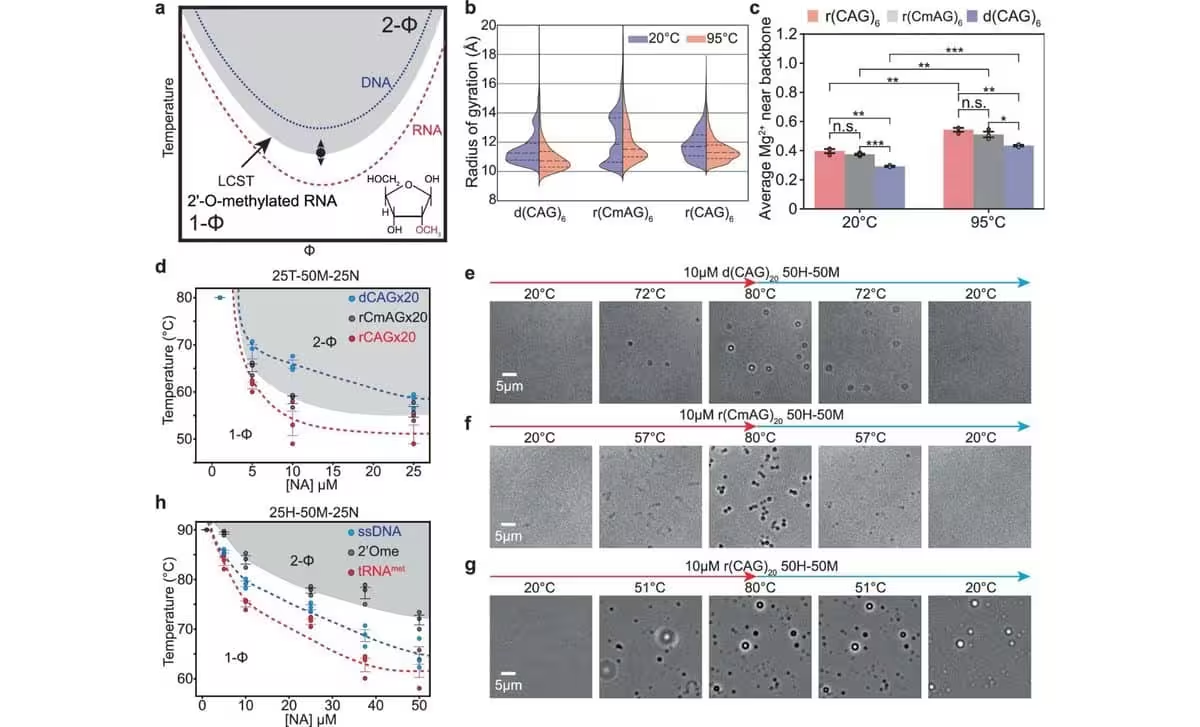
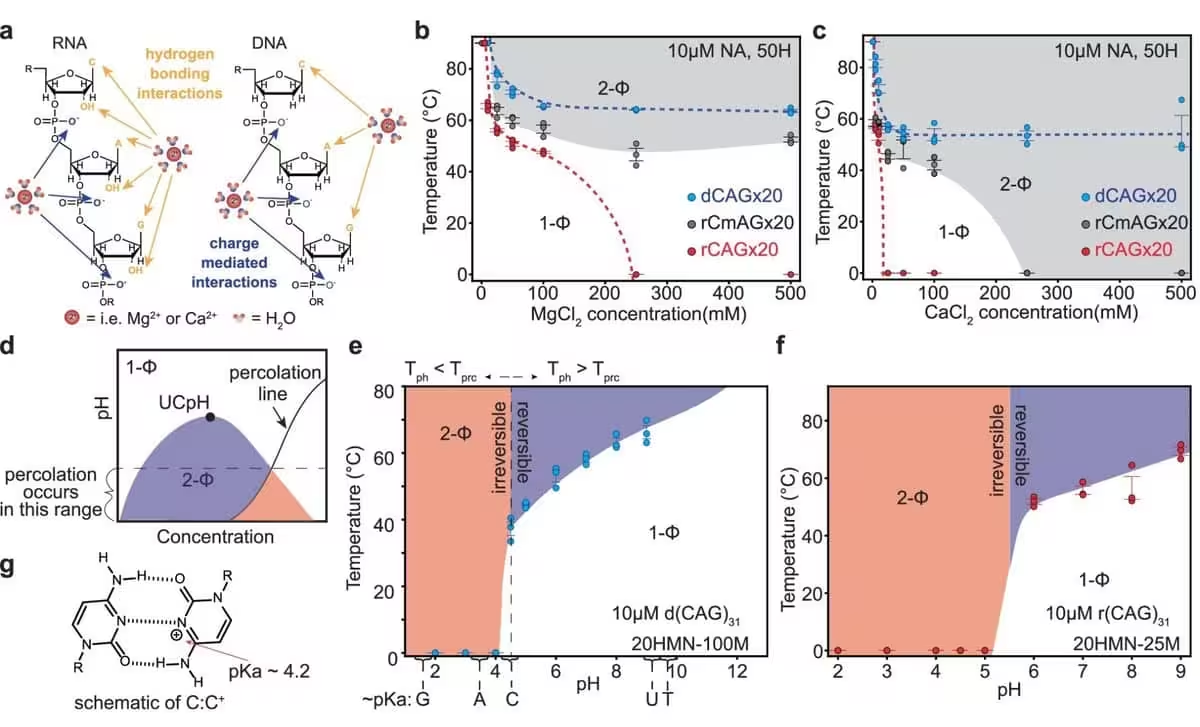
New research published in Nature Communications may resolve this long-standing tension by highlighting a specific molecular component: the 2′-hydroxyl (2′-OH) group. This small chemical feature, which distinguishes RNA from its more stable cousin, DNA, appears to govern how RNA molecules behave under thermal stress.
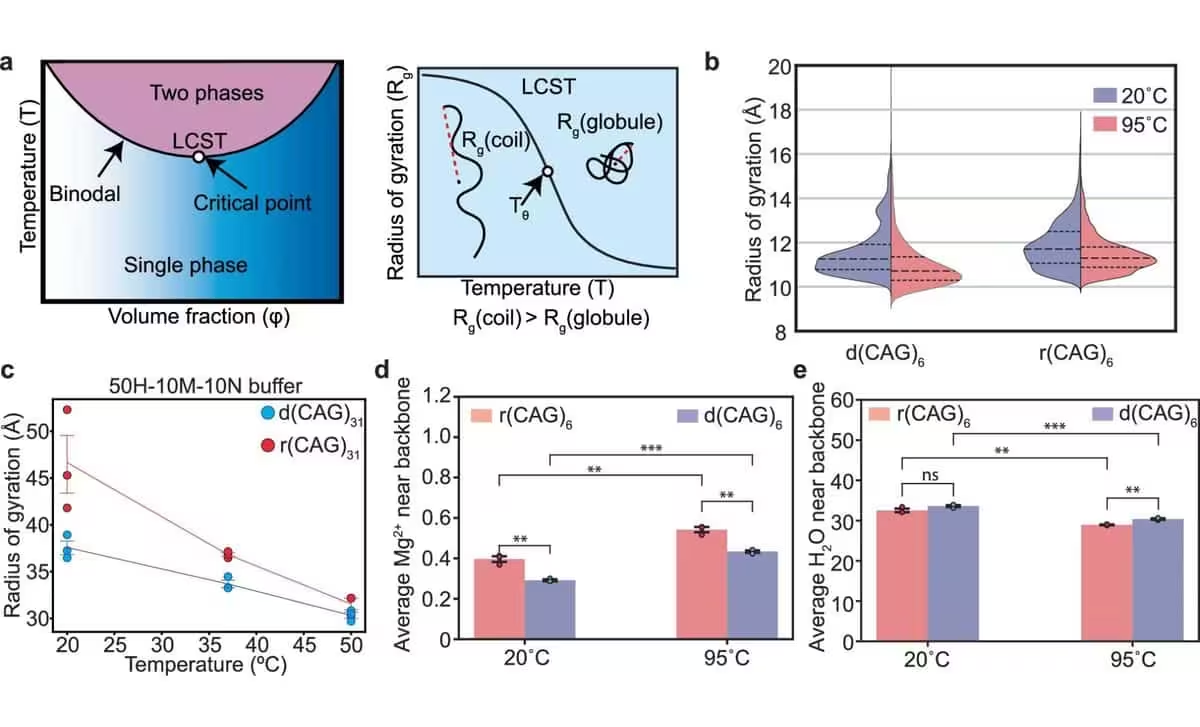
Led by University at Buffalo researcher Priya Banerjee, the study utilized advanced techniques including temperature-controlled microscopy, small-angle X-ray scattering, and molecular-dynamics simulations. The team discovered that as temperatures rise, the 2′-OH group actively encourages RNA strands to aggregate into dense, gel-like droplets known as condensates. These structures could have provided the necessary protective microenvironments for early life long before the evolution of lipid cell membranes.
“These findings reveal, for the first time, how remarkably small changes in molecular chemistry can control the emergence of much larger, self-organized biomolecular structures like RNA condensates,” Banerjee said in a press statement.
Addressing the Hazards of a Primitive Earth
The late Nobel laureate Sidney Altman, who earned his prize for identifying RNA’s catalytic role, frequently acknowledged the environmental hurdles facing the RNA World hypothesis. The extreme temperatures and acidity of the Hadean Earth meant that RNA, if left unprotected, would likely fall apart before it could function as a genetic repository.
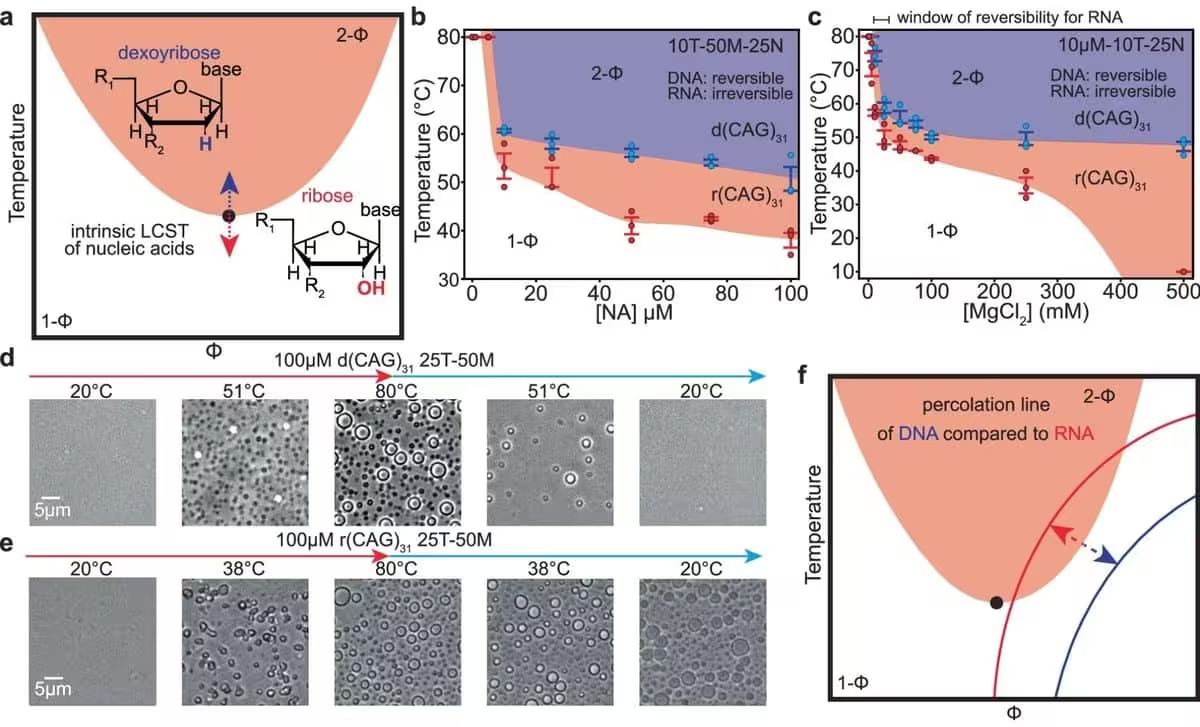
While this new study does not prove that life emerged inside these droplets, it provides a plausible physical mechanism for how RNA could have achieved the necessary stability. By self-organizing into condensates, RNA molecules effectively gained a primitive shield against their surroundings.
From Droplets to Early Life
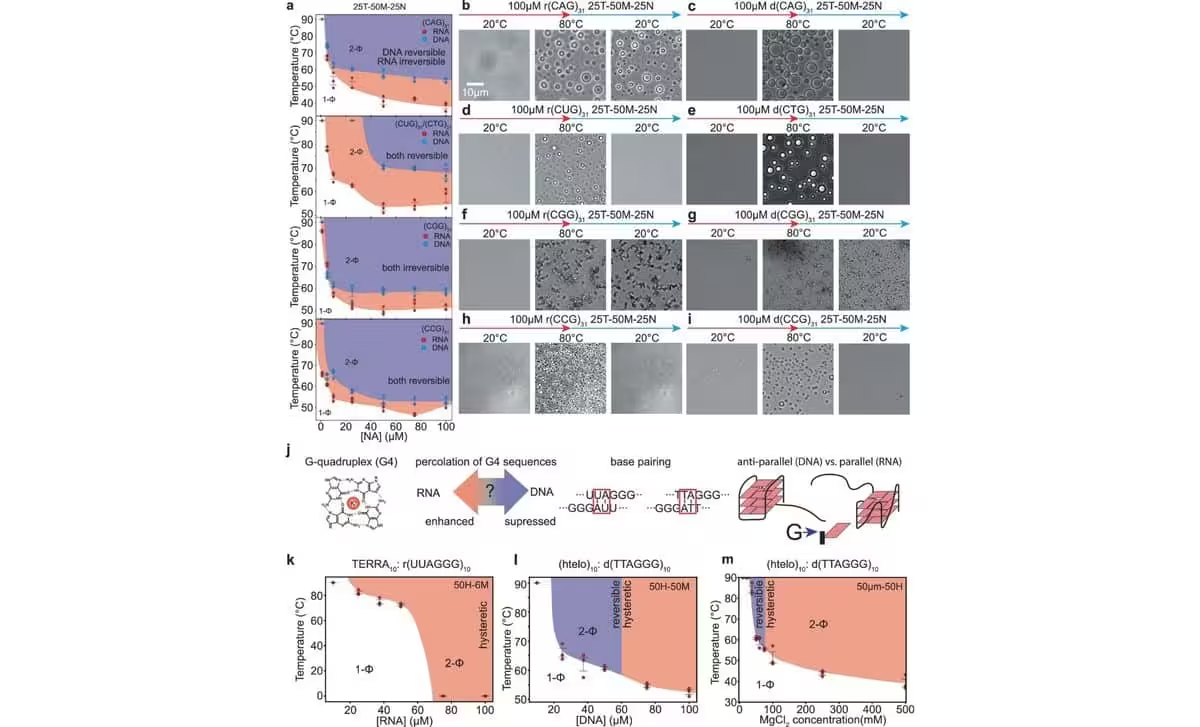
This work builds upon findings reported by the team in Nature Chemistry in 2023, which established that RNA droplets naturally form under high heat. The more recent analysis identifies the 2′-OH group as the critical driver of this phenomenon. Currently, the researchers are investigating whether these organized RNA clusters exhibit behaviors that mirror early cellular life, such as metabolic-like activity or the ability to maintain internal order.
While there is a clear distinction between an organized cluster of molecules and a functioning living cell, Banerjee believes these structures represent a vital intermediate stage. By bridging the gap between simple chemistry and cellular life, these RNA condensates may have set the stage for the complexity that defines biology today. Future research will focus on determining if these droplets possess the functional sophistication necessary to be considered true precursors to life.
This article has been fact checked for accuracy, with information verified against reputable sources. Learn more about us and our editorial process.
Last reviewed on .
Article history
- Latest version
Reference(s)
- “Priya R. Banerjee.” <https://scholar.google.com/citations?user=a3GcfaAAAAAJ&hl=en>.
- <https://www.buffalo.edu/news.host.html/content/shared/university/news/news-center-releases/2026/08/rna-droplets-study.detail.html>.
- “Nobel Prize in Chemistry 1989.” NobelPrize.org <https://www.nobelprize.org/prizes/chemistry/1989/altman/article/>.
Cite this page:
- Posted by Bilal Abbasi