Scientists Successfully Trap Rare Earth Metal In Molecular Cage To Unlock Hidden Chemistry
Scientists have forced a stable rare-earth metal into an unusual state using a custom molecular cage, unlocking new ways to study its elusive properties.
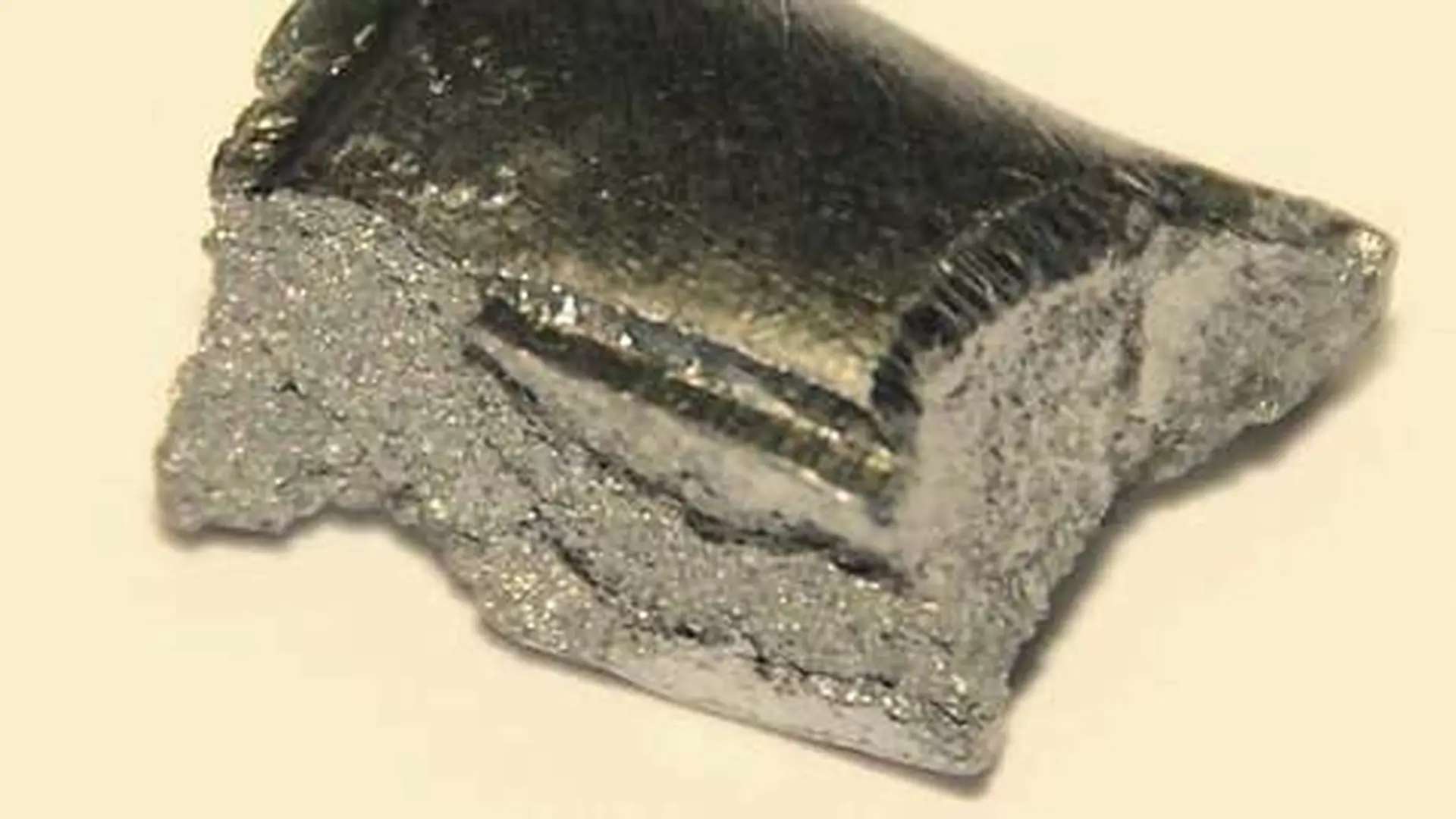
Chemists at the University of Iowa have successfully stabilized a rare and typically volatile oxidation state of terbium by trapping the metal within protective molecular cages. This development, detailed in Nature Communications, represents a significant shift in how researchers can manipulate rare-earth elements, moving away from the need for highly restrictive atmospheric controls.
Rare-earth elements, or lanthanides, are foundational to modern technology, appearing in everything from high-performance magnets to advanced medical diagnostic equipment. However, their chemical uniformity poses a persistent challenge for industry; because most lanthanides share a strong preference for the plus-3 oxidation state, separating individual elements from complex mixtures is notoriously difficult and energy-intensive. Terbium is among those that strongly resist shifting to the plus-4 state, a transition that requires the difficult removal of an electron.
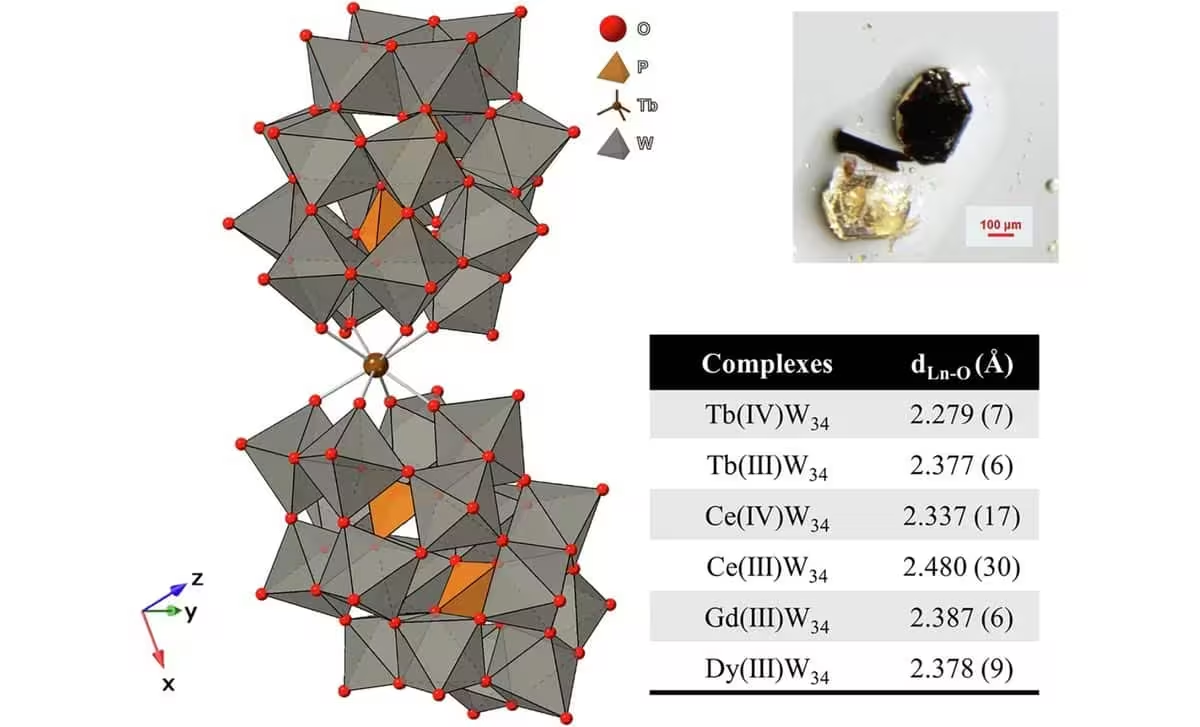
To overcome this, the research team, led by Korey Carter and Pere Miró, utilized polyoxometalates—complex structures composed of tungsten and oxygen—to serve as protective “cages.” By enclosing a terbium ion within a pair of these structures, the team created a stable environment capable of hosting the metal after the removal of an electron. Utilizing potassium persulfate as an oxidizing agent, the researchers successfully forced the terbium into a plus-4 oxidation state, even while immersed in water.
Unlike previous attempts to isolate such states, which required strictly regulated laboratory environments to prevent degradation, this synthesis occurred under ambient conditions. Once the reddish-brown crystals were formed, the team verified the transition using X-ray diffraction, which revealed that the distance between the terbium ion and its surrounding oxygen atoms had shrunk by 0.098 angstroms, confirming a successful structural shift.
Probing the electronic frontiers
The study employed an array of advanced analytical techniques, including electron paramagnetic resonance and X-ray absorption spectroscopy, to map the electronic properties of the new material. Researchers identified a distinct absorption band at 437 nanometers that serves as a diagnostic signature for the terbium(IV) state, a feature entirely absent in standard trivalent samples.
While the material demonstrated impressive resilience—remaining stable for over 12 days within a closed aqueous system—it also revealed distinct sensitivities. The researchers observed that the material is vulnerable to X-ray radiation, which can trigger a reversion to the plus-3 state in under an hour. Furthermore, magnetic analysis highlighted significant differences between the two states, with the plus-4 variant exhibiting a lower effective magnetic moment of 8.76 Bohr magnetons compared to the 10.15 measured in the trivalent form.
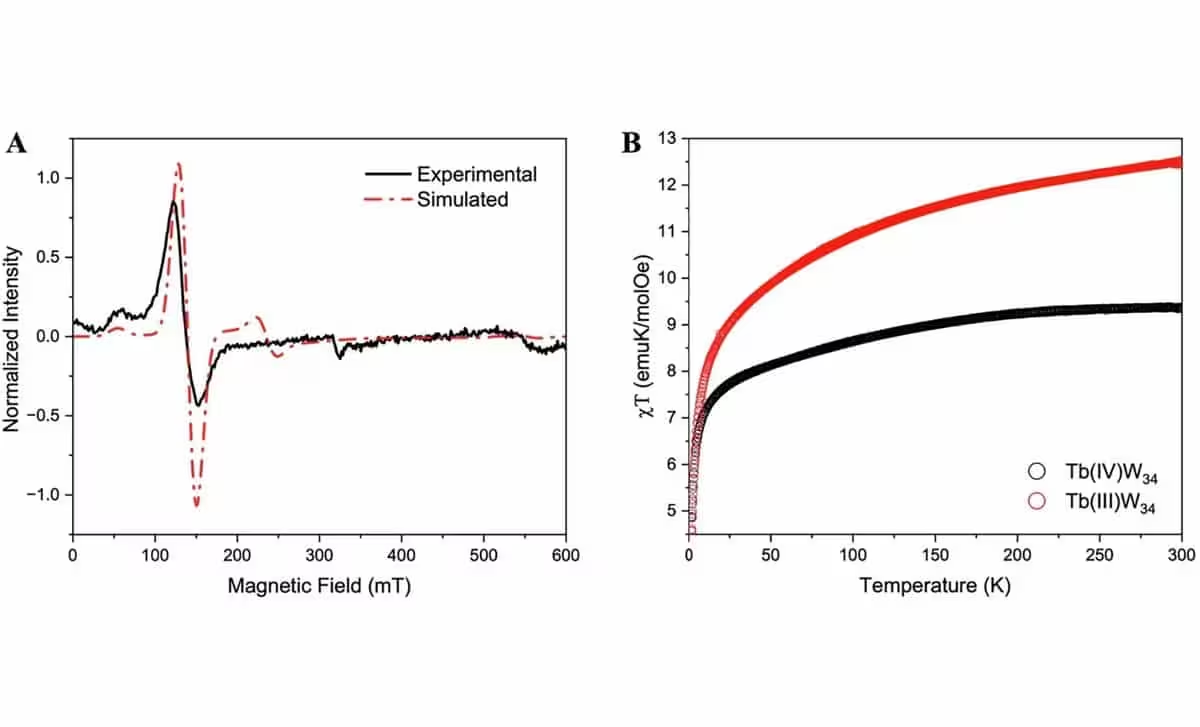
By comparing these results with trivalent gadolinium, which shares a similar electron configuration, the researchers gained deeper insight into how the chemical cage influences the behavior of lanthanide electrons. These insights are not merely theoretical; they offer a potential pathway for more efficient rare-earth separation techniques and provide a new framework for developing materials for quantum information science and spintronics. Looking ahead, the team intends to apply this cage-based strategy to the study of actinides, potentially unlocking new methodologies for handling these complex, often radioactive elements.
This article has been fact checked for accuracy, with information verified against reputable sources. Learn more about us and our editorial process.
Last reviewed on .
Article history
- Latest version
Cite this page:
- Posted by Bilal Abbasi