Scientists Discover Molten Rock Can Store Hidden Oxygen That Could Shape Planetary Atmospheres
New research reveals that molten rock deep within Earth stores more oxygen than expected, potentially linking volcanic activity to ancient atmospheric shifts.
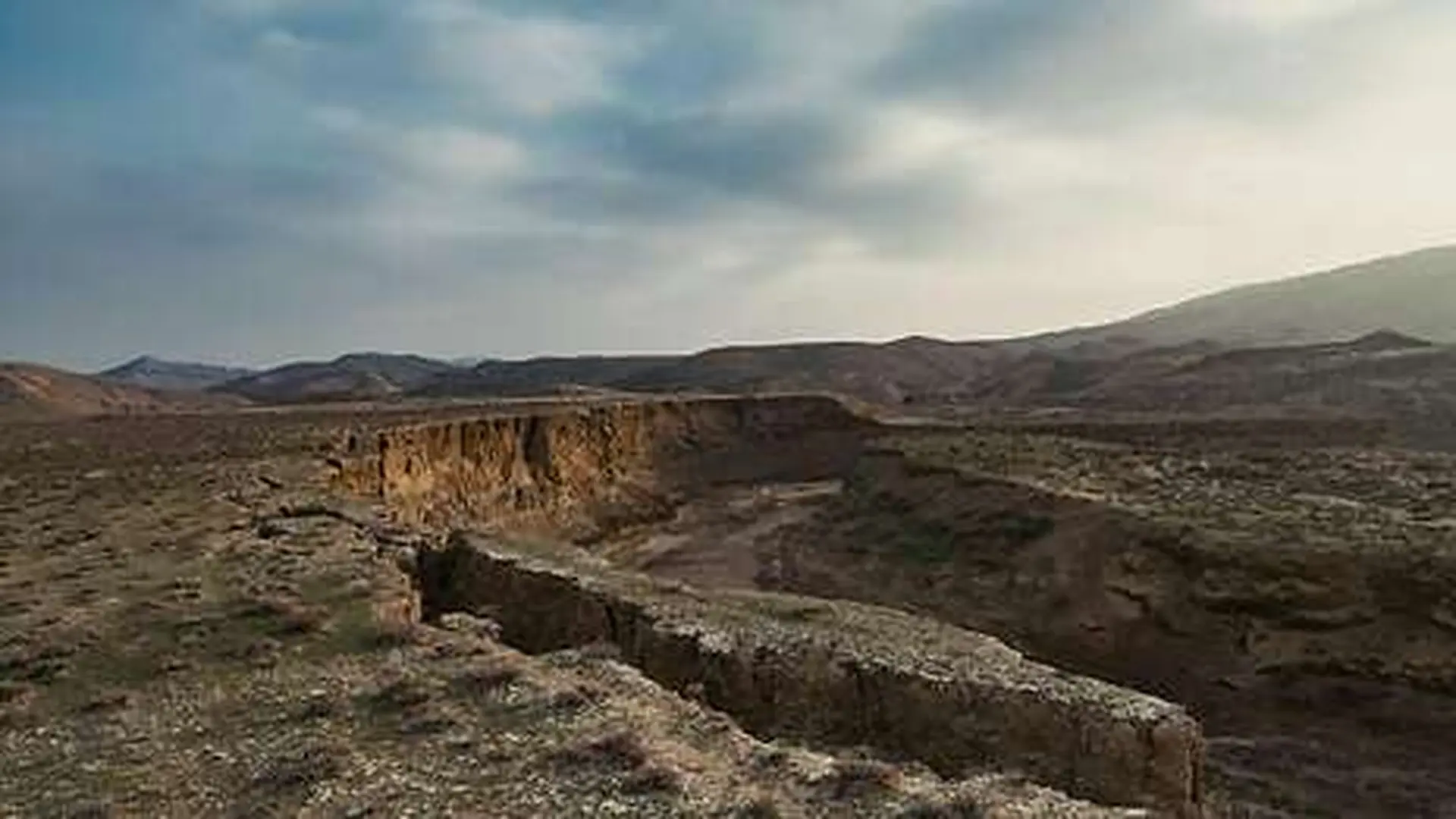
Deep within the Earth, the rules governing how molten rock behaves under extreme conditions may be far more complex than geologists once assumed. A study published August 25, 2026, in National Science Review reveals that silicate melts—the molten rock found deep in the Earth’s mantle—possess a previously unknown capacity to store and transport significant amounts of oxygen.
Led by a team from the Center for High Pressure Science and Technology Advanced Research (HPSTAR), the research challenges the long-standing belief that the oxygen content of magma is strictly dictated by the chemical ratios of iron, silicon, and magnesium. Instead, the findings suggest that molten silicate can physically incorporate excess oxygen directly into its internal structure when subjected to the intense pressures found deep underground.
Unlocking Oxygen Storage in the Mantle
To investigate how these materials react to extreme environments, the team conducted experiments on synthetic mid-ocean ridge basalt. Using a high-pressure apparatus, they subjected the samples to temperatures between 1,200 and 1,800 degrees Celsius and pressures reaching 7 gigapascals. By introducing platinum oxide (PtO₂) as a potent oxygen source, researchers were able to simulate highly oxidizing conditions within the molten rock.
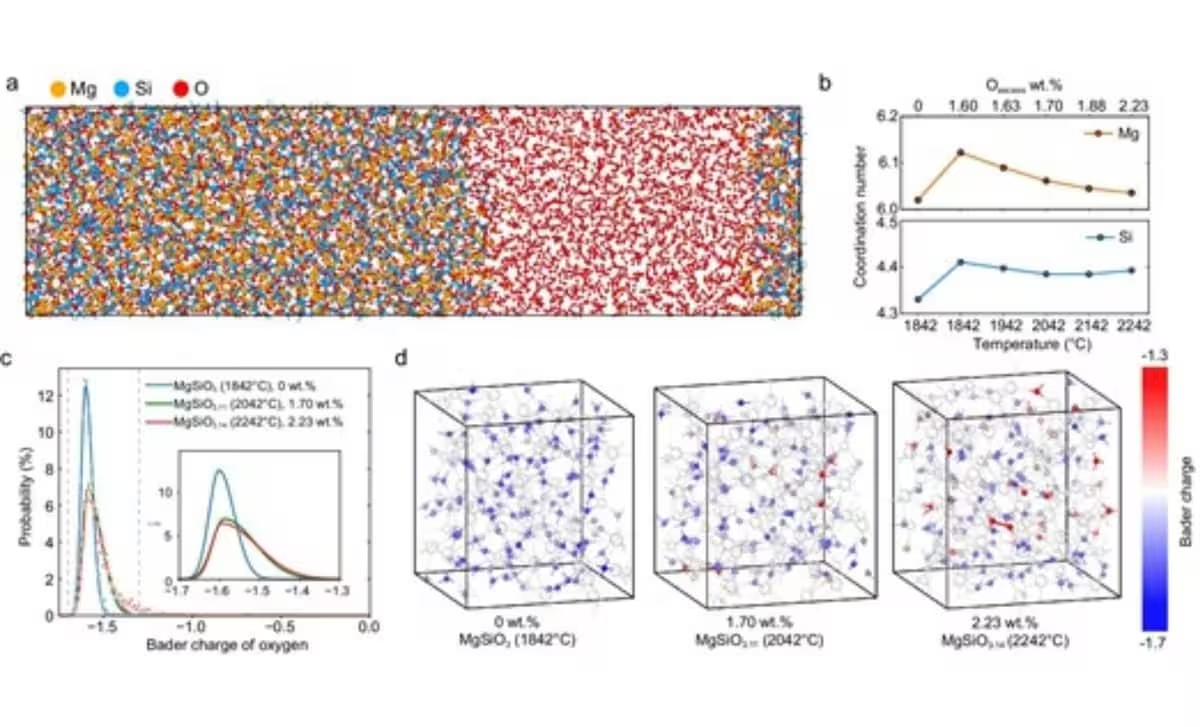
The results were striking: while samples held almost no excess oxygen at atmospheric pressure, that figure jumped to 5.2% of the total sample weight at 7 gigapascals. Further analysis using Raman spectroscopy confirmed that this oxygen was not trapped as pockets of gas, but was chemically integrated into the structural matrix of the molten material itself. Computer-based molecular dynamics simulations supported these findings, confirming that liquid silicate can indeed reach an equilibrium that accommodates higher oxygen concentrations under pressure.
A New Piece of the Atmospheric Puzzle
This discovery has significant implications for understanding how Earth’s atmosphere evolved over billions of years. As mantle magma rises toward the surface, the ambient pressure drops, forcing the molten rock to shed its previously held excess oxygen. This cycle offers a potential mechanism for moving oxidizing power from the deep mantle into the crust and, eventually, the atmosphere.
The researchers specifically point to the period between 2.5 and 2.0 billion years ago, a time marked by the formation of massive volcanic provinces. With approximately 7.2 million cubic kilometers of magma generated during that window, the team calculated that if just 0.27% of that material had been saturated with excess oxygen, it could theoretically account for the entire oxygen content of the modern atmosphere. While the authors caution that this is a theoretical scaling exercise rather than a confirmed historical record of how our atmosphere gained its oxygen, the model provides a compelling new perspective on planetary chemistry.
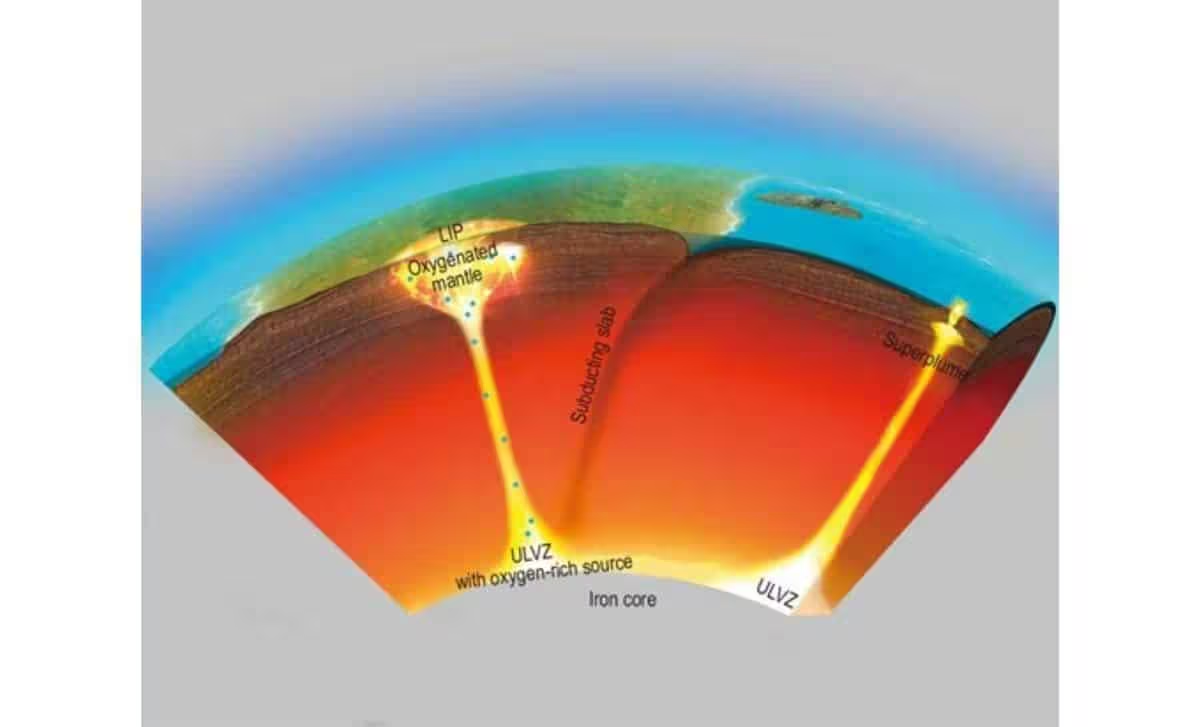
Beyond our own planet, this study suggests that oxygen-saturated magma could be a fundamental factor in the development of other rocky planets, influencing everything from the formation of initial magma oceans to the long-term chemical evolution of their atmospheres.
This article has been fact checked for accuracy, with information verified against reputable sources. Learn more about us and our editorial process.
Last reviewed on .
Article history
- Latest version
Cite this page:
- Posted by Bilal Abbasi