Researchers Reveal How Plant Cellulose Replaces Plastics and Transforms Modern Industry Through Sustainable Engineering
A comprehensive review of cellulose extraction and chemical modification highlights new pathways for replacing synthetic plastics across multiple industrial sectors.
A comprehensive review of sustainable polymer alternatives reveals how plant-derived cellulose is transforming modern manufacturing beyond traditional paper production, according to a study published in Discover Environment. The global market for cellulose fibers reached 34.98 billion United States Dollars in 2024 and is projected to expand to 66.62 billion United States Dollars by 2033 as industries increasingly replace petroleum plastics with renewable biomaterials.
For decades, synthetic plastics dominated packaging, construction, and textiles due to their low cost and durability. Petroleum-based polymers persist in terrestrial and aquatic ecosystems, generating microplastics that threaten environmental and human health. Saurabh Bassi and colleagues at their research institution evaluated how cellulose, the most abundant natural biopolymer on Earth, can replace synthetic materials through precise chemical modifications and structural control.
How Biomass Sources Dictate Material Performance
The journey from raw plants to high-tech materials begins with selecting the right biological feedstock. Softwoods possess long fibers that provide high tear resistance, making them ideal for reinforcing composite structures and construction materials. Hardwoods offer superior fiber-to-fiber bonding and form even surfaces, which suits them for coatings, films, and barrier packaging. Agricultural residues like wheat straw and sugarcane bagasse offer circular economy benefits, but require thorough pretreatment to remove ash, silica, and lignin.
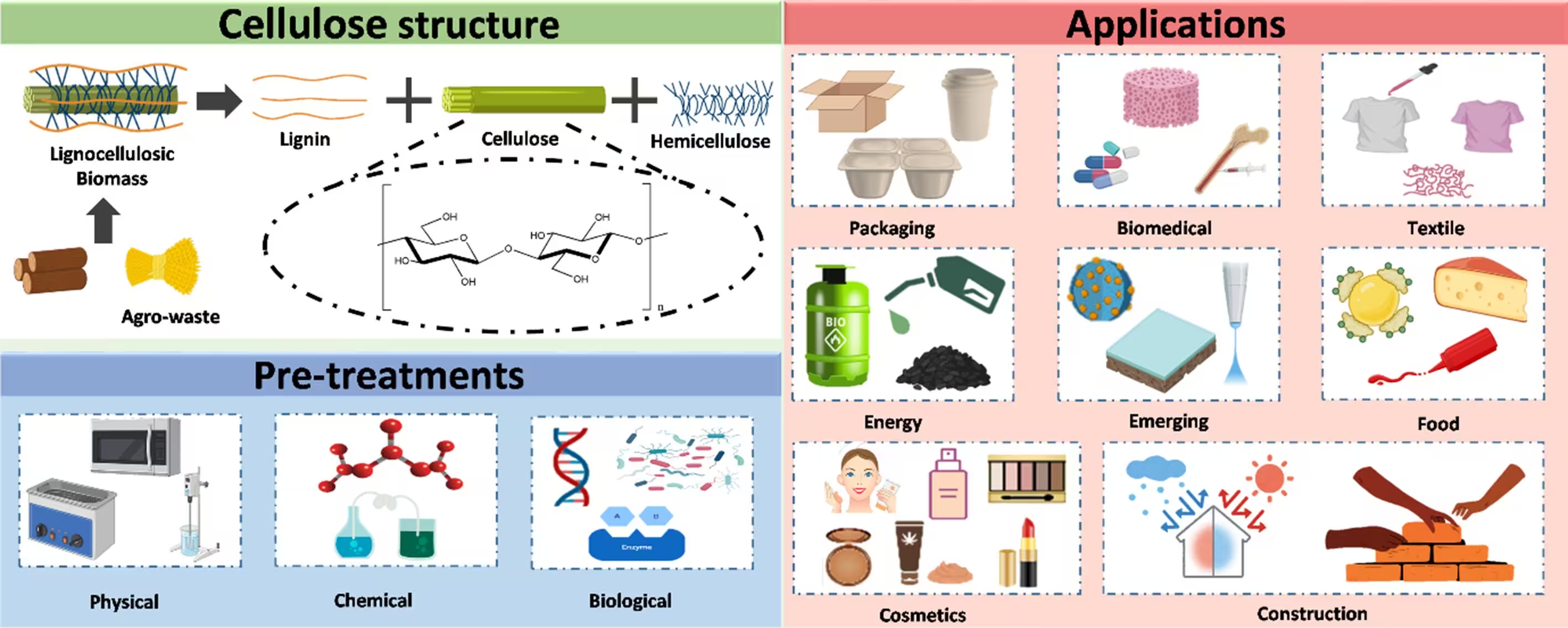
The extraction and pulping methods permanently shape the final product’s characteristics. Kraft pulping uses sodium hydroxide and sodium sulfide chemistry to efficiently delignify wood and produce strong fibers. Sulfite pulping yields brighter, easily bleachable pulp, while alkaline processes are favored for agricultural residues because they facilitate silica removal. For advanced nanocellulose applications, the purity of the starting pulp is less critical than its chemical composition, viscosity, and carboxyl group content.
The Energy Cost of Advanced Cellulose Processing
Transforming bulk pulp into nanomaterials requires intensive mechanical, chemical, or biological pretreatments. Mechanical fibrillation methods such as grinding, milling, and high-pressure homogenization maximize surface area, but they demand substantial electrical energy. Combining mechanical action with enzymatic hydrolysis or deep eutectic solvents helps reduce chemical waste and improves fibrillation efficiency. However, dewatering and drying remain major energy bottlenecks in scaling up nanocellulose production.
Economic analyses show that producing nanocellulose costs between 4.60 and 7.50 United States Dollars per kilogram, making it significantly more expensive than commodity plastics like polyethylene terephthalate. Capital expenditures and drying energy represent the primary economic hurdles for market adoption. Life-cycle assessments indicate that scaling up production from laboratory benches to industrial facilities can reduce global warming potential by up to 28 percent for materials like transparent wood.
Multifunctional Applications Across Modern Industries
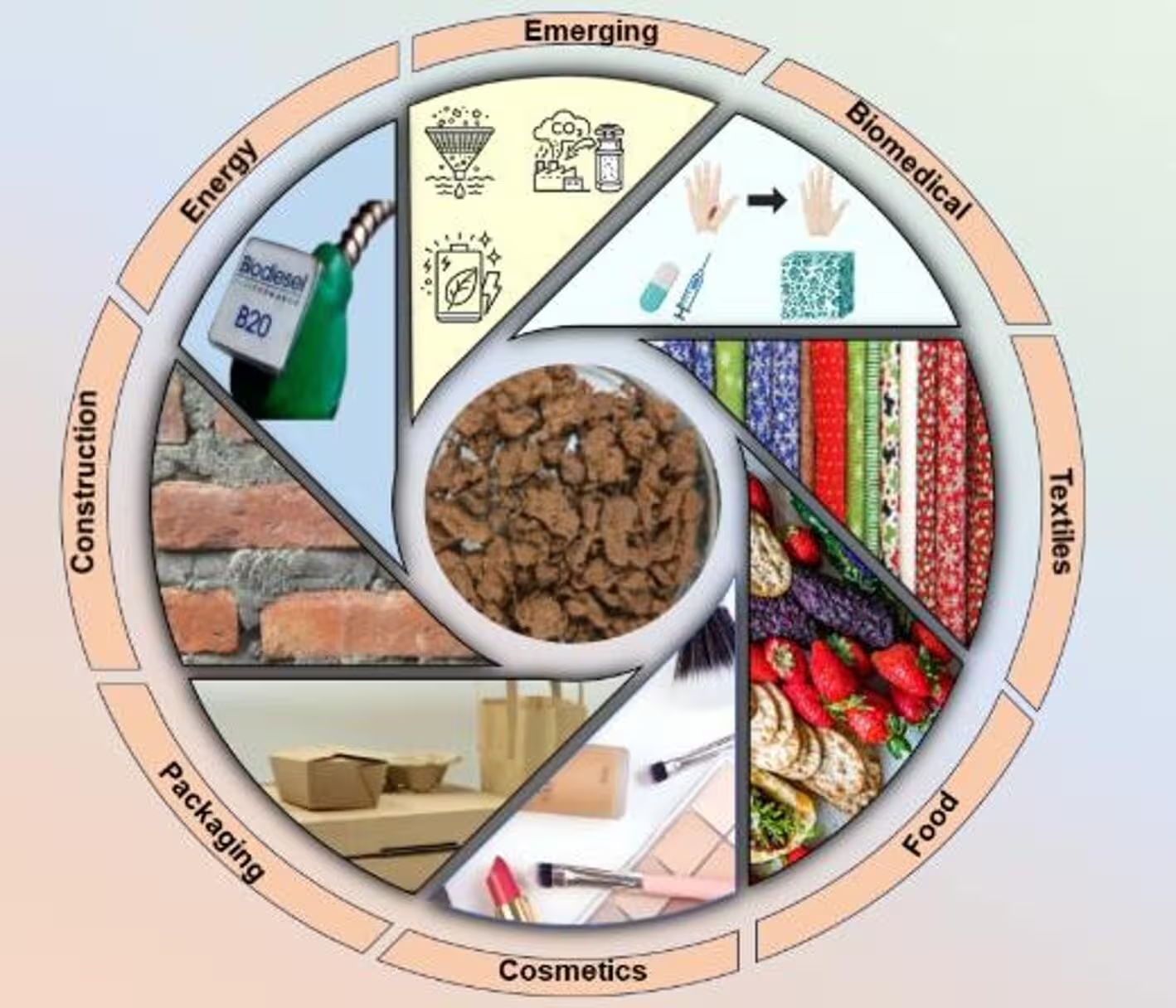
Cellulose derivatives now serve as functional ingredients in fields far removed from conventional papermaking. In the food industry, microcrystalline cellulose and cellulose nanofibrils act as fat replacers and emulsion stabilizers, mimicking creaminess while reducing calories. In cosmetics, bacterial cellulose forms stable Pickering emulsions and provides skin moisturization, with clinical trials showing bio-cellulose face masks increase skin hydration by up to 62 percent.
Advanced structural engineering utilizes cellulose as a sacrificial template to create hollow alumina spheres with high buoyancy and hydrostatic failure pressures exceeding 200 megapascals. Furthermore, functionalized cellulose aerogels achieve up to 97 percent solar reflectance for passive radiative cooling. Carbon dioxide-capture aerogels developed from alkali-dissolved cellulose can capture up to 6.5 grams of carbon dioxide per gram of material while providing structural strength.
Overcoming Regulatory and Standardization Barriers
Despite promising laboratory metrics, commercial translation faces structural roadblocks including batch-to-batch feedstock inconsistency and moisture sensitivity. Although cellulose films offer exceptional oxygen barrier properties, their hydrophilic nature compromises moisture resistance under high humidity. Protective hydrophobic coatings can mitigate this weakness, but they often complicate end-of-life biodegradability and recycling.
The authors emphasize that future research must prioritize integrated biorefineries that valorize all components of biomass, including hemicellulose and lignin. Standardizing characterization protocols and establishing harmonized regulatory frameworks for food contact and biomedical safety will determine whether renewable cellulose can successfully compete with established petrochemical polymers at a global scale.
The research was published in Discover Environment on November 27, 2026.
This article has been fact checked for accuracy, with information verified against reputable sources. Learn more about us and our editorial process.
Last reviewed on .
Article history
- Latest version
Cite this page:
- Posted by Anjali Singh