Researchers Combine Multi-Omics And Artificial Intelligence To Predict Cancer Therapy Outcomes And Survival Rates
Thirteen new studies explore advanced imaging, machine learning models, and clinical biomarkers to refine precision oncology and immunotherapy decisions.
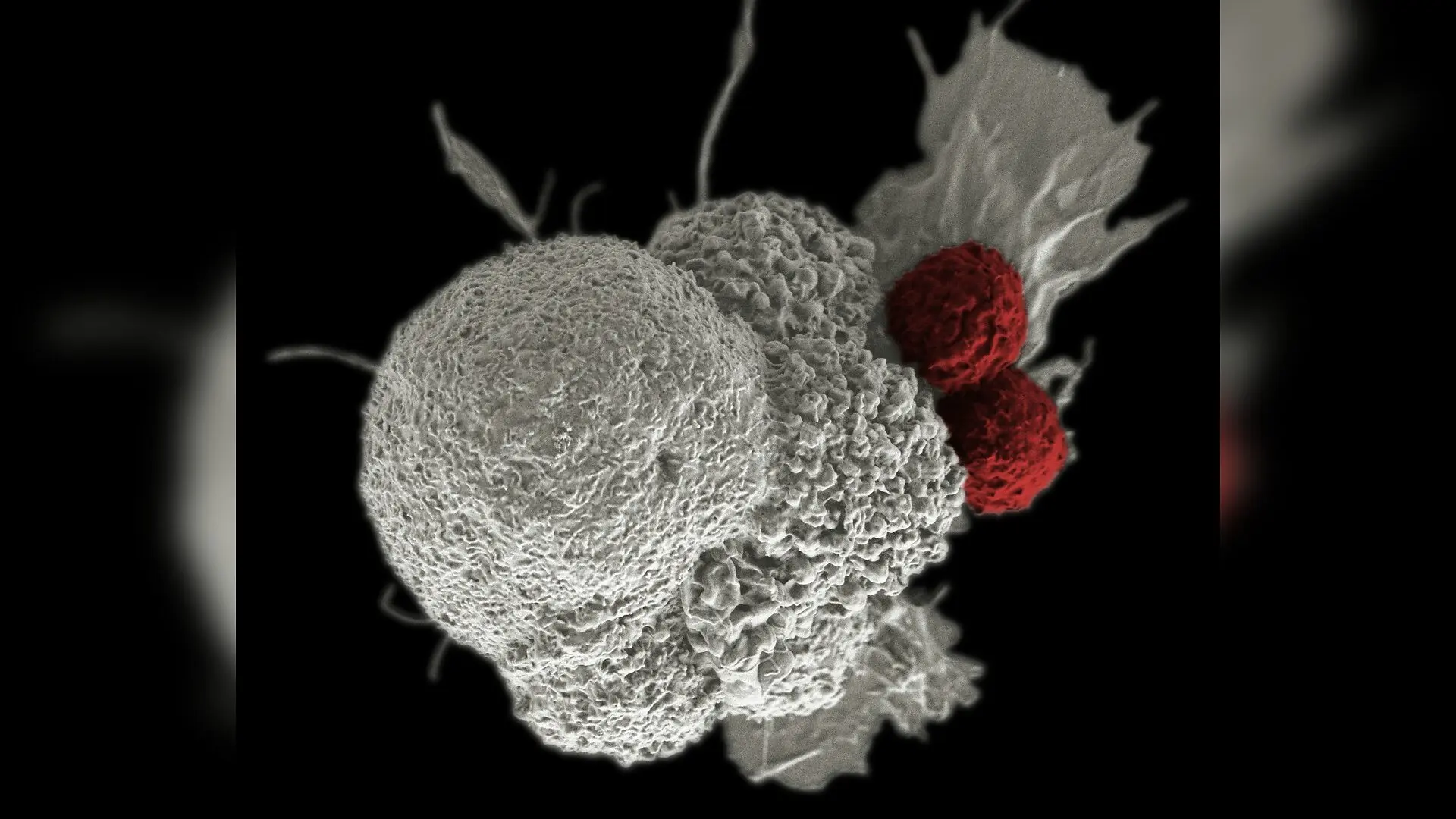
Cancer remains a leading cause of mortality worldwide, with tumor ecosystems challenging therapeutic efficacy and clinical decision-making. A new compilation of 13 studies published in Frontiers in Immunology highlights how multi-omics, advanced imaging, and machine learning could transform precision oncology. The research brings together diverse approaches to refine risk stratification and guide personalized treatments.
How Can Multi-Omics and Machine Learning Improve Survival Predictions?
Researchers are increasingly turning to multi-omics, which combines data from genomics, transcriptomics, and epigenetics, to better understand tumor behavior. In a study on lung adenocarcinoma, scientists identified two distinct cancer subtypes that serve as independent predictors of overall survival. By integrating clinical features, genetic alterations, and DNA methylation patterns, they developed a risk score based on 17 genes to estimate survival probabilities.
Similar computational strategies are reshaping how doctors view esophageal squamous cell carcinoma, a common form of esophageal cancer. Investigators used public expression profile data to identify two distinct patterns of disulfidptosis-related genes as independent prognostic factors. Drug screening models further identified potential treatment options for patients carrying less favorable molecular signatures.
What Role Do Surrogate Markers Play in Immunotherapy Response?
Predicting how a patient will respond to immunotherapy remains a major hurdle in clinical practice. For gastric cancer, established parameters such as Programmed Death Ligand-1, microsatellite instability status, and tumor mutation burden help assess treatment efficacy. Newer research points to gut microbiota, circulating tumor DNA, and lipid metabolism as emerging indicators for patients who resist conventional therapies.
In esophageal cancer treatments involving neoadjuvant chemoimmunotherapy, which is therapy given before primary surgery to shrink tumors, investigators evaluated major pathological response rates. A retrospective multicenter study of 306 patients demonstrated that major pathological response shares similar prognostic significance with pathological complete response. This finding suggests that certain intermediate treatment responses could serve as reliable surrogate endpoints for long-term survival.
Why Must Artificial Intelligence Models Adopt Causal Inference?
Despite the widespread adoption of artificial intelligence in healthcare, current machine learning models face significant hurdles regarding interpretability and reliability. A comprehensive review highlighted the near-absence of causal inference in current immunotherapy applications. Most deep learning systems remain purely correlational rather than uncovering true biological cause and effect.
To address these methodological gaps, other researchers developed a machine learning model combining habitat imaging and Vision Transformer architectures to predict treatment outcomes. Utilizing data from six medical centers, the ExtraTrees model achieved high predictive performance. Researchers also utilized SHAP analyses, a method for explaining machine learning output, to make the computational decisions more transparent for clinicians.
How Do Clinical Nomograms Refine Risk Assessment?
Physicians continually face new challenges in estimating recurrence risks based on patient histories and clinicopathological features. Several research teams developed nomograms, which are visual calculators used to estimate clinical probability, for patients with gliomas, central nervous system germ cell tumors, and human immunodeficiency virus positive individuals recovering from colorectal cancer resection. These tools integrate demographic details, nutritional parameters, and tumor markers.
Other investigators integrated lymphovascular and perineural invasion into standard staging systems to improve prognostic accuracy. Across multiple evaluation studies, models incorporating discrimination metrics, calibration curves, and decision curve analysis showed consistent performance. The authors note that rigorous external validation remains essential before these integrative models can transition into standard clinical workflows.
The research was published in Frontiers in immunology on November 26, 2026.
This article has been fact checked for accuracy, with information verified against reputable sources. Learn more about us and our editorial process.
Last reviewed on .
Article history
- Latest version
Cite this page:
- Posted by David Anderson