New 24-Item Scale Reveals How Liver Cancer Patients Weigh Health Choices After Treatment
Specialist consensus yields a preliminary tool to measure perceived benefits and barriers following tumor-blocking procedures.

Patients recovering from liver cancer face difficult choices regarding their daily health habits after undergoing a complex procedure that blocks tumor blood vessels. A team of researchers has now developed a specialized evaluation tool to map out exactly how these individuals weigh the pros and cons of lifestyle changes, medication routines, and follow-up visits.
Hepatocellular carcinoma, the most common form of primary liver cancer, is frequently diagnosed at an advanced stage when surgical removal is no longer an option. For many patients, transarterial chemoembolization serves as a primary treatment. This procedure uses targeted catheters to deliver chemotherapy directly to tumor-feeding blood vessels while cutting off their blood supply. While the technique extends survival, the recovery process demands rigorous lifestyle adjustments, including strict medication adherence, nutritional management, physical activity, and regular symptom monitoring.
How Do Twenty-Four Specialists Build a Decision Scale?
Led by corresponding author Xiaolin Wang and colleagues at the Second Affiliated Hospital of Chongqing Medical University, the research team set out to create the first dedicated measurement instrument for post-treatment health choices. The work, published in PLOS One, draws on the Transtheoretical Model, a psychological framework that explains how people modify health behaviors by systematically balancing perceived benefits against perceived barriers.
To build the preliminary instrument, the investigators combined a comprehensive review of ten academic databases with semistructured interviews involving liver cancer patients at a tertiary hospital in Chongqing. This qualitative phase yielded five core themes and thirteen subthemes. From these findings, the team formulated an initial item pool consisting of twenty-eight potential questions spanning two core dimensions: perceived benefits and perceived barriers.
The researchers then engaged twenty-four clinical experts from sixteen Chinese provinces and municipalities, including specialists in liver cancer nursing, interventional care, and psychological support. These experts participated in two rounds of a modified Delphi consultation process between December 2025 and January 2026. Each expert evaluated every item on a five-point scale for importance and feasibility, providing written feedback for refinement.
What Did the Expert Panel Change and Why?
Both consultation rounds achieved a one hundred percent response rate, indicating high engagement from the participating medical professionals. Expert authority coefficients reached values between 0.92 and 0.94, well above the threshold for high credibility. Statistical measures of consensus, including Kendall’s coefficient of concordance, showed significant improvements between the first and second rounds as scores converged.
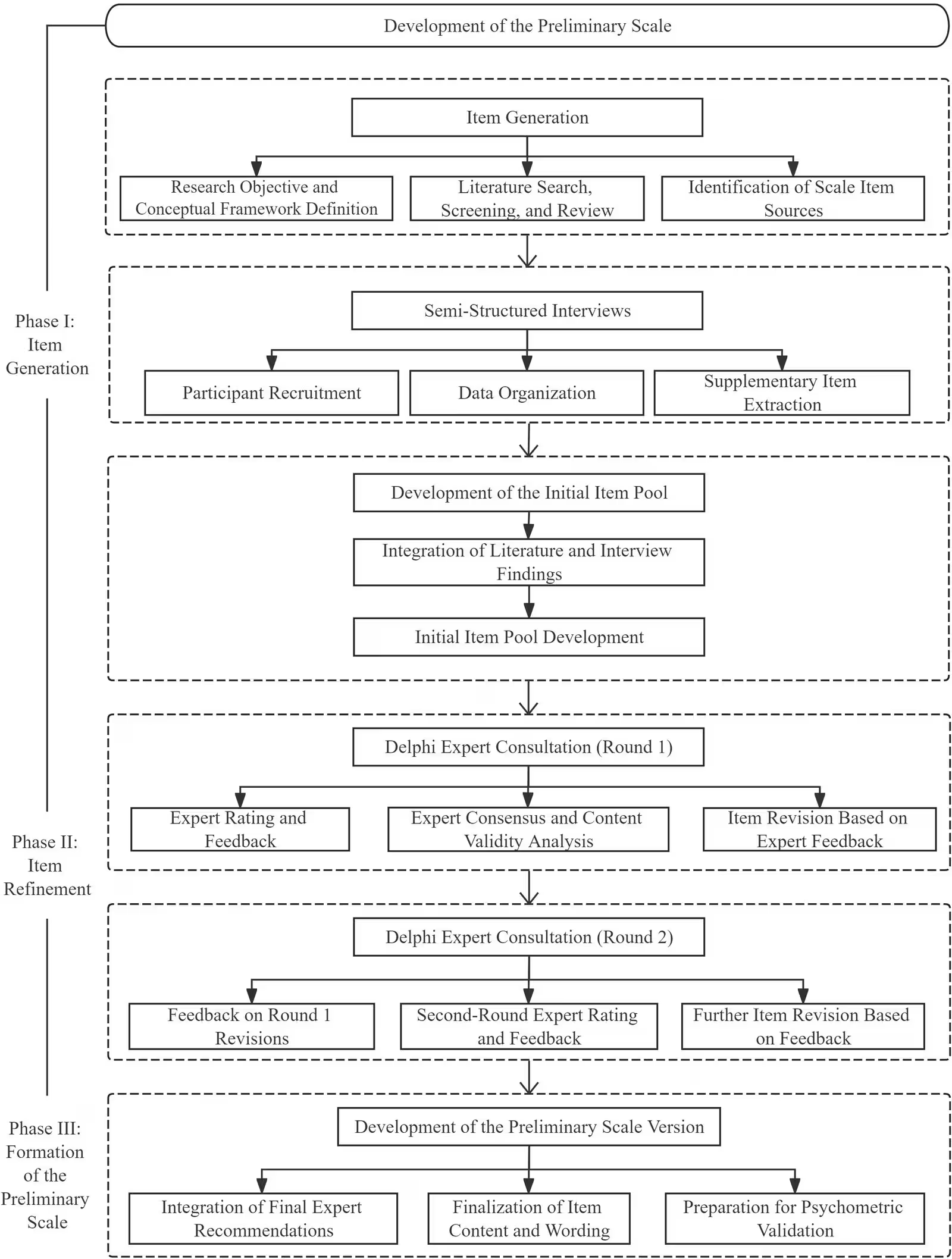
Following rigorous expert review, several items were modified, merged, or deleted to ensure the scale reflected immediate patient concerns rather than distant outcomes or external influences. For instance, broad statements about returning to family roles were removed because they focused too heavily on long-term milestones rather than immediate daily choices. Conversely, new items were added to capture specific hurdles unique to this population, such as worries that early physical activity might conflict with traditional beliefs about mandatory bed rest, or concerns that eating smaller, more frequent meals would consume too much daily time.
The resulting preliminary scale comprises twenty-four items split evenly between twelve positive statements and twelve con statements. The positive items highlight advantages such as reduced thrombosis risk from early movement, improved sleep from moderate activity, and better peace of mind from tracking recovery progress. The con statements capture practical and emotional obstacles, including fears of worsening pain, financial strains from long-term care, and anxieties surrounding follow-up examination results.
What Are the Limitations of the Current Scale?
While the content validity indices exceeded recommended standards, with average scale-level scores above 0.98 for both importance and feasibility, the authors emphasize that the work remains at a preliminary stage. Because the Delphi panel drew exclusively from hospital departments such as interventional radiology and oncology, opinions from primary care and community rehabilitation settings were not represented.
Furthermore, the evaluation was conducted entirely within a Chinese healthcare and cultural context, meaning its applicability across different international regions requires further testing. The research team notes that large-scale empirical studies involving diverse patient cohorts are still necessary to perform exploratory and confirmatory factor analysis, verify structural validity, and test the longitudinal responsiveness of the scoring system over time.
What Happens Next for Patient Recovery Tools?
The newly formulated instrument provides a conceptual foundation for identifying where patients stand in their decision-making process. By pinpointing specific barriers and perceived benefits, healthcare professionals hope to design stage-specific counseling interventions that can improve treatment adherence, self-management capabilities, and overall quality of life for individuals navigating liver cancer recovery.
The research was published in PloS one on November 23, 2026.
This article has been fact checked for accuracy, with information verified against reputable sources. Learn more about us and our editorial process.
Last reviewed on .
Article history
- Latest version
Reference(s)
- Jiang, Yujun., et al. “Development of the decisional balance scale for health behaviors after transarterial chemoembolization in patients with hepatocellular carcinoma: A Modified Delphi Study.” PLOS One, vol. 21, no. 11, November 23, 2026, pp. e0362463 Public Library of Science (PLoS), doi: 10.1371/journal.pone.0362463. <https://doi.org/10.1371/journal.pone.0362463>.
Cite this page:
- Posted by Tariq Hassan