Scientists Have Invented A Living Concrete Made From Yeast To Build Cities On Mars
Scientists have developed a yeast-based material that could allow astronauts to 3D print structural components using Martian soil and local resources.
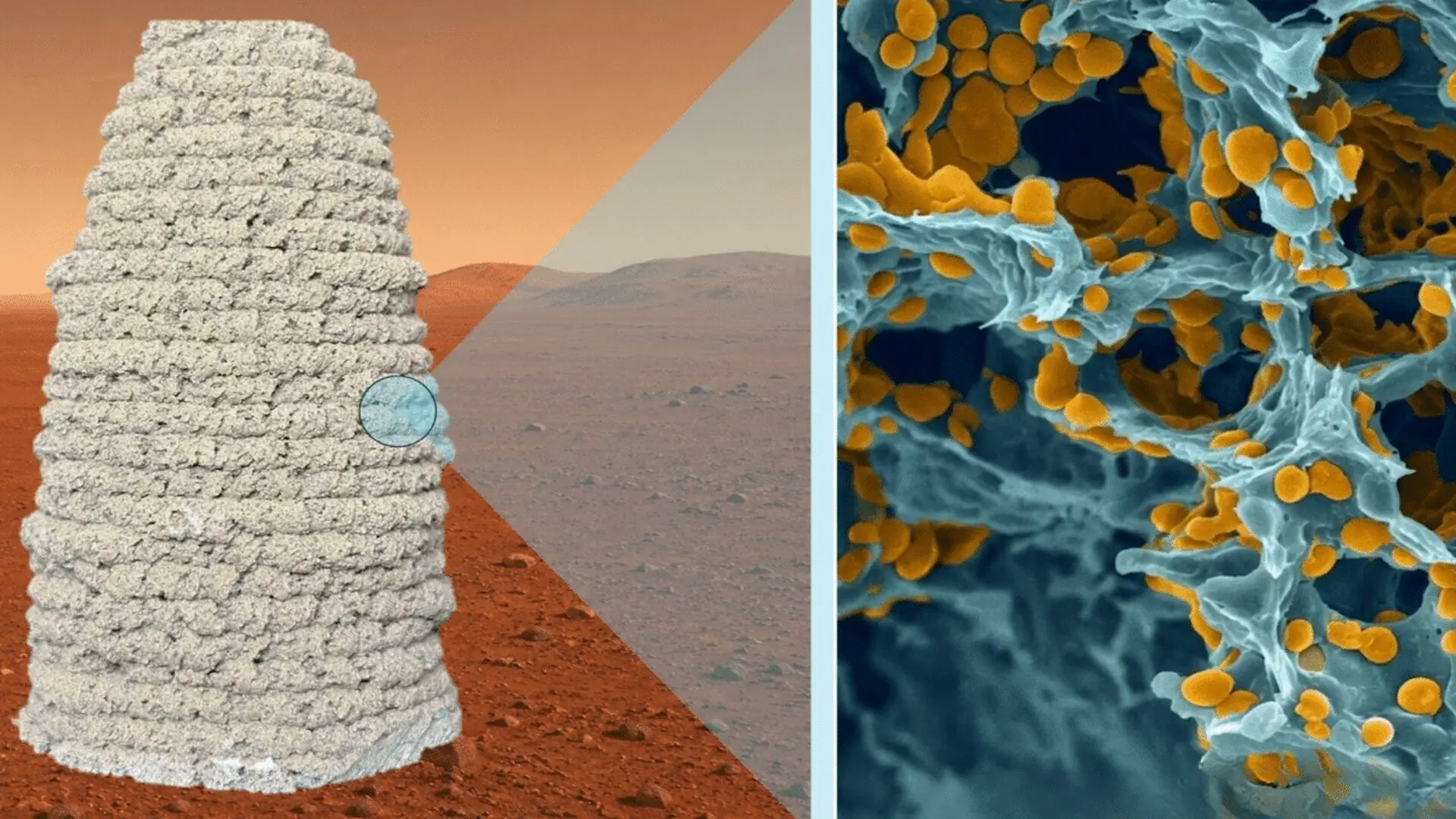
Engineers are looking toward the microscopic world to solve one of the greatest challenges of space exploration: how to build durable shelters on Mars without hauling massive quantities of supplies from Earth. A new study, published in the journal Chem Circularity, outlines a novel method for creating robust construction materials by mixing local Martian regolith with gelatin and specially engineered yeast cells.
Turning Martian Dust into Living Infrastructure
Establishing a foothold on the Red Planet is hampered by extreme conditions, including sub-zero temperatures, intense radiation, and a thin, unforgiving atmosphere. Traditional construction is impractical due to the exorbitant cost and logistical impossibility of transporting heavy concrete or steel across deep space. To bypass this, researchers at The Hong Kong University of Science and Technology have turned to biotechnology.
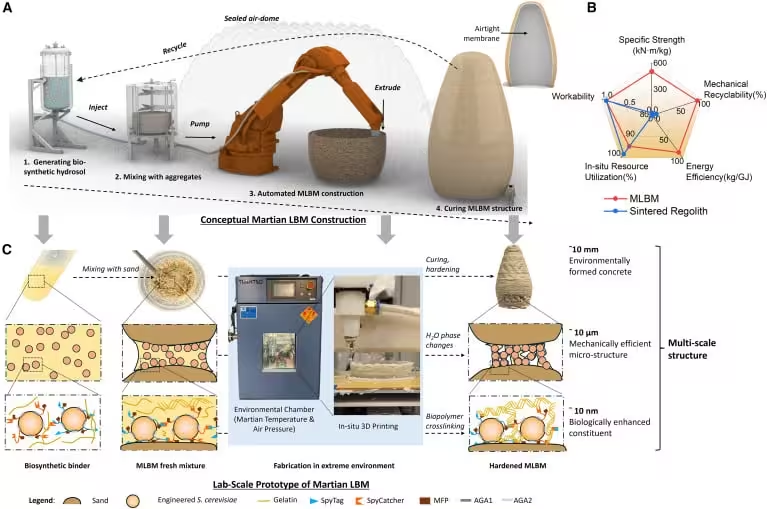
The team’s approach utilizes Martian-like sand as a base, which is then bound together by a biological matrix. By engineering yeast to express highly adhesive proteins—drawing inspiration from the way mussels anchor themselves to wet rocks—the scientists created a mixture that functions as a structural adhesive. Gelatin serves as the secondary support, providing a medium for the yeast to grow and harden the mineral components.
According to civil engineer and lead author Jishen Qiu, the inspiration for this synthesis came from the peculiar properties of freeze-dried foods. “Mars’s extremely low temperature and pressure create conditions similar to freeze-drying,” Qiu explained. By leveraging these environmental factors, the team found they could transform a viscous mixture into a solid, porous structure similar to foam.
Putting Bioconcrete to the Test
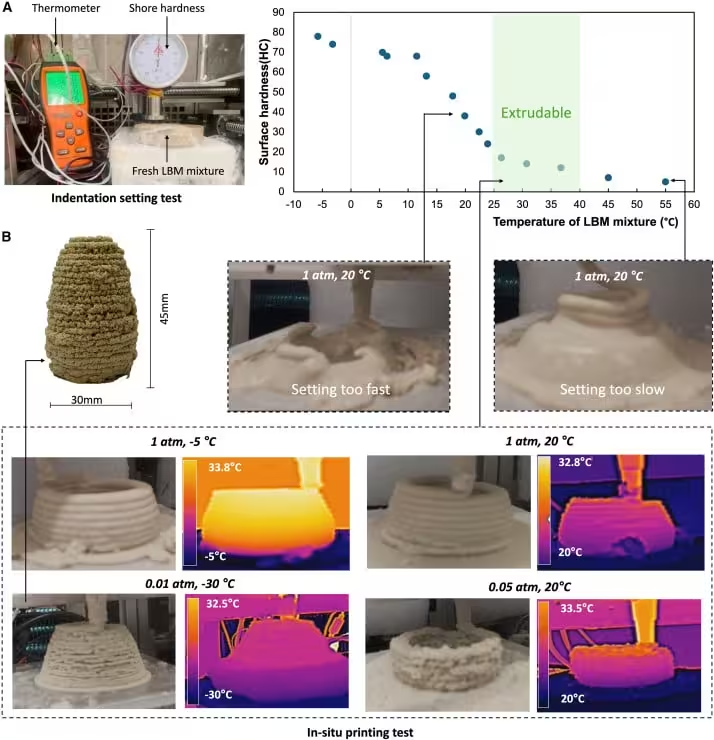
The resulting material is designed for additive manufacturing. It can be extruded through a 3D printer nozzle to create intricate, layer-by-layer designs. Once printed, the simulated Martian environment triggers the evaporation of internal moisture, leaving behind a cured, lightweight shell.
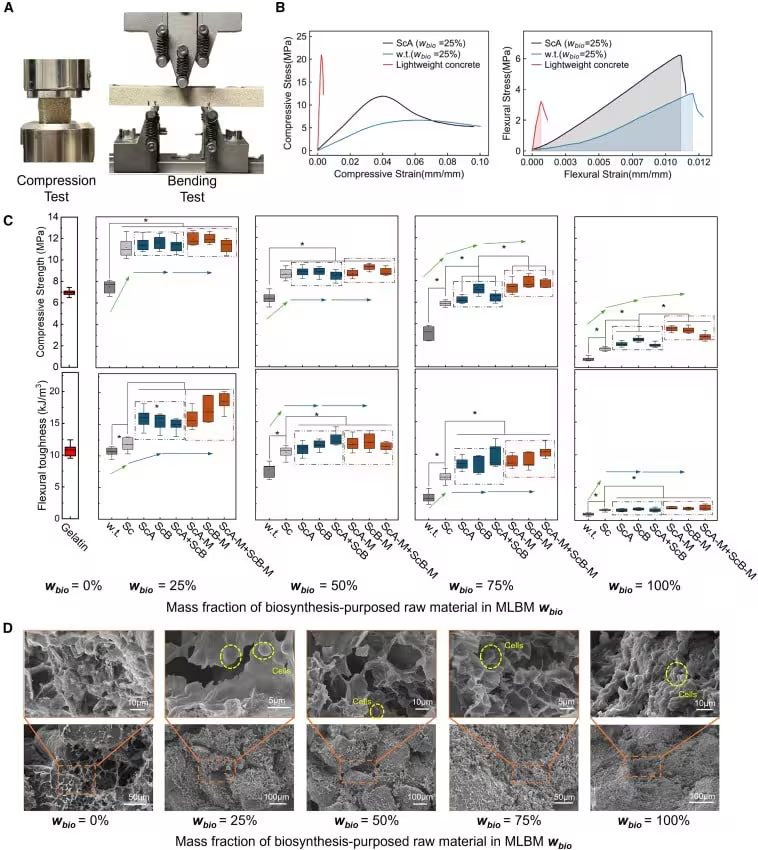
In laboratory trials simulating the Martian surface, the team produced small-scale structures measuring roughly 45 millimeters by 30 millimeters. Despite their modest size, these samples demonstrated impressive mechanical integrity, achieving a compressive strength of 10 to 12 megapascals—comparable to low-grade concrete. Qiu notes that given Mars’s lower gravity, this material is theoretically robust enough to support multistory structures, offering a significant advantage over heavier, traditional materials.
A Sustainable Path for Deep Space Habitats
The true utility of this biological approach lies in its potential for a closed-loop system. Unlike heavy shipments of steel or concrete, which are consumed upon use, the yeast-based material is regenerative. If a structure is damaged or becomes obsolete, the biological components could theoretically be recovered and reused for new construction projects. As long as the yeast remains viable, it can be cultivated and multiplied on-site.
This paradigm shift reflects a growing trend in aerospace research: treating living organisms not merely as passengers, but as essential tools for resource management and manufacturing in extreme environments. However, the path to a fully realized Martian habitat remains complex. Current prototypes depend on some materials brought from Earth, such as the initial gelatin base, and researchers must still verify that the yeast can maintain its viability under the harsh, actual conditions of the Martian surface.
While large-scale implementation would still require a significant logistical footprint to establish initial operations, the ability to manufacture building materials from local regolith is a critical step toward permanent human residency on other planets. For Qiu, the evidence suggests no fundamental physical barriers to this approach. “It would surprise me if materials for future Martian engineering will not be as diverse as those used in Earth engineering,” Qiu said, “and biology will certainly contribute.”
This article has been fact checked for accuracy, with information verified against reputable sources. Learn more about us and our editorial process.
Last reviewed on .
Article history
- Latest version
Cite this page:
- Posted by Rohan Kumar