Vellore Institute of Technology Researchers Reveal How Microagro Wastes Clean Up Toxic Water Spills
Agro-industrial waste substrates fuel microbial biosurfactant production to degrade up to 91% of engine oil pollutants.
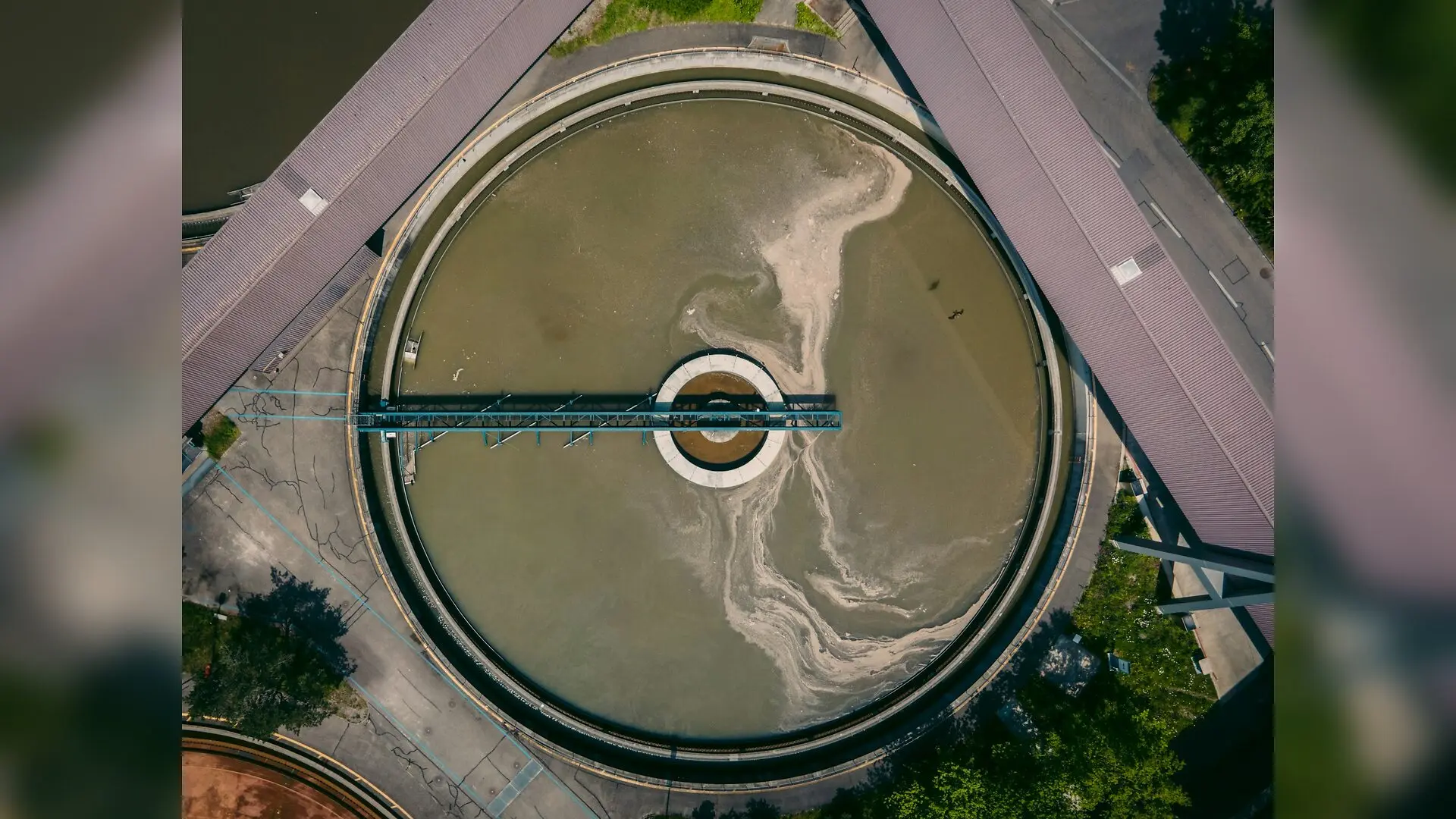
Microbial biosurfactants produced from agro-industrial waste streams can degrade up to 91.3% of stubborn engine oil pollutants while simultaneously cutting down the high financial and environmental costs of water purification. Transforming discarded materials like molasses, fruit peels, and waste cooking oil into powerful surface-active compounds bridges the gap between waste management and advanced environmental remediation, according to a comprehensive review published in Frontiers in Bioengineering and Biotechnology.
How Can Microbes Turn Food Scraps Into Powerful Cleansing Agents?
Biosurfactants are naturally occurring organic compounds synthesized by bacteria, yeasts, and fungi that possess both water-loving and oil-loving properties. This unique amphiphilic structure allows them to lower surface tension, form microscopic aggregates called micelles, and emulsify oily pollutants that normally resist standard treatment. Researchers Solomon A and Vishnu D from the Vellore Institute of Technology highlight that while conventional synthetic surfactants are effective, they often generate secondary pollution and carry high operating costs. Microbial agents offer a biodegradable, non-toxic alternative that safely integrates into biological wastewater systems.
For years, commercial biosurfactant production has remained economically unviable due to the high cost of refined carbon substrates. Scientists now focus on utilizing cheap, renewable agro-industrial residues, including sugarcane molasses, corn steep liquor, brewery waste, and crude glycerol. These waste-derived feedstocks supply the essential sugars and nutrients required for microbial growth. By converting low-value garbage into high-value biochemicals, industries can foster a circular bioeconomy while addressing escalating water pollution challenges.
What Makes Submerged Fermentation the Preferred Industrial Choice?
Submerged fermentation serves as the primary liquid-phase production method because it allows precise control over critical operating parameters like pH, aeration, temperature, and agitation. Microbes such as Pseudomonas aeruginosa and Bacillus subtilis thrive in these aqueous environments, efficiently converting complex agro-waste hydrolysates into glycolipids and lipopeptides. For instance, specific bacterial strains cultivated on raw orange peel extract can yield up to 3.7 grams per liter of rhamnolipids while simultaneously removing toxic lead ions through biosorption.
Solid-state fermentation offers an alternative by utilizing solid residues with minimal water usage, but it suffers from poor heat and mass transfer limitations. Submerged systems simplify downstream processing by enabling straightforward cell separation and foam fractionation. This scalability makes liquid cultivation the most practical route for large-scale industrial manufacturing of bio-based surfactants.
Why Is Downstream Recovery the Biggest Financial Hurdle?
Downstream processing and purification often account for up to 80% of total production expenses, restricting wider commercial adoption. Fermentation broths derived from agro-wastes contain residual cells, proteins, and lipids that complicate the isolation of target compounds. Traditional recovery relies on acid-induced precipitation followed by solvent extraction, achieving purification efficiencies ranging from 60% to over 98%. However, high solvent consumption creates environmental footprints that counteract the green benefits of bio-based production.
To overcome these economic and ecological barriers, researchers are exploring advanced separation technologies like foam fractionation and ultrafiltration. Foam fractionation exploits the natural surface activity of biosurfactants, concentrating them at gas-liquid interfaces without heavy chemical inputs. Ultrafiltration membranes can concentrate biomolecules and remove impurities across large fluid volumes, though membrane fouling remains a persistent operational challenge.
Can Integrated Systems Clean Up Toxic Heavy Metals and Oil Spills?
Beyond breaking down organic waste, biosurfactants interact strongly with metal ions through complexation, chelation, ion exchange, and micelle-associated transport. Functional groups such as carboxyl, hydroxyl, and phosphate enable these molecules to capture toxic heavy metals like cadmium, chromium, nickel, mercury, and lead from contaminated waterways. Recent studies demonstrate that combining glycolipid-producing Pseudomonas azotoformans with synthesized zinc-selenium nanoparticles achieves over 91% degradation of used engine oil.
Despite these promising laboratory results, transition toward full-scale industrial application requires rigorous validation using real wastewater matrices rather than synthetic models. Life-cycle assessments and techno-economic analyses must also evaluate the complete production chain, including transport, pretreatment energy, and solvent recovery. Standardized performance metrics will ultimately determine whether bio-based agents can replace conventional synthetic chemicals in commercial wastewater treatment plants.
The research was published in Frontiers in bioengineering and biotechnology on November 28, 2026.
This article has been fact checked for accuracy, with information verified against reputable sources. Learn more about us and our editorial process.
Last reviewed on .
Article history
- Latest version
Cite this page:
- Posted by Robert Brown