Engineered Fungal Strains Cut Wall Growth By 42 Percent And Scale Up Enzyme Production To 3,000 Liters
Disrupting a single hydrophobin gene in filamentous fungi improves fluid dynamics and boosts industrial enzyme yield.
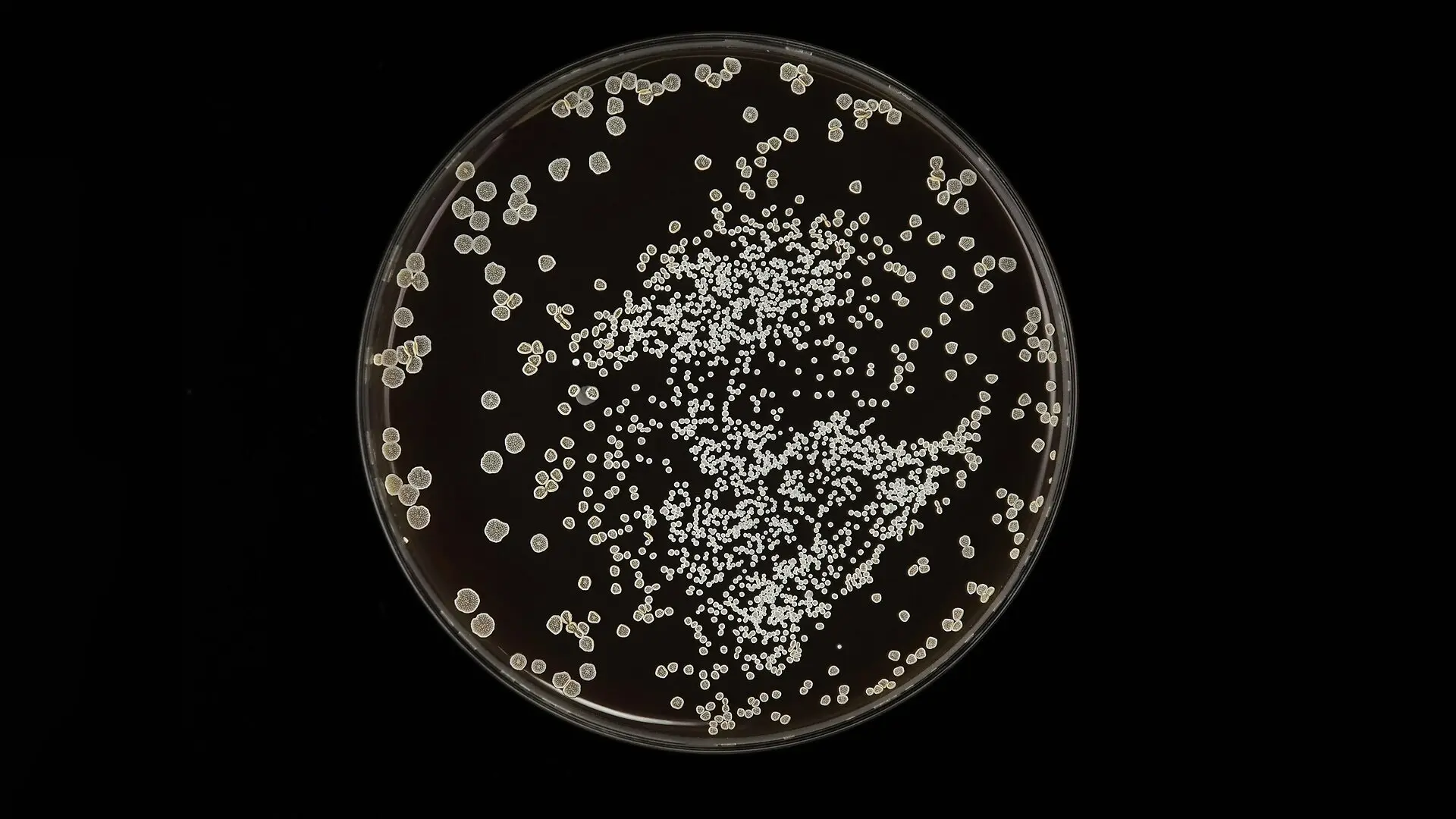
Genetically engineered fungal strains developed by Susukida and colleagues could solve long-standing industrial fermentation bottlenecks by slashing unwanted wall growth by 42% and successfully scaling up enzyme production to 3,000 liters. The research tackles major physical hurdles in biotechnology where filamentous fungi produce high-value products in large bioreactors.
Industrial fermentation relies heavily on filamentous fungi such as Aspergillus oryzae to manufacture enzymes and organic acids. However, high biomass concentrations inside commercial bioreactors often trigger severe operational problems. These include high broth viscosity, poor oxygen transfer, and the accumulation of dense crusts of mycelium known as wall growth. Such buildup clogs equipment, reduces working volume, and releases dead cells that lower overall process efficiency. Previously, researchers tackled some of these issues by disrupting specific cell wall polysaccharides to create dispersed hyphal strains that flow more easily. Yet, even with these improvements, significant wall growth persisted under high-cell-density conditions.
How Gene Disruption Stops Fungal Wall Growth
To overcome stubborn surface adhesion, the team targeted a small amphipathic protein family known as hydrophobins. Class 1 hydrophobins, including the RolA protein in Aspergillus oryzae, self-assemble into rigid, amyloid-like fibrils called rodlets that form hydrophobic outer layers. These structures help fungi stick tightly to solid surfaces and stabilize gas-liquid interfaces. The authors hypothesized that eliminating the rolA gene in an already dispersed fungal background would prevent biomass from attaching to reactor walls. They constructed a triple-modified strain lacking both specific polysaccharide biosynthesis pathways and the rolA gene, published in Frontiers in Bioengineering and Biotechnology, evaluating its performance across multiple scales.
Testing Fermentation Performance in Lab and Pilot Reactors
Laboratory evaluations in 4-liter bioreactors revealed striking operational advantages for the newly engineered strain. The dry weight of the wall growth dropped by 33% at 120 hours compared to the parental control strain. Because less material adhered to the vessel walls and internal baffles, the effective working volume of the culture liquid increased by 5%. Furthermore, xylanase activity, serving as a model recombinant enzyme, reached 10,111 units per milliliter, corresponding to a roughly 1.43-fold increase in productivity. The modified strain also exhibited faster initial growth, accelerating biomass accumulation and oxygen depletion during the early phases of fermentation.
Simulating Fluid Dynamics and Scale-Up Behavior
To understand how fluid behavior changes at commercial scales, the team used computational fluid dynamics models to simulate internal flow patterns. The simulations indicated that eliminating the surface hydrophobin reduced gas accumulation around the impeller shaft and improved liquid circulation. While vessel-averaged oxygen transfer rates remained comparable, the absence of RolA fostered more uniform flow patterns and milder local shear stress distribution. These rheological enhancements allowed the team to scale the process successfully from laboratory vessels up to 200-liter and 3,000-liter pilot bioreactors.
Maintaining Productivity in Large Industrial Vessels
Pilot-scale trials in the 3,000-liter bioreactor demonstrated that the engineered strain maintained stable enzyme productivity and mycelial dry weight comparable to smaller scales. Although larger reactors impose higher local shear rates due to increased impeller tip speeds, the strain tolerated these mechanical stresses without losing performance. The measured power consumption values matched computational simulations within an uncertainty error of 2.7% at the large scale, confirming the reliability of the scale-up model. These results point to a robust, scalable strategy for improving filamentous fungal fermentation in industrial biotechnology.
The research was published in Frontiers in bioengineering and biotechnology on November 27, 2026.
This article has been fact checked for accuracy, with information verified against reputable sources. Learn more about us and our editorial process.
Last reviewed on .
Article history
- Latest version
Cite this page:
- Posted by Rohan Kumar