Subordinate Rats Show Heightened Brain Coupling Despite Avoiding Effort
Brain wave recordings reveal that lower-ranking male rats exhibit stronger neural synchrony and higher cortical power when making cost-benefit choices.

Male Wistar rats occupying the bottom rung of a social hierarchy show heightened brain wave activity and stronger neural coupling when making choices, even when competing for resources is entirely removed from the equation. When faced with a cost-benefit puzzle pitting high rewards against physical barriers, subordinate animals consistently steer away from effortful payoffs, contrasting sharply with dominant peers.
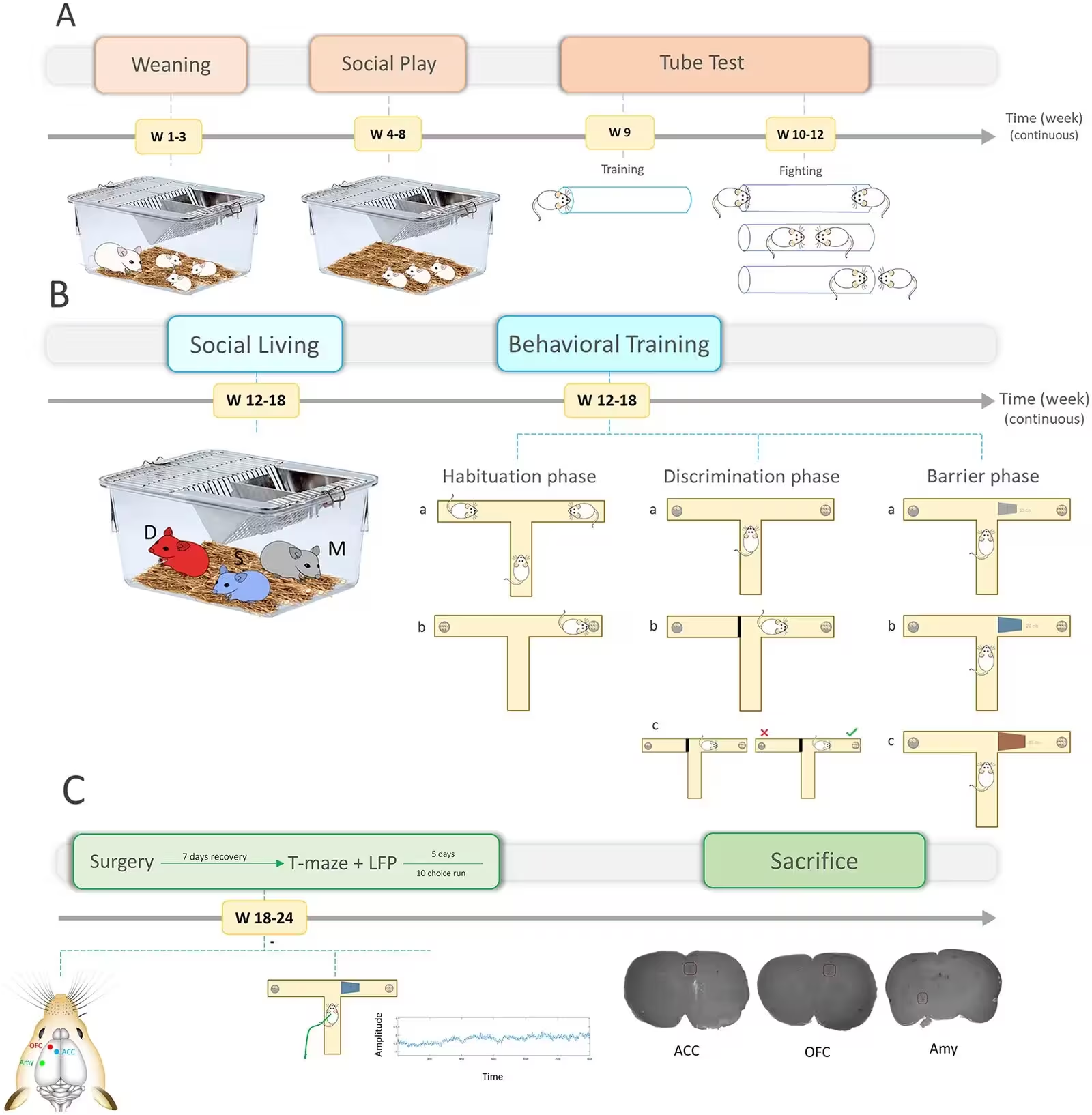
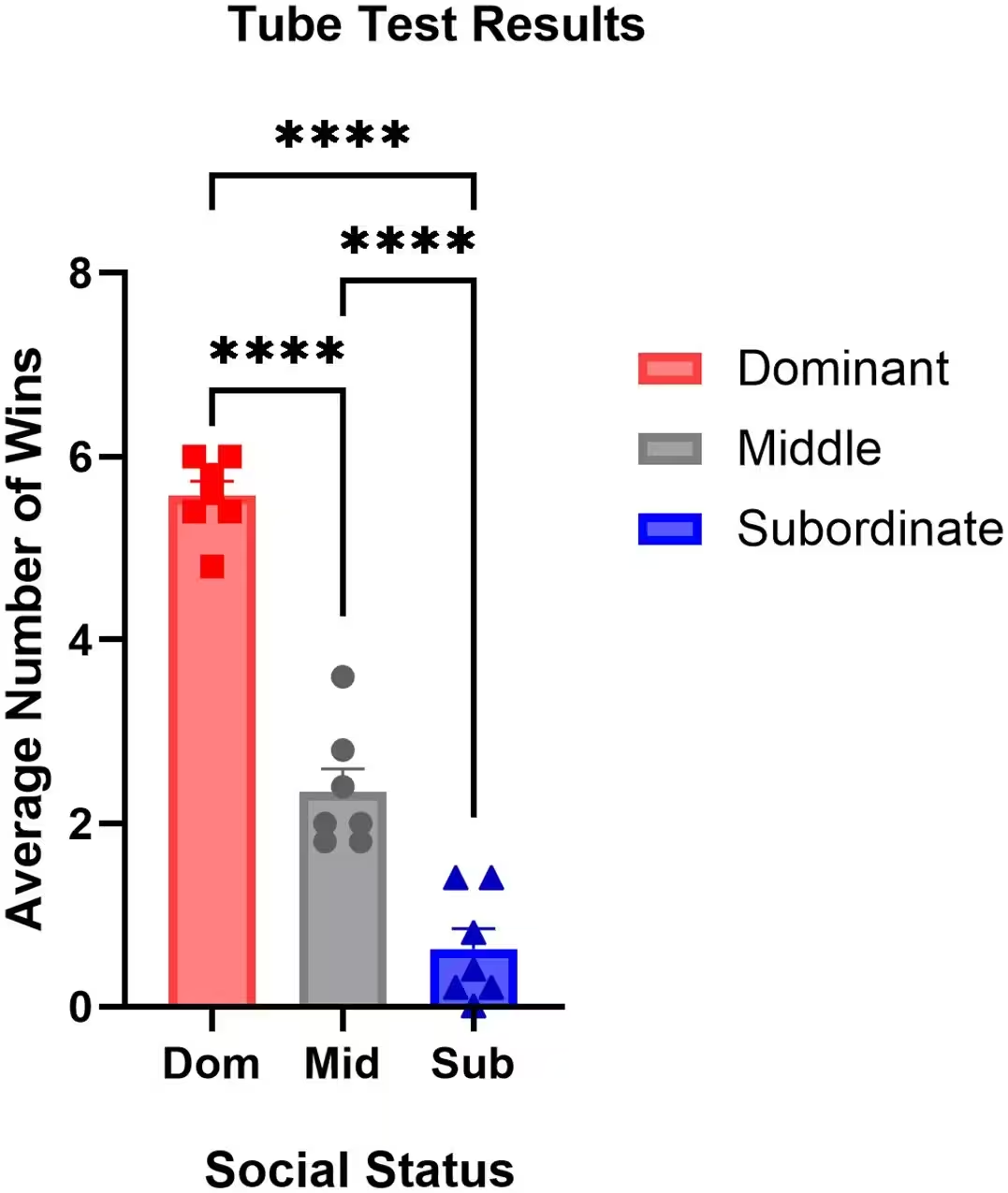
The study, published in PloS one, tracked twenty-one male Wistar rats divided into triads to investigate how social standing alters decision-making circuits. Researchers Ghazale Roshani, Soomaayeh Heysieattalab, and Farhad Farkhondeh Tale Navi assessed social hierarchies using a standard tube test, ranking animals as dominant, intermediate, or subordinate based on 5 days of competitive matchups.
How Hierarchy Shapes Cost-Benefit Choices
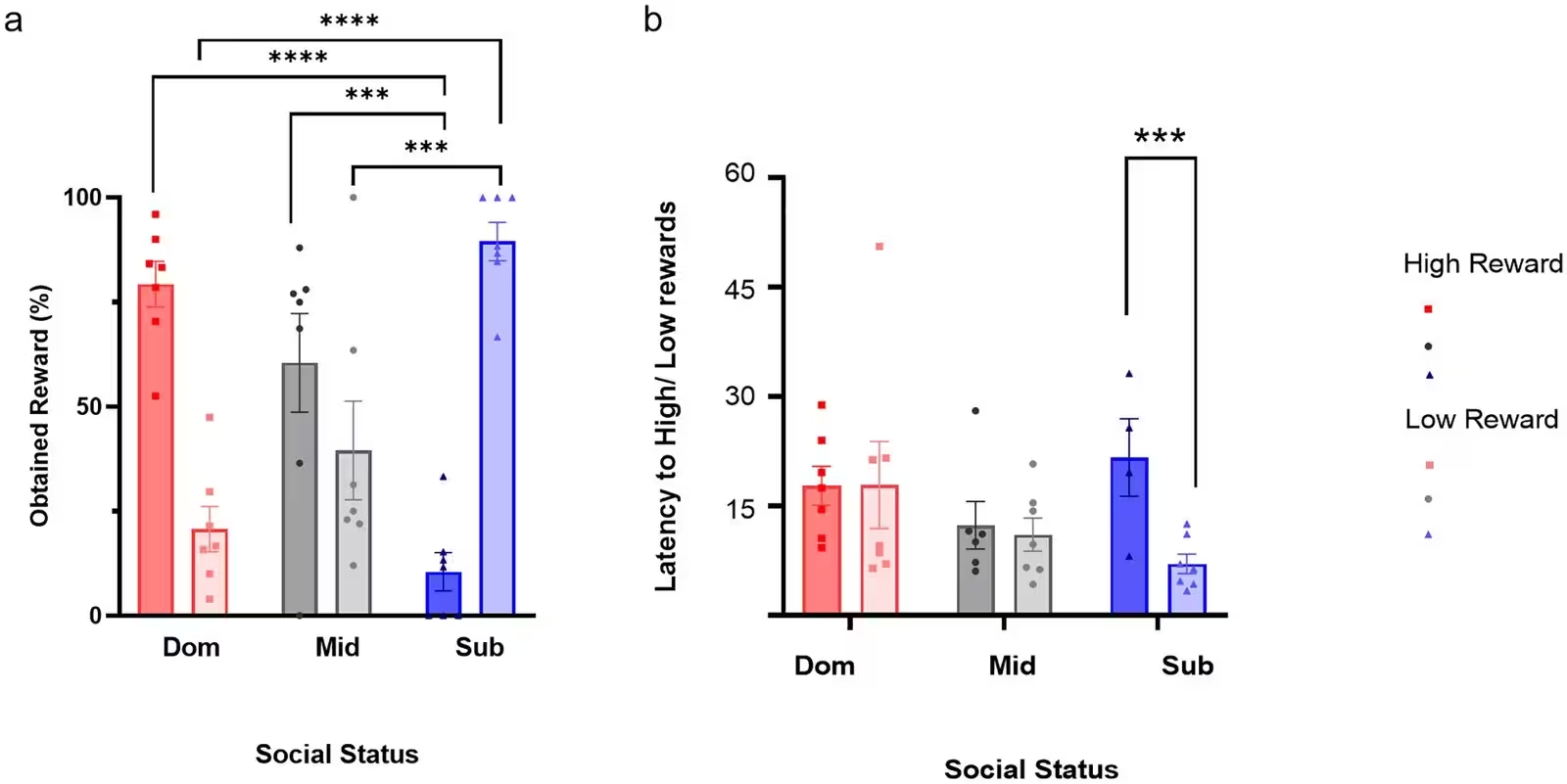
Following hierarchy establishment, the animals underwent training in a T-maze designed to evaluate effort-based decision-making. The maze required rats to choose between a high-reward option consisting of six popcorn pellets blocked by a 30-centimeter wire mesh barrier and a low-reward option featuring just two pellets with no barrier. While overall response latency showed no meaningful differences across ranks, the proportion of effortful choices varied dramatically.
Dominant rats selected the high-effort, high-reward arm in 79.27 percent of trials, whereas intermediate rats chose it 60.45 percent of the time. In stark contrast, subordinate animals opted for the demanding route in a mere 10.52 percent of trials, favoring the effortless alternative nearly 90 percent of the time. These behavioral divergences occurred during individual trials without any dominant conspecific present in the maze, suggesting that long-term social status leaves a lasting imprint on motivational processing.
Electrophysiological Recordings Reveal Hyperactive Cortical Circuits
To examine the neural underpinnings of these behavioral gaps, investigators recorded local field potentials simultaneously from three interconnected brain structures implicated in motivation and social behavior. These included the anterior cingulate cortex, which handles cost-benefit evaluation and cognitive control, the orbitofrontal cortex, responsible for updating reward values, and the amygdala, which processes emotional salience and social rank.
Spectral analysis demonstrated that subordinate rats exhibited significantly greater theta and high-gamma power across the anterior cingulate cortex, orbitofrontal cortex, and amygdala compared to dominant animals. Subordinate subjects also displayed elevated low-beta power in several of these target regions. These elevated electrical signatures point to heightened neural engagement when lower-ranking animals weigh their options.
Frequency-Specific Coherence Across Neural Pathways
Measuring functional connectivity through magnitude-squared coherence revealed complex patterns of neural synchronization between brain regions. Subordinate rats generally demonstrated greater low-beta and high-gamma coherence across the orbitofrontal-amygdala, orbitofrontal-anterior cingulate, and anterior cingulate-amygdala pathways. Conversely, dominant animals showed stronger theta-band coherence within specific cortical-limbic connections.
Exploratory correlation analyses linked specific electrophysiological measures with behavioral output, particularly involving low-beta and high-gamma activity, though these relationships shifted depending on social rank and neural pathway. The authors emphasize that while lower neural power in dominant animals could theoretically align with neural efficiency models where successful circuits require less activation, such interpretations remain speculative without direct physiological tracking.
Study Limitations and Future Directions
Several limitations temper the findings, including the observational nature of the social hierarchies. Because social rank was not experimentally manipulated, researchers cannot definitively separate the direct consequences of subordination from pre-existing behavioral traits that may have driven rank formation in the first place. Furthermore, neurochemical factors such as dopaminergic signaling and stress-related hormones like glucocorticoids were not directly measured.
Future research combining targeted social status manipulation with longitudinal monitoring of neuroendocrine factors will be necessary to untangle how social experience reshapes the brain. Nevertheless, the current findings establish that hierarchical standing alters the neural dynamics of cost-benefit calculations long after direct social competition has ended.
The research was published in PloS one on November 16, 2026.
This article has been fact checked for accuracy, with information verified against reputable sources. Learn more about us and our editorial process.
Last reviewed on .
Article history
- Latest version
Reference(s)
- Roshani, Ghazale., et al. “Struggling minds in lower ranks: Stronger ACC–OFC–amygdala coupling despite reduced selection of effortful options in subordinate male rats.” PLOS One, vol. 21, no. 11, November 16, 2026, pp. e0362370 Public Library of Science (PLoS), doi: 10.1371/journal.pone.0362370. <https://doi.org/10.1371/journal.pone.0362370>.
Cite this page:
- Posted by Priya Sharma