Why Bats Can Carry Deadly Viruses Without Getting Sick And What It Means For Us
An international team of scientists outlines a major new research agenda to decode bat immunity, microbial coinfections, and environmental stressors before the next global health threat emerges.
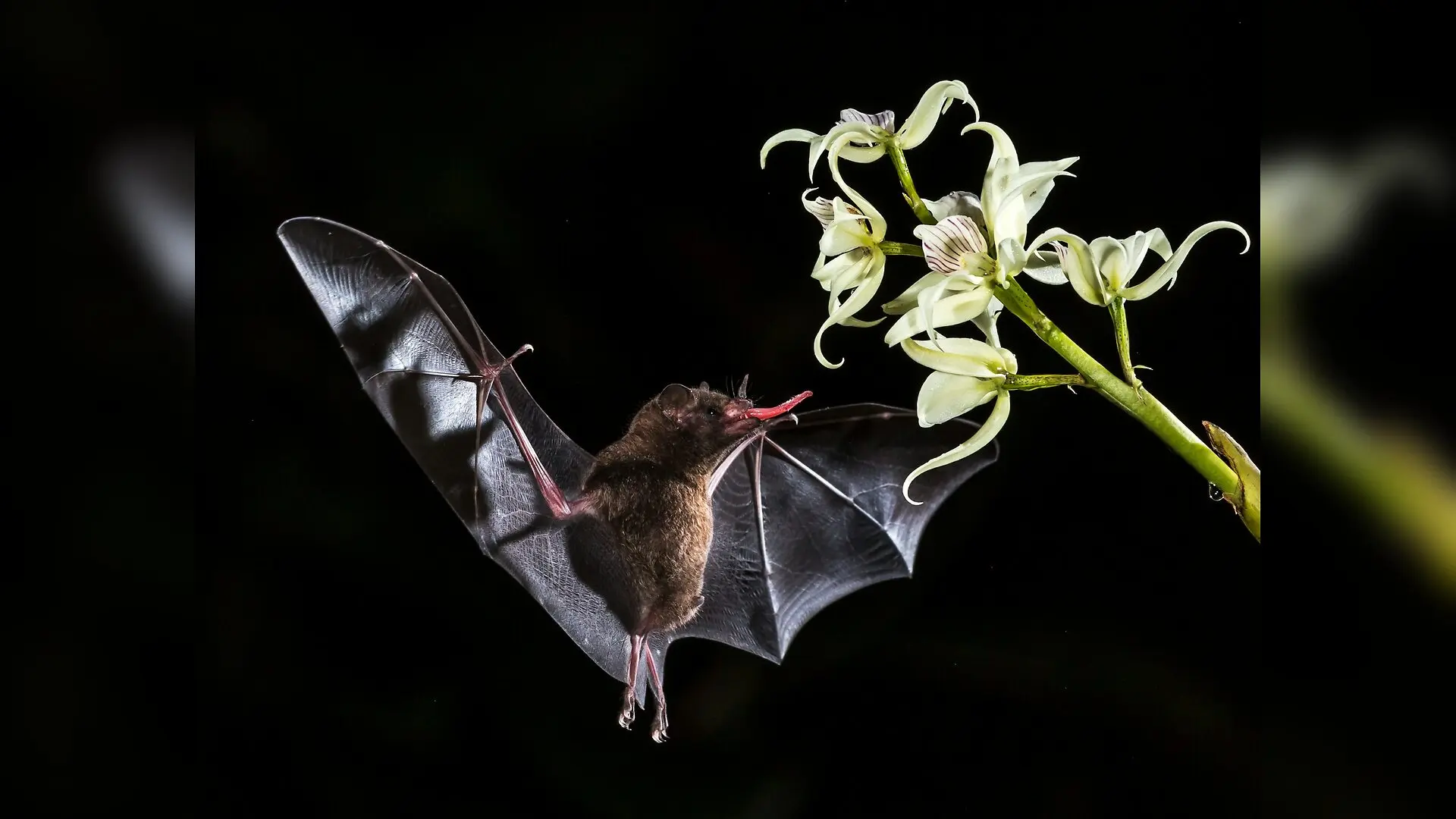
Bats serve as natural reservoir hosts for dangerous viruses like Nipah and Marburg, yet they rarely show signs of illness themselves. Researchers are now calling for a major shift in how science studies these flying mammals, moving beyond a narrow focus on viruses to examine the entire spectrum of microbes that inhabit them.
Following a specialized gathering of experts in July 2025, an international team led by scientists from the University of California, Berkeley, published in Nature Communications outlining five critical research questions to guide the next decade of discovery in bat infectious disease, a field known as batID. The authors argue that understanding why bats tolerate severe infections without dying could unlock powerful new strategies for pandemic prevention and wildlife conservation.
Are Bats Uniquely Tolerant to Dangerous Pathogens?
For decades, scientific literature has lauded bats as uniquely tolerant hosts of viral infections. In biology, tolerance means a host limits the disease or tissue damage caused by a microbe without actively trying to clear the microbial burden from its body. However, the authors point out that much of this tolerance is actually assumed based on an apparent absence of clinical disease rather than precise mathematical measurements.
While bats do possess specialized genetic adjustments that dampen runaway inflammation, such as modified gene families that reduce immune overreaction, their responses vary widely depending on the pathogen. For instance, while they often host intracellular viruses with few symptoms, some species suffer severe mortality from fungal infections like white-nose syndrome or certain bacterial agents. Quantifying host fitness across different viral loads remains a major blind spot that future studies must address.
How Do Coinfections Change the Rules of Host Survival?
Most laboratory research examines a single microbe interacting with a single host, but wild animals regularly host multiple infections at the same time. Simultaneous infections, known as coinfections, or subsequent infections, known as superinfections, can radically alter how a disease progresses. When a bat carries multiple viral strains, it creates biological opportunities for genetic recombination, potentially giving rise to novel viral diversity.
The sequence in which infections arrive also matters immensely for whether a microbe persists or gets cleared by the immune system. For example, historical data from little brown bats suggests that a prior coronavirus infection can influence subsequent fungal colonization, hinting at complex interactions across different biological scales.
What Role Do Gut Microbes Play in Immune Defense?
The bacterial communities living inside the digestive tract, known as the microbiome, play a monumental role in shaping immune system development in humans and other mammals. Interestingly, studies show that bat gastrointestinal tracts harbor unusually low bacterial biomass dominated by specific aerobic bacteria. This peculiar structure likely evolved as an adaptation to powered flight, which requires rapid digestion and shortened intestinal tracts.
Because these gut microbiomes are more transient and diet-driven than those of typical mammals, environmental changes can easily disrupt them. Researchers note that fecal microbiota transplants from bats into laboratory mice have successfully helped mice avoid pathological inflammation during influenza infections, proving that the bat microbiome holds functional secrets worth decoding.
How Do Microbes Persist in Slow-Reproducing Populations?
One of the longest-standing puzzles in disease ecology is how pathogens survive in wild bat populations given that many species have very low birth rates. Traditional epidemic models rely on a steady supply of new, susceptible young animals to keep a virus alive. Because bats produce few offspring each year, mathematical models often fail to explain long-term virus persistence.
To solve this mystery, scientists are exploring alternative mechanisms such as viral latency, where a pathogen goes quiet inside a host before reactivating later, and immune waning, where protective antibodies fade over time. Seasonal migrations and large, multi-species roosts also help bridge the gap, allowing infections to circulate continuously through regional metapopulations.
How Does Environmental Change Accelerate Spillover Risks?
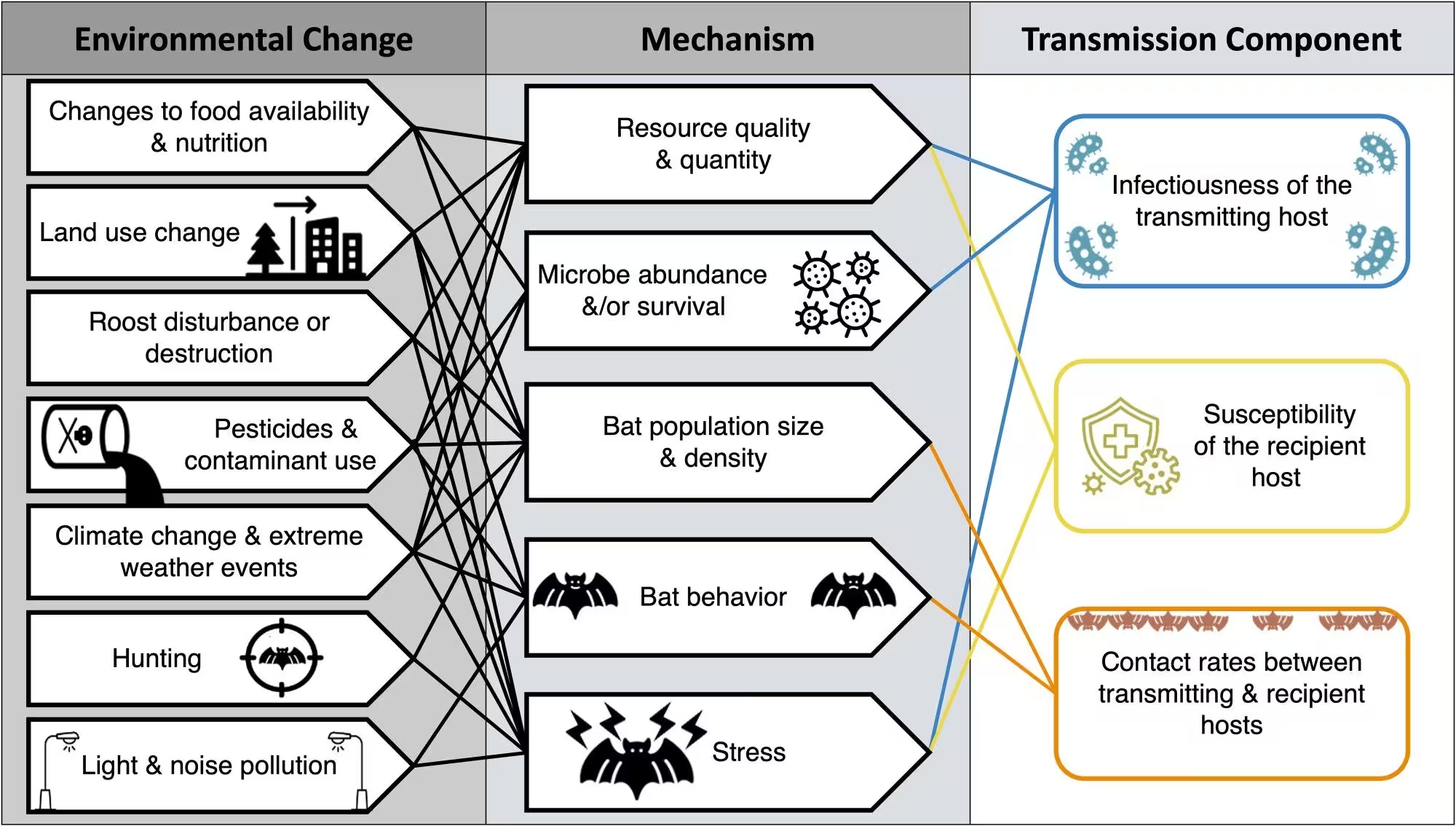
Human activities are rapidly altering natural habitats, and environmental stressors can heavily influence how microbes transmit between animals. When food sources become scarce due to deforestation or climate extremes, physiological stress can cause bats to shed higher concentrations of viral pathogens in their urine and waste. Toxicant exposure, such as heavy metal accumulation from polluted landscapes, further complicates immune function.
The research team emphasizes that future investigations must combine longitudinal field monitoring with controlled laboratory experiments to establish clear biological baselines. By standardizing how scientists measure environmental stress, immune health, and pathogen load, the global scientific community hopes to outpace emerging zoonotic threats before the next international symposium convenes.
The research was published in Nature communications on November 23, 2026.
This article has been fact checked for accuracy, with information verified against reputable sources. Learn more about us and our editorial process.
Last reviewed on .
Article history
- Latest version
Reference(s)
- Kettenburg, Gwenddolen., et al. “Prioritizing the next decade of research in bat infectious disease (batID).” Nature Communications, vol. 17, no. 1, November 23, 2026 Springer Science and Business Media LLC, doi: 10.1038/s41467-026-79693-1. <https://doi.org/10.1038/s41467-026-79693-1>.
Cite this page:
- Posted by Hassan Raza