Ancient Children Shaped Clay Figurines 15,000 Years Ago
Fingerprints preserved in prehistoric miniature sculptures push the roots of complex human art deep into the hunter-gatherer era.
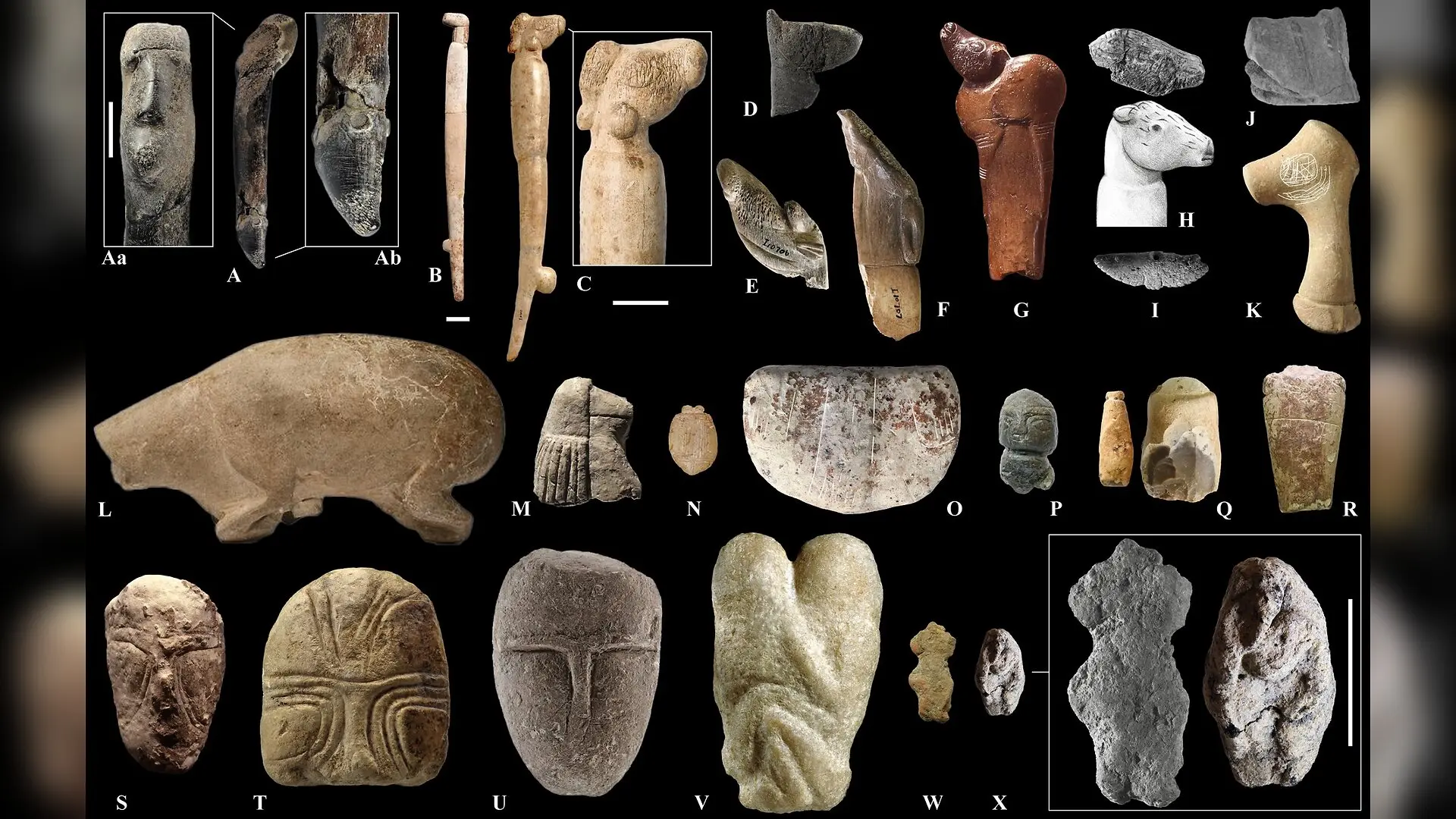
Ancient children shaped clay figurines in Middle Eastern settlements 15,000 years ago, pushing the roots of human symbolic art back deep into the hunter-gatherer era. Researchers analyzing tiny sculpted artifacts from three prehistoric sites in Israel discovered that these fragile pieces preserve the actual fingerprints of their makers, including youngsters under the age of ten.
The new findings challenge a long-standing archaeological rule stating that complex clay sculpting and symbolic traditions only blossomed much later with the advent of farming during the Neolithic period. Instead, the data reveals a rich, multigenerational artistic culture flourishing during the Natufian period, a transitional era when human groups first settled down into permanent villages rather than roaming as nomadic foragers.
An international team of researchers detailed their discoveries in a study published in PLOS One, examining a haul of 154 figurative artifacts and 139 clay cylinders unearthed from the sites of el-Wad Terrace, Hayonim Terrace, and Eynan-Mallaha. These objects had previously been overlooked or mistaken for simple lumps of heated sediment related to pigment production.
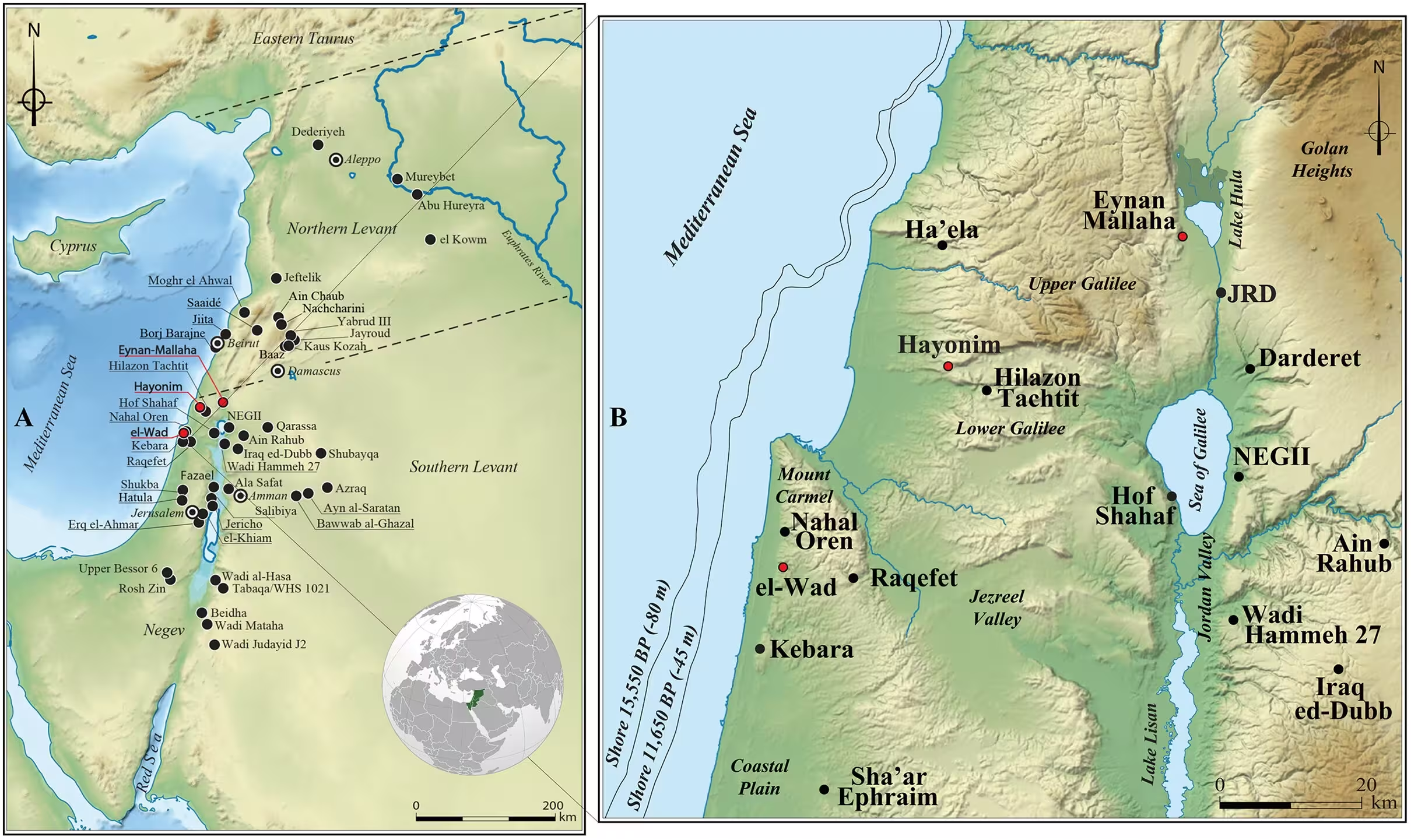
What the Prehistoric Miniatures Depict
The recovered collection spans three distinct phases of the Natufian culture, lasting from roughly 15,000 to 11,650 years ago. Among the tiny sculptures are 11 ornithomorphic, or bird-like, representations, two artiodactyl figures representing hoofed mammals like gazelles, and two anthropomorphic pieces depicting human features.
Measuring mostly less than two centimeters in size, the bird figurines show striking attention to anatomical detail. One complete final Natufian specimen features delicate parallel incisions mimicking the folded wings and tail feathers of a falconiform bird of prey. Another early Natufian piece captures the posture of a surface-feeding duck with its neck curved downward, mimicking a courtship display.
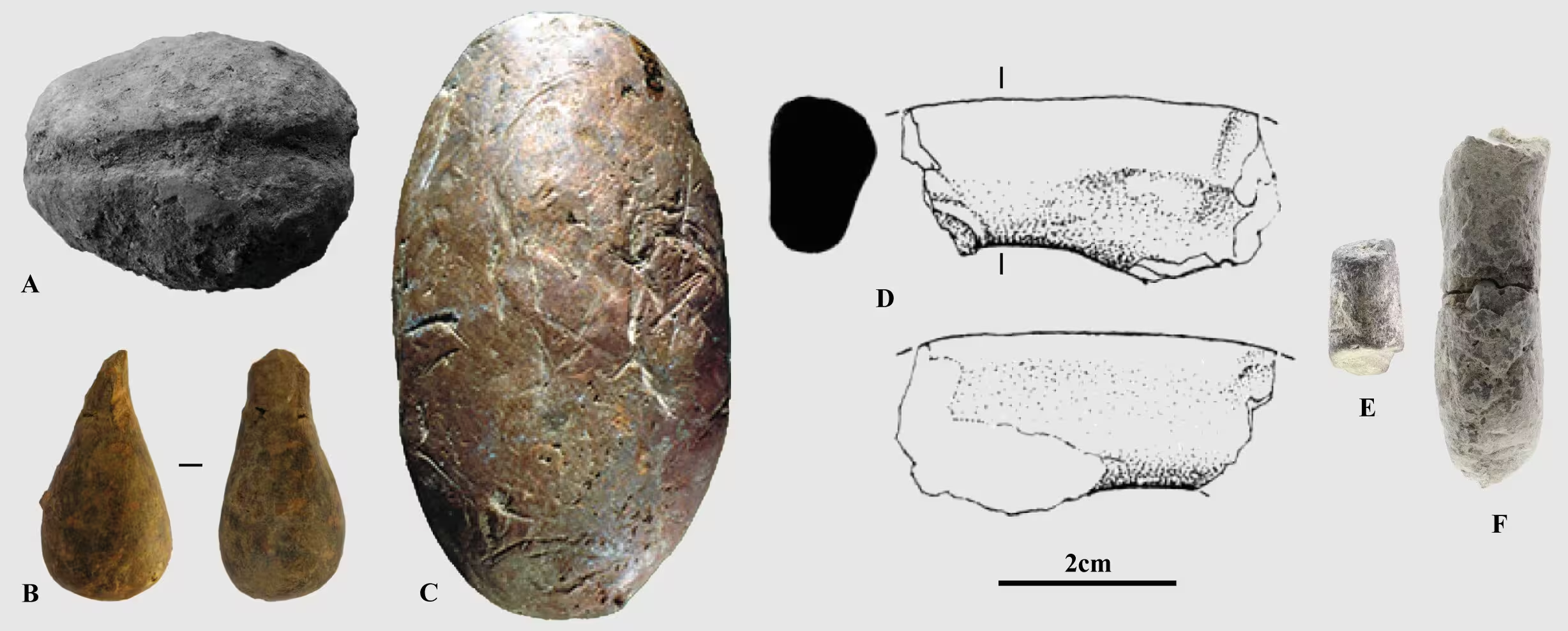
The human-made objects were crafted through an additive process, often starting with a hand-rolled clay core and building up layers. Many of the items were colored using an iron-oxide-rich red clay slip known as an engobe, applied with finger smoothing and sometimes stenciled with plant fibers to create striking geometric patterns.
Detecting Ancient Hands Through Fingerprints
By measuring the density of epidermal ridges on preserved fingerprints left in the wet clay, the authors reconstructed the demographic makeup of the prehistoric artists. This paleodermatoglyphic analysis revealed a wide distribution of ridge breadths, indicating that individuals of varying ages and sexes participated in shaping the items.
At the Eynan-Mallaha site, researchers even identified a direct sequence of interactions on a single anthropomorphic figurine. An adult female first left a vertical fingerprint on the back of the torso before a pre-pubescent child pressed a transverse print directly over it, capturing a rare moment of hands-on generational knowledge transmission.
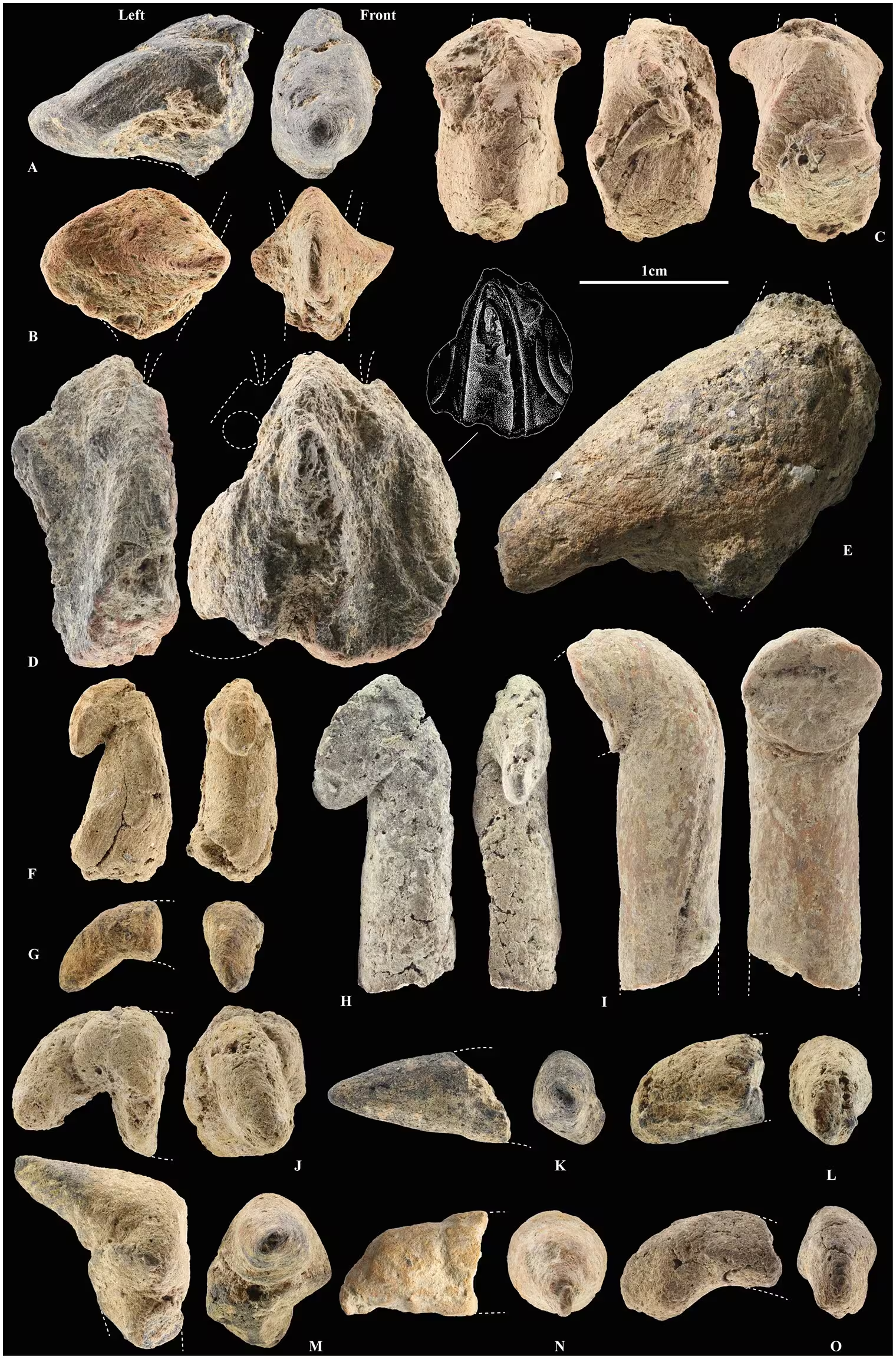
The presence of children’s fingerprints on the actual shaping and coloring stages suggests youngsters were active participants rather than casual bystanders. At some locations like Hayonim Terrace and Eynan-Mallaha, adult males appeared absent from the clay-working record, while at el-Wad Terrace, adult male prints were clearly identified on larger cylindrical pieces.
Spatial Distribution Inside Prehistoric Dwellings
Spatial analysis at Eynan-Mallaha provided a rare window into how these symbolic objects functioned within daily domestic spaces. During the early Natufian occupation, figurines and cylinders coexisted freely within dwelling floors alongside everyday domestic debris and ritual animal deposits.
In one striking instance, a duck-like clay figurine was discovered tucked directly inside a central fireplace amidst a dense cluster of calcinated mallard bones bearing cut marks from feather extraction. The researchers suggest the artifact may have been deliberately fired or discarded in a ritual pyrotechnical event after thermal shock cracked it during drying.
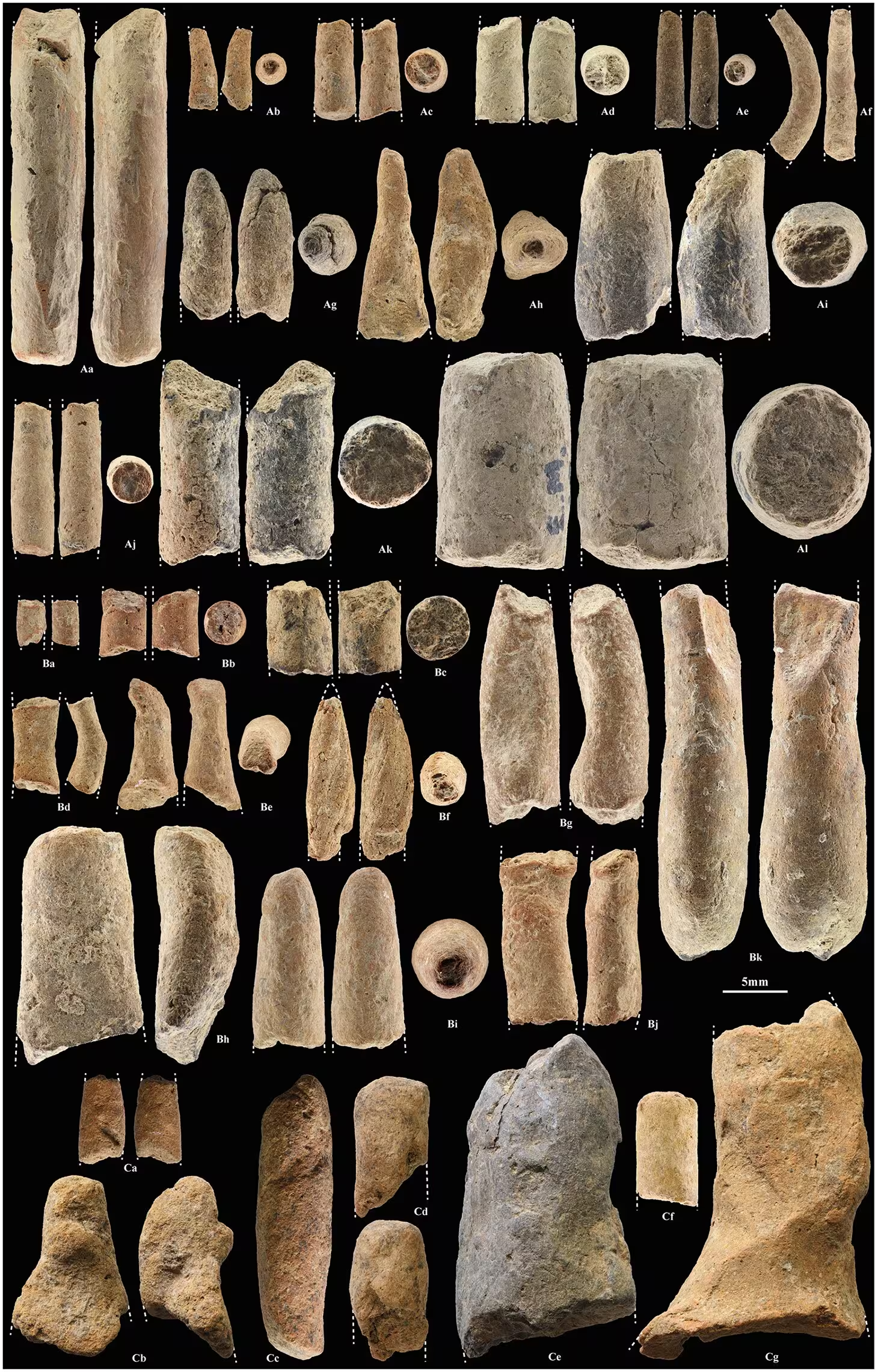
By the final Natufian phase, however, the spatial distribution shifted. Figurines were largely absent from standard living shelters and instead concentrated in specialized architectural structures dedicated to food preparation and pyrotechnic tasks.
The sheer scale of this newly recognized tradition demonstrates that complex symbolic expression, narrative imagery, and composite material crafting were firmly established millennia before farming villages dotted the landscape.
The research was published in PLOS One on November 11, 2026.
This article has been fact checked for accuracy, with information verified against reputable sources. Learn more about us and our editorial process.
Last reviewed on .
Article history
- Latest version
Reference(s)
- Davin, Laurent., et al. “Modelling symbols among the first-sedentary communities: Emergence of clay figurines in Epipaleolithic Southwest Asia.” PLOS One, vol. 21, no. 11, November 11, 2026, pp. e0360388 Public Library of Science (PLoS), doi: 10.1371/journal.pone.0360388. <https://doi.org/10.1371/journal.pone.0360388>.
Cite this page:
- Posted by Hassan Raza