New Mathematical Model Tracks Four Gene Therapy Targets Inside Single Droplets
An advanced statistical framework resolves complex droplet digital PCR data to quantify DNA integrity in viral and non-viral gene therapies.
New statistical modeling can now track four distinct genetic targets simultaneously within a single microscopic droplet of fluid, solving a major bottleneck in manufacturing gene therapies. Gene therapy relies on delivering precise genetic instructions inside viral shells or lipid nanoparticles, but manufacturing processes routinely produce broken, truncated, or incomplete DNA sequences alongside functional ones.
To ensure these treatments are both safe and effective, researchers need precise ways to measure structural integrity inside thousands of independent microscopic reactions. Described in a study published in PLOS One, the new mathematical framework adapts a Poisson-multinomial model to evaluate four-channel droplet digital PCR assays, known as dPCR, which partition DNA templates across thousands of nanoscale wells to count targets with high sensitivity.
How Four-Target Droplet Partitioning Operates
Droplet digital PCR works by diluting a DNA sample and splitting it into approximately 20,000 independent microscopic droplets so that most compartments contain either a single molecule or none at all. When fluorescent probes bind to specific target regions, individual compartments light up to show a binary positive or negative signal. While older setups typically tracked only two regions at once to test if opposite ends of a gene were linked together, expanding to four targets exponentially increases the complexity of the data.

The research team, consisting of scientists from Biogen including Lauren Tereshko, Matthew Ryals, Cullen Mason, Romi Admanit, and Jake Gagnon, designed quadplex assays targeting four distinct segments of a lentiviral plasmid. These targeted the cytomegalovirus promoter, the enhanced green fluorescent protein cargo, and resistance genes for puromycin and ampicillin. Because a four-channel instrument generates sixteen possible cluster combinations of fluorescence signals, standard software calculations cannot properly account for all the ways multiple targets can co-occupy a single droplet.
Decoding Ten Unique Fragment Combinations
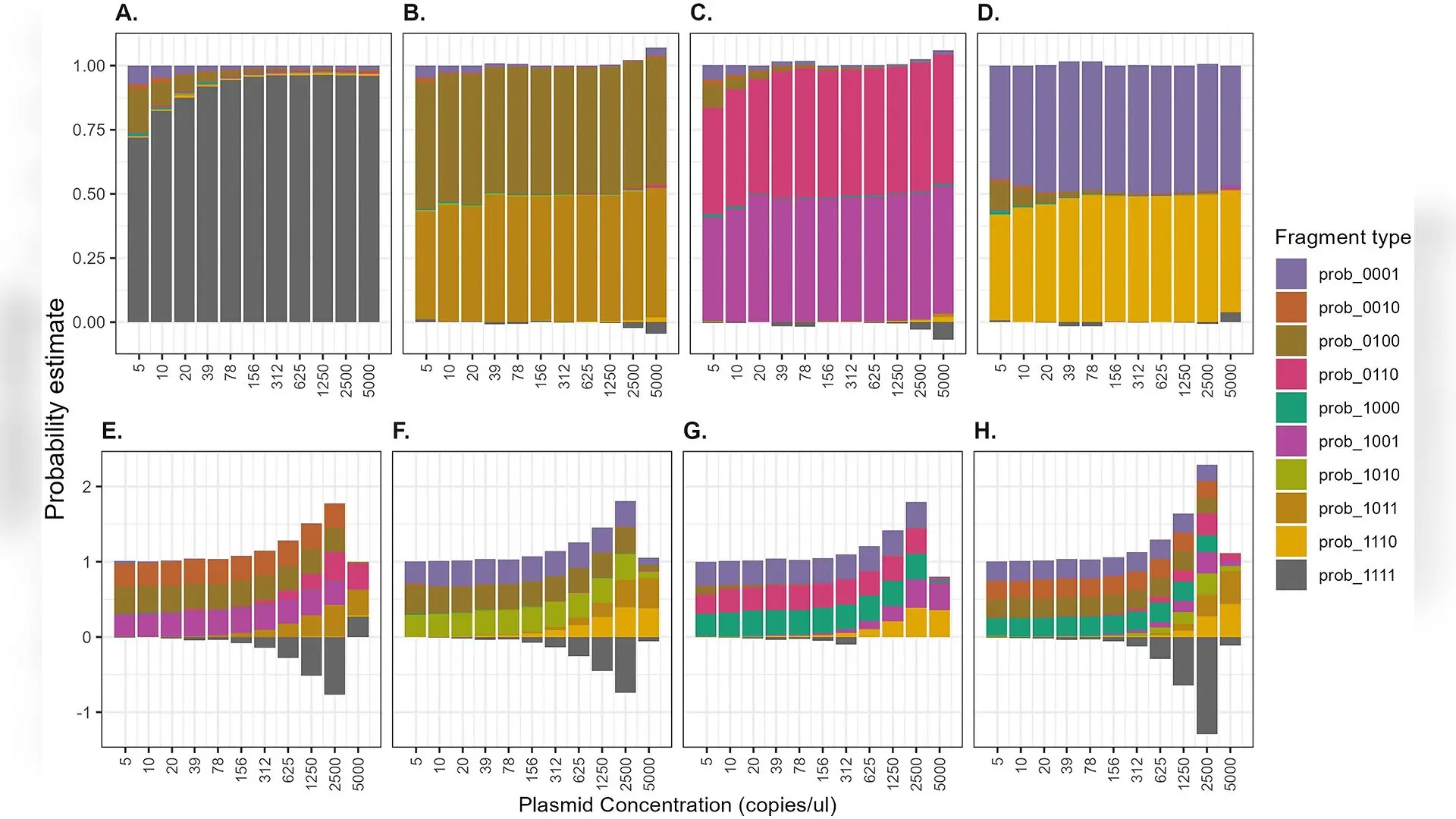
To overcome this statistical hurdle, the authors expanded an advanced mathematical framework to account for ten distinct template types that might exist within any given droplet, ranging from single isolated fragments to fully intact sequences. The model solves for the probabilities of nine fragmented template species directly, while calculating the probability of fully intact templates as the mathematical remainder. Testing the approach with plasmid templates digested by one to four restriction enzymes revealed how the system performed under controlled degradation.
When templates were cut into fewer than three fragments, the model produced stable integrity estimates across a wide range of concentrations, spanning from 39 to 5,000 copies per microliter. However, heavily fragmented samples with three or more cut sites began to show significant deviation at higher concentrations. Under these crowded conditions, the model started overestimating improbable fragment types, which occasionally resulted in negative estimates for fully intact structures due to mathematical overflow.
Validating Viral Genome Stress and Protein Output
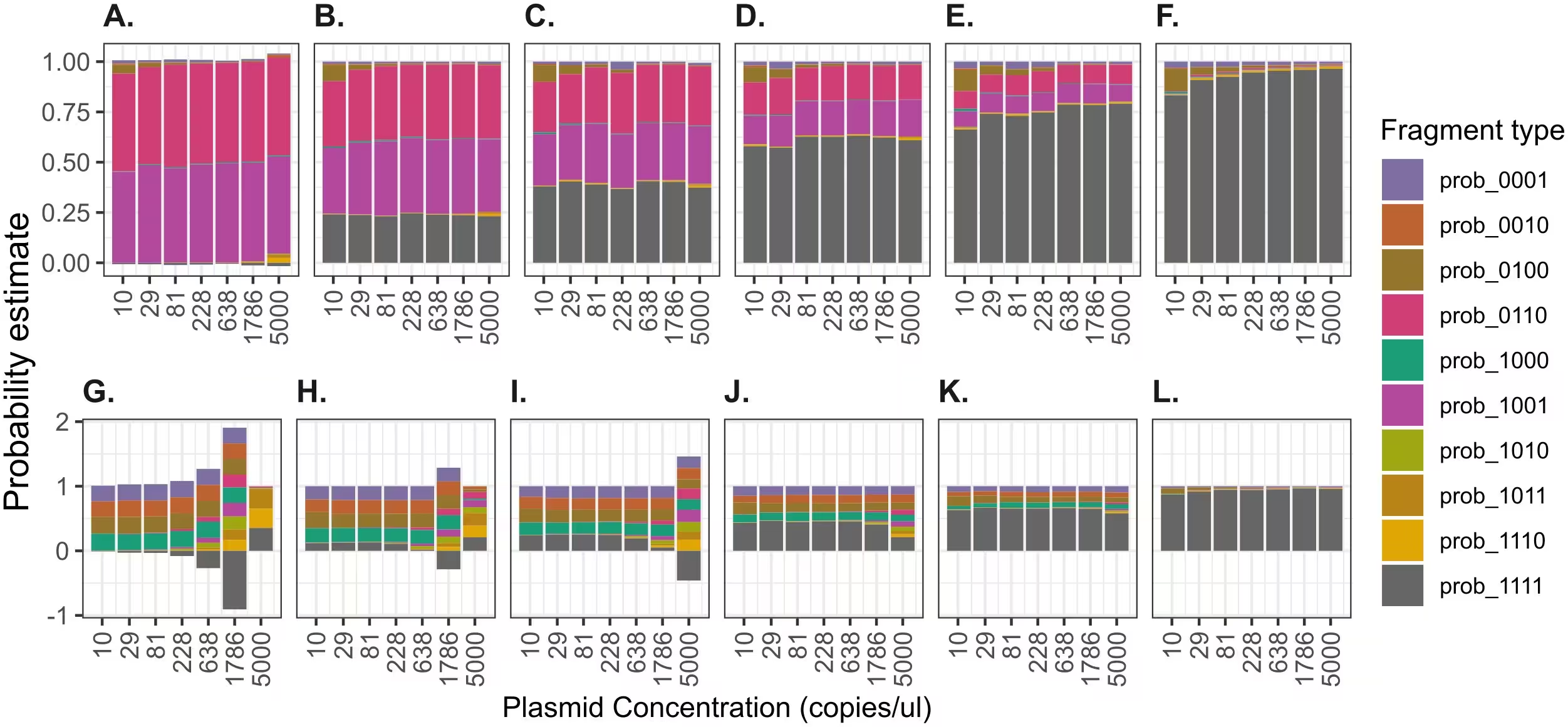
The team then applied the quadplex model to evaluate adeno-associated virus products known as AAV9-BIIB1 and AAV2-BIIB2, which naturally contain heterogeneous mixtures of empty, partial, and full capsids. By subjecting the extracted viral genomes to thermal stress at 95 degrees Celsius or varying durations of germicidal ultraviolet C radiation, the researchers tracked how physical damage degraded sequence integrity.
Exposing AAV2-BIIB2 to ultraviolet light for up to 60 minutes caused a sharp drop in the proportion of intact genomes calculated by the model. When those same stressed viral samples were introduced into mammalian cell cultures, the reduction in intact genome estimates strongly correlated with a loss of functional protein expression measured 48 hours later. Long-read sequencing performed as an orthogonal validation method confirmed identical degradation trends, demonstrating that the mathematical model successfully captures biologically meaningful damage in therapeutic vectors.
Operating Boundaries and Future Applications
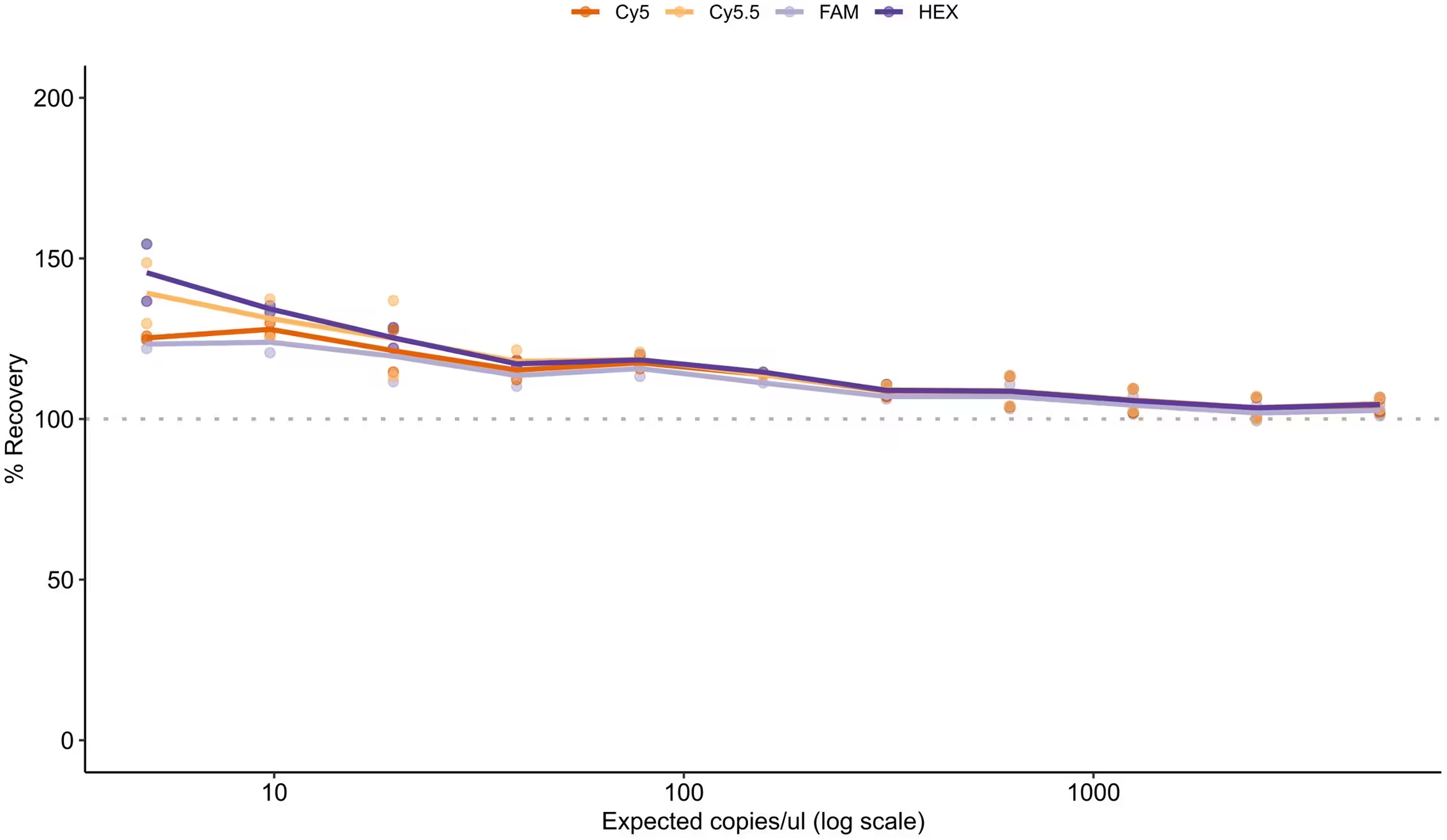
The investigation highlights specific technical boundaries that laboratories must navigate when implementing multiplex assays. Statistical accuracy depended heavily on droplet occupancy, with model performance deteriorating when empty droplet fractions dropped below 27.6 percent because high template crowding distorts Poisson estimates. The authors emphasize that thorough empirical testing using vector-specific plasmid controls is essential before analyzing unknown samples.
By releasing their R code to the public, the researchers hope to provide the biotech industry with a standardized tool for monitoring product quality. The quadplex model can be adapted to screen viral vectors during upstream and downstream process development, verify non-viral editing components, or quantify residual host cell DNA impurities remaining in drug substances.
The research was published in PLOS One on November 12, 2026.
This article has been fact checked for accuracy, with information verified against reputable sources. Learn more about us and our editorial process.
Last reviewed on .
Article history
- Latest version
Reference(s)
- Tereshko, Lauren., et al. “A Poisson-multinomial model for quantifying gene therapy vector integrity using quadplex digital PCR.” PLOS One, vol. 21, no. 11, November 12, 2026, pp. e0362653 Public Library of Science (PLoS), doi: 10.1371/journal.pone.0362653. <https://doi.org/10.1371/journal.pone.0362653>.
Cite this page:
- Posted by Priya Sharma