Nearby Magnetic Star Baffling Astronomers With Unusually Faint Hydrogen Glow
High-resolution observations of a fast-spinning stellar neighbor suggest it may be a transitional object bridging two different wind regimes.
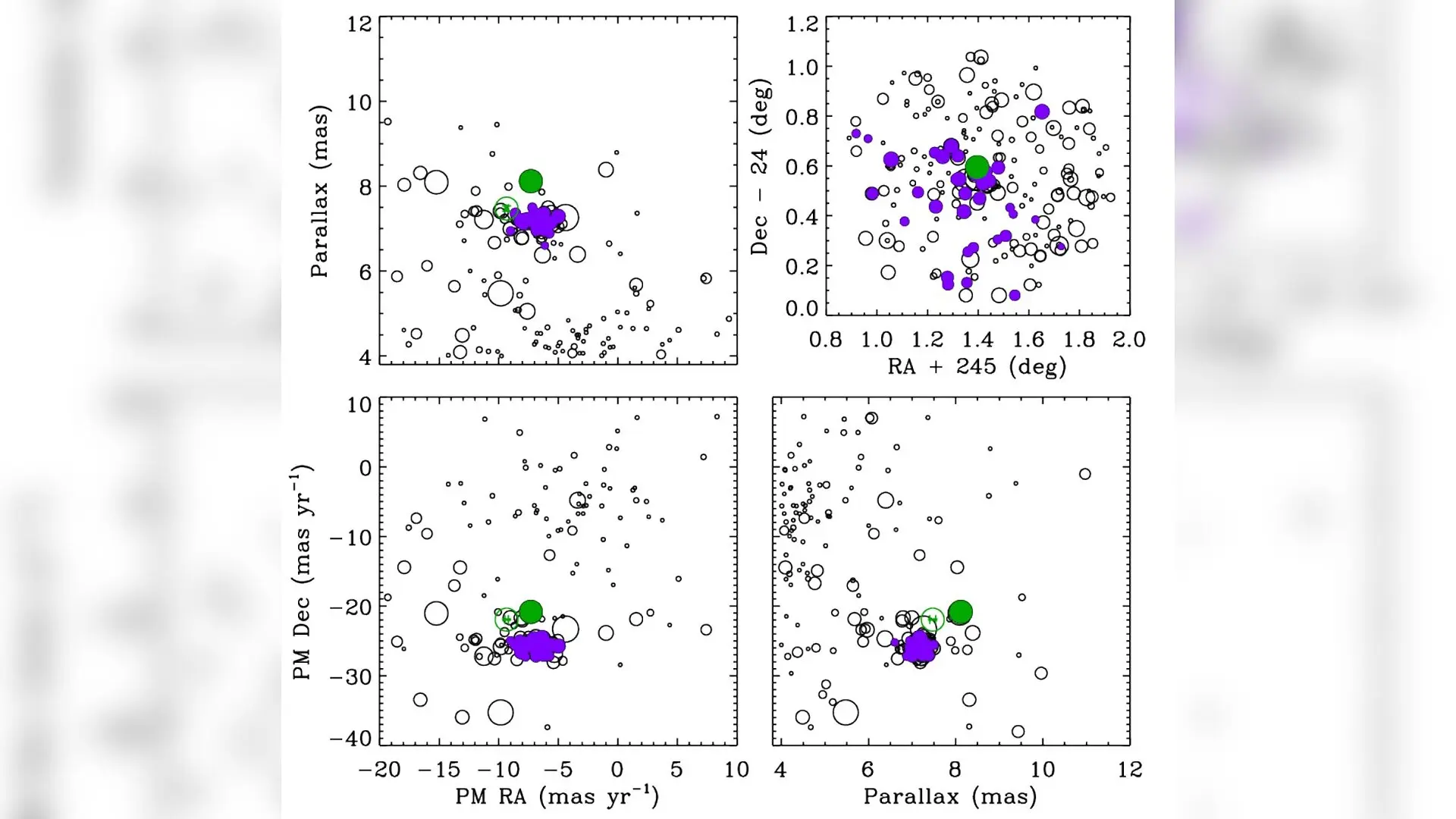
Astronomers have discovered that a nearby spinning magnetic star, located 139 light-years away, displays a hydrogen emission signal roughly four times weaker than standard theoretical models predict. The unusual object, known as rho Ophiuchi C, or rho Oph C for short, is a B-type star with a mass about 4.8 times that of our Sun and a rapid rotational period of just 0.86 days.
When massive, hot stars possess strong magnetic fields, their stellar winds become trapped to form structures called centrifugal magnetospheres. As plasma corotates with the star, centrifugal forces support high densities that typically generate bright hydrogen alpha emission lines. A framework known as the centrifugal breakout model successfully explains these emissions in hotter stars, but a well-known puzzle persists because the emission drops off below a bolometric luminosity threshold of approximately log (L/L☉) ~ 2.8.
Mapping the Magnetic Fields and Rotation of rho Oph C
To investigate how this scaling relationship breaks down at lower luminosities, an international research team analyzed high-resolution spectropolarimetric observations obtained using the ESPaDOnS instrument at the Canada-France-Hawaii Telescope and the HARPSpol polarimeter at the European Southern Observatory. The detailed findings are available on the arXiv preprint server, building upon photometric data collected by space telescopes including Hipparcos, Kepler’s K2 mission, and NASA’s Transiting Exoplanet Survey Satellite (TESS).
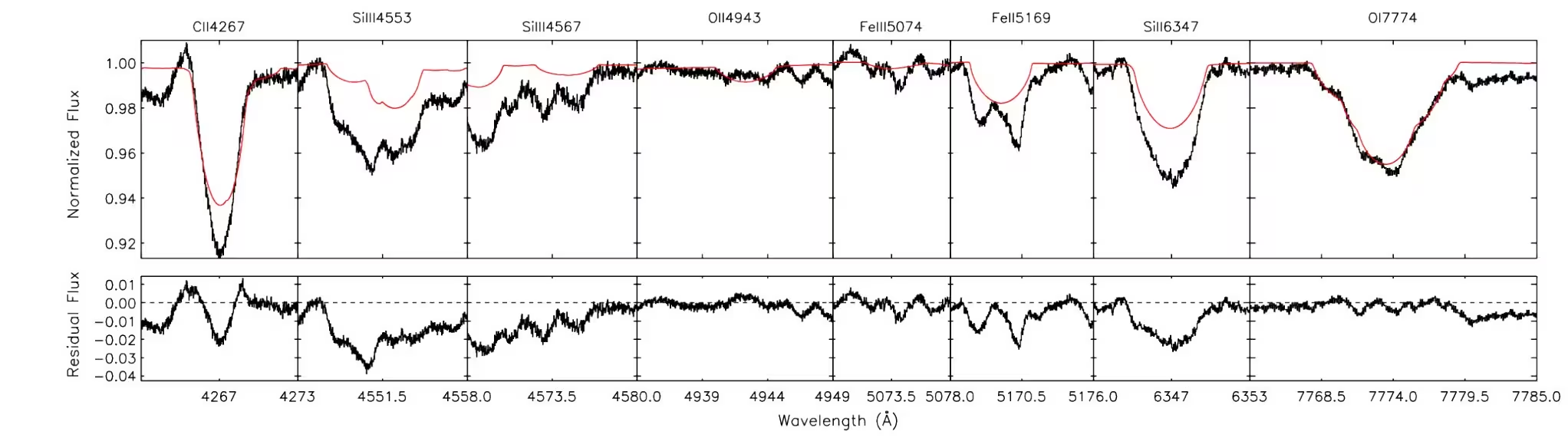
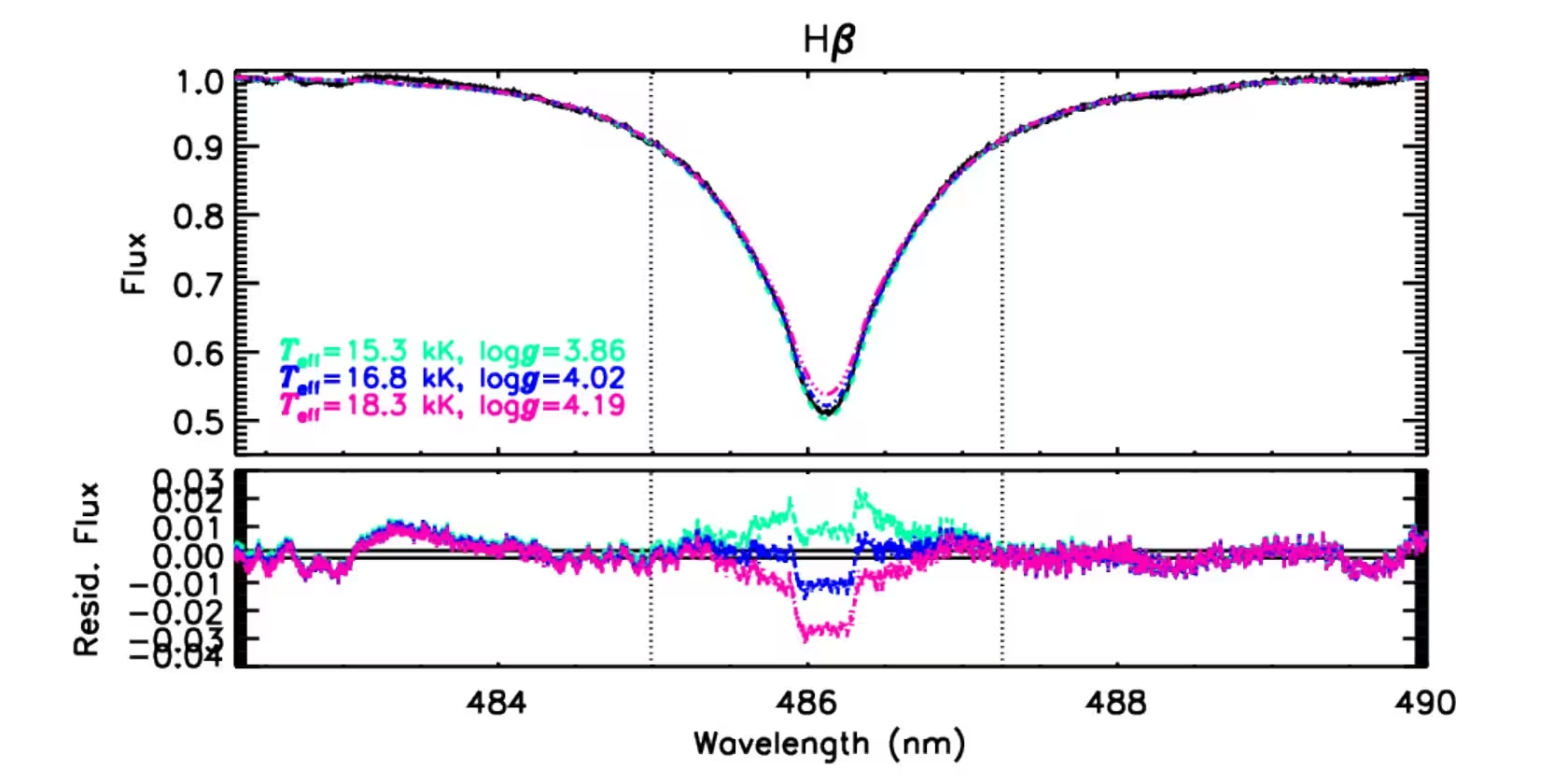
The spectropolarimetric data confirmed that rho Oph C possesses a very strong magnetic field with a polar strength of about 10 kilogauss, aligned nearly parallel to its rotational axis with an obliquity angle of only 7 degrees. This geometry matches independent predictions previously inferred from the star’s radio emission. However, contrary to expectations from standard models, the hydrogen alpha emission lines are significantly fainter than anticipated.
Evaluating Surface Spots Versus Magnetospheric Eclipses
The researchers also analyzed light curves from TESS to determine the origin of the star’s photometric variability. While variations in metal absorption lines and broad light curve structures correlate closely with surface chemical abundance spots, the data also reveal complex rotationally modulated substructures at the millimagnitude level. These subtle variations point toward weak magnetospheric eclipses, though their amplitude is far smaller than the prominent eclipses predicted by the centrifugal breakout model.
Interestingly, the star’s radio luminosity remains entirely consistent with standard theoretical predictions, even though its hydrogen emission falls short. This dichotomy provides a crucial clue about the physical mechanisms operating in low-luminosity magnetic stars.
Clues to a Transitional Stellar Wind Regime
Two primary hypotheses have been proposed to explain why hydrogen emission disappears in cooler magnetic stars. The first suggests that magnetospheres become magnetically leaky due to non-ideal plasma transport. The second proposes that stellar winds undergo a transition where hydrogen ions decouple from metallic ions, creating a metallic magnetosphere devoid of hydrogen.
The authors suggest that rho Oph C may represent a transitional object caught between hydrogen-dominated winds and runaway metallic winds. If stellar winds begin losing their hydrogen content at these cooler effective temperatures, the resulting drop in electron density would naturally weaken hydrogen emission and photometric eclipses while leaving radio synchrotron radiation intact.
The study was posted to the arXiv preprint server on November 10, 2026.
This article has been fact checked for accuracy, with information verified against reputable sources. Learn more about us and our editorial process.
Last reviewed on .
Article history
- Latest version
Reference(s)
- Shultz, M.. “Revisiting the centrifugal breakout scaling relationship for H$α$ emission in light of $ρ$ Oph C, the coolest B-type star with an H$α$-bright centrifugal magnetosphere.” arXiv.org <http://arxiv.org/abs/2611.14452v1>.
Cite this page:
- Posted by Aisha Ahmed