Euclid Spacecraft Pipeline Unveils Massive New Map of the Universe
Astronomers detail the complex data processing pipeline behind Euclid Data Release 1, combining space-based and ground observations to map millions of galaxies.
Astronomers processing data from the European Space Agency spacecraft Euclid have successfully generated a massive multi-wavelength catalogue containing millions of objects across roughly 1,900 square degrees of the sky. The European collaboration released details regarding the core data pipeline behind Euclid Data Release 1, detailing how instrument measurements are combined and validated to map cosmic structures over vast light-year distances.
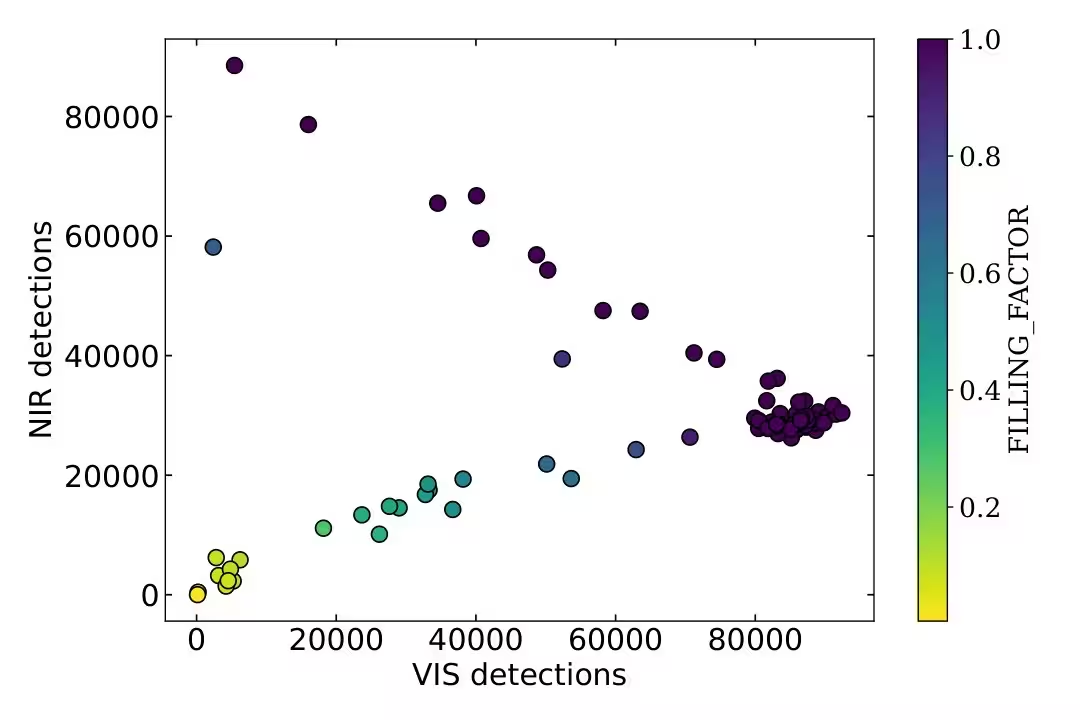
Launched in July 2023 and beginning regular observations in February 2024, the Euclid mission aims to chart the geometry of the Universe and shed light on dark energy and dark matter. The newly detailed processing pipeline, known as the MERge processing function, handles the monumental task of merging optical data from the Visible Camera with near-infrared measurements from the Near IR Spectrometer and Photometer. These space observations are further complemented by ground-based imaging data in five different filter bands to enable precise redshift measurements and comprehensive galaxy profiling.
How Millions of Cosmic Objects Are Detected and Measured
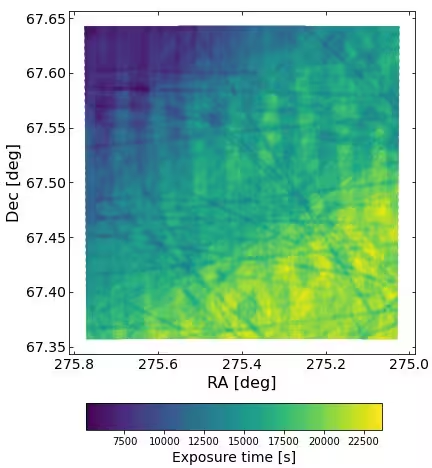
To construct the comprehensive catalogues, the processing pipeline segments the sky into predefined spatial areas called tiles. Because regions with extremely long exposure times, such as the Euclid Deep Fields, present unique computational hurdles, the team designed a dedicated deep tiling solution with an extended area of 17 by 17 minutes of arc. Object detection is performed independently across both visible and near-infrared bands using specialized clustering software before combining the sources into a unified list.
The study, published on the arXiv preprint server, explains that the pipeline applies multiple photometric techniques to measure object brightness. These include aperture photometry on point spread functions matched to the worst available resolution, template-fitting photometry designed to minimize blending in low-resolution data, and two-dimensional Sérsic profile fitting to extract integrated galaxy fluxes. Morphological characteristics such as concentration, asymmetry, and smoothness are also computed for hundreds of thousands of galaxies, providing vital structural data for downstream cosmological research.
Validating Pipeline Accuracy Against Gaia Stars
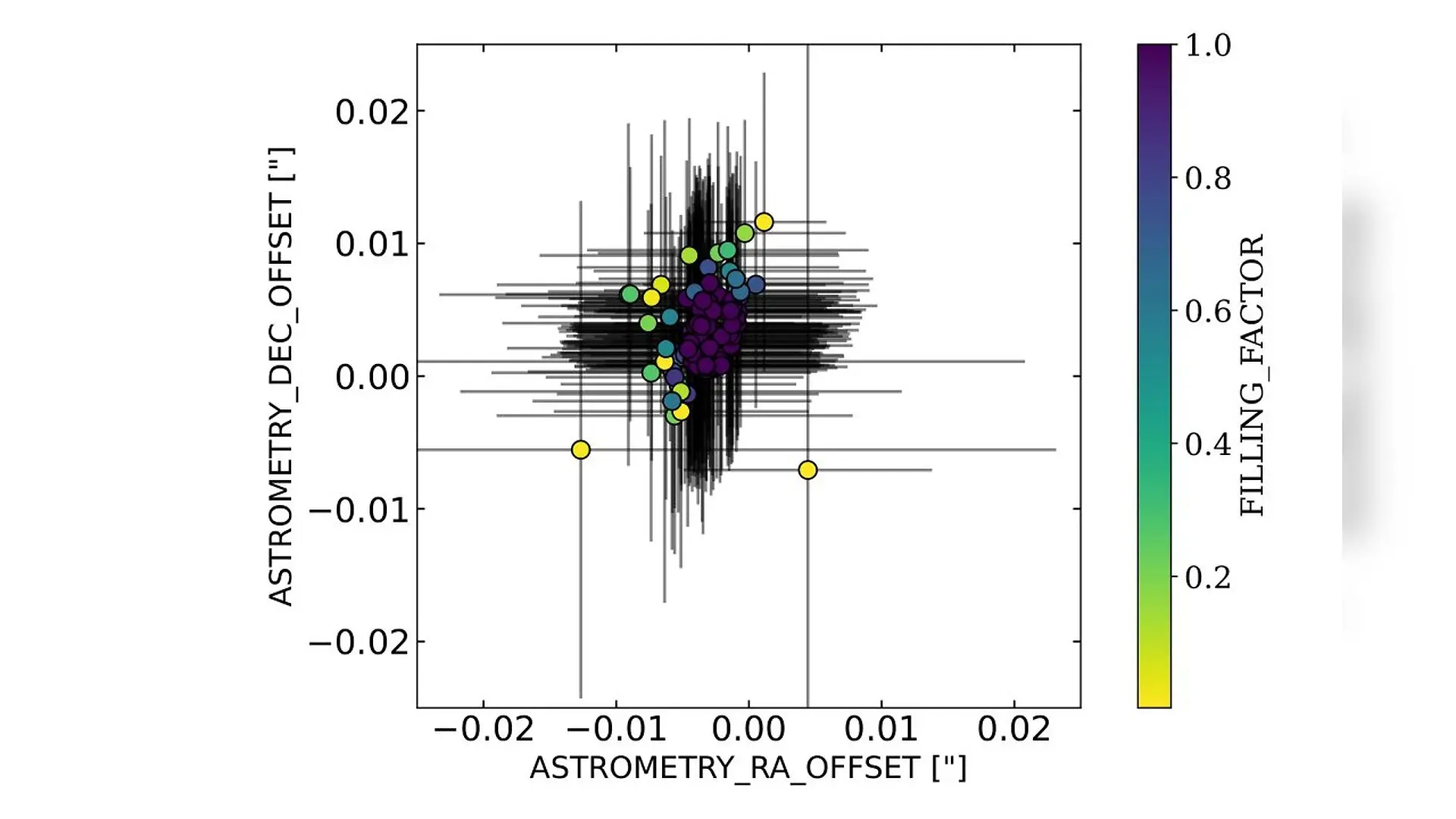
Ensuring data integrity before a public release requires rigorous validation checks against established astronomical reference frames. The authors validated the astrometry and photometry of their detected sources by comparing point-like objects against proper motion-corrected positions and photometry from the Gaia Data Release 3 catalogue. By analyzing millions of matched stars, the team assessed relative flux errors and regional photometric stability across the survey area.
The analysis revealed that the choice of point spread function normalization significantly impacts photometric accuracy. Unlike earlier test runs, the team decided against re-normalizing extended point spread function stamps, which successfully resolved persistent flux offsets seen in previous data releases, such as discrepancies found in Pan-STARRS bands. However, residual dependencies on visible band normalization remain the primary limiting factor for overall photometric precision, prompting ongoing refinements for future data releases.
What These Catalgues Mean for Future Cosmology
The photometric and morphological catalogues generated by the processing pipeline serve as essential inputs for downstream pipelines calculating photometric redshifts, galaxy spectra, and weak gravitational lensing shear. These measurements form the backbone of Euclid core cosmology science, allowing researchers to trace how cosmic structures evolve across billions of years of cosmic history.
While the current data release provides unprecedented homogeneity and depth, the collaboration noted several known issues, including minor border coverage limitations and variable observing conditions caused by solar activity or satellite pointing constraints. The team is already implementing improvements for upcoming data cycles, aiming to refine image co-addition and object deblending algorithms to meet the rigorous demands of upcoming survey phases.
The study was posted to the arXiv preprint server on November 13, 2026.
This article has been fact checked for accuracy, with information verified against reputable sources. Learn more about us and our editorial process.
Last reviewed on .
Article history
- Latest version
Reference(s)
- Collaboration, Euclid. “Euclid Data Release 1 (DR1): The MERge processing.” arXiv.org <http://arxiv.org/abs/2611.17832v1>.
Cite this page:
- Posted by Karan Das