Black Hole Spin Forces Charged Particles Sideways Near the Event Horizon
A new theoretical analysis shows that extreme frame-dragging around rotating black holes forces subatomic particles to drift away from magnetic field lines.
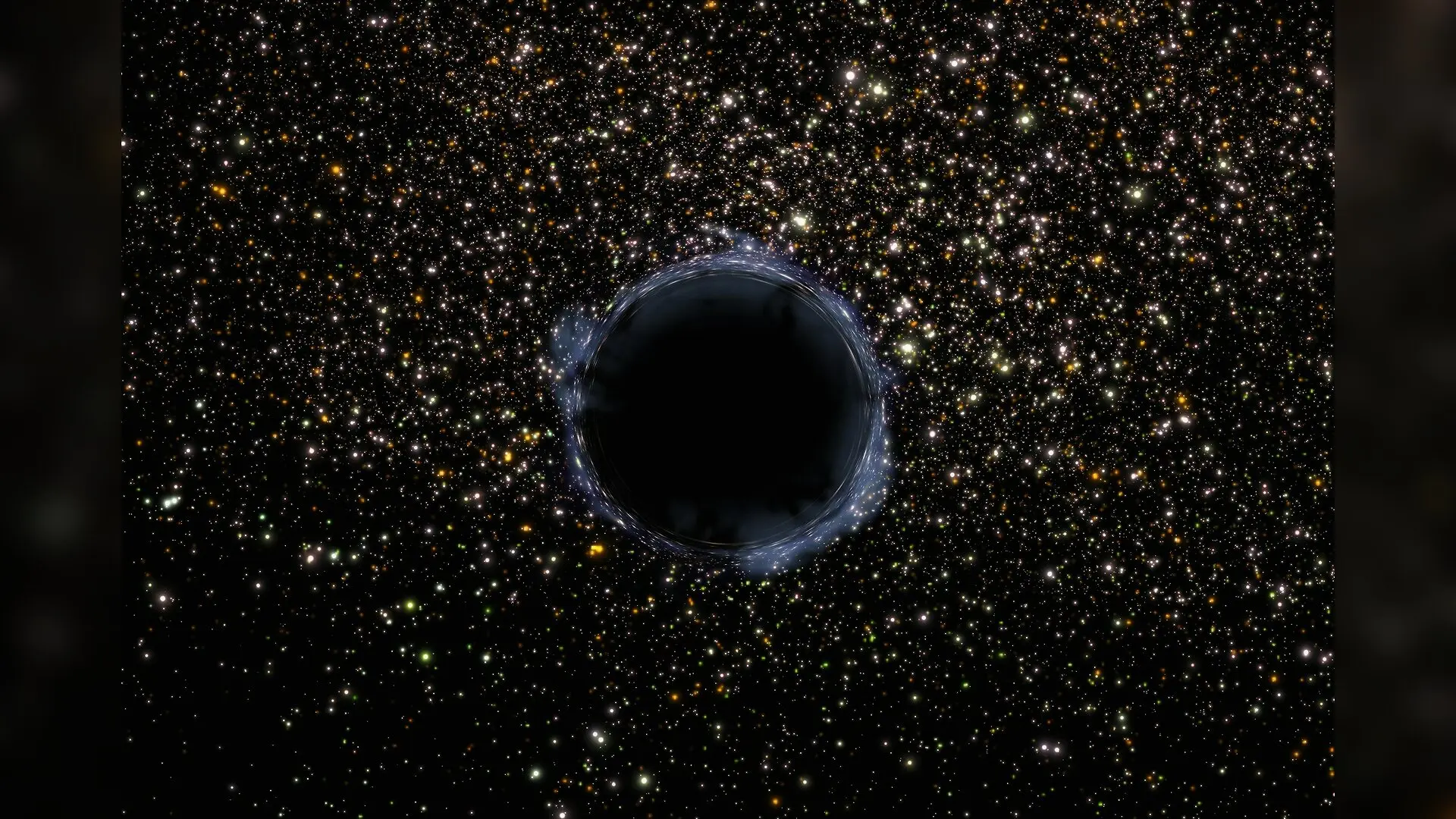
A rapidly spinning black hole can actively yank charged particles sideways as they travel through its extreme magnetic environment, according to a recent theoretical analysis. The study explores how intense gravitational rotation forces subatomic particles to drift away from standard magnetic field lines.
Astrophysicists have long understood that matter swirling around supermassive black holes forms sparse plasma immersed in powerful magnetic fields. Under these collisionless conditions, charged particles spiral tightly around magnetic field lines while slowly migrating sideways, a motion known as drift. While gravitational pull from a black hole mass is known to cause this drift, the specific influence of black hole spin has remained largely unexplored in rigorous curved spacetime frameworks.
How Relativistic Spin Alters Particle Motion
To investigate this phenomenon, researcher Ye Shen from Fuzhou University utilized a covariant formulation of the guiding-center approximation, a mathematical tool used to track the average center of a particle’s rapid gyration. The work, available on the arXiv preprint server, models how spacetime curvature and frame-dragging interact with moving charges in extreme astrophysical environments.
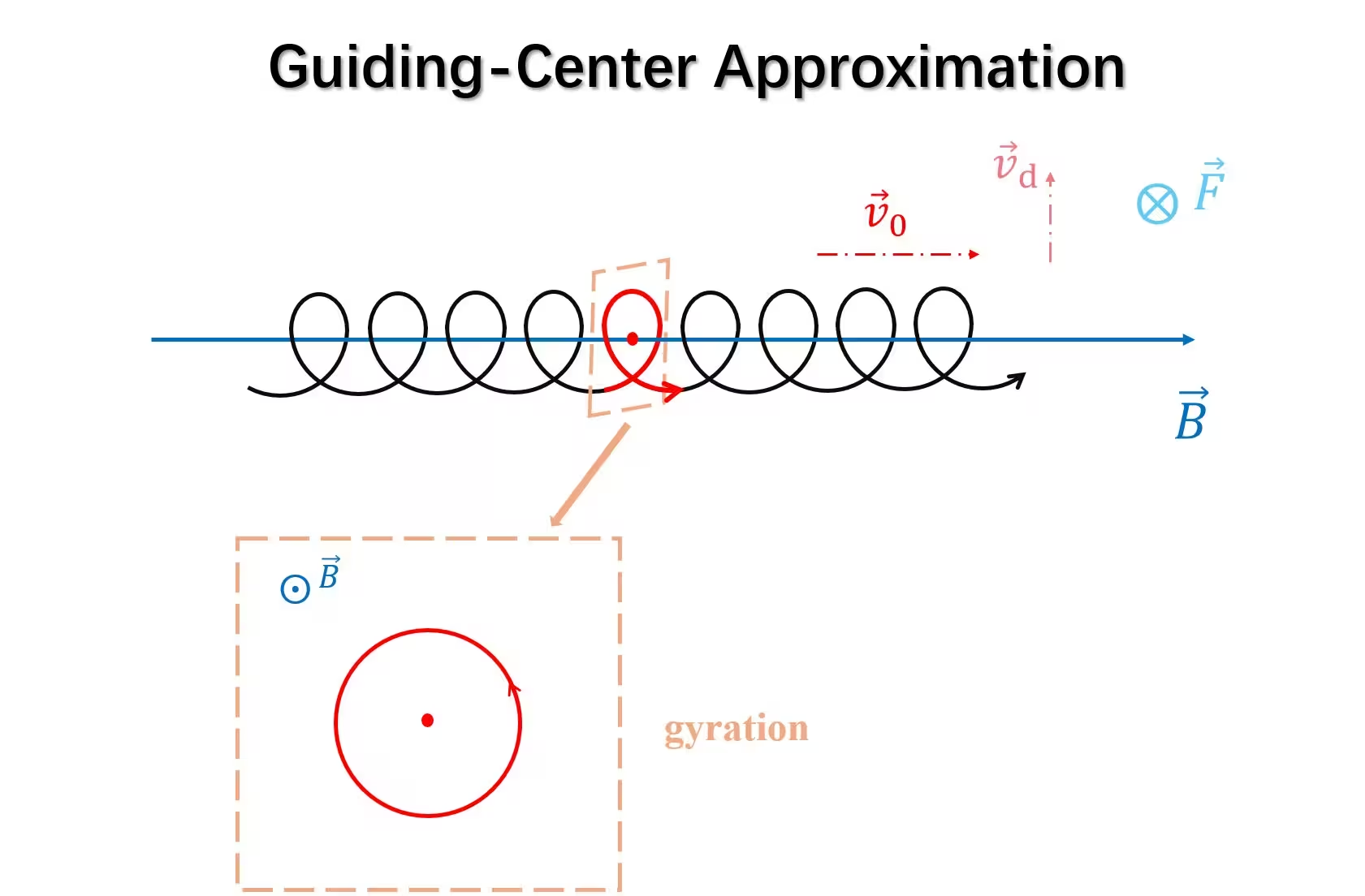
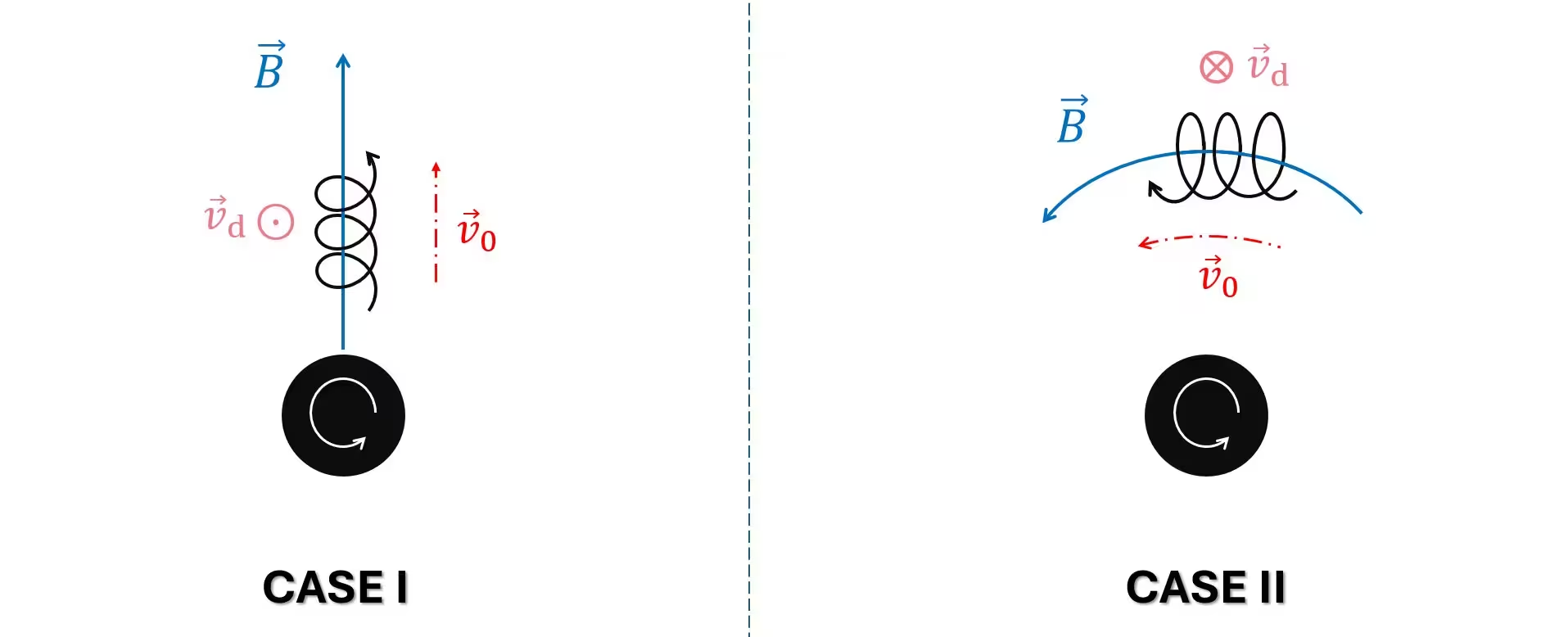
The author examined particle behavior across two distinct magnetic field configurations on the equatorial plane around a spinning black hole. In the first scenario, where the magnetic field is purely radial, the rotation of the massive object acts as the primary driver of particle drift. In the second scenario, featuring a purely toroidal magnetic field, three competing factors shape the drift, namely black hole mass, spin, and the curvature of the magnetic field lines.
Measuring the Drift Rate Near the Event Horizon
To quantify how severely particles deviate, the author defined a drift rate measuring the lateral distance a particle travels per unit length along a magnetic field line. Calculations show that when a charged particle moves extremely close to a rapidly spinning black hole, specifically within five to ten gravitational radii of the event horizon, the spin-induced drift becomes remarkably significant.
The math reveals that for black holes possessing a high dimensionless spin parameter exceeding 0.9, the contribution of spin to particle migration becomes comparable to other dominant astrophysical forces. This effect is especially prominent when particles travel at velocities near the speed of light along the magnetic field.
Observational Challenges and Future Implications
Despite these clear theoretical predictions, detecting this spin-induced drift in actual astronomical settings presents severe observational hurdles. Systems satisfying the precise mass and magnetic field thresholds required for noticeable drift often feature low accretion rates, making them exceptionally faint and difficult to observe.
Candidate X-ray binary systems such as V404 Cygni, which features a massive black hole paired with a high spin rate and moderate magnetic field strength, offer promising natural laboratories for testing these extreme plasma dynamics. Further research into collective plasma behavior will help determine whether individual particle drifts significantly alter the large-scale structure of accretion flows and relativistic jets.
The study was posted to the arXiv preprint server on November 14, 2026.
This article has been fact checked for accuracy, with information verified against reputable sources. Learn more about us and our editorial process.
Last reviewed on .
Article history
- Latest version
Reference(s)
- Shen, Ye. “Drift of a Charged Particle in a Black Hole Magnetosphere: the Effect of Black Hole Spin.” arXiv.org <http://arxiv.org/abs/2611.19098v1>.
Cite this page:
- Posted by Karan Das