Tiny Glass Chip Successfully Merges Starlight To Reveal Sharper Cosmic Views
Astronomers have developed a tiny glass chip that combines starlight from two telescopes, paving the way for sharper, more compact deep-space imaging.
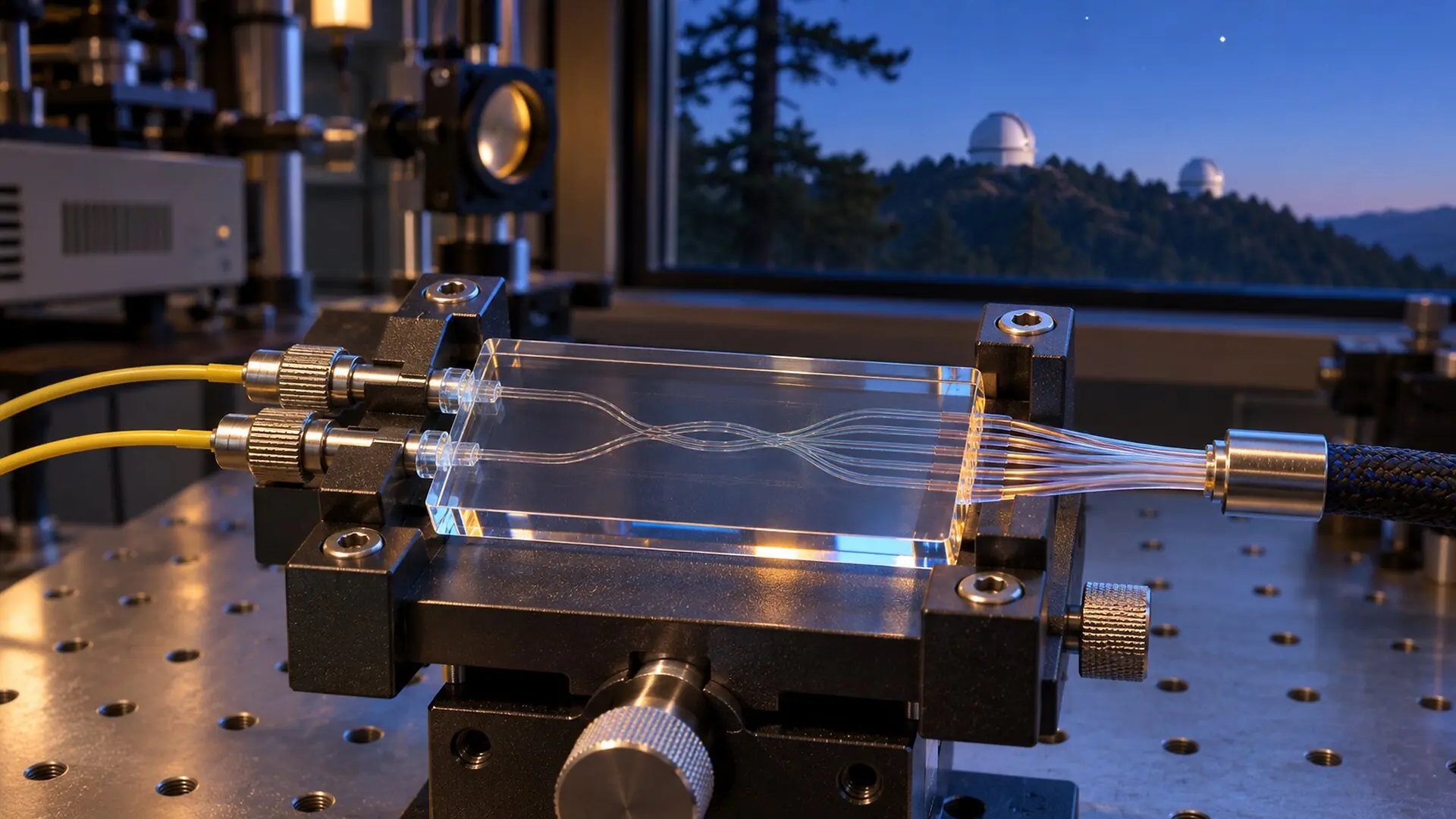
Astronomers have successfully integrated a compact photonic chip into the CHARA Array in California, marking a significant step toward shrinking the massive, complex hardware typically required for stellar interferometry. The device, which is only a few centimeters across, combined light beams from two separate telescopes to produce precise interference patterns, proving that specialized glass components can replace traditional, bulky mirror-and-lens assemblies in high-resolution astronomical observations.
The research, led by scientists at Heriot-Watt University and published in the Monthly Notices of the Royal Astronomical Society, details the performance of the new instrument, known as CHARIOT. By using ultrafast-laser inscription to create light-guiding channels within a quartz glass block, the team successfully routed starlight to create stable interference fringes, which are essential for measuring the precise sizes of stars and detecting faint, surrounding emissions.
Streamlining complex observations
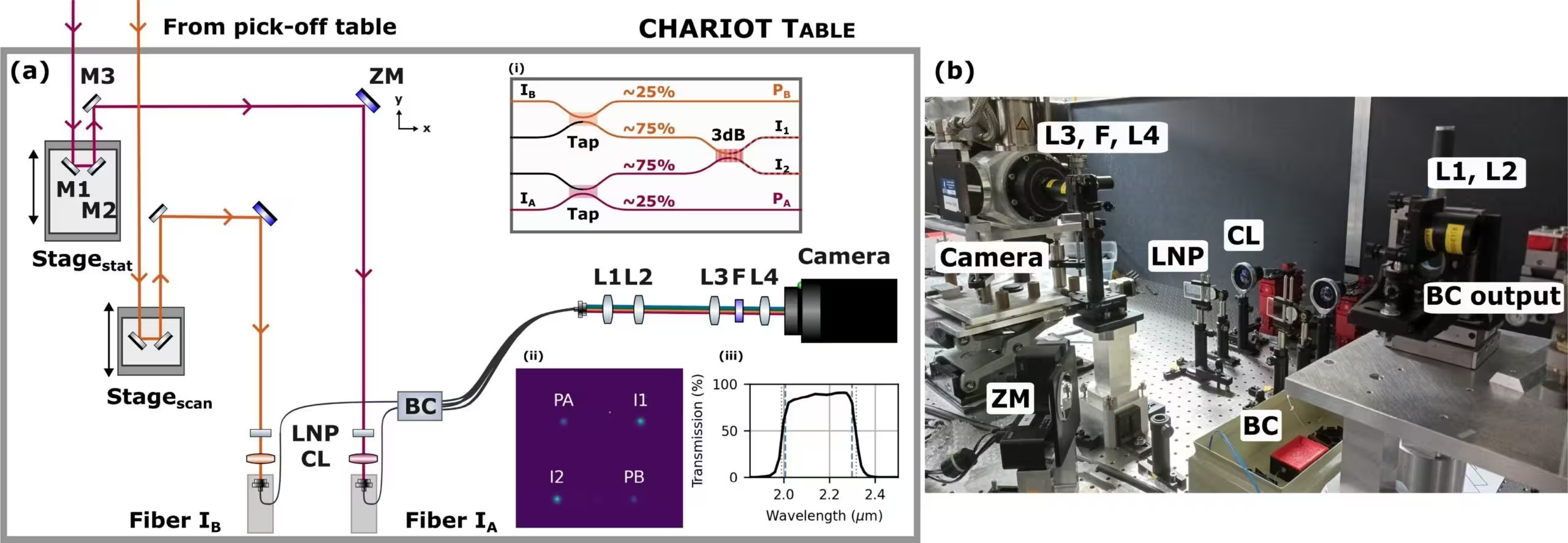
The CHARA Array, operated by Georgia State University at Mount Wilson Observatory, relies on interferometry to extract fine details from celestial objects by overlapping light waves from multiple telescopes. Traditionally, this requires a large footprint of moving mirrors and alignment stages. The CHARIOT project seeks to modernize this process by offloading the beam-combining task to a miniature integrated circuit.
According to Heriot-Watt professor Robert Thomson, the chip demonstrates that complex optical functions can be performed by a device no larger than a matchbox. The fabrication process utilizes Infrasil quartz glass, which is highly efficient for transmitting light in the near-infrared K band. To ensure accuracy, the chip splits incoming light into multiple paths, allowing researchers to monitor beam intensity and calibrate their data against atmospheric fluctuations in real time.
Performance and testing milestones
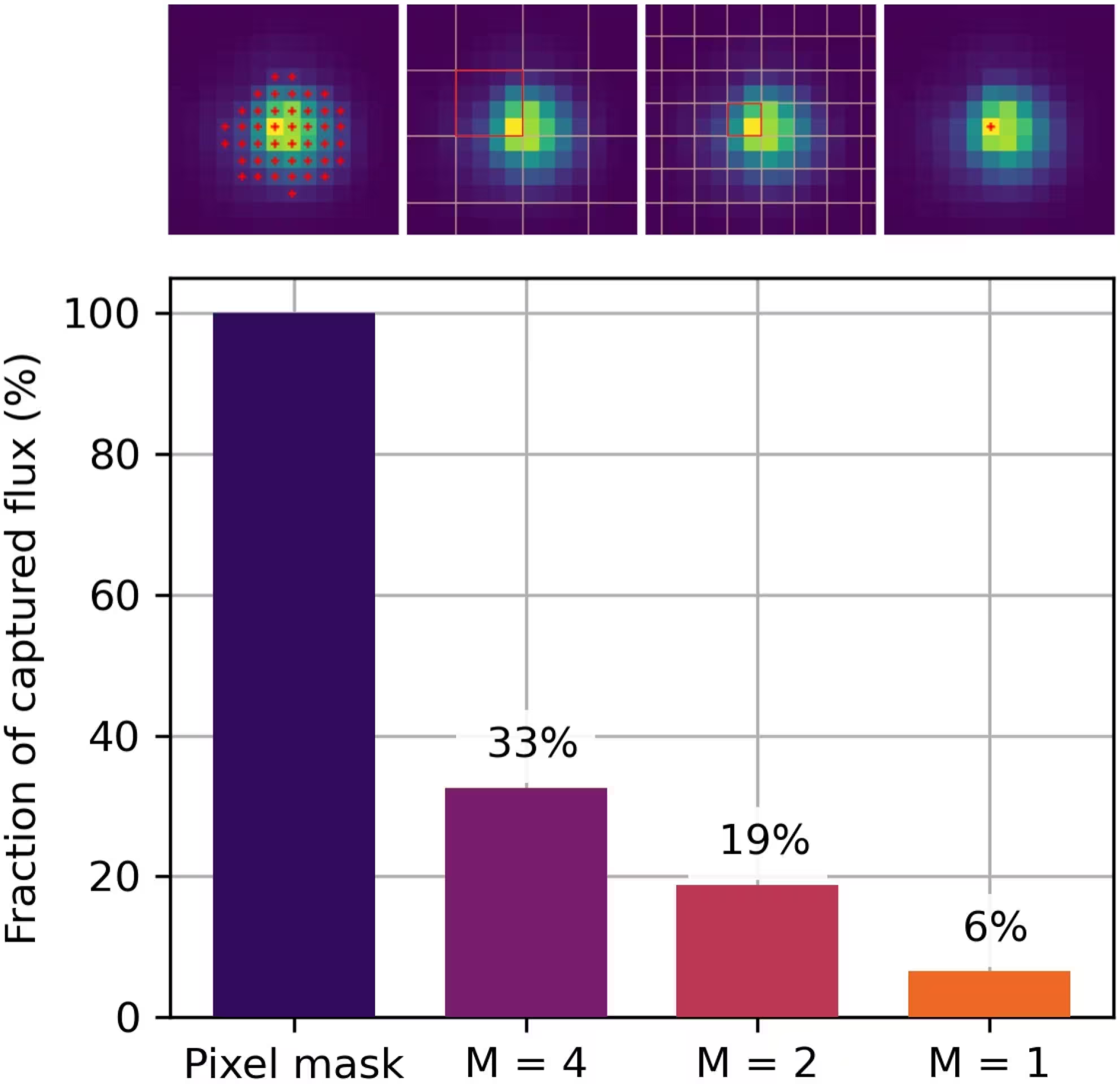
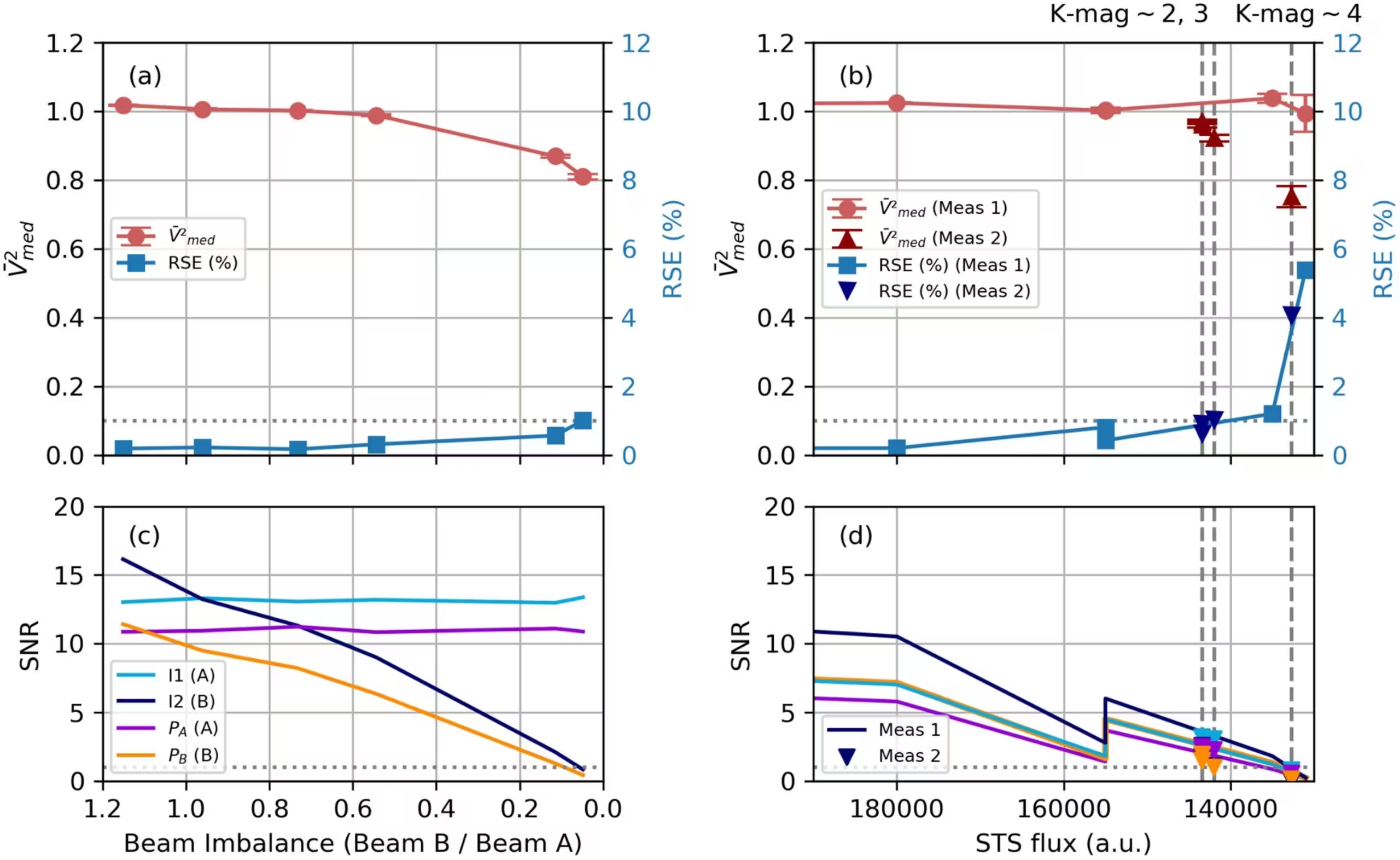
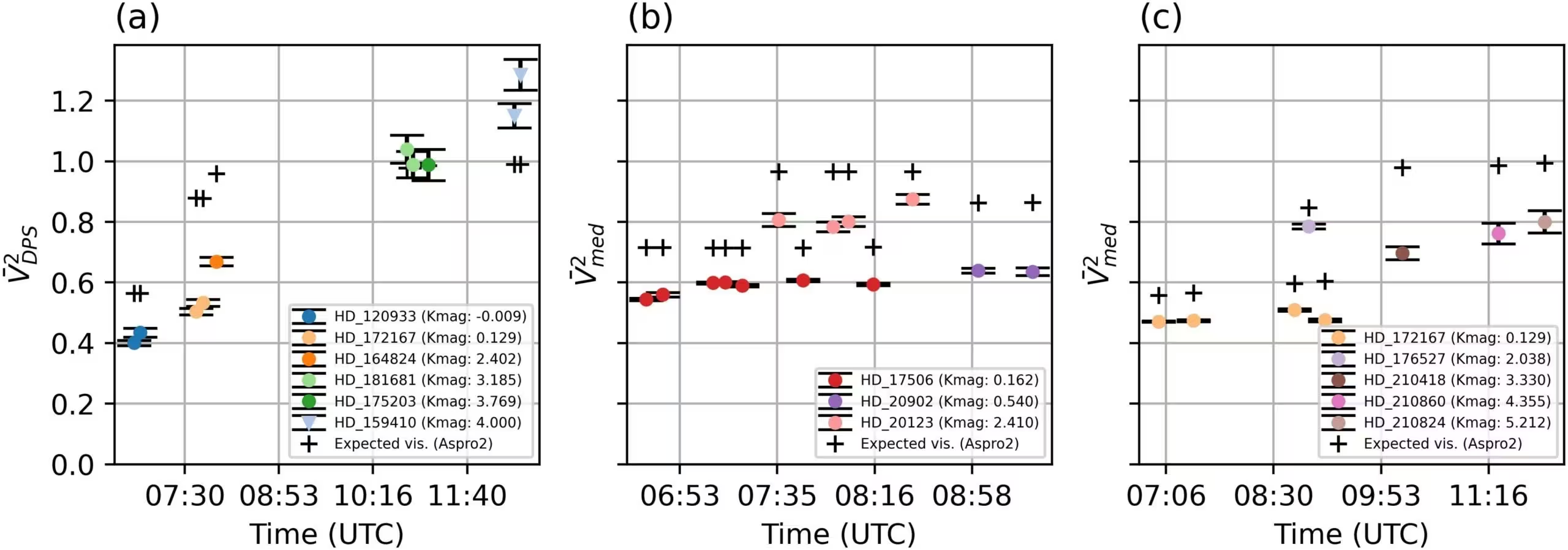
The team conducted a series of observing campaigns between May 2024 and July 2025 to refine the instrument. Early runs faced challenges with hardware vibrations and light loss, but successive upgrades—including improved fiber-to-chip connections—led to a tenfold increase in light transmission by the final testing phase. For bright stars, the system achieved a measurement precision of better than 1%, a critical threshold for identifying subtle astronomical features.
While the instrument performed well with bright targets, detecting fainter objects like HD 210824 presented a greater challenge. As the signal weakened, precision dropped to approximately 4.6%. The researchers note that further advancements in data calibration and light-collection efficiency will be necessary to reliably study dim, distant celestial phenomena.
Future directions in astrophotonics
One of the primary goals for this technology is the study of hot dust disks in planetary systems. Detecting the minute interference signatures of this dust, which can appear as a tiny fraction of the host star’s brightness, requires the high level of stability that a compact, integrated chip can provide. By swapping out these photonic components as technology advances, astronomers can iterate on their designs without needing to overhaul the entire telescope infrastructure.
The collaborative team, which includes researchers from the University of Cologne, the University of Potsdam, and the Leibniz Institute for Astrophysics Potsdam, is already looking toward the next phase of development. Future goals include cooling the beam combiner to reduce thermal noise and expanding the system to support four or more telescopes simultaneously. Such upgrades could eventually facilitate nulling interferometry, a technique intended to suppress stellar glare to reveal the faint glow of exoplanets hidden nearby.
This article has been fact checked for accuracy, with information verified against reputable sources. Learn more about us and our editorial process.
Last reviewed on .
Article history
- Latest version
Cite this page:
- Posted by Karan Das