AI Generates Realistic Galaxy Images From Raw Pixel Statistics
A new deep learning framework bypasses traditional mathematical models to simulate complex cosmic structures.
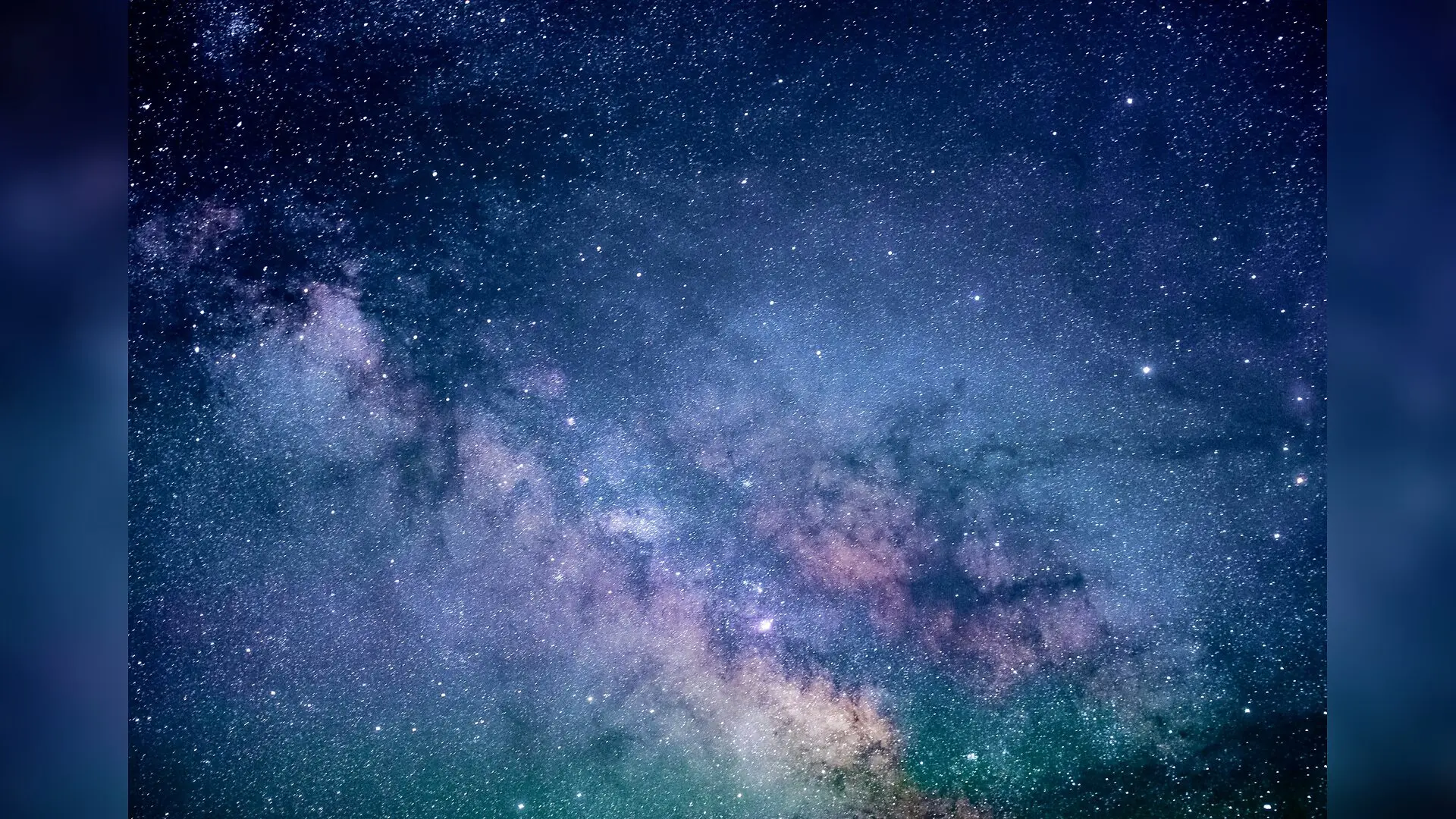
Astronomers have trained an artificial intelligence model to synthesize realistic galaxy images from scratch using only five raw measurement numbers, bypassing the traditional mathematical equations that usually govern cosmic simulations. The generative framework, developed by a team of researchers and available on the arXiv preprint server, converts pixel-level statistics into detailed visual structures.
Galaxies display immense structural diversity, ranging from smooth elliptical systems to messy, colliding star clusters that defy simple mathematical profiles. Traditional tools like GalSim rely on rigid analytical formulas to draw artificial galaxies, but these equations struggle to reproduce clumpy asymmetric details. To solve this, Quanfeng Xu and colleagues built a hybrid system named Flow-VAE that combines a variational autoencoder with a conditional normalizing flow.
How Artificial Intelligence Learns to Draw Galaxies
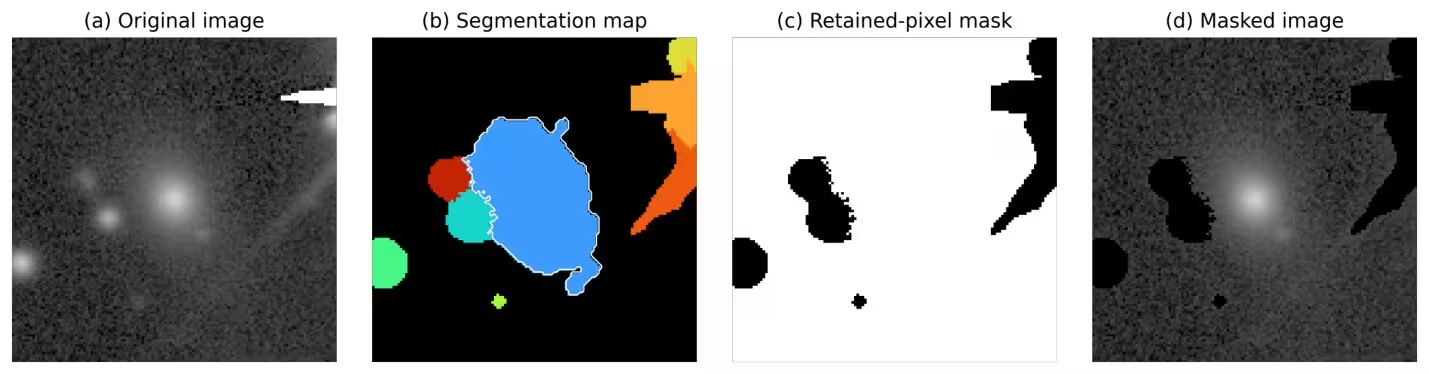
The research team trained the model using 240,000 galaxy image cutouts spanning 64 by 64 pixels, drawn from the Dark Energy Camera Legacy Survey. Before training, the team cleaned the images using automated source extraction tools to remove interfering foreground stars and nearby galaxies that could distort the pixel readings. They then calculated five non-parametric statistics for every object to capture its exact structural layout without assuming a smooth mathematical shape.
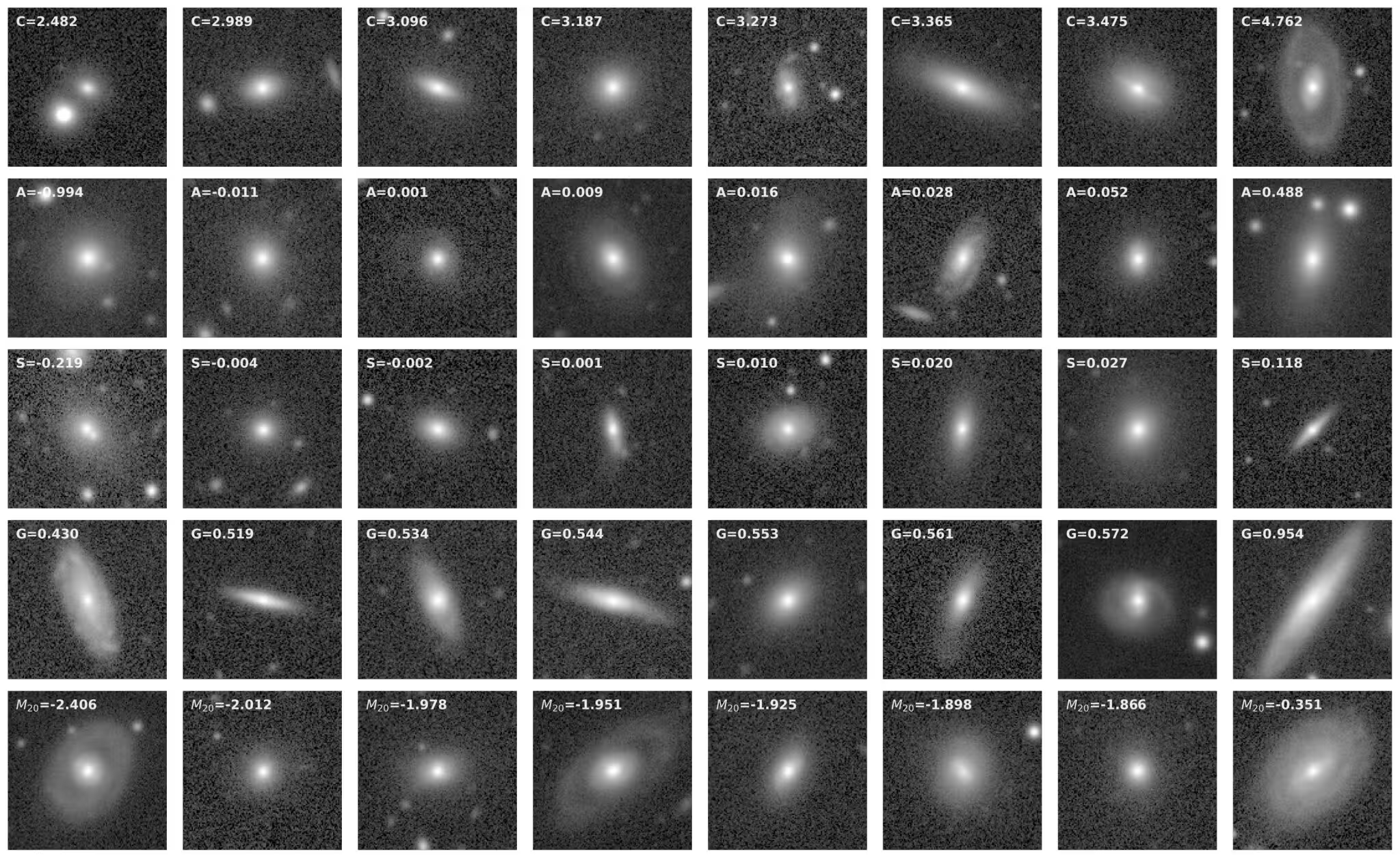
These five metrics include concentration, which compares the inner light radius to the outer boundary, and asymmetry, which measures how much a galaxy deviates from rotational symmetry. The system also tracks smoothness to spot small-scale star clusters, the Gini coefficient to evaluate how unevenly the brightness is spread across pixels, and a metric known as M20 that highlights bright off-center regions. Because these five properties correlate heavily in real galaxies, the team added a Gaussian mixture model to map their joint distribution and ensure the artificial outputs mirror physical reality.
Testing the Limits of Synthetic Cosmic Structures
To evaluate how faithfully the neural network reproduces requested traits, the authors tested single-parameter generation by fixing one statistic while allowing the other four to adjust naturally. When they measured the properties of the newly generated images, the recovered values matched the target inputs with high fidelity across wide statistical ranges. However, the team noticed a clear regression trend where low requested values tended to be overestimated by the model, while extremely high values were understated.
The authors also tested rare parameter combinations that rarely appear in nature to see how the architecture handles unusual inputs. When condition vectors fell into low-density regions of the training distribution, the generated images showed broader error margins and systematic offsets. Even under these sparse conditions, more than twenty percent of the valid outputs successfully recovered all five requested descriptors within a ten percent tolerance window.
What This Means for Future Sky Surveys
Generating realistic mock galaxies with controlled properties is crucial for preparing data pipelines for next-generation facilities like the Euclid space telescope and the Chinese Space Station Telescope. By comparing the structural properties of generated images against real observations, the team confirmed that auxiliary metrics such as half-light radii and bulge-to-total light ratios closely mirrored actual sky data. The new approach offers astronomers a flexible way to test how automated search algorithms handle complex, irregular systems without relying on oversimplified geometric models.
The study was posted to the arXiv preprint server on November 14, 2026.
This article has been fact checked for accuracy, with information verified against reputable sources. Learn more about us and our editorial process.
Last reviewed on .
Article history
- Latest version
Reference(s)
- Xu, Quanfeng. “From Non-parametric Statistics to Images: Generating Galaxy Morphologies.” arXiv.org <http://arxiv.org/abs/2611.19211v1>.
Cite this page:
- Posted by Nida Rehman