Stellar Disruptions And Gravitational Waves Reveal How Hidden Black Holes Form
A new multi-messenger framework suggests that combining ripped-apart stars with spacetime ripples can constrain black hole populations before space detectors launch.
A pair of celestial phenomena taking place deep within the dense clusters of stars surrounding massive black holes could soon reveal how these cosmic leviathans form and grow across the Universe. By bringing together observations of shredded stars and ripples in spacetime, astrophysicists have designed a joint statistical framework to map out hidden black hole populations before next-generation space detectors even launch.
Massive black holes lurk at the centers of nearly all large galaxies, scaling in mass from thousands to tens of billions of times the mass of our Sun. Yet the exact mechanisms governing their birth and early evolution remain shrouded in mystery. To tackle this puzzle, a team led by Shashwat Singh at the University of Glasgow developed a multi-messenger strategy that connects two distinct types of stellar dynamical events occurring in nuclear star clusters, which are dense swarms of stars and compact remnants tightly bound around a central black hole.
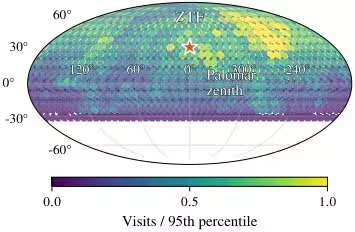
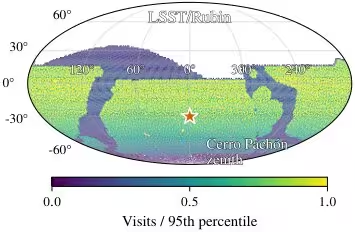
The first phenomenon, known as a tidal disruption event, happens when an unlucky star wanders too close to a massive black hole and gets violently ripped apart by intense gravitational tidal forces. This creates a brilliant flare of radiation that can outshine an entire galaxy for weeks or months. The second phenomenon, an extreme mass-ratio inspiral, occurs when a dense stellar-mass compact object, such as a dead star or small black hole, spirals slowly inward over millions of orbits, emitting continuous gravitational waves before finally plunging into the darkness. While large optical surveys like the Zwicky Transient Facility and the upcoming Vera C. Rubin Observatory spot hundreds of stellar disruptions, space-based gravitational wave detectors will capture the slow orbital decays.
Because both phenomena originate from the chaotic stellar dynamics within the same galactic nuclei, they share a deeply intertwined fate. However, observing them together has historically been challenging because they are hunted by completely different instruments. To overcome this scarcity of joint detections, the researchers built an end-to-end simulation pipeline combining galaxy stellar mass functions, nuclear cluster formation rates, and time-dependent cluster regrowth cycles driven by past galaxy collisions. They modeled eight distinct astrophysical scenarios varying in how black holes occupy galaxies and how their host star clusters nucleate, and then evaluated the expected detection counts for current and future surveys.
The study, published on the arXiv preprint server, reveals that existing optical observations already place strict limits on these theoretical models. When the team compared their predicted disruption counts against thirty-eight confirmed events discovered by the Zwicky Transient Facility between March 2018 and November 2025, they found that certain formation assumptions were strongly disfavored. Specifically, models assuming that every single galaxy hosts both a massive black hole and a dense star cluster overpredict the observed number of disruptions by a wide margin. Instead, the data favors scenarios where lower-mass galaxies less frequently host central black holes or clusters, bringing theoretical predictions into alignment with real-world sky surveys.
How Can Combining Gravitational Waves and Light Flares Transform Our Understanding?
Looking ahead to the next decade, the analysis demonstrates that pairing gravitational wave observations with optical surveys will dramatically sharpen our knowledge of black hole demographics. While optical light curves provide massive statistical sample sizes that tightly constrain the overall abundance and cosmic redshift evolution of low-mass black holes, gravitational wave inspirals provide exquisite precision on properties that light cannot reveal, including black hole spin and orbital eccentricity. Even though inspiral events will make up only a tiny fraction of the combined data catalogs, they carry disproportionate statistical weight that refines population models in ways optical surveys alone cannot achieve.
The authors emphasize that the ratio of tidal disruptions to gravitational wave inspirals acts as a sensitive probe of nuclear stellar dynamics. Because both event rates depend on the efficiency of stellar relaxation processes and the structure of the loss cone around the black hole, measuring this ratio will provide a vital consistency check for theoretical models of galactic evolution. As upcoming observatories scan the sky and space antennas open up low-frequency gravitational wave astronomy, this complementary multi-messenger approach will finally shed light on the hidden origins of the massive black holes shaping our Universe.
The study was posted to the arXiv preprint server on November 20, 2026.
This article has been fact checked for accuracy, with information verified against reputable sources. Learn more about us and our editorial process.
Last reviewed on .
Article history
- Latest version
Reference(s)
- Singh, Shashwat. “Disrupted stars and captured compact objects: Combining observations from multiple messengers to infer the population of massive black holes.” arXiv.org <http://arxiv.org/abs/2611.27742v1>.
Cite this page:
- Posted by Nida Rehman