Bird Cameras Reveal How Social Flocks Completely Change Where Seabirds Hunt for Fish
Tracking wild Northern gannets with miniature cameras shows that hunting in groups allows seabirds to bypass typical environmental restrictions.
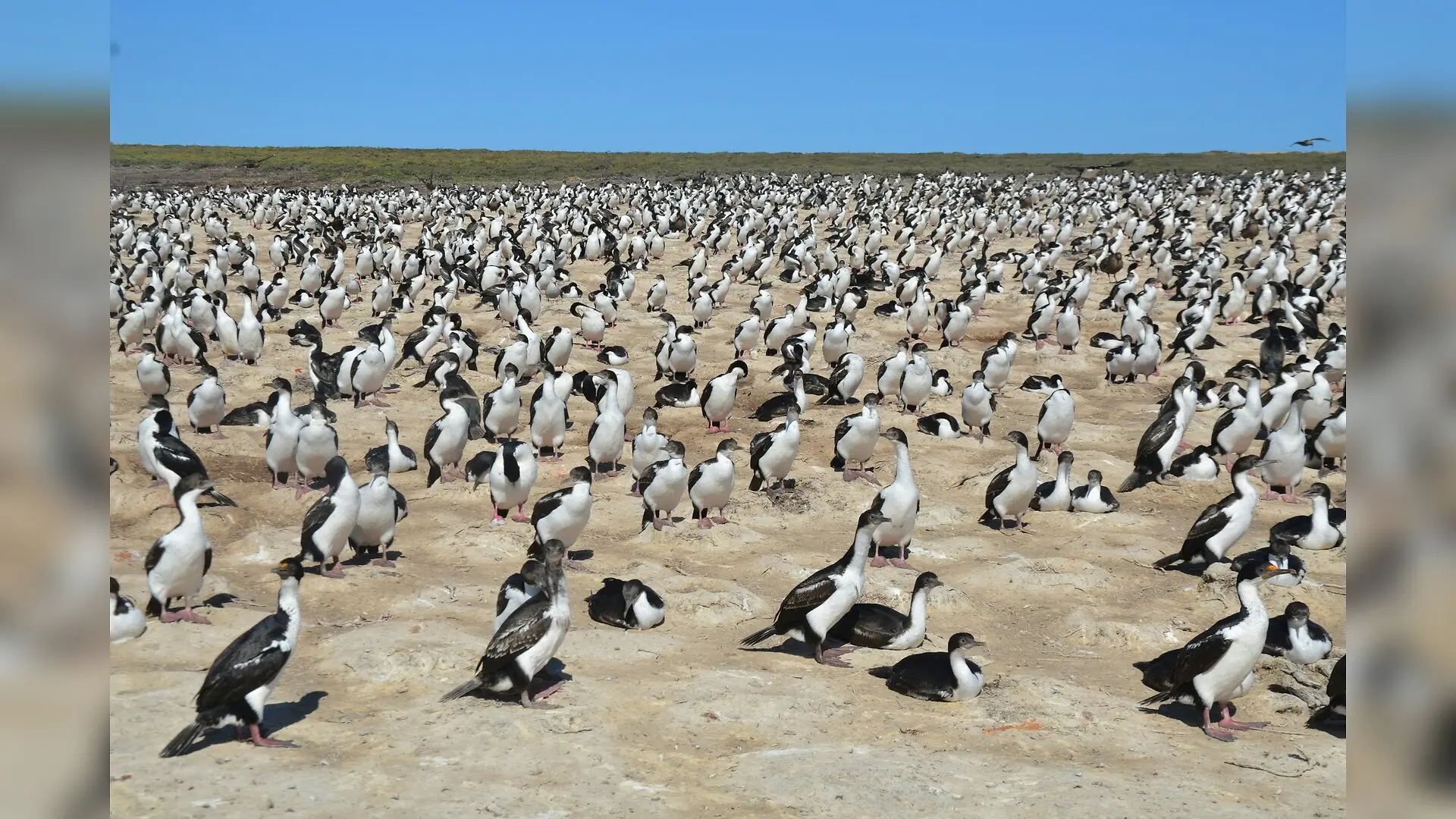
When breeding Northern gannets search the open ocean for fish, their hunting grounds transform entirely depending on whether they fly alone or join a bustling flock. Marine ecologists have long known that seabirds rely on a mix of environmental signs and the movements of other animals to find food, but the combined power of these two factors has remained largely unmeasured. By outfitting wild gannets with miniature cameras and global positioning system trackers, researchers discovered that these large seabirds hunt in dramatically different physical environments depending on their social context.
The study, published in Oecologia, was led by E. J. Alexander alongside colleagues including B. L. Clark, K. M. Atkins, and senior researcher S. C. Votier. The team set out to understand how social cues, such as the presence of other feeding birds, alter the fundamental habitat requirements of colonial seabirds during the demanding chick-rearing season.
How Do Tiny Bird Cameras Reveal Secret Ocean Hunting Grounds?
Tracking high-flying marine predators across hundreds of square kilometers of ocean is notoriously difficult. To solve this, the research team deployed a combination of high-resolution bird-borne cameras and location loggers on breeding Northern gannets, scientifically known as Morus bassanus. These devices captured the exact moments the birds plunged into the water to capture prey, alongside precise data about water depth, temperature, and distance from their nesting colony.
By analyzing these dive events using resource selection functions, a statistical method used to evaluate habitat preferences, the authors mapped the environmental conditions associated with successful foraging. The footage and tracking data revealed that gannets do not treat the ocean the same way when they are hunting by themselves compared to when they are part of a feeding frenzy.
Why Does Hunting in Flocks Change Where Seabirds Look for Fish?
The findings indicate that solitary gannets are much pickier about their physical environment, choosing specific oceanographic hotspots where underwater topography and currents naturally concentrate fish near the surface. These lone hunters rely heavily on environmental cues to locate sparse prey patches in the vast marine expanse.
When gannets hunt in groups, however, the rules of habitat selection shift. The presence of a flock acts as a powerful social cue that overrides the need for specific physical indicators, allowing birds to successfully target prey in areas they would usually ignore when flying alone. This synergy between social information and environmental conditions helps explain how seabird colonies can rapidly exploit ephemeral food resources across changing marine ecosystems.
What Do These Insights Mean for Marine Conservation?
Understanding how social dynamics influence habitat selection provides crucial context for predicting how seabird populations might respond to shifts in prey availability driven by climate change and commercial fishing. If animals rely on the presence of neighbors to find food, a decline in colony numbers could make remaining foragers less efficient at locating patchy resources.
The authors note that while environmental variables remain vital for mapping habitat suitability, conservation planners must also account for social structures when protecting marine areas. As oceans warm and fish distributions shift, knowing how seabirds integrate social cues and environmental signs will help researchers better protect these iconic coastal predators.
The research was published in Oecologia on November 20, 2026.
This article has been fact checked for accuracy, with information verified against reputable sources. Learn more about us and our editorial process.
Last reviewed on .
Article history
- Latest version
Reference(s)
- Alexander, Evelyn J.., et al. “Habitat selection differs between social and solitary foraging in a wide-ranging seabird.” Oecologia, vol. 208, no. 12, November 20, 2026 Springer Science and Business Media LLC, doi: 10.1007/s00442-026-06016-y. <https://doi.org/10.1007/s00442-026-06016-y>.
- Posted by Omar Mirza