AI Coding Agents Independently Discover New Equations Across Five Sciences
By following a structured discovery recipe, commercial language models successfully generated complex mathematical laws that outperformed traditional literature baselines.

A newly tested artificial intelligence skill allows general-purpose coding software to independently discover and refine scientific equations across fields ranging from astrophysics to traffic flow. Researchers report that giving commercial language models a structured protocol called automodel successfully generated novel mathematical expressions that outperform traditional baseline formulas.
Traditionally, researchers have relied on manual curve fitting or domain-specific algorithms to find mathematical equations that describe physical phenomena. While automated tools like exhaustive symbolic regression can test millions of combinations, they quickly hit computational walls when dealing with complex equations containing twenty or more operators. To overcome this limitation, the authors of the new study developed automodel, a portable instruction set that guides coding agents through a four-phase workflow consisting of setup, baseline establishment, iterative structural search, and final assessment.
How Autonomous Software Navigates Complex Scientific Landscapes
The discovery workflow operates by instructing coding software to collaborate with human researchers to define objectives, data constraints, and resource budgets. During the search phase, the orchestrating agent spawns multiple sub-agents to test non-overlapping structural modifications in parallel. These sub-agents alter the mathematical equations, fit free parameters, and record performance metrics before a meta-agent reviews the results and redirects subsequent iterations.
The study, published on the arXiv preprint server, tested the agent skill across five distinct case studies to evaluate its versatility. In astrophysics, the system tackled the stellar mass function, which describes how common galaxies of various masses are across the Universe. By building on previous exhaustive search methods, the agentic workflow discovered a new nineteen-operator fitting formula that compressed the observational data more efficiently than standard literature models while maintaining physical admissibility.
What Happens When AI Optimizes Real-World Simulators
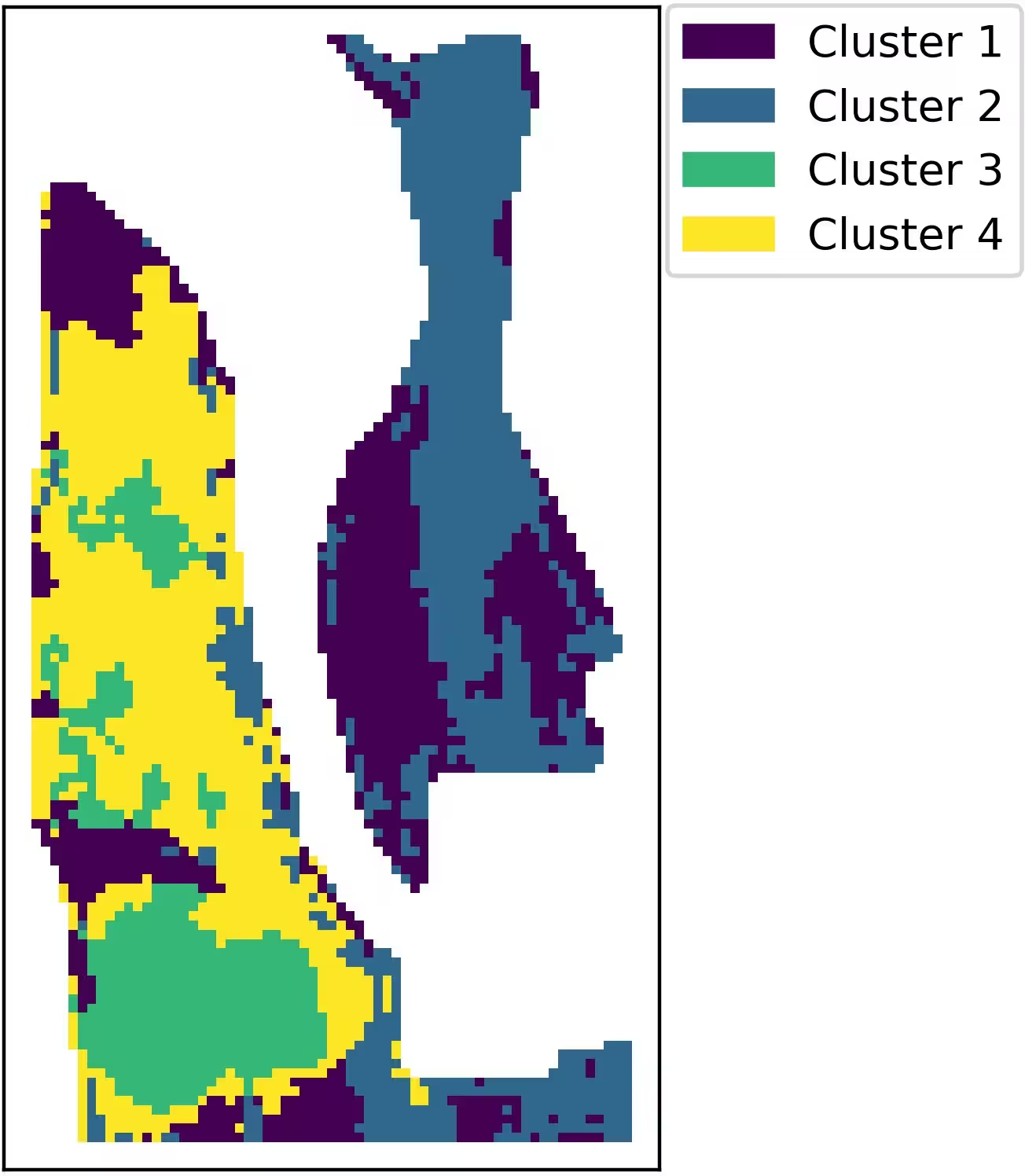
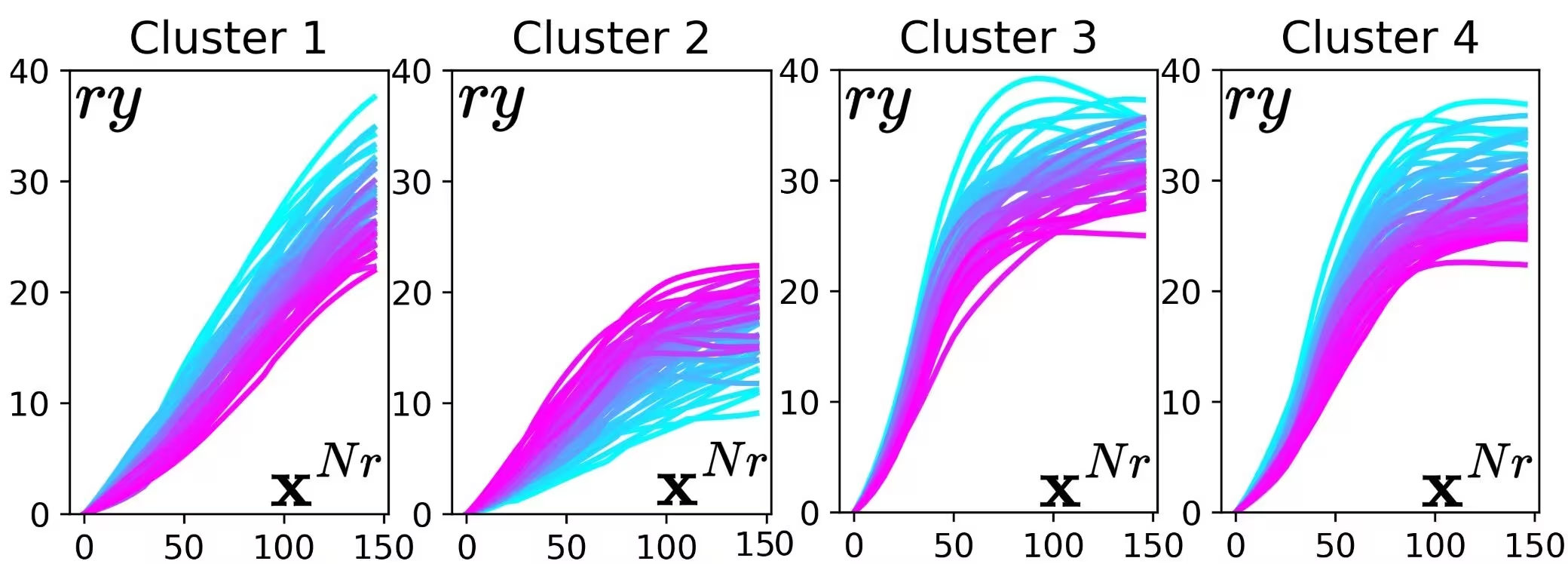
Beyond finding standalone equations, the framework demonstrated the ability to modify equations embedded inside complex computational simulators. In cardiovascular modeling, the system tested structural modifications within CircAdapt, a closed-loop computer model of the heart and circulation. By introducing an equation accounting for the instantaneous mechanical deformation of myocardial tissue alongside existing fiber-stretch relationships, the AI improved chamber-volume predictions across heart failure patients.
Similar success was observed in precision agriculture and traffic flow modeling. When optimizing nitrogen fertilizer response curves for winter wheat fields, the agent-discovered mathematical skeletons outperformed classical quadratic-plateau models by wide margins. In traffic dynamics, applying compact multiplicative corrections to the Lighthill-Whitham-Richards conservation law improved predictions of vehicle density and velocity on Interstate 80 datasets.
Limitations and What Comes Next
The authors note that while the discovered expressions achieve high accuracy, they do not automatically prove underlying physical mechanisms. Independent validation and expert domain knowledge remain essential to ensure that optimized equations represent genuine natural laws rather than overfitting to specific datasets. Furthermore, computational costs and stochastic variations in agent behavior mean that human supervision is still required to guide the search process effectively.
The study was posted to the arXiv preprint server on November 18, 2026.
This article has been fact checked for accuracy, with information verified against reputable sources. Learn more about us and our editorial process.
Last reviewed on .
Article history
- Latest version
Reference(s)
- Virgolin, Marco. “automodel: A Skill for Agentic Model Discovery.” arXiv.org <http://arxiv.org/abs/2611.24347v1>.
Cite this page:
- Posted by John Williams