JWST Reveals Surprising Truth About Hazy Sub-Neptune Exoplanets
New telescope data challenge long-held assumptions about planetary hazes, revealing a complex mix of stellar contamination and high-metallicity atmospheres.
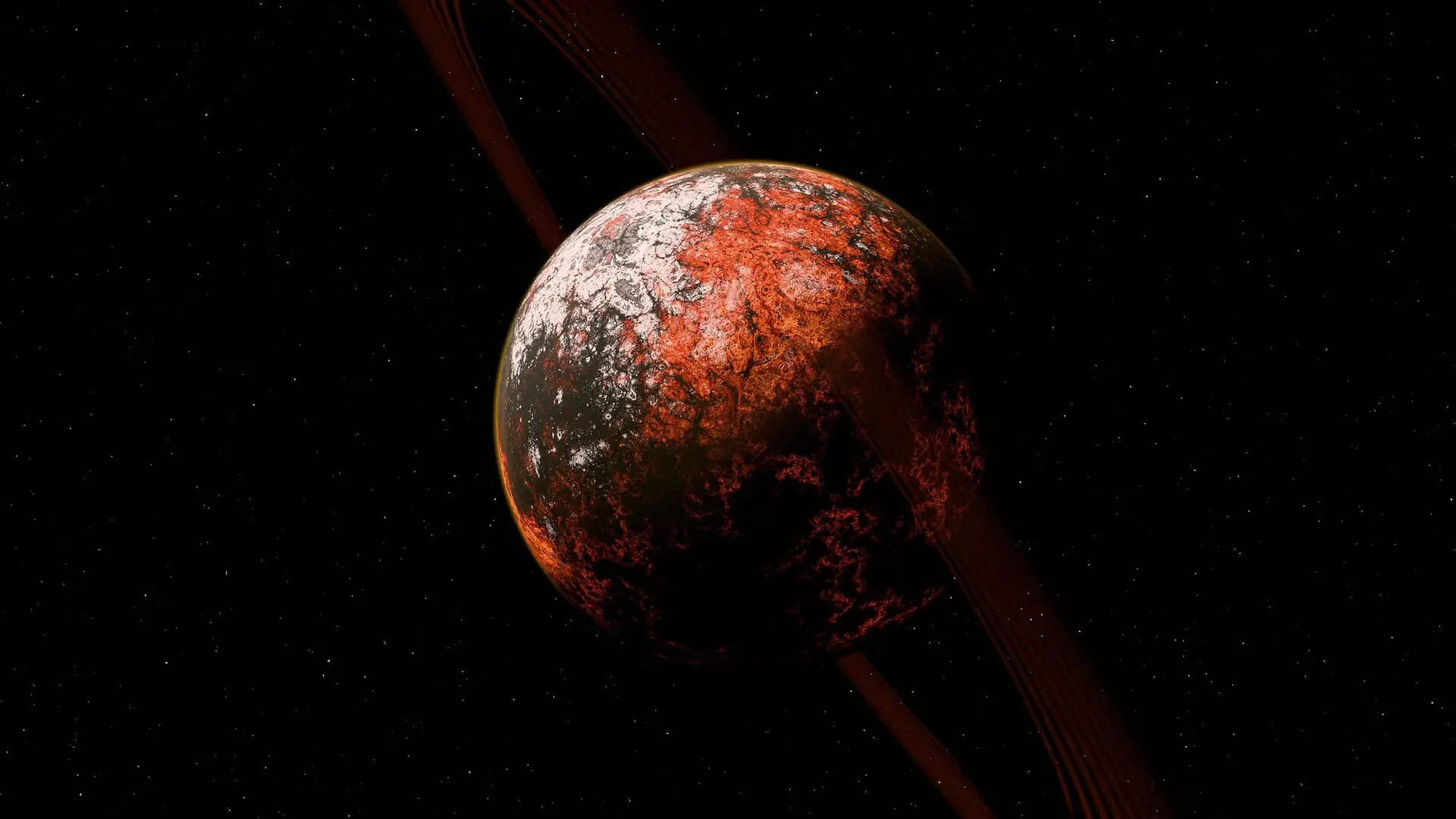
When researchers took a fresh look at eight bizarre sub-Neptune exoplanets using the James Webb Space Telescope, they discovered that planetary hazes are far more complicated than previously imagined. The analysis challenges the long-held assumption that warm, hydrogen-rich planets universally form thick photochemical veils, revealing instead a fragmented and highly diverse population.
Sub-Neptunes are among the most common types of planets found in our galaxy, yet none exist in our solar system. Their intermediate size, sitting somewhere between rocky terrestrial worlds and giant gas planets, makes them crucial laboratories for understanding planetary formation and atmospheric chemistry. Transmission spectroscopy, which examines starlight filtering through a planet’s atmosphere during a transit, has previously revealed a wide variety of spectral behaviors. While some worlds display clear molecular signatures, others show nearly flat, featureless spectra that scientists often attribute to obscuring clouds or hazes.
Early observations from the Hubble Space Telescope suggested a neat population-level trend, indicating that warmer sub-Neptunes generally developed heavier aerosol opacities. However, newer data from the James Webb Space Telescope have painted a much messier picture. To investigate these conflicting findings, a team of astronomers led by A. Y. Jaziri of LATMOS/IPSL and Université Paris-Saclay, alongside colleagues T. Drant and M. Turbet, performed a consistent atmospheric retrieval analysis of eight moderately irradiated sub-Neptunes, published on the arXiv preprint server. The researchers tested whether laboratory-derived haze properties could successfully explain the new high-precision telescope data across multiple targets.
Can Laboratory Haze Models Explain Eight Distinct Sub-Neptunes?
The research team systematically compared haze-free atmospheric models against two specific experimental haze analogues, designated as exo1 and exo2, which replicate different chemical structures and carbon-to-nitrogen configurations in laboratory settings. Out of the eight planets examined, including LP 791-18 c, TOI-1231 b, TOI-732 c, TOI-270 d, GJ 1214 b, GJ 9827 d, GJ 3090 b, and TOI-421 b, only three showed significant statistical evidence for hazes. Specifically, LP 791-18 c, TOI-732 c, and GJ 3090 b favored the haze-inclusive models over clear atmospheres, while the remaining five targets were equally well or better described without any aerosols.
The results also highlighted a subtle trap in planetary data interpretation. For planets like LP 791-18 c and GJ 3090 b, the apparent preference for haze was primarily driven by the short-wavelength spectral slope rather than direct detections of characteristic infrared absorption features from the laboratory analogues. Furthermore, stellar contamination, known as the transit light-source effect, can mimic the exact same short-wavelength slope changes. When accounting for these potential stellar biases, the actual presence of photochemical hazes on those particular worlds becomes much less certain.
Why Do Muted Spectra Not Always Mean Haze Is Present?
For several other planets in the sample, such as GJ 1214 b and TOI-270 d, flat or muted transmission spectra did not require hazes at all. Instead, the telescope data could be successfully reproduced by high-metallicity, carbon dioxide-rich or water-heavy atmospheres that naturally shrink the atmospheric scale height and dampen molecular signals. This reveals a deep degeneracy in planetary retrieval models, where multiple completely different physical scenarios can produce nearly identical telescope observations.
Interestingly, the team found no clear correlation between retrieved methane abundances and haze preferences across the sample. While methane provides a vital carbon source for producing photochemical hazes, the efficiency of haze formation clearly depends on a complex web of atmospheric composition, oxidation states, and stellar ultraviolet irradiation. For instance, highly oxidized atmospheres rich in carbon dioxide may actively inhibit the chemical pathways required to form complex hydrocarbon aerosols.
What Does This Mean for Future Exoplanet Studies?
Ultimately, the new findings suggest that the tidy aerosol trends inferred from older Hubble observations do not reflect a universal haze-forming mechanism across all sub-Neptunes. Instead, atmospheric signatures are dictated by local chemical environments and stellar interactions. Resolving these ambiguities will require simultaneous modeling of stellar contamination, broader wavelength coverage, and laboratory experiments that span a wider range of atmospheric conditions to finally untangle true planetary aerosols from stellar noise.
The study was posted to the arXiv preprint server on November 24, 2026.
This article has been fact checked for accuracy, with information verified against reputable sources. Learn more about us and our editorial process.
Last reviewed on .
Article history
- Latest version
Reference(s)
- Jaziri, A.. “A comparative analysis of the presence of haze in sub-Neptunes observed with JWST.” arXiv.org <http://arxiv.org/abs/2611.32950v1>.
Cite this page:
- Posted by Farah Siddiqui