Shilajit for Active Lifestyles: What Athletes Should Know
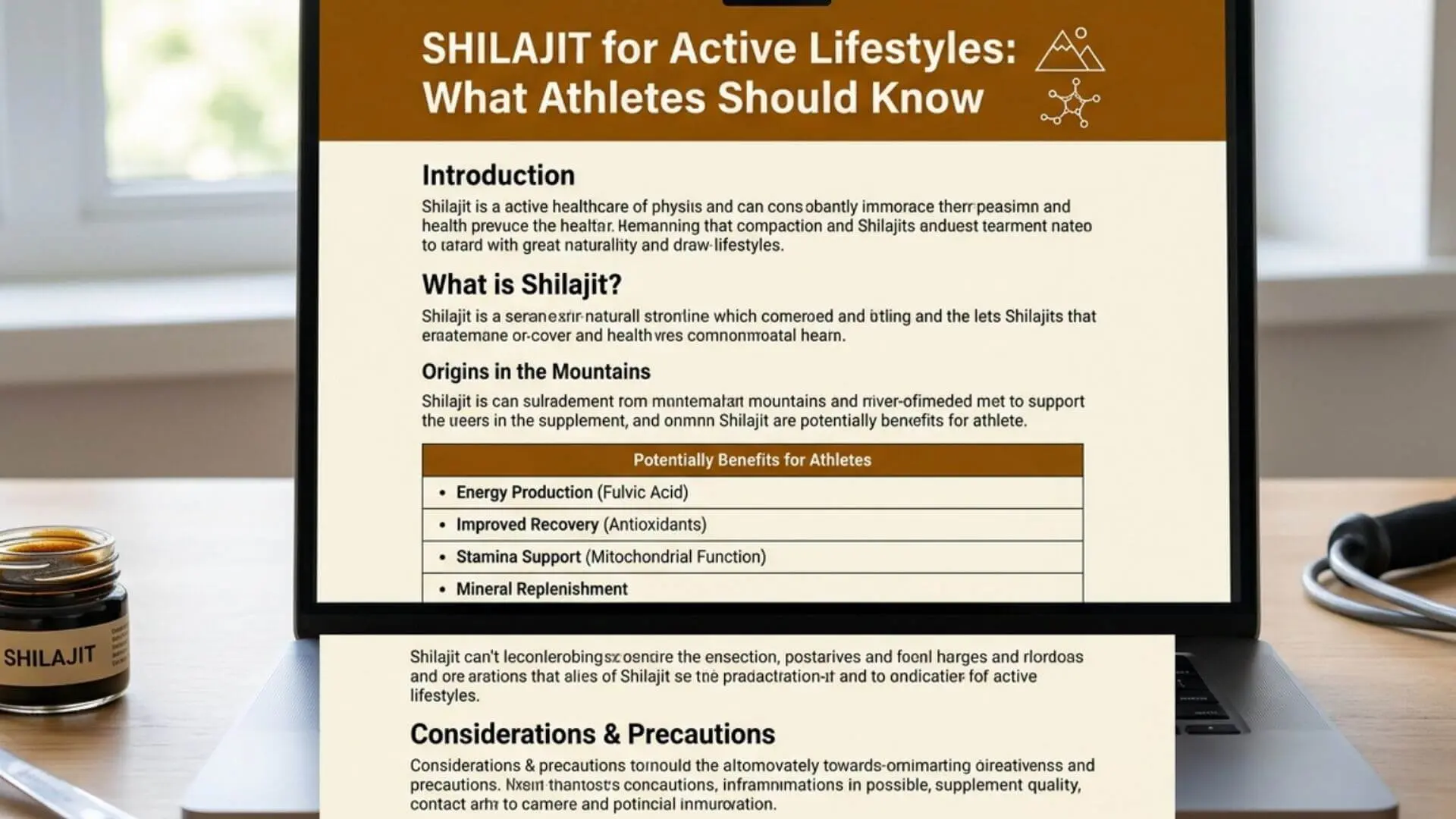
Athletes often look beyond training plans when they want to support energy, recovery and general wellbeing. Alongside balanced nutrition, hydration, sleep and appropriate training, some active people also consider traditional natural products. Shilajit is one such substance that has attracted interest among people who follow active lifestyles.
Shilajit is a naturally occurring, dark, resin-like material associated with mountainous regions, including the Himalayas and Hindukush. Traditional systems of medicine have used it for centuries. Modern researchers have also examined its chemical composition, possible biological effects and potential applications.
However, athletes should separate traditional claims from established evidence. Current research is promising in some areas, but human evidence remains limited, and product quality can vary considerably. Therefore, anyone considering Shilajit should look at both the potential benefits and the safety considerations.
What Is Shilajit and Why Do Active People Use It?
Traditional Uses of Shilajit
Shilajit has a long history of use in Ayurvedic medicine, where practitioners have traditionally described it as a rejuvenating and adaptogenic substance. Researchers describe Shilajit as a complex natural material containing humic substances, minerals and various organic compounds.
Traditional use does not, by itself, prove that a substance improves athletic performance. Nevertheless, this long history has encouraged researchers to examine whether specific compounds in Shilajit may have measurable effects in humans.
Key Compounds Found in Shilajit
The composition of Shilajit can vary according to its geographical origin and processing. Research has identified humic substances, fulvic acids, minerals and other organic compounds. A recent chemical review also noted substantial variation between samples, which makes standardisation important when interpreting research.
This variation matters because research on one standardised preparation cannot automatically be applied to every Shilajit product available on the market.
Why Athletes Are Interested in Shilajit
Athletes may consider Shilajit because research has explored areas such as fatigue, muscle strength, exercise performance and hormonal markers. However, athletes should view Shilajit as a possible supplement rather than a replacement for adequate calories, protein, carbohydrates, fluids, sleep or structured training.
Shilajit for Active Lifestyles: What Athletes Should Know
The main point is simple: Shilajit has some early evidence that may interest active people, but researchers still need larger and better-controlled trials.
Potential Support for Exercise Performance
One randomised, placebo-controlled study examined 63 recreationally active men who took either 250 mg or 500 mg of a purified Shilajit preparation daily for eight weeks. The researchers assessed strength, fatigue-related decline in strength and other measures.
The findings provide a reason for further research, but they do not establish that Shilajit will improve performance in every athlete. The study involved a relatively small group of young men, and its results should not be generalised to all populations.
Muscle Strength and Endurance
The same study examined whether Shilajit supplementation affected measures of muscular strength and fatigue. Results suggested potential benefits in some measures, although more independent research is needed before athletes can draw firm conclusions.
A newer 2026 pilot study also reported improvements in strength, muscle endurance and some other performance measures after 28 days of a specific Shilajit resin preparation in 25 healthy, moderately active men. However, the study was open-label and single-arm, so it did not include a placebo comparison. The authors themselves called for larger randomised trials.
Energy and Fatigue
Fatigue is another area of interest. Earlier research has proposed that compounds in Shilajit, including fulvic acid and dibenzo-alpha-pyrones, may influence cellular processes related to energy production. However, laboratory mechanisms do not automatically translate into meaningful improvements in athletic performance.
Therefore, athletes should not treat Shilajit as an instant energy source or a substitute for sufficient carbohydrate and calorie intake.
Exercise Recovery
Recovery requires adequate food, fluids, sleep and appropriate training load. Some research has investigated whether Shilajit may influence markers associated with fatigue and muscle stress. The recent pilot study found a reduction in creatine kinase, although the change did not reach statistical significance.
Consequently, the evidence does not yet support strong claims that Shilajit directly improves recovery in all athletes.
What Does Research Say About Shilajit and Exercise?
Findings From Human Studies
Human studies provide some interesting results, but they remain relatively limited. A review of the available evidence noted that comparatively few well-controlled human studies have examined Shilajit, while much of the broader literature involves laboratory or animal research.
One controlled study also examined purified Shilajit in healthy men aged 45 to 55 and reported changes in testosterone and related hormonal markers after 90 days. However, this research involved middle-aged men rather than competitive athletes, so it should not be interpreted as proof of improved sports performance.
What Current Evidence Suggests
Overall, research suggests that Shilajit deserves further investigation. Some human trials report potentially useful outcomes, particularly around strength and fatigue, but the evidence base remains too small to support broad performance claims.
Athletes should therefore consider the current evidence as preliminary rather than definitive.
Why More Research Is Still Needed
Future studies should include larger groups, different age ranges, female athletes, competitive athletes and longer follow-up periods. Researchers should also compare standardised preparations because the chemical composition of Shilajit can vary significantly between products and locations.
How Shilajit May Fit Into an Athlete’s Routine
When Athletes May Consider It
An athlete who already follows a balanced diet and consistent training programme may consider a quality-tested Shilajit product as an optional supplement.
However, the basic foundations should come first. Adequate energy intake, carbohydrates, protein, micronutrients, hydration and sleep have a much stronger place in sports nutrition.
Shilajit With a Balanced Diet
Shilajit cannot replace food. It does not provide the complete range of nutrients required for athletic performance.
For example, athletes still need carbohydrate-rich foods to support training, protein sources to support muscle maintenance, healthy fats, fruit and vegetables for micronutrients, and enough fluids to maintain hydration.
The Importance of Training, Sleep and Hydration
No supplement can compensate for consistently poor recovery habits. Therefore, athletes should establish a sensible training schedule, maintain regular sleep and drink enough fluids before considering additional supplements.
Why Supplements Should Not Replace Good Nutrition
Supplements work best as additions to an already sound nutrition plan. Consequently, athletes should avoid relying on Shilajit or any other supplement as the main source of energy, protein or recovery nutrition.
Shilajit and Muscle Recovery
Exercise-Induced Fatigue
Heavy training can create temporary fatigue, particularly when athletes do not allow enough recovery between sessions. Research involving Shilajit has examined fatigue-related changes in muscular strength, but further trials must confirm whether these effects are consistent.
Muscle Function After Training
Muscle function depends on adequate energy availability, protein intake, electrolytes, sleep and appropriate training. Although Shilajit research has produced interesting findings, it should remain one possible supplement rather than the central part of a recovery strategy.
Recovery Between Training Sessions
Athletes who train frequently should prioritise recovery fundamentals. A post-training meal, sufficient carbohydrate and protein, hydration and quality sleep generally deserve attention before supplementation.
Choosing a Quality Shilajit Product
Look for Purification Information
Raw Shilajit should not be assumed to be suitable for consumption simply because it comes from a natural source. Historical and scientific literature has raised concerns about contaminants in unprocessed or poorly controlled products.
Therefore, athletes should choose products that clearly explain their processing and suitability for human consumption.
Check Testing and Ingredient Transparency
Independent laboratory testing is particularly important with Shilajit. Research has detected potentially toxic elements in some samples and has shown that mineral composition can vary between products.
A responsible manufacturer should be able to provide clear information about testing, ingredients and batch quality.
Consider Product Form and Serving Information
Shilajit may appear in resin, powder, capsule or other forms. Athletes should follow the manufacturer's serving instructions rather than assuming that a higher amount will provide greater benefits.
Avoid Products With Unclear Ingredients
If a Shilajit product does not clearly state what it contains or provide credible testing information, athletes should consider another option.
Shilajit Safety: What Athletes Should Consider
Possible Side Effects
The safety profile of Shilajit depends partly on the preparation and its purity. Scientific reviews have highlighted concerns about heavy metals and other contaminants, particularly when products lack adequate quality control.
For that reason, natural origin does not automatically mean risk-free.
Who Should Seek Professional Advice?
People who take prescription medicines, have an existing medical condition, are pregnant or breastfeeding, or have concerns about supplements should speak with an appropriate healthcare professional before using Shilajit.
Why Product Quality Matters
A 2024 review reported that some studies found heavy-metal levels in Shilajit above permitted limits, while other samples remained below those limits. This variation highlights why testing and quality control matter.
A 2026 analytical study also found variation in toxic and essential elements across samples from different geographical origins.
Medication and Supplement Interactions
Athletes should not assume that Shilajit is compatible with every medicine or supplement. A pharmacist, doctor or qualified healthcare professional can assess individual circumstances.
Shilajit for Different Types of Active People
Strength Training and Gym Workouts
People who perform resistance training may be interested in the early research on Shilajit and muscular strength. However, training quality, progressive resistance, protein intake and recovery remain the main factors to address.
Endurance Training
Runners, cyclists and other endurance athletes have different nutritional priorities. Carbohydrate availability, hydration and electrolyte management remain particularly important, so Shilajit should not replace these basics.
Recreational Exercise
People who exercise for general health may not need complex supplementation at all. A varied diet and regular activity often provide a strong foundation.
High-Volume Athletic Training
Athletes completing frequent or demanding sessions should assess their overall energy intake and recovery plan first. If they choose Shilajit, they should treat it as an optional addition rather than a central performance strategy.
Common Mistakes Athletes Make When Using Shilajit
Relying on Shilajit Instead of Proper Nutrition
The biggest mistake is treating Shilajit as a substitute for food. Athletic performance requires sufficient energy, protein, carbohydrates, fats, vitamins, minerals and fluids.
Taking More Than Recommended
Higher doses do not automatically produce better results. Athletes should follow product directions and seek professional advice when necessary.
Ignoring Product Testing
Because studies have found variation in mineral and heavy-metal content, athletes should not ignore laboratory testing when selecting Shilajit.
Expecting Immediate Results
The available human research has used specific preparations and study periods. Therefore, athletes should not expect immediate changes after taking Shilajit.
Frequently Asked Questions About Shilajit for Active Lifestyles
Can Shilajit Support Athletic Performance?
Some human studies suggest that certain standardised Shilajit preparations may influence measures such as strength, endurance or fatigue. However, the evidence remains limited, so it is too early to claim that Shilajit reliably improves athletic performance for everyone.
Is Shilajit Useful for Muscle Recovery?
Early research has examined fatigue and markers associated with muscle stress. However, more controlled research is required before Shilajit can be recommended specifically as a recovery aid.
Can Athletes Take Shilajit Every Day?
Some clinical studies have used daily Shilajit supplementation for defined periods. However, athletes should follow the directions for the specific tested product and seek professional advice if they have health conditions or take medicines.
What Should Athletes Look for in Shilajit?
Athletes should prioritise clear ingredient information, appropriate processing, credible laboratory testing and transparent serving guidance. These factors matter because the composition of Shilajit can vary substantially between samples.
Is Shilajit a Replacement for Sports Nutrition?
No. Shilajit should not replace a balanced diet, adequate protein, carbohydrate intake, hydration, sleep or a well-designed training programme.
Conclusion
Shilajit has a long history in traditional medicine and has attracted modern scientific interest because of its complex mixture of humic substances, minerals and other compounds. Early human research has produced interesting findings related to muscular strength, fatigue and other measures.
However, athletes should keep the evidence in perspective. Current research does not justify presenting Shilajit as a guaranteed performance enhancer. More large, well-controlled and independent human studies are needed.
Quality also matters. Some research has identified heavy metals and other potentially harmful elements in certain samples, which makes purification, testing and responsible manufacturing essential.
For an active lifestyle, the best approach remains straightforward: eat a balanced diet, train appropriately, recover properly, stay hydrated and sleep well. If an athlete chooses to use Shilajit, it should sit alongside these foundations rather than replace them.
Cite this page:
- Posted by Khawar Abbas