New Statistical Analysis Finds Surprising Pattern in Children Who Recall Past Lives
A large archive of alleged past-life memories reveals a mysterious link between birth intervals and circumstances of death, though the cause remains unknown.

For more than sixty years, researchers at the University of Virginia’s Division of Perceptual Studies have meticulously cataloged thousands of reports from children who claim to remember past lives. This archive, arguably the most comprehensive of its kind, contains detailed interviews with families, witnesses, and neighbors, which investigators then cross-reference against historical data to verify the accuracy of the children’s assertions.
A fresh quantitative study published in the journal Psychology of Consciousness: Theory, Research, and Practice has moved beyond individual anecdotal accounts to analyze broad patterns within this dataset. Led by cognitive neuroscience researcher Saeedeh Sadeghi, the team investigated a potential link between the circumstances of a person’s death and the time elapsed before the birth of a child who later identifies with that individual.
Notable Case Histories
The archive includes widely cited examples that highlight the specificity of these claims. In one instance, a young boy from Louisiana named James began suffering from recurring nightmares about his plane catching fire. He claimed to have been a World War II fighter pilot, citing specific details about his vessel, the Natoma Bay, and identifying a comrade named Jack Larsen. Researchers successfully corroborated his statements with the life and death of James Huston Jr., who was killed in action over the Pacific Ocean in 1945.
Another case involves a four-year-old boy from Oklahoma named Ryan, who recognized a man in a 1930s Hollywood photograph as himself. Investigators confirmed the man was a minor actor named Marty Martyn. Remarkably, Ryan provided 55 verified facts about Martyn’s life, including details about his domestic habits and family structure, which were not public knowledge.
Statistical Trends in Intermission Periods
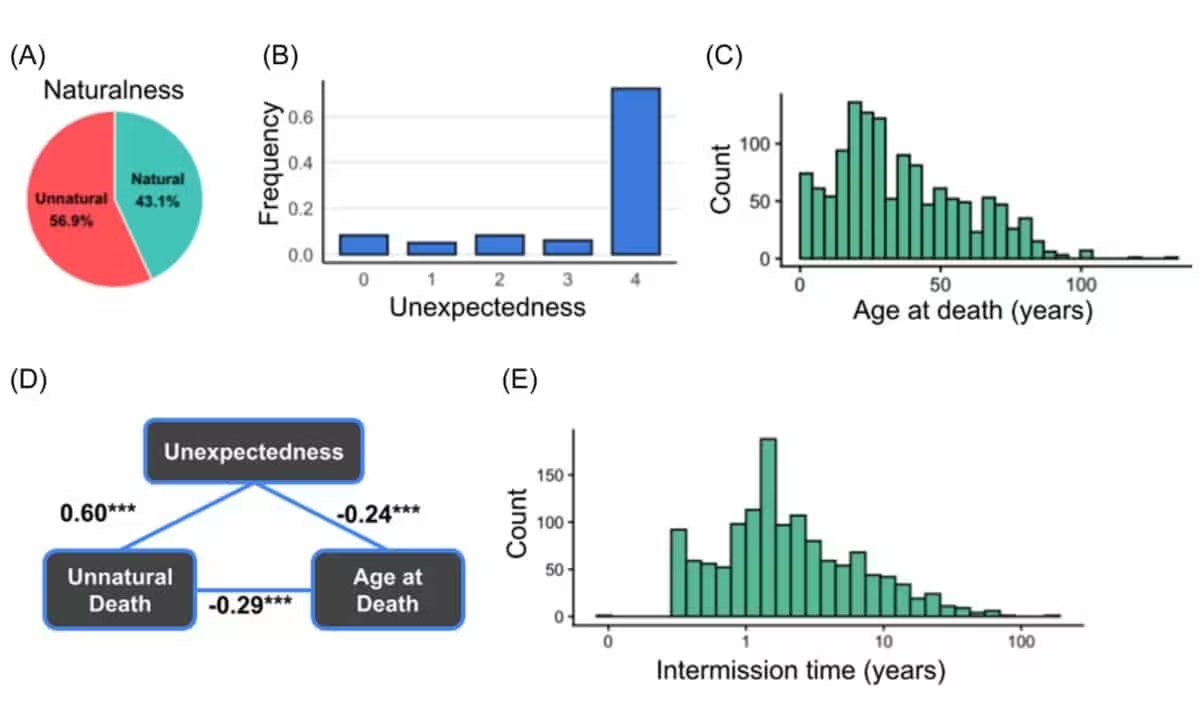
Sadeghi’s team conducted a statistical review of 1,678 cases in which a “Past Person” was identified. Of these, 1,319 cases provided sufficient data to calculate the “intermission time”—the duration between the death of the previous individual and the birth of the child.
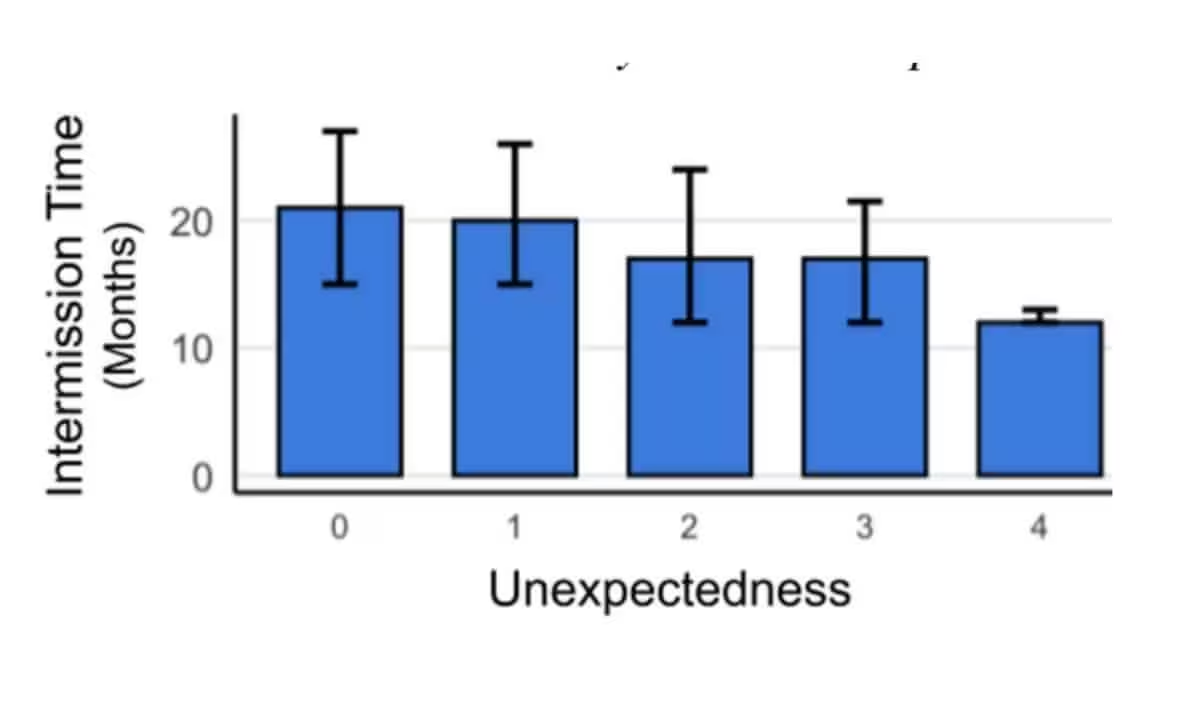
The findings indicate a median interval of 16 months, though the data showed high variance, with intervals ranging up to 150 years. A significant correlation emerged regarding the nature of the death: for cases labeled as “completely unexpected,” such as accidents or sudden medical crises, the median interval dropped to 12 months. Conversely, for deaths that were anticipated, the median rose to 21 months. This 43% discrepancy suggests that abrupt, violent, or sudden endings may be associated with shorter periods before a child begins reporting these memories.
Furthermore, the data set was heavily weighted toward younger individuals, with the median age of the deceased at 30 years. The researchers noted that unnatural and unexpected deaths were significantly more common in this archive than in general mortality statistics, suggesting a potential link between the trauma of a sudden death and the reported phenomena.
Evaluating Cultural Influence and Scientific Caution
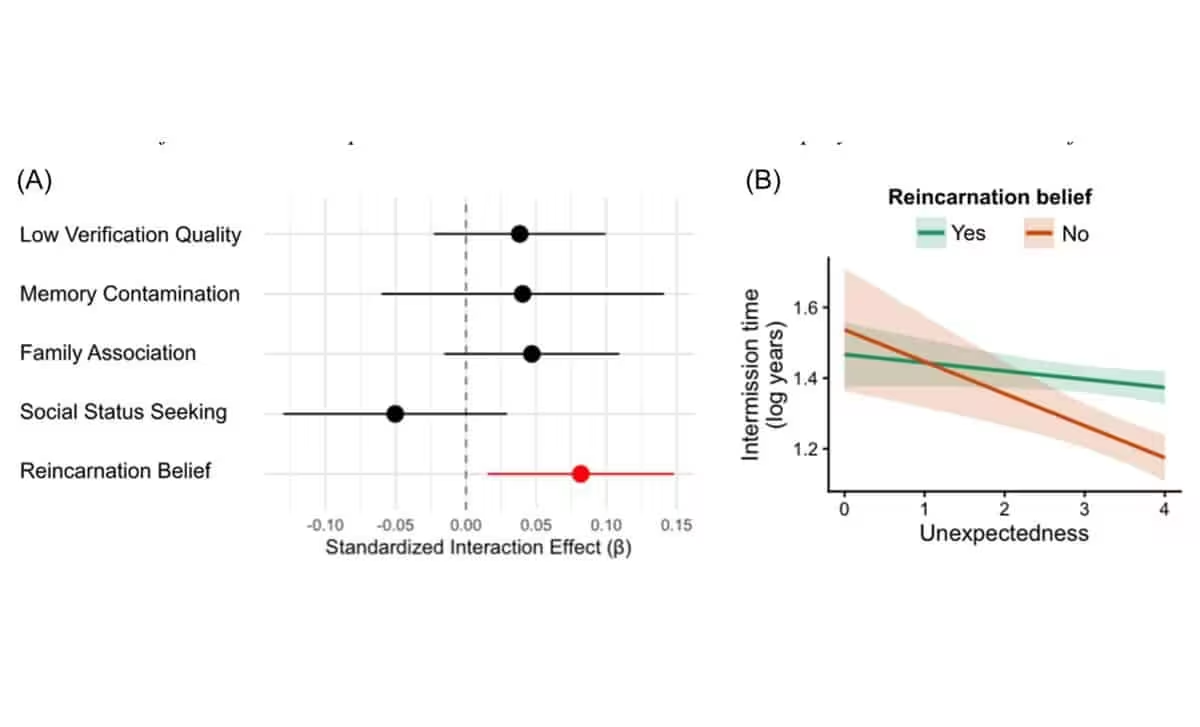
Critics have often argued that cultural or religious beliefs could bias these reports, suggesting that parents in cultures that embrace reincarnation might be more likely to interpret a child’s statements as past-life memories. However, the study found no evidence that religious or cultural backgrounds explained the observed patterns. In fact, the correlation between unexpected deaths and shorter intervals remained consistent and even appeared stronger among families with no religious commitment to the concept of reincarnation.
University of Virginia social psychologist Philip Cozzolino noted in a press release that the evidence does not point toward social belief systems as the primary driver behind these findings.
Despite the statistical findings, researchers emphasize that the study is limited by the observational nature of the data. The impact of death unexpectedness accounted for only a small percentage of the overall variation in birth timing, meaning other unknown factors likely play a role. The team remains strictly agnostic regarding metaphysical interpretations, acknowledging that while the statistical patterns are noteworthy, they do not prove a mechanism for consciousness surviving death.
Sadeghi emphasized that while the findings do not constitute proof of any supernatural process, the consistency of the data warrants further rigorous inquiry. For now, the study serves as a call for more extensive research into these childhood accounts rather than a dismissal of the phenomenon as mere coincidence.
This article has been fact checked for accuracy, with information verified against reputable sources. Learn more about us and our editorial process.
Last reviewed on .
Article history
- Latest version
Reference(s)
- “Children Who Report Memories of Past Lives.” <https://med.virginia.edu/clinical/psychiatry-neurobehavioral-sciences/perceptual-studies/our-research/children-who-report-memories-of-previous-lives>.
- Amazouz, Lydia. “Massive Hydrothermal System Discovered Beneath the Pacific Ocean.”, August 13, 2025 Indian Defence Review <https://indiandefencereview.com/massive-hydrothermal-system-pacific-ocean/>.
- Staff, THR. “10-Year-Old Boy Says He Remembers Past Life as Hollywood Actor.”, March 24, 2015 The Hollywood Reporter <https://www.hollywoodreporter.com/tv/tv-news/10-year-old-boy-says-784090/>.
- “Surprising Pattern Emerges in Reincarnation Reports.”, October 19, 2026 Surprising Pattern Emerges in Reincarnation Reports <https://www.uvahealth.com/news/surprising-pattern-emerges-in-reincarnation-reports>.
Cite this page:
- Posted by Zubair Ali