AI Breakthrough Reveals How to Fix Flaws in Laser 3D Printed Metals
Combining metallurgical physics with machine learning helps solve the formability and strength trade-off in laser metal 3D printing.
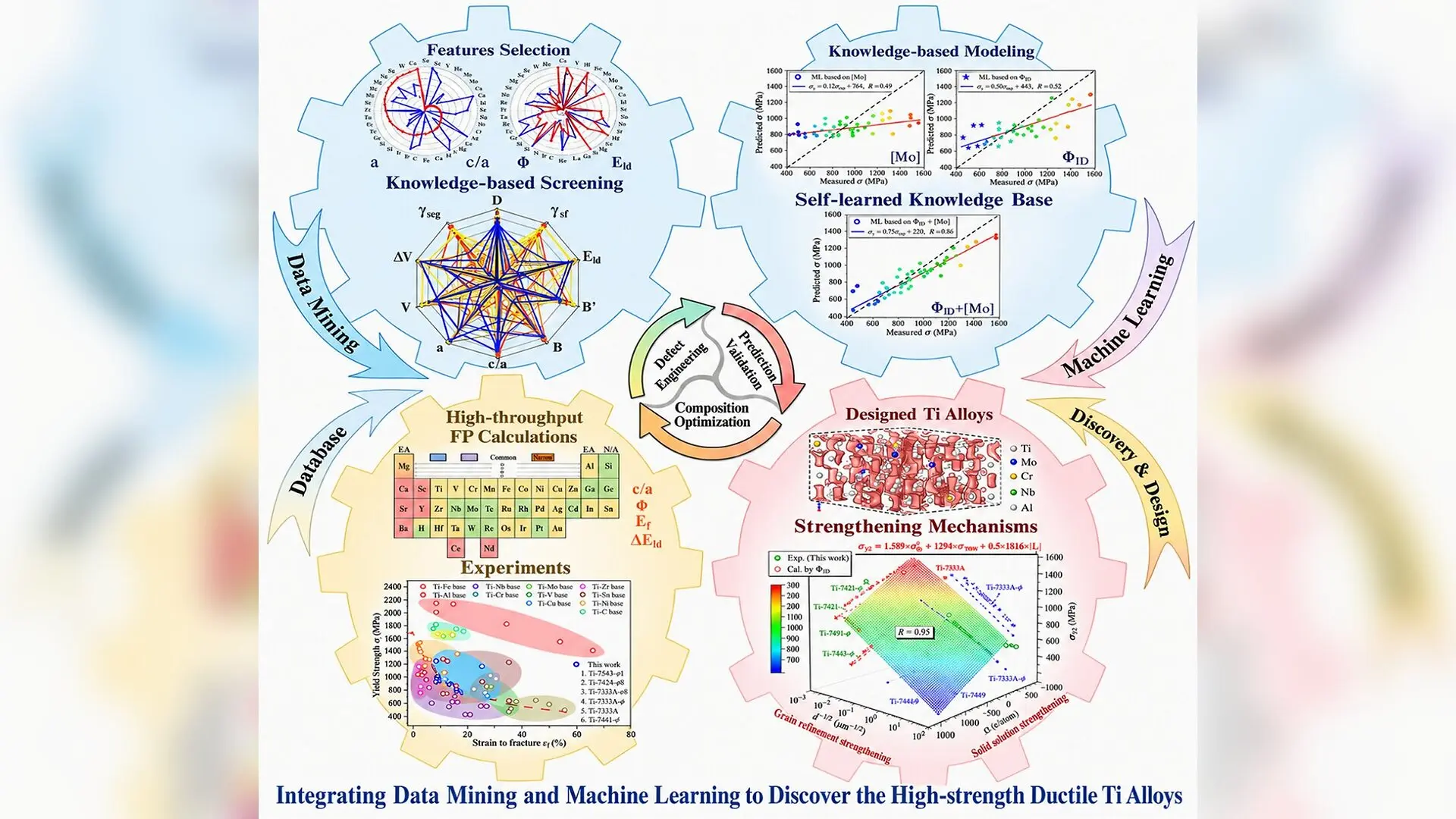
Laser 3D printing creates complex metal parts by melting powder layer by layer with a high-energy beam, but hidden defects and structural flaws often make it difficult to balance print quality with mechanical strength. A comprehensive review published in Advanced Materials Joining details how artificial intelligence combined with metallurgical physics can solve this long-standing manufacturing bottleneck.
Why Do Traditional Optimization Methods Fail in Metal 3D Printing?
Laser powder bed fusion involves extreme physical conditions, including cooling rates up to one million kelvins per second and rapid thermal cycling. These steep temperature gradients create complex fluid flows and rapid solidification that make trial-and-error parameter tuning inefficient and costly. While standard machine learning models can predict final part density or strength, they usually function as black boxes without explaining the underlying physical causes.
Without physical interpretability, data-driven algorithms often fail when applied to new alloy compositions, different 3D printing machines, or unfamiliar processing conditions. Researchers note that formability issues like cracking and mechanical properties such as fatigue resistance are tightly coupled through the same thermal history. Optimizing one aspect often worsens the other unless engineers understand the shared physical pathways.
How Can Physical Knowledge Guide Machine Learning Models?
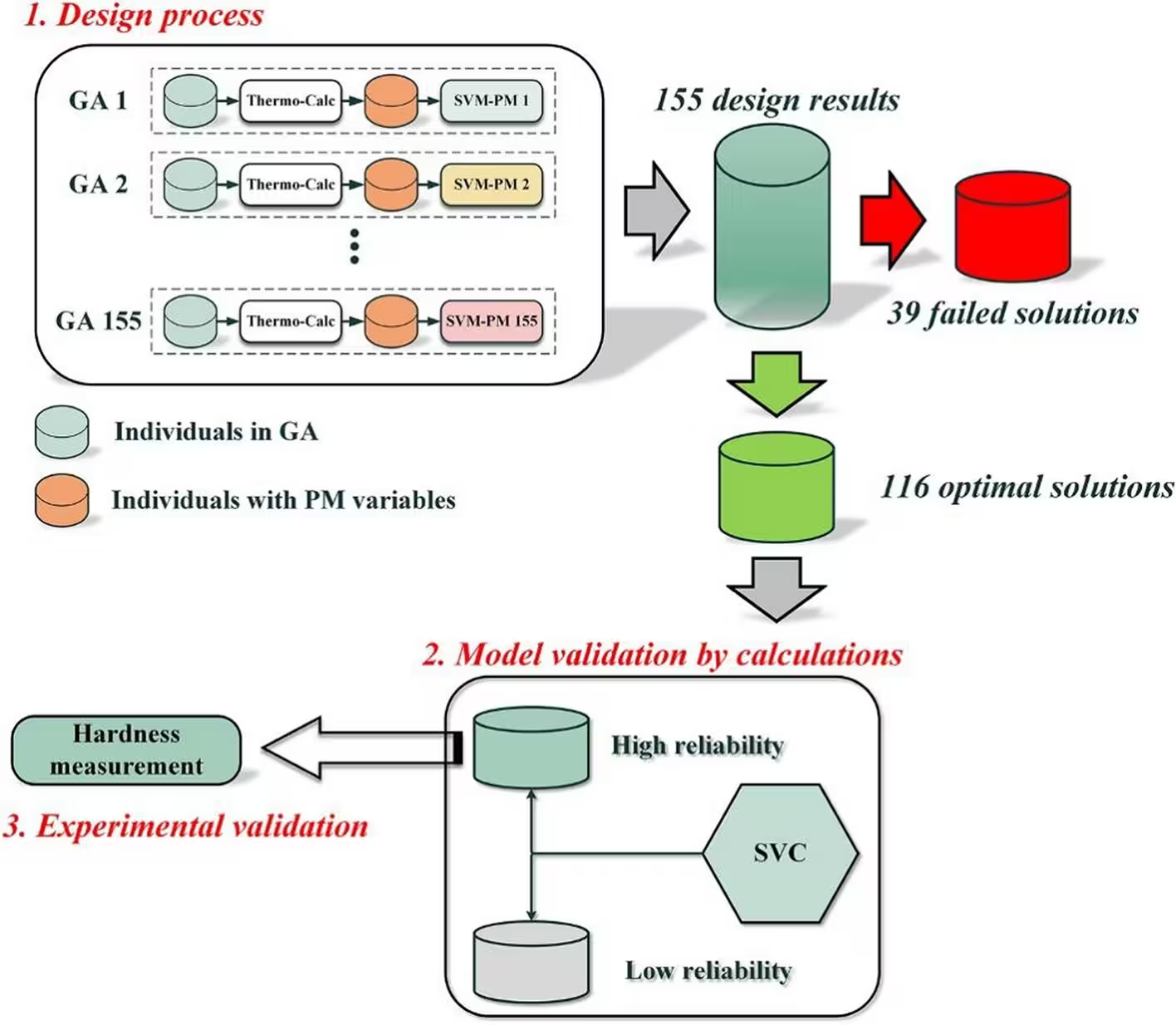
The review highlights four major knowledge domains that introduce physical interpretability into artificial intelligence systems for metallic materials. Physical metallurgy principles use established thermodynamic and phase-transformation rules to constrain AI search spaces, preventing physically impossible predictions. Cross-scale numerical simulations provide quantitative descriptors such as solidification intervals, phase stability fractions, and thermal gradients.
Micrographic image data from scanning electron microscopes and electron backscatter diffraction allow neural networks to analyze complex grain structures without manual feature extraction. Finally, causal physical mechanisms embed governing differential equations directly into network loss functions. This physics-informed approach ensures that model predictions follow the laws of thermodynamics and fluid dynamics rather than relying purely on statistical correlations.
What Does This Mean for Steels, Titanium, and Superalloys?
Different alloy families face distinct challenges that dictate how artificial intelligence is applied. For martensitic steels and titanium alloys, where near-full density is relatively easy to achieve, researchers use explainable models to regulate microstructural heterogeneity, control phase transformations, and improve fatigue resistance. Physics-informed neural networks have successfully predicted ultra-high-cycle fatigue strength by incorporating fracture mechanics constraints.
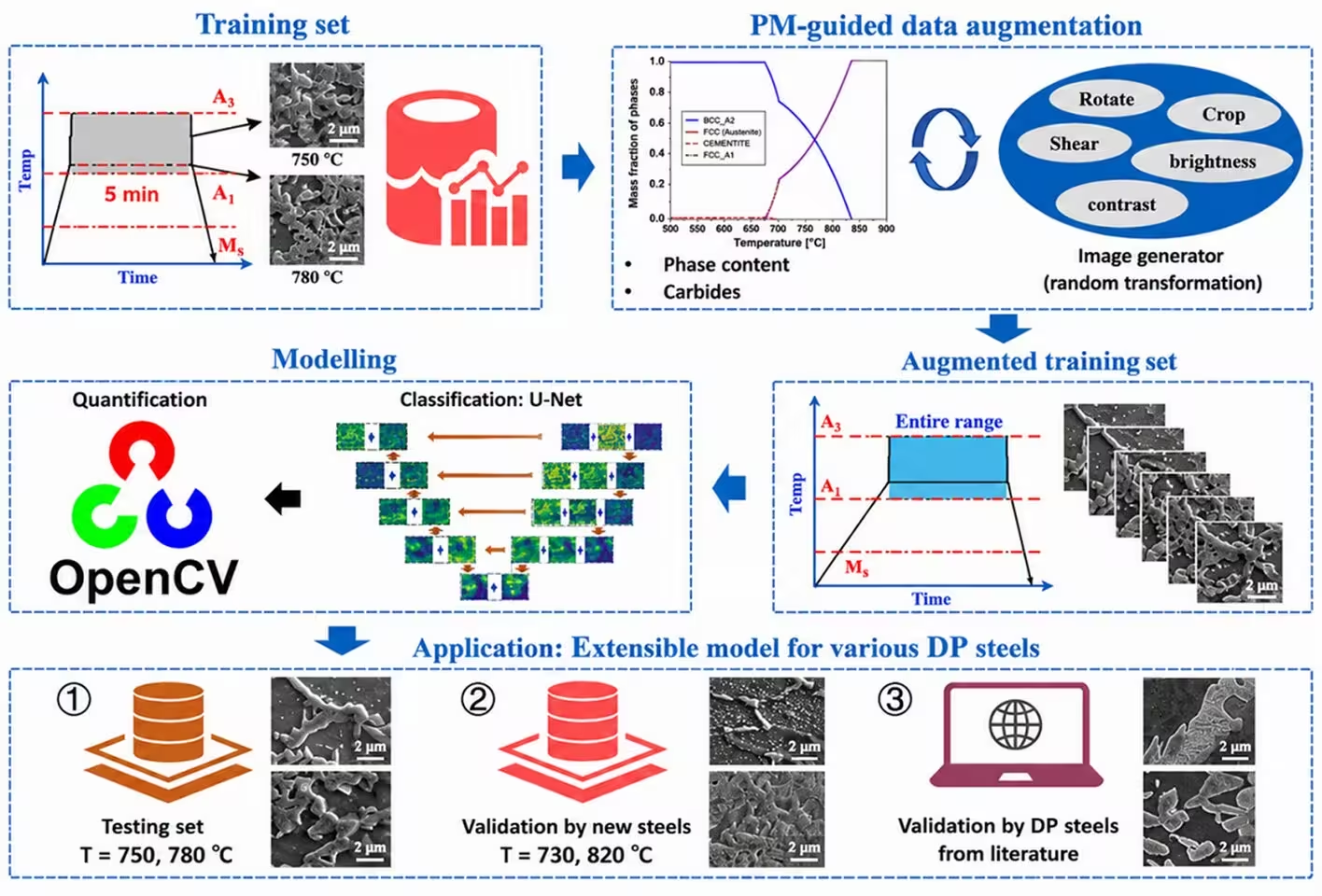
Conversely, aluminum alloys and nickel-based superalloys suffer from severe hot cracking and narrow processing windows. Here, explainable models help identify crack-resistance parameters and optimize alloy compositions to suppress defect formation. By integrating thermodynamics and graph-attention networks, scientists have recently designed new aluminum and nickel alloys that achieve crack-free fabrication and high strength across broad processing windows.
What Happens Next in Intelligent Manufacturing?
Overcoming the trade-off between formability and performance requires shifting toward multi-objective optimization frameworks backed by standardized paired datasets. Future manufacturing research must combine causal discovery algorithms with autonomous experimentation platforms to build closed-loop design workflows. This integration aims to make laser-based metal additive manufacturing more reliable and transparent for high-tech industrial applications.
The research was published in Advanced Materials Joining on November 6, 2026.
This article has been fact checked for accuracy, with information verified against reputable sources. Learn more about us and our editorial process.
Last reviewed on .
Article history
- Latest version
Reference(s)
- Liu, Minghao., et al. “Explainable artificial intelligence for laser powder bed fusion alloys: breaking the formability–performance trade-off via collaborative control.” Advanced Materials Joining, vol. 1, no. 1, November 6, 2026 Springer Science and Business Media LLC, doi: 10.1007/s44500-026-00023-y. <https://doi.org/10.1007/s44500-026-00023-y>.
Cite this page:
- Posted by Deepak Malhotra