Actors Searching for Fictional Treasure Stumble Upon Real 19th Century Cavalry Armor
A long-forgotten moat, a legendary Napoleonic treasure, and a documentary film crew have converged in Poland to spark a fascinating historical mystery.
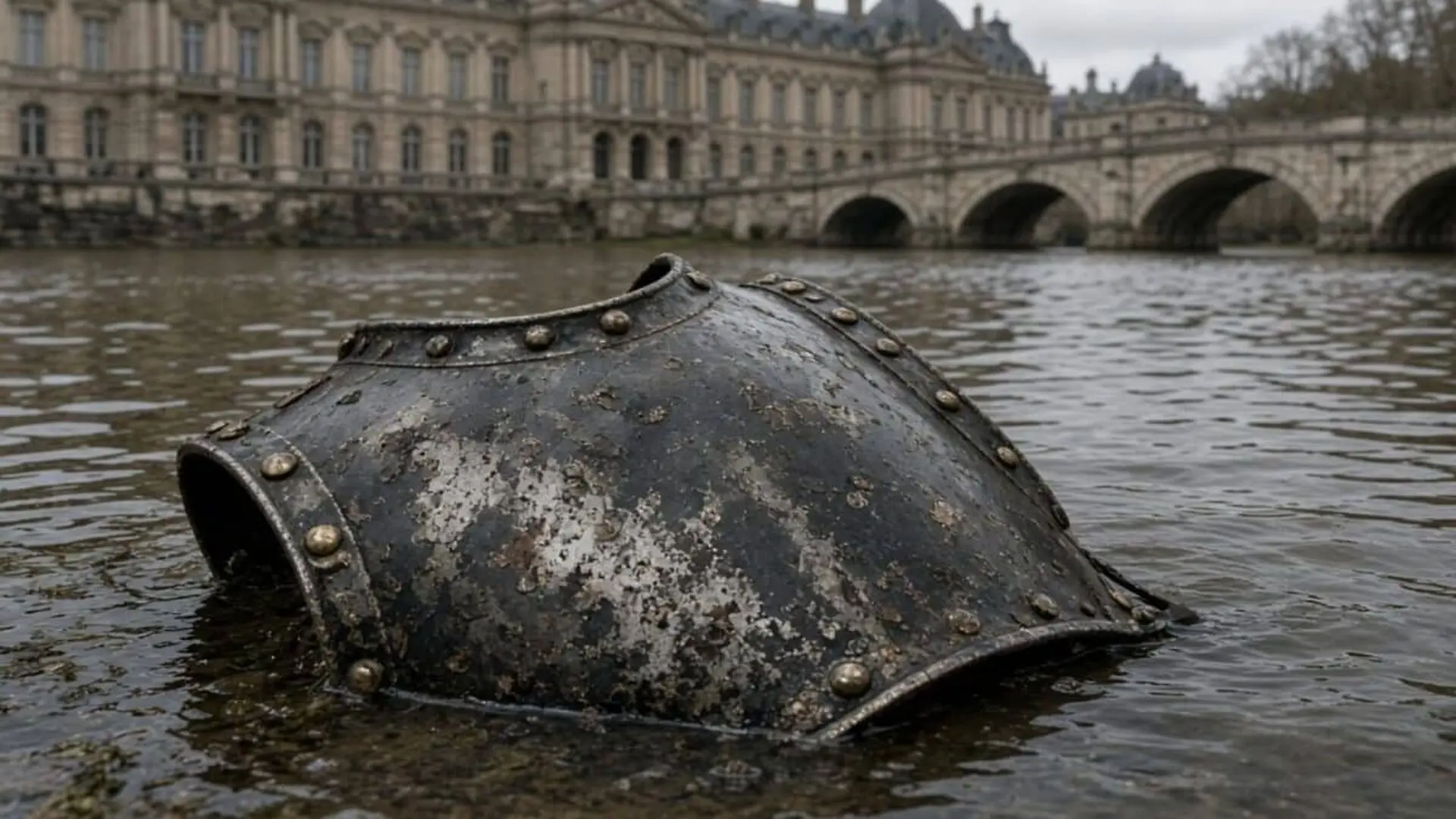
What began as a method-acting exercise for a group of young actors quickly transformed into a genuine archaeological discovery. While filming for an upcoming adaptation of the Polish classic Satan from the Seventh Grade, the production team decided to immerse the cast in the realities of treasure hunting by conducting an actual survey of the grounds at Pielaszkowice Palace. On the very first day, the search yielded a significant piece of military history: a 19th-century cavalry cuirass recovered from the depths of the estate’s silt-filled moat.
The expedition was organized by journalist and author Joanna Lamparska, who purposefully selected the Pielaszkowice site for its rich historical associations. Located roughly 40 kilometers from Wrocław, the palace is famously linked to the 1813 armistice between Napoleon Bonaparte and the allied Russian and Prussian forces. Lamparska noted that the Lower Silesia region remains a hotspot for such discoveries, as the constant movement of Napoleonic-era troops often left behind pay chests, personal effects, and remnants of skirmishes.
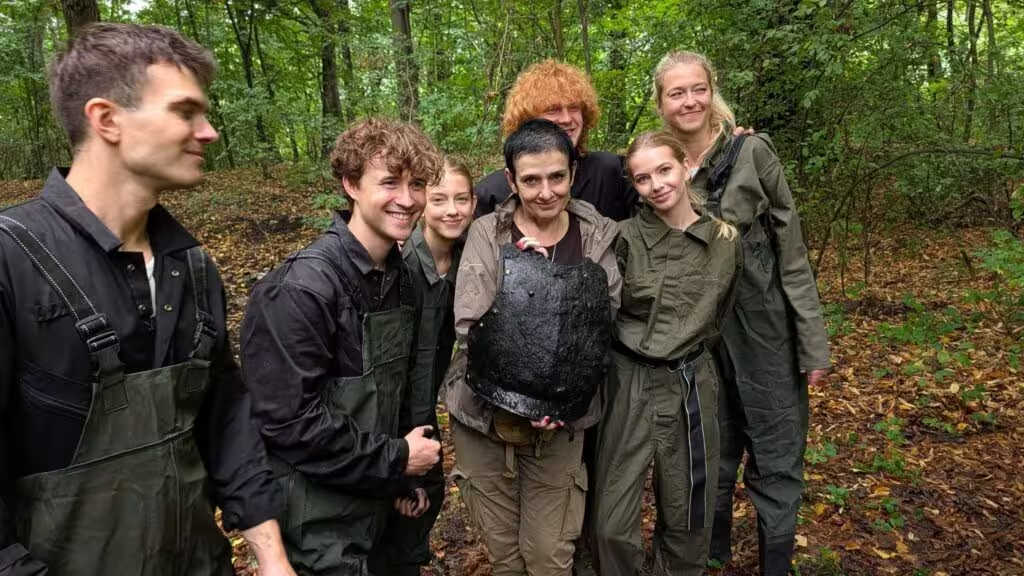
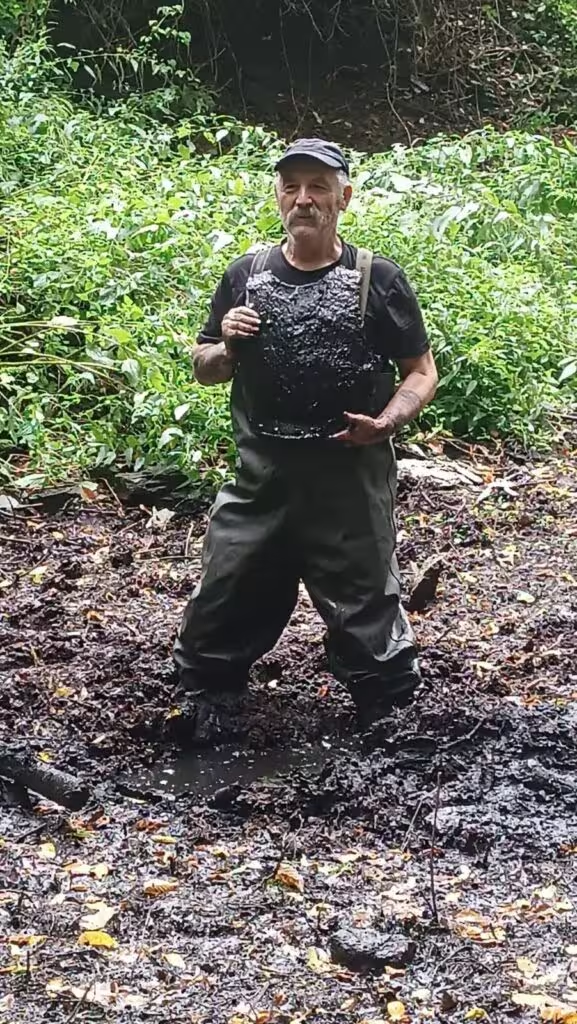
The recovery process proved physically demanding. Wiesław Andrysiak, a member of the DRACO History Explorers Association, found himself wading through waist-deep mud alongside actors Chris Cugowski, Maciek Tomaszewski, and Natalia Pujszo. The moat, which had been left unexamined for generations, required the assistance of geophysics specialists to navigate the treacherous, waterlogged sediment.
While the cuirass—a protective chest plate worn by heavy cavalry—has captured the most attention, the team also unearthed fragments of ornate park sculptures, antique metal door fittings, and various weaponry components dating back over a century. Historians suggest that the moat served as a repository for various eras of the estate’s history. In 1945, when the Red Army occupied the village, residents reported that the palace’s contents, including fine Meissen porcelain and military mementos, were tossed from windows into the water, effectively burying the collection in the silt.
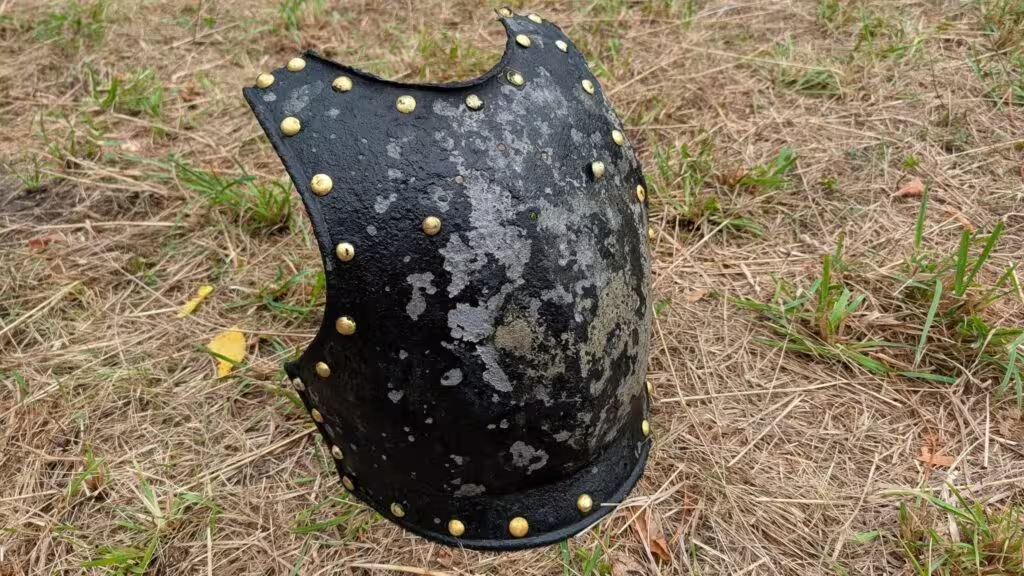
There remains some debate regarding the specific origins of the breastplate. While the Muzeum Domu Śląskiego in Ziębice has classified the piece as a 19th-century German guard cuirass, further conservation work is expected to reveal specific markings or construction details that could pin down its exact provenance. Regardless of its precise origin, the object is destined for the Ziębice museum rather than any private collection.
For the cast and crew of the upcoming film, the experience has bridged the gap between fiction and reality. The original 1937 novel by Kornel Makuszyński, which follows a clever teenager tracking clues to a lost Napoleonic cache, has long fueled local fascination with hidden history. With the recent success of the search, the team is already planning to return to the moat, convinced that the mud still holds further artifacts waiting to be brought to light.
This article has been fact checked for accuracy, with information verified against reputable sources. Learn more about us and our editorial process.
Last reviewed on .
Article history
- Latest version
Cite this page:
- Posted by Farah Siddiqui