Can Mental Grounding Protect Teenagers From Social Media Harm?
A comprehensive review of 43 studies suggests that being present in the moment helps users navigate online pressures and lower anxiety.

Young adults and teenagers who possess a higher capacity for present moment awareness experience fewer mental health struggles linked to heavy digital habits, according to a systematic review published in PLOS One.
As billions of people worldwide spend hours every day scrolling through digital platforms, researchers have long debated whether screen time directly harms psychological well-being. While some studies point to clear risks like anxiety, depression, and compulsive use, others highlight the positive social connections these platforms provide. This ongoing debate has led scientists to look for personal traits that might protect certain individuals from digital harm.
How does being present change our digital habits?
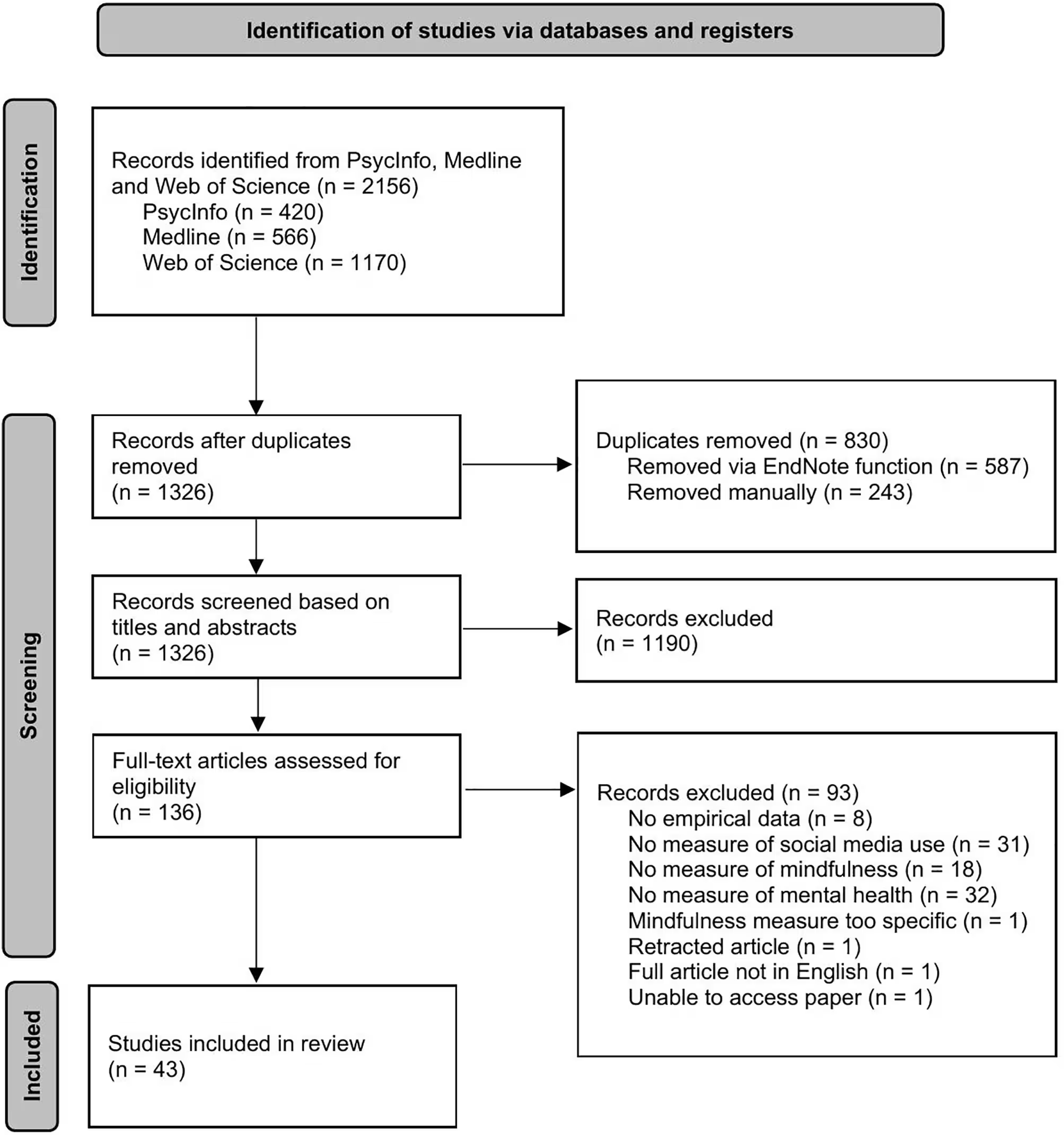
To investigate whether mental grounding acts as a shield, researchers Charlotte A. Jones and Marc S. Tibber analyzed existing scientific literature on human attention, mental health, and digital platform usage. Their comprehensive search yielded 43 original quantitative studies published between 2016 and early 2026, encompassing a total of nearly twenty-nine thousand participants. Most of these investigations focused on university students and adolescents, tracking how well individuals noticed their own thoughts and actions.
The analyzed papers defined mindful attention as the ability to remain conscious of one’s current activities without judgment, rather than getting lost in automatic scrolling or anxious rumination. Across the diverse collection of studies, researchers measured how this psychological trait interacted with common online pressures, such as the fear of missing out, negative social comparisons, and cyber-ostracism.
What did the review reveal about psychological protection?
Out of the 43 studies examined, an overwhelming majority of 39 papers linked higher levels of mental presence to better emotional health and healthier digital behaviors. Individuals who scored higher on questionnaires measuring attentional awareness consistently reported lower levels of psychological distress, anxiety, and depression. Furthermore, these participants displayed a reduced tendency toward compulsive platform use and digital addiction.
The review highlights that mindful awareness often acts as a crucial buffer in statistical models. For instance, several cross-sectional and longitudinal studies demonstrated that being mentally grounded can reduce the psychological harm caused by upward social comparisons or feelings of exclusion online. By recognizing the impulse to check a notification or compare oneself to others, users appear better equipped to pause before reacting.
What are the limitations of the current evidence?
Despite the promising overall trend, the authors emphasize important methodological limitations within the existing body of research. The vast majority of the reviewed papers used cross-sectional designs, meaning they captured data at only one point in time. This design prevents scientists from proving a direct cause-and-effect relationship between attentional awareness and improved psychological outcomes.
Additionally, reliance on self-reported questionnaires and convenience sampling methods, mostly involving university students, means the findings may not apply universally to all age groups and cultures. The review also noted considerable variation in how researchers measured digital platform usage, ranging from daily screen time hours to specific emotional responses like doomscrolling.
What questions remain for future research?
Future scientific investigations will need to utilize rigorous longitudinal tracking and controlled experimental interventions to determine whether teaching mental grounding techniques can actively reduce digital harm. Researchers also stress the need to study younger children and older adults, as current data remains heavily skewed toward teenagers and young adults. Ultimately, understanding how personal awareness shapes digital interactions could help develop better psychological support tools for the modern connected world.
The research was published in PLOS One on November 25, 2026.
This article has been fact checked for accuracy, with information verified against reputable sources. Learn more about us and our editorial process.
Last reviewed on .
Article history
- Latest version
Reference(s)
- Jones, Charlotte A.., et al. “Systematic review of quantitative studies exploring links between mindfulness, mental health, and social media use.” PLOS One, vol. 21, no. 11, November 25, 2026, pp. e0337349 Public Library of Science (PLoS), doi: 10.1371/journal.pone.0337349. <https://doi.org/10.1371/journal.pone.0337349>.
- Posted by David Anderson