Thawing Permafrost And Salmon Collapse Could Boost Mercury Intake By 486 Percent
Simulated subsistence diets reveal how climate change disruptions in Alaska could dramatically elevate heavy metal exposure.

Researchers calculated that declining Yukon River salmon populations combined with thawing permafrost could increase dietary mercury intake by up to 486 percent in indigenous Alaskan communities. These converging environmental pressures threaten traditional food security and public health across the region.
Understanding Mercury Exposure Risks in Remote Arctic Watersheds
Arctic ecosystems face rapid warming that disrupts regional water quality and reshapes local subsistence food availability. Traditional diets in these northern communities rely heavily on fish consumption, which represents the primary human exposure pathway for mercury worldwide. Perennially frozen ground known as permafrost underlies most of the Arctic and contains massive stores of heavy metals. As warming temperatures destabilize these soils, heavy metals wash into waterways where aquatic food webs absorb the toxic elements. At the same time, ecological disruptions have caused precipitous drops in regional fish stocks, forcing residents to alter their traditional dietary patterns. The study, published in Nature Communications, details how these dual crises intersect.
Dietary mercury exposure remains a widespread public health concern because prenatal accumulation of methylmercury links directly to lower intelligence quotients and developmental delays. Many residents regularly consume fish and marine mammals containing notable contaminant concentrations. Subsistence fishers in Alaska previously showed elevated blood heavy metal levels compared to other national monitoring groups. Environmental degradation threatens to drive these exposure pathways even higher, leaving remote food networks vulnerable.
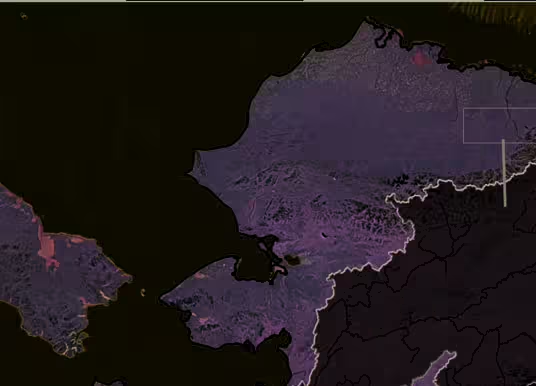
Modelling Diet Shifts and Thawing Permafrost Consequences
The research team built a computer model using harvest data from the Alaska Department of Fish and Game gathered between 2010 and 2018. M. Isabel Smith from the University of Southern California and colleagues evaluated the potential effects of removing salmon from simulated subsistence diets while simultaneously increasing total mercury burdens in fish. The team ran 10,000 random daily diet simulations for a standard adult weighing 77 kg who consumed 2,020 calories a day. These simulations tested moderate and severe climate scenarios where metal concentrations in resident freshwater fish rose by 21 percent and 175 percent respectively by 2100.
When simulated diets replaced salmon with land-based game like moose or caribou, total heavy metal exposure decreased by up to 48 percent in interior regions. Replacing salmon with alternative fish species such as northern pike or burbot led to higher contaminant intakes because those predators occupy higher trophic levels and bioaccumulate more toxins. In coastal areas, marine mammals such as beluga whales contributed heavily to yearly exposure totals despite lower overall harvest volumes. Permafrost degradation alone increased yearly dietary loads by up to 175 percent under severe warming projections.
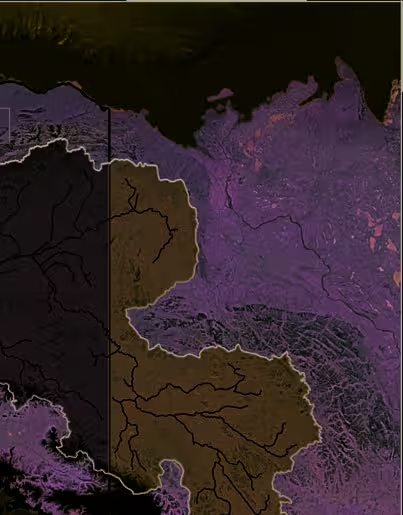
Synergistic Effects of Environmental Change on Human Health
When the authors combined severe permafrost thaw with alternative fish substitution, modelled dietary exposure surged by up to 486 percent in interior communities and 304 percent in coastal areas. These combined scenarios demonstrated that dietary adaptations can either amplify or offset climate-driven environmental contamination depending on the specific food choices made. Interior diets exceeded established safety thresholds only under the most extreme combined scenario involving severe permafrost thaw and non-salmon fish substitution. Coastal diets surpassed those safety guidelines under multiple scenarios due to regular marine mammal consumption.
The authors note that these dietary scenarios serve as an analytical framework rather than a prescription for future eating habits. Subsistence practices remain deeply connected to cultural identity, regional tradition, and personal autonomy across Alaska Native communities. Future monitoring efforts must track both total mercury and bioavailable methylmercury in regional aquatic species to protect public health while respecting traditional ways of life.
The research was published in Nature communications on November 27, 2026.
This article has been fact checked for accuracy, with information verified against reputable sources. Learn more about us and our editorial process.
Last reviewed on .
Article history
- Latest version
Reference(s)
- Smith, M. Isabel., et al. “Changing mercury exposure in the Yukon Watershed linked to traditional diet shifts and permafrost thaw.” Nature Communications, vol. 17, no. 1, November 27, 2026 Springer Science and Business Media LLC, doi: 10.1038/s41467-026-79288-w. <https://doi.org/10.1038/s41467-026-79288-w>.
Cite this page:
- Posted by Divya Iyer