The Human Heart Shows a Surprising Ability to Repair Itself, New Study Finds
A new human study found strong evidence that the adult human heart can push some of its muscle cells back into the cell cycle after a heart attack, something many scientists thought was impossible.
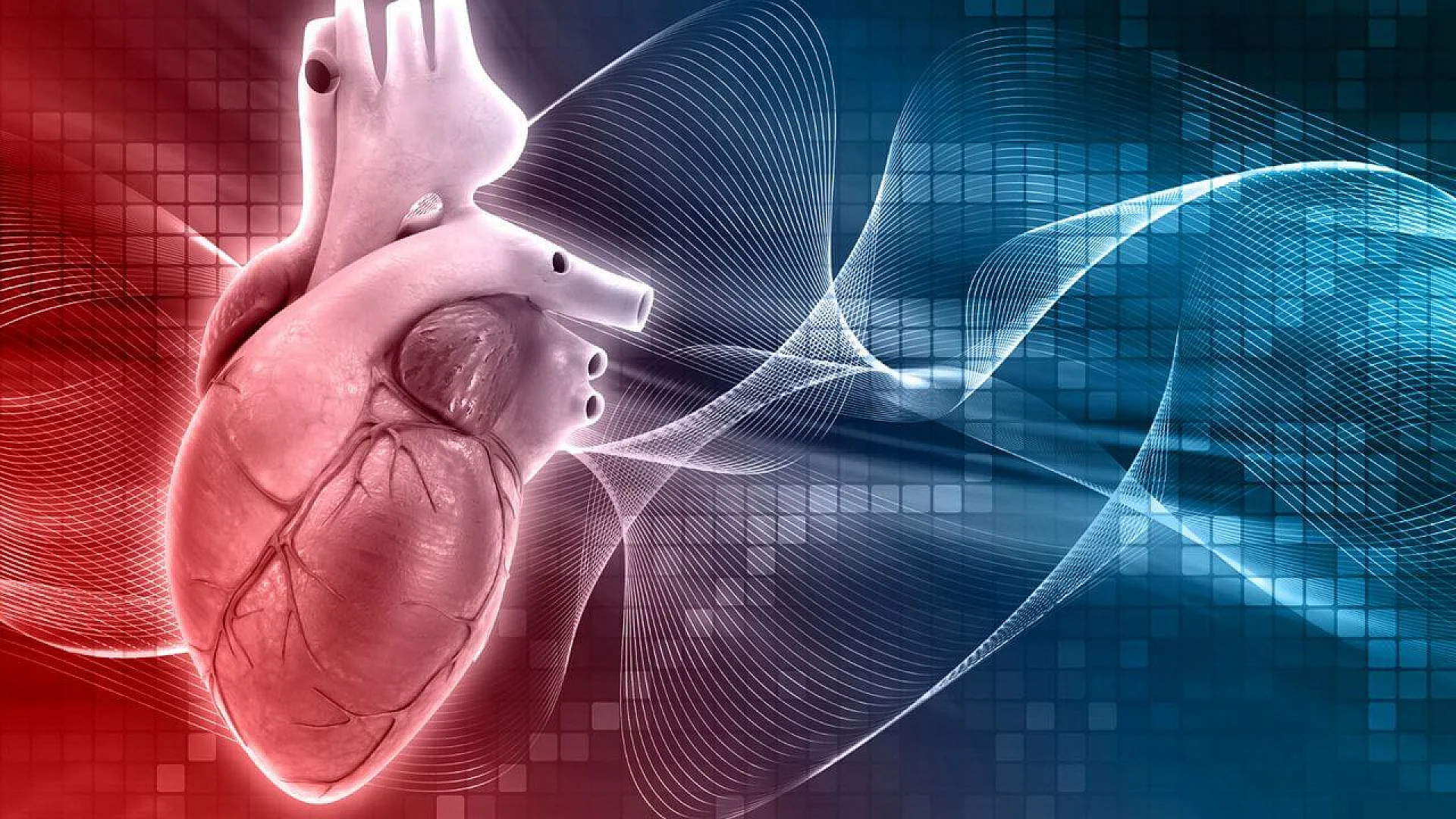
Heart attacks are sadly very common, not just in rich countries but all over the world. When blood flow to the heart is suddenly blocked, part of the heart muscle is starved of oxygen. Cells begin to die within minutes.
Once this damage happens, the heart usually heals by forming scar tissue. The scar helps hold the heart together, but it cannot contract like normal muscle. Over time, this loss of pumping power can lead to heart failure, fatigue, breathlessness, and a poor quality of life.
For decades, medical science accepted one hard rule. Adult human heart muscle cells, called cardiomyocytes, do not divide. Unlike skin or blood cells, they were thought to be stuck in a permanent resting state.
This belief shaped how heart disease was treated. Doctors focused on saving as much muscle as possible during a heart attack, because rebuilding it later was considered impossible.
Now, that rule is being questioned.
Animal studies have been hinting at something interesting for years. In mice and rats, heart muscle cells can re-enter the cell cycle after injury. When blood supply is cut off and then restored, some surviving cells near the damaged area start dividing.
But humans are not mice.
Human hearts are much larger, slower to heal, and harder to study. Fresh heart tissue from patients who have just had a heart attack is extremely rare. Because of this, scientists could never directly prove that the same process happens in people.
Most previous human studies relied on indirect clues, such as measuring carbon levels in DNA or tracking protein markers that suggest cell turnover. These methods were useful, but they did not show actual cell division happening in real human heart tissue.
That missing proof was the main problem this new research set out to solve.
The researchers were given an unusual opportunity. They studied heart tissue from a patient who had suffered a severe heart attack and was later declared brain dead while still on life support. This allowed the team to examine a human heart that had experienced real ischemic injury, under real clinical conditions.
In addition, the scientists developed a careful biopsy method to collect tiny heart tissue samples from living patients. These patients were undergoing coronary artery bypass surgery after heart attacks.
Samples were taken from two key areas. One was the border zone, the region just next to the damaged tissue. The other was a distant area of the heart that was not directly injured.
This combination of samples gave the researchers a detailed and realistic picture of how the human heart responds after a heart attack.
Finding dividing heart cells is not easy. Cardiomyocytes are large and complex. Sometimes they show changes in their DNA or structure without actually completing division. So the researchers had to be very careful not to mistake these signs for true cell division.
They used several advanced techniques together. Special stains were used to detect proteins that only appear when a cell enters mitosis, the stage where it prepares to split into two. One important marker was phosphorylated histone H3, a clear signal that a cell has moved into the active phase of the cell cycle.
The team also studied gene activity, protein signals, and metabolic changes in the tissue. Single-nucleus RNA sequencing allowed them to examine thousands of individual cell nuclei, one by one.
To make sure their findings were reliable, the results were compared with the largest publicly available dataset of human heart attack tissue. The same patterns appeared there as well.
The results were clear and surprising. After a heart attack, adult human cardiomyocytes showed increased signs of mitosis. In simple words, some heart muscle cells were actually trying to divide.
These cells were mainly found near the border of the damaged area. This makes sense, because cells there are under severe stress but are still alive. It is a dangerous zone, but also a place where repair signals are strongest.
The researchers also identified specific genes and proteins that were switched on in these dividing cells. Many of these pathways are known to support cell growth and energy production. Some had been seen before in animal studies. Others were completely new in the context of heart repair.
Together, these findings provide the strongest evidence so far that the adult human heart has a limited but real ability to restart cell division after injury.
This discovery changes how scientists think about heart disease.
First, it breaks the old idea that human heart muscle cells are completely unable to divide. The ability is not gone. It is just very weak.
Second, it shifts the main question in heart regeneration research. Instead of asking whether the heart can regenerate, researchers can now ask why it regenerates so poorly, and how that response might be strengthened.
Third, by identifying the molecular signals involved, the study offers new targets for future treatments. If doctors can learn how to safely boost these natural repair pathways, it may one day be possible to improve recovery after a heart attack.
This approach is very different from stem cell injections or artificial heart tissue. It focuses on helping the heart heal itself, using tools it already has.
One of the most important parts of the study is the biopsy method developed by the researchers.
For the first time, scientists can study living human heart tissue shortly after a heart attack. This is a major step forward.
It allows researchers to test potential drugs or therapies directly on human tissue, rather than guessing based on animal results. It also helps explain why some treatments that worked in mice failed in human trials.
In the future, this method could be used to study how age, diabetes, obesity, or genetics affect the heart’s ability to repair itself.
The researchers are very clear about what their study does not show. The amount of cell division observed is small. It is not nearly enough to replace the massive loss of muscle caused by a major heart attack. Scarring still dominates the healing process.
This research does not mean that heart attacks can heal on their own, or that current treatments are no longer needed. Quick restoration of blood flow, proper medication, and long-term care remain essential.
What the study shows is a starting point, not a cure.
The next challenge is to understand why this regenerative response is so limited in humans.
Scientists will need to figure out how to increase cardiomyocyte division without causing serious side effects. Uncontrolled cell growth in the heart could lead to rhythm problems or other dangerous complications.
Long-term studies are also needed to see whether newly divided heart cells actually improve heart function in a meaningful way.
Still, the door is now open. This research does not promise miracles. But it changes something fundamental.
The adult human heart is no longer seen as a completely fixed organ, unable to respond once damage is done. Instead, it shows a faint ability to fight back.
That small signal, if understood and supported correctly, could one day lead to better outcomes for millions of people living with heart disease.
The research was published in Heart, Lung and Circulation on August 01, 2025.
The information on this page is peer reviewed by a qualified editorial review board member. Learn more about us and our editorial process.
Last reviewed on .
Article history
- Latest version
- Peer reviewed by Dr. Kavita Verma, MD
Reference(s)
- Hume, R.., et al. “Human Hearts Intrinsically Increase Cardiomyocyte Mitosis Following Myocardial Infarction.” Heart, Lung and Circulation, vol. 34, 01 August 2025, pp. S306-S307. Elsevier, doi: 10.1016/j.hlc.2025.06.332. <https://www.heartlungcirc.org/article/S1443-9506(25)00821-2/fulltext>.
Cite this page:
- Posted by Elizabeth Taylor