Spatial Architecture Explains Why Glioblastoma Vaccines Fail
A new review suggests brain tumor immunotherapies falter because antigens and immune cells remain trapped in distinct spatial niches.
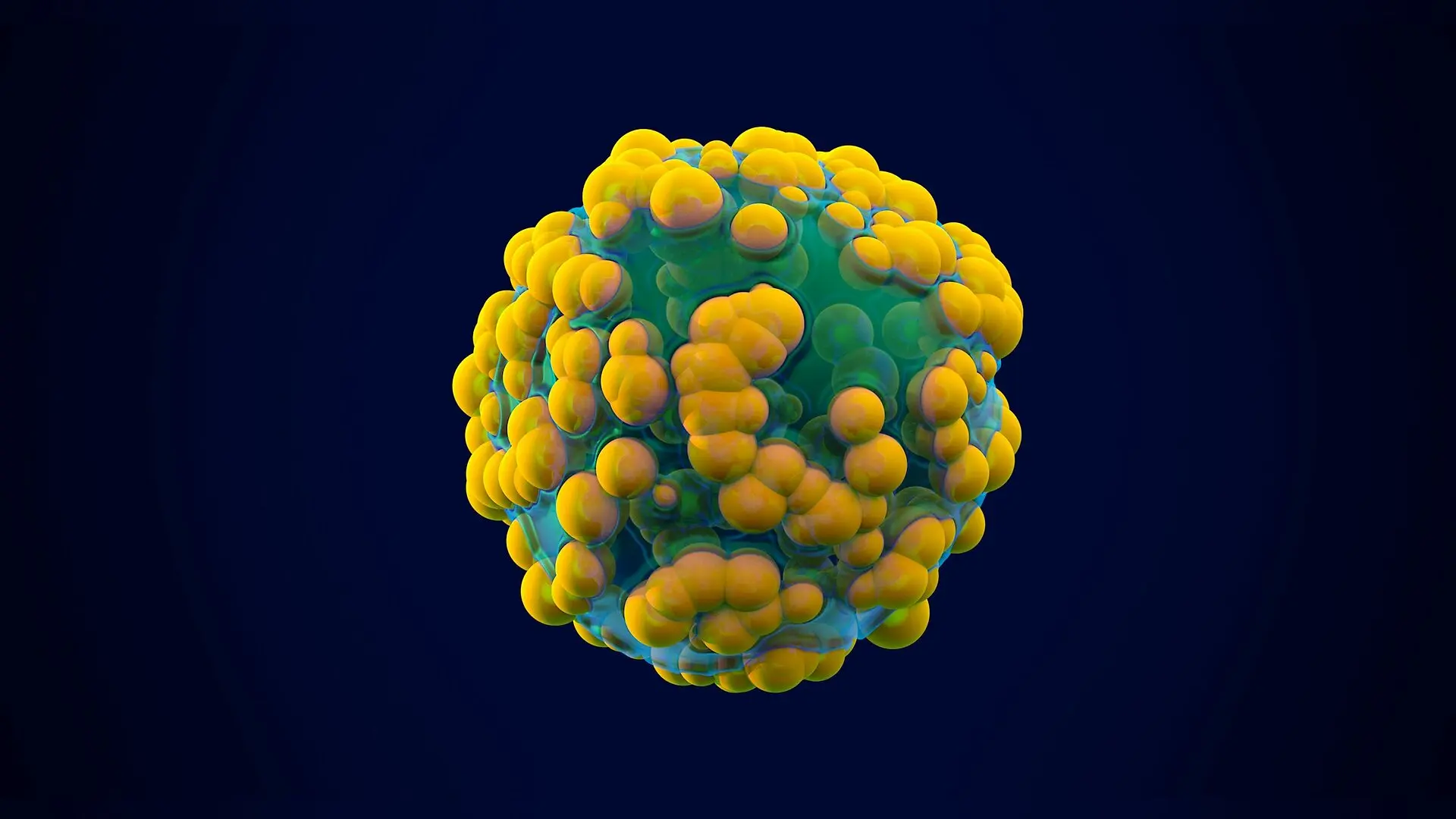
Glioblastoma cells manage to evade personal vaccines by hiding in spatially organized pockets of the brain, according to a review published in Frontiers in Immunology by investigators Yuan and Liu in October 2026. This aggressive primary brain tumor remains notoriously difficult to treat, with patients facing a median overall survival of just 14.6 months following standard chemoradiotherapy.
Traditional approaches to designing cancer vaccines rely on bulk tissue sequencing, which flattens the complex architecture of the tumor into a single average profile. While clinical trials have shown that personalized vaccines can stimulate circulating immune cells, these treatments have largely failed to translate into meaningful survival gains. The authors argue that this disconnect stems from ignoring the physical geography of the tumor.
How Tumor Architecture Blocks Immune Cells
Recent advances in spatial biology reveal that glioblastoma is not a random mixture of cells, but a compartmentalized ecosystem with distinct layers. Hypoxia, or low oxygen levels, acts as a major tissue organizer that patterns cellular states across the tumor landscape. Within these hypoxic and perivascular niches, immune cells often become trapped or reprogrammed into immunosuppressive states.
Furthermore, malignant cells continuously shift between different cellular states, such as oligodendrocyte progenitor-like, neural progenitor-like, astrocyte-like, and mesenchymal-like states. If a vaccine targets an antigen found in only one of these states, the tumor can simply switch states to survive. Additionally, physical barriers like the extracellular matrix and surrounding brain tissue restrict how deeply therapeutic T cells can infiltrate.
Can Spatial Multi-Omics Save Brain Tumor Vaccines?
To overcome these hurdles, the review outlines a proposed spatial multi-omic strategy for future clinical trials. By combining spatial transcriptomics, spatial proteomics, and immunopeptidomics, researchers can map not just which genes are active, but whether target proteins are actually translated and presented on cell surfaces in accessible locations.
The authors suggest that future vaccine antigen selection should satisfy three spatial criteria: state-spanning expression across all major cellular programs, regional conservation in both the tumor core and invasive margins, and recurrent stability after standard therapy.
What Are the Practical Limits of This Approach?
Despite its promise, translating spatial profiling into routine clinical workflows faces significant hurdles. Spatial technologies are currently slower and more expensive than standard bulk sequencing, posing challenges for rapid vaccine manufacturing timelines. Furthermore, the prognostic value of these spatial criteria still requires rigorous validation in prospective clinical trials.
The research was published in Frontiers in immunology on October 27, 2026.
This article has been fact checked for accuracy, with information verified against reputable sources. Learn more about us and our editorial process.
Last reviewed on .
Article history
- Latest version
Cite this page:
- Posted by Faisal Qureshi