Turku University Hospital Researchers Found New Prenatal Blood Test Cut False Positives By Forty Times, And What It Means For Families
Universal genetic screening reached 96 percent participation and cut invasive diagnostic procedures by 80 percent in Southwest Finland

Researchers at Turku University Hospital found that offering noninvasive prenatal testing as a first-tier screening tool for 5,508 pregnant women dramatically improved detection rates while cutting false positives by more than forty times.
Cell-free DNA analysis looks at genetic fragments circulating in maternal blood to check for chromosomal conditions during early pregnancy. For years, public health systems relied on blood markers combined with ultrasound measurements, which frequently generated false alarms and led to unnecessary invasive procedures. Now, healthcare providers are evaluating how direct blood screening performs when offered universally to the general population.
How Did First-Tier Screening Perform For 5,508 Women?
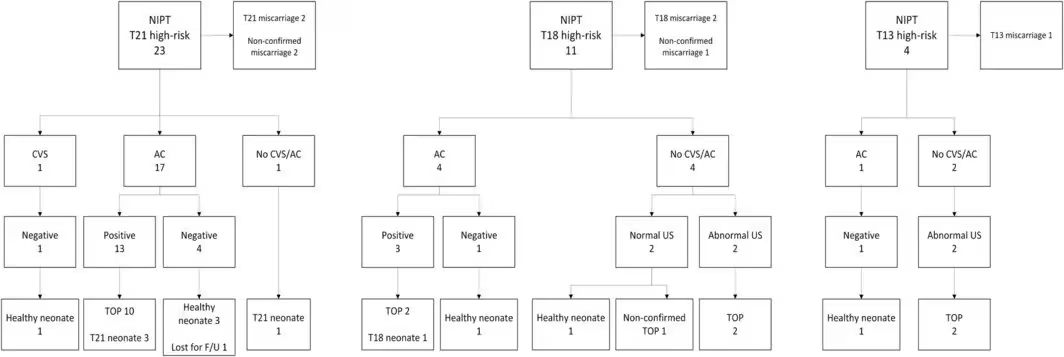
During the prospective evaluation conducted between May 1, 2023, and November 30, 2024, researchers tracked participation rates and clinical outcomes across Southwest Finland. The study, published in Acta Obstetricia et Gynecologica Scandinavica, revealed that 96.1% of pregnant women participated in the cost-free screening program. This uptake remained comparable to the historical participation rate of 97.6% seen with older testing methods between 2019 and 2022.
When analyzing the detection of trisomy 21, trisomy 18, and trisomy 13, the blood-based screening achieved a sensitivity of 96.2% and a specificity of 99.9%. By comparison, the older combined testing method reached a sensitivity of only 72.9% and a specificity of 97.9%. These figures demonstrate that direct genetic screening significantly reduces missed cases while protecting healthy pregnancies from undue concern.
Why Did Invasive Testing Rates Drop By Eighty Percent?
False positive results from older screening methods historically forced many families to undergo diagnostic procedures such as amniocentesis or chorionic villus sampling, which carry small inherent risks. Under the new screening approach, the rate of supplemental testing dropped from 2.3% down to 0.4%. When comparing the current data against records from 2013 before secondary blood tests were introduced, the overall need for invasive testing decreased by 80%.
Lead author Satu Graber and colleagues noted that the positive predictive value reached 75.8% during the evaluation period. Because these chromosomal conditions occur infrequently in the general population, researchers emphasized that predictive values must be interpreted with caution. Nevertheless, the sharp decline in false positives successfully spared hundreds of families from stressful follow-up examinations.
What Caused Test Failures in 80 Patients?
Laboratory analysis failed to yield an initial result for 80 patients, representing about 1.5% of the screened group. Among these instances, 66 cases stemmed from low fetal fraction levels where insufficient placental DNA was present in the maternal blood sample, while 14 cases resulted from technical issues like broken tubes or labeling errors.
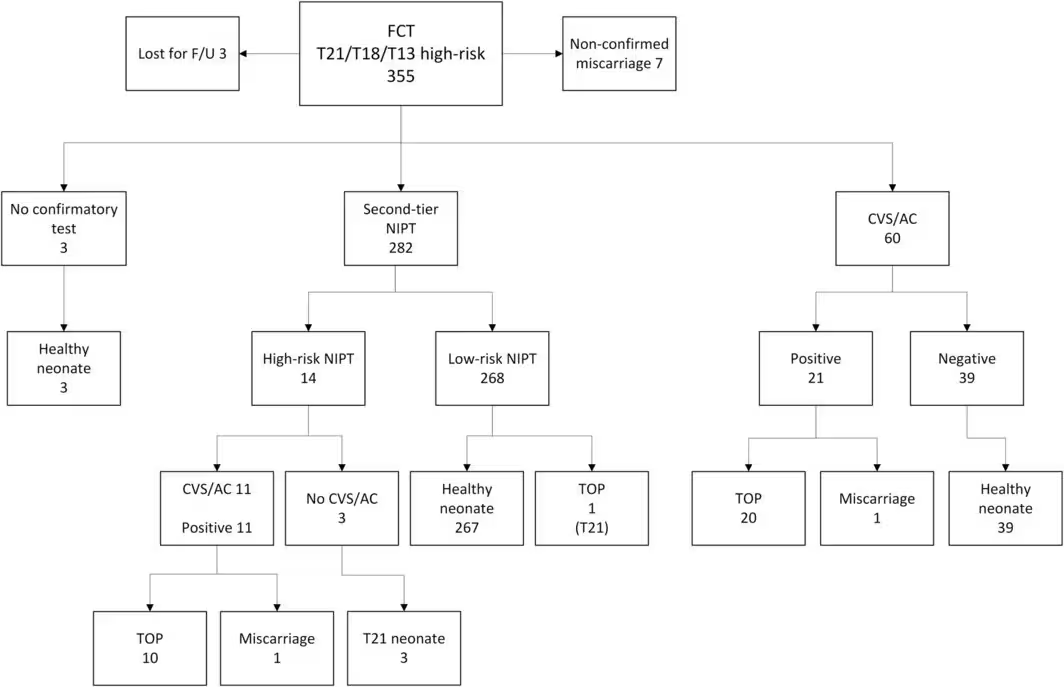
When clinicians scheduled repeat blood draws at two-week intervals, nearly all participants successfully received a risk evaluation. This protocol reduced the final unresolved no-call rate to just 0.1%. Researchers identified higher body mass index as a primary risk factor for initial test failure, noting that the median body mass index among patients requiring repeated sampling was 41 kilograms per square meter.
What Are The Limitations of This Real-Life Cohort?
While the study evaluated an entire regional population within a single tertiary hospital network, certain constraints complicated data collection. Because demographic databases could not be directly linked to screening registries, maternal characteristics were derived from the total delivery population at Turku University Hospital rather than exclusively from screened participants. Additionally, different methods were used to estimate participation rates across the historical and modern cohorts.
The authors acknowledge that regional factors, including a genetically homogeneous population and universal access to public antenatal care, may have influenced the exceptionally high uptake. Further investigations across diverse international populations will help determine whether similar screening models achieve equivalent success in different healthcare settings.
The research was published in Acta obstetricia et gynecologica Scandinavica on November 27, 2026.
This article has been fact checked for accuracy, with information verified against reputable sources. Learn more about us and our editorial process.
Last reviewed on .
Article history
- Latest version
Reference(s)
- Graber, Satu., et al. “Noninvasive prenatal testing as first‐tier trisomy screening in a general pregnant population in Southwest Finland.” Acta Obstetricia et Gynecologica Scandinavica, November 27, 2026 Wiley, doi: 10.1111/aogs.70390. <https://doi.org/10.1111/aogs.70390>.
Cite this page:
- Posted by Faisal Qureshi