Calibrated Nanopore Sequencing Framework Uncovers Cell-Specific RNA Modifications in Human Cells
New benchmarking workflows combine enzyme inhibitors and control transcripts to eliminate background noise in direct RNA sequencing datasets.

A new analytical framework reveals that long-read direct RNA sequencing can reliably map the cell-specific chemical modifications of messenger RNA molecules when paired with rigorous background filtering. The approach addresses long-standing challenges in detecting RNA marks such as N6-methyladenosine, a dynamic chemical tag that fine-tunes gene expression across mammalian tissues.
How Can Direct RNA Sequencing Overcome High Background Noise?
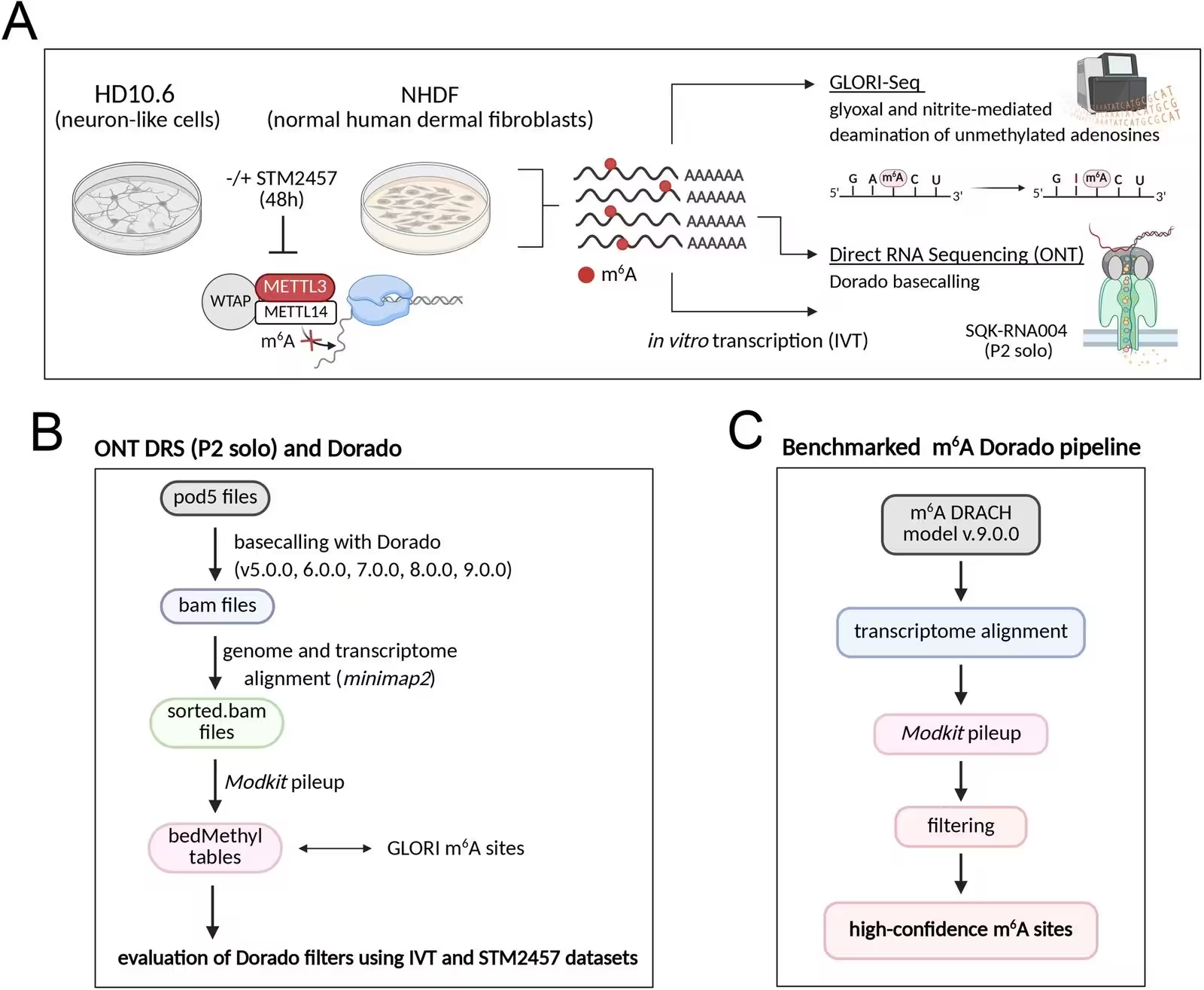
Cellular RNA undergoes hundreds of distinct chemical modifications that dictate stability, splicing, and translation. While Oxford Nanopore Technologies direct RNA sequencing allows scientists to examine intact native RNA molecules at single-molecule resolution, the computational tools used to read these modifications often generate high rates of false-positive signals. To solve this issue, Daniel Depledge and Angus Wilson at New York University School of Medicine, alongside their collaborators, established a systematic benchmarking workflow evaluated on human skin cells and lab-grown neuronal models, with results published in eLife.
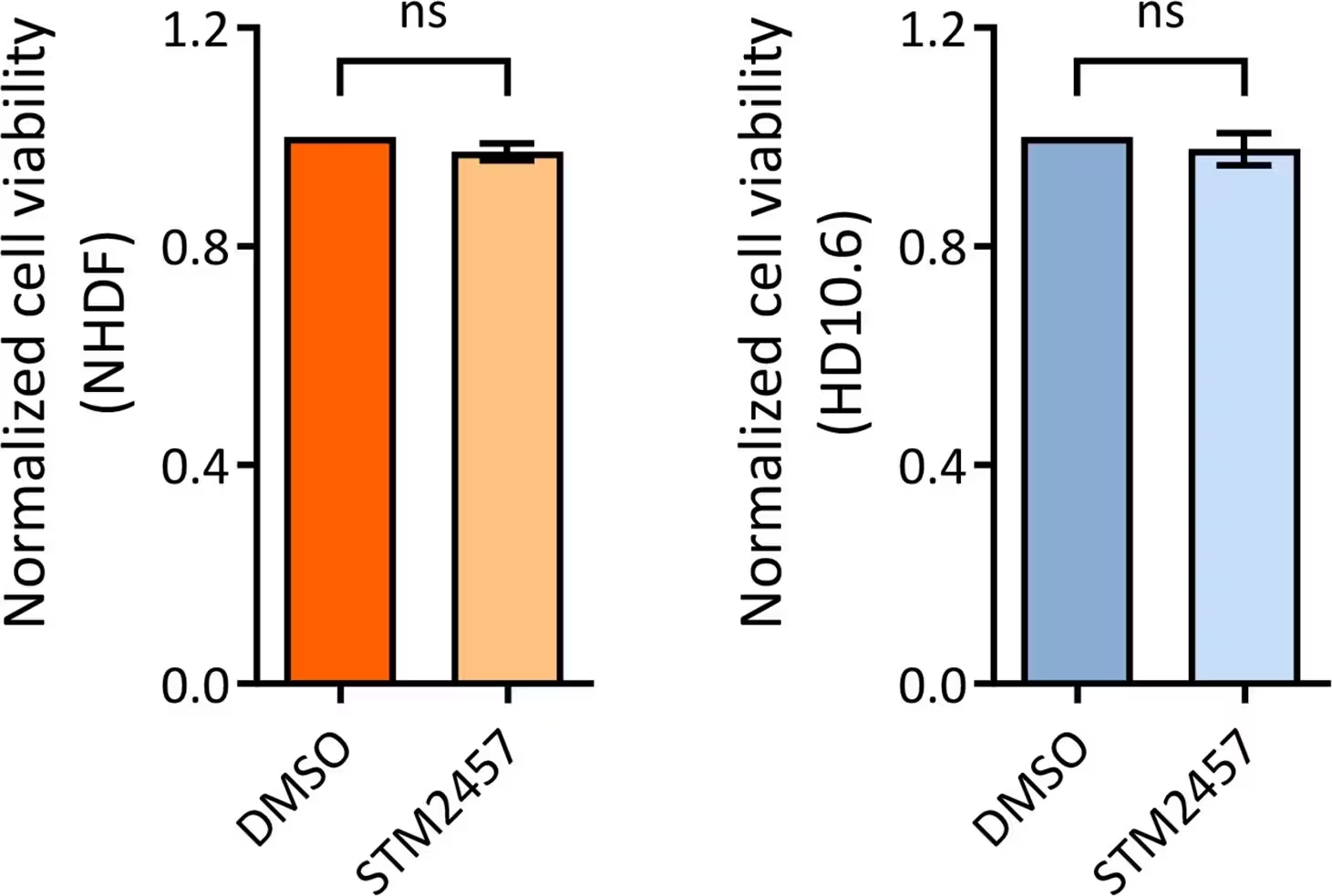
The research team tracked RNA isolated from primary normal human dermal fibroblasts and differentiated human neurons derived from the HD10.6 cell line. To separate true biological modification signals from technical background noise, the investigators incorporated multiple control layers. They generated unmodified in vitro transcribed RNA controls, which lack any chemical modifications, and treated cell cultures with STM2457, a small-molecule inhibitor targeting the primary RNA methyltransferase enzyme METTL3.
What Do Modification Probabilities and Inhibitor Controls Reveal?
By comparing sequencing reads from treated cells and unmodified controls against biological samples, the authors discovered that seventy-five to ninety percent of basecalls below a modification probability score of zero point nine eight represent background noise rather than true chemical tags. Applying this stringent statistical threshold, alongside a requirement that at least twenty reads cover a specific site, successfully eliminated over seventy percent of artefactual calls without sacrificing sensitivity.
When the team compared their filtered direct RNA sequencing workflow against GLORI, an orthogonal chemical conversion method performed on the same input RNA, they found strong convergence at sites exhibiting high methylation proportions. However, discrepancies remained at lower modification frequencies, underscoring the importance of rigorous bioinformatic filtering when interpreting single-molecule epitranscriptomic datasets.
Why Do Neuronal Cells Exhibit Higher Methylation Proportions Than Skin Fibroblasts?
Mapping the modified transcripts across different cell types demonstrated that while the genomic locations of N6-methyladenosine installation remain largely conserved, the predicted modification proportions differ significantly. Specifically, differentiated neuronal-like cells displayed globally higher methylation proportions, with a median of seventy point two percent compared to fifty-four percent in dermal fibroblasts.
Further analysis of representative genes linked to neurodegeneration and intracellular signaling, such as MAPK1 and AKT1, confirmed robust methylation across both cell types with consistently elevated proportions in the neuronal context. The authors caution that while these differences are clear, determining whether they stem from variations in RNA stability, translation rates, or other cell-type-specific mechanisms will require further functional investigation.
The research was published in eLife on November 20, 2026.
This article has been fact checked for accuracy, with information verified against reputable sources. Learn more about us and our editorial process.
Last reviewed on .
Article history
- Latest version
Reference(s)
- Ohnezeit, Denise., et al. “Calibrated analysis framework for nanopore direct RNA sequencing uncovers cell-specific m⁶A proportions at conserved sites.” eLife, vol. 15, November 20, 2026 eLife Sciences Publications, Ltd, doi: 10.7554/eLife.110672. <https://doi.org/10.7554/eLife.110672>.
Cite this page:
- Posted by Faisal Qureshi