Home Care Tablet Games and Nurse Monitoring Dashboard Tested by Older Adults
Swiss researchers evaluated a dual-purpose digital platform combining cognitive training games for seniors with remote telemetry for geriatric nurses.
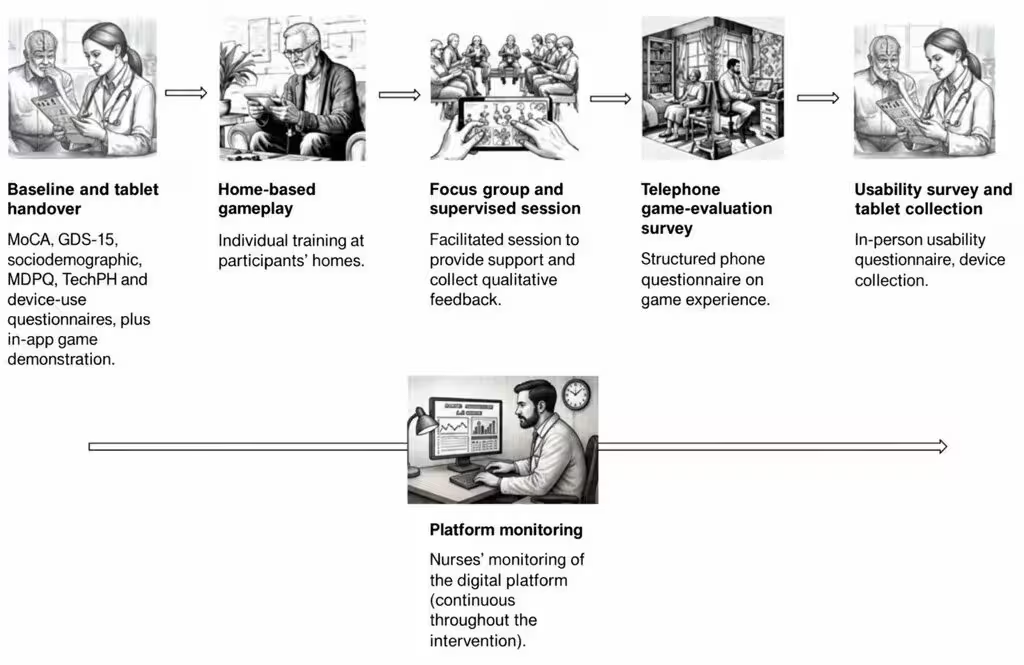
Eighteen older adults receiving home care in Switzerland recently tested a custom tablet platform featuring six cognitive training games alongside a remote monitoring dashboard for nurses, revealing high usability and enthusiasm despite varied digital literacy. The study followed participants over a three-month period to evaluate user experience, adherence patterns, and professional feedback, published in JMIR Serious Games by Sara Levati and her colleagues at the University of Applied Sciences and Arts of Southern Switzerland. While prior research has investigated digital games for mental stimulation or tracking cognitive health in isolation, this project combined patient-facing training with nurse-facing behavioral telemetry in a real-world home care environment.
How Do Older Adults Respond to Tablet-Based Cognitive Training?
Participants in the trial had a mean age of about 79 years and completed regular gameplay sessions averaging three active days per week. Questionnaires administered at the end of the intervention showed that game usability was rated favorably by more than 90 percent of respondents, while acceptability exceeded 85 percent. Qualitative interviews highlighted that seniors found the games enjoyable, visually appealing, and mentally stimulating, with several noting that the activities helped pass the time and reduced feelings of loneliness.
The gaming suite, developed under the name beSerious, embedded its activities within a progressive travel storyline where users virtual-toured 47 European countries. The six minigames targeted distinct cognitive domains: a word deduction puzzle comparable to Wordle, a spatial sequence recall task, a digital jigsaw puzzle, a rapid-tapping attention challenge, a disk-transfer planning puzzle, and a top-down maze navigation game. Gameplay analytics revealed distinct behavioral profiles, with some participants playing briefly while others engaged for up to 45 minutes twice daily.
What Did Home Care Nurses Learn From the Remote Monitoring Dashboard?
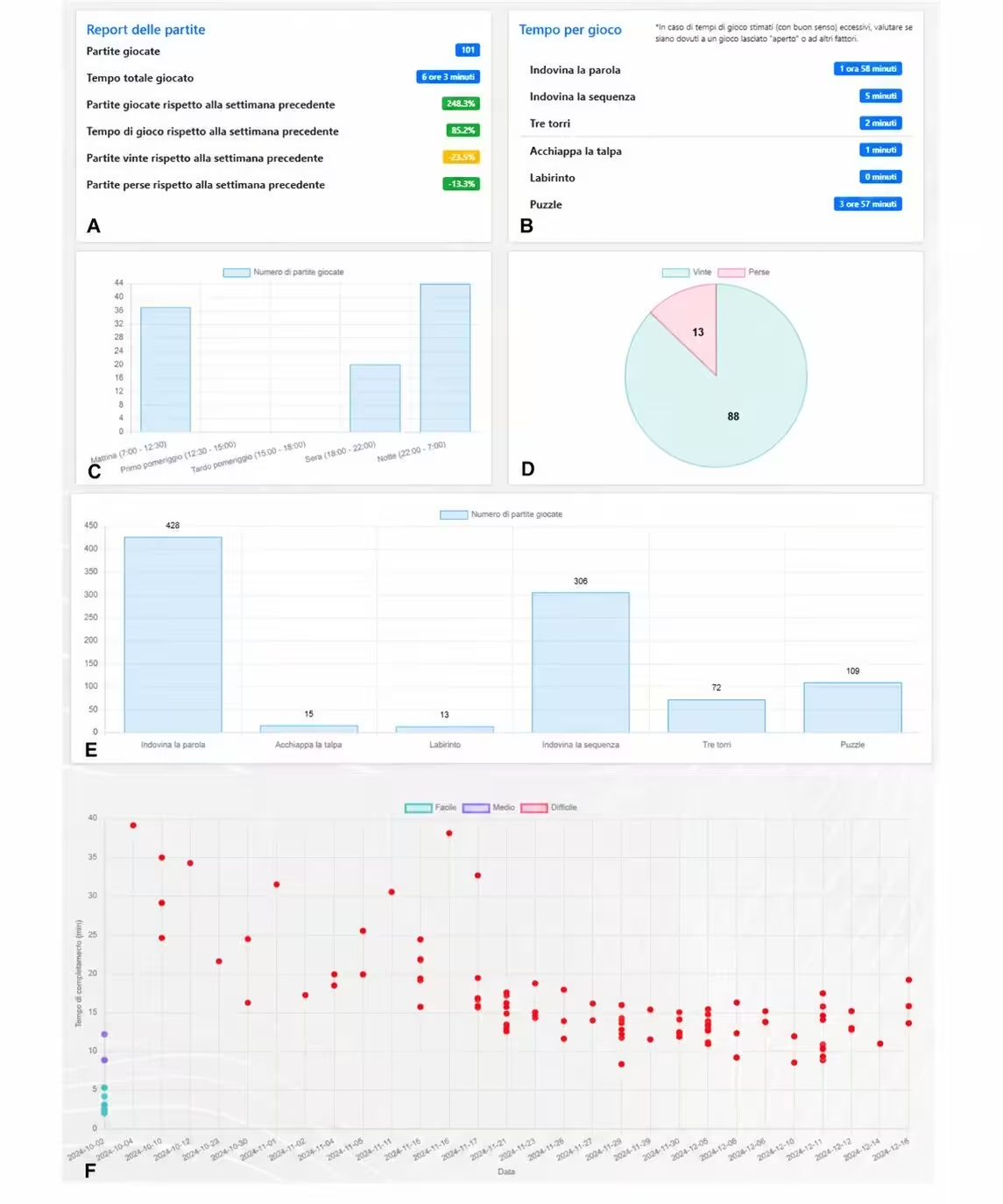
Three geriatric nurses reviewed the web-based monitoring interface, which aggregated gameplay telemetry, win-loss ratios, play duration, and active time slots across the 24-hour day. The nursing staff reported that the platform was clear, intuitive, and easy to interpret without extensive training. They noted that tracking gameplay adherence offered meaningful behavioral indicators, such as identifying temporary pauses caused by illness or holiday travel, as well as detecting unusual late-night activity that might relate to sleep patterns or medication side effects.
The nurses emphasized that such longitudinal tracking could eventually help bridge the communication gap between routine home visits. By observing subtle shifts in engagement or game performance over weeks and months, care providers could potentially spot early warning signs that warrant further clinical attention, though the authors stressed that the current software functions strictly as a supportive monitoring tool rather than a diagnostic device.
What Limitations and Future Steps Shape This Digital Health Proof of Concept?
The researchers acknowledged several methodological constraints, notably the small sample size of 18 participants and the lack of a control group. Because the study focused on feasibility, usability, and acceptability rather than clinical efficacy, the findings cannot determine whether the games improved long-term cognitive function or generated true far transfer to daily living activities. Furthermore, technical hurdles such as reduced screen brightness under low battery conditions and occasional navigation barriers pointed to necessary hardware and interface refinements for future iterations.
Future research will need to involve larger, more diverse populations and longer observation windows to validate gameplay-derived metrics as reliable indicators of cognitive decline. Meanwhile, the current proof of concept demonstrates that integrating cognitive training apps with nurse monitoring platforms is feasible in community care settings, opening new pathways for supporting older adults aging in place.
The research was published in JMIR serious games on November 20, 2026.
This article has been fact checked for accuracy, with information verified against reputable sources. Learn more about us and our editorial process.
Last reviewed on .
Article history
- Latest version
Reference(s)
- Demarchi, Jessica., et al. “Game-Based Cognitive Health Training and Monitoring for Older Adults: Prospective, Single-Arm, Longitudinal, Convergent, Mixed Methods Usability and Acceptability Study.” JMIR Serious Games, vol. 14, November 20, 2026, pp. e91956-e91956. JMIR Publications Inc., doi: 10.2196/91956. <https://doi.org/10.2196/91956>.
Cite this page:
- Posted by Raj Joshi