Ancient Armored Fish Discovery Reveals Key Evolutionary Shift In Vertebrate Ancestry
Six 419-million-year-old jawless fish fossils discovered in China are challenging scientists to rethink how these ancient creatures lived and evolved.
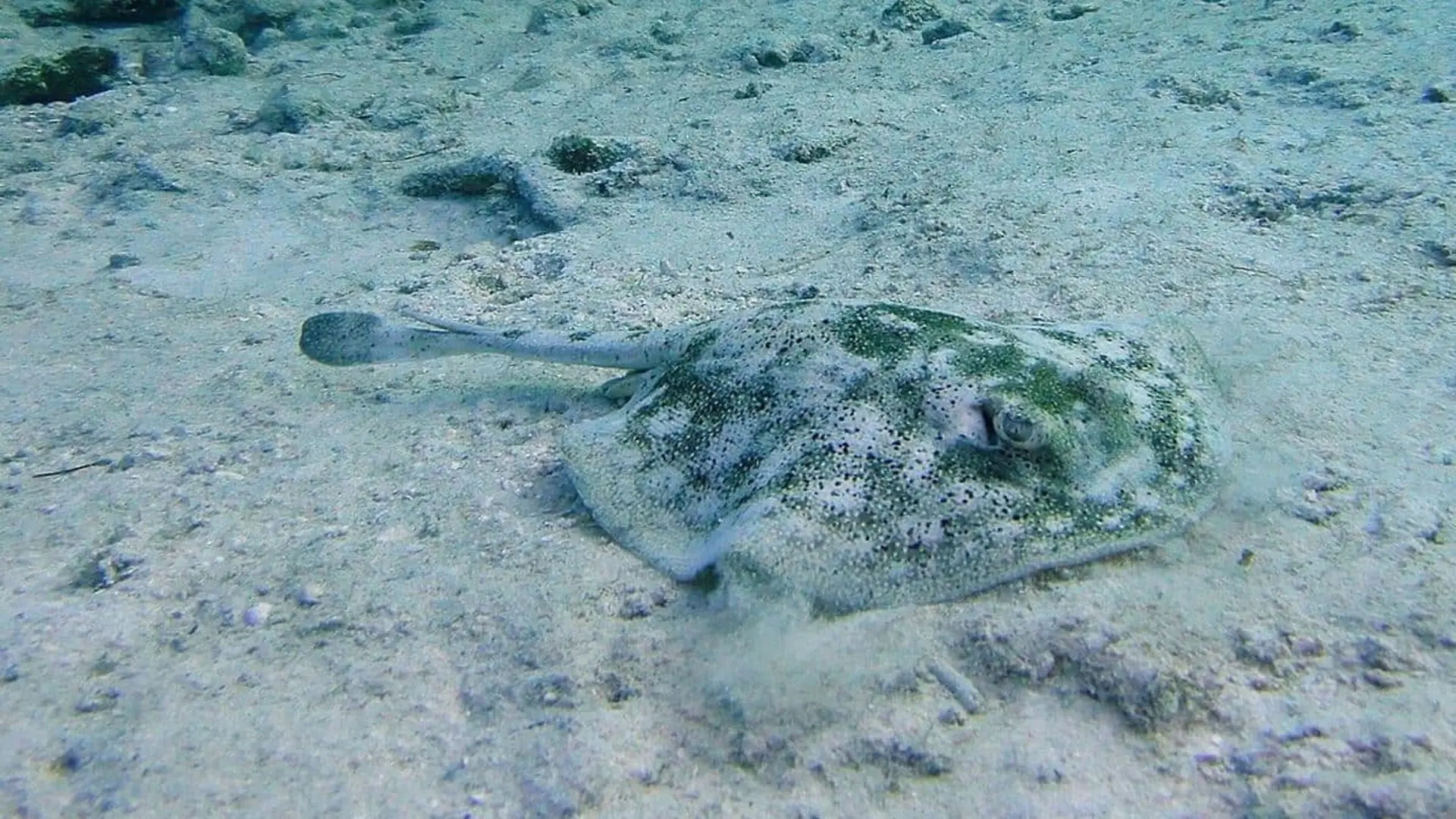
A newly identified species of armored, jawless fish discovered in southwestern China is providing paleontologists with a clearer window into the evolutionary history of vertebrates. The fossilized remains of Asioaspis brachyotus, which dates back approximately 419 million years to the Early Devonian, offer a missing link in understanding how early fish transitioned from a life buried in the seafloor to one spent swimming along its surface.
The discovery, detailed in the journal Vertebrata PalAsiatica, highlights the significance of the Galeaspida. This extinct group of bony-headed fish, found exclusively in the fossil records of China and northern Vietnam, is considered a vital evolutionary branch. Researchers note that galeaspids share a closer genetic and structural kinship with jawed vertebrates—including humans—than they do with modern jawless fish such as hagfish or lampreys. Studying them is essential for decoding the origins of critical biological features like jaws, paired appendages, and the spiracle.
Unlocking the Secrets of Ancient Aquatic Life
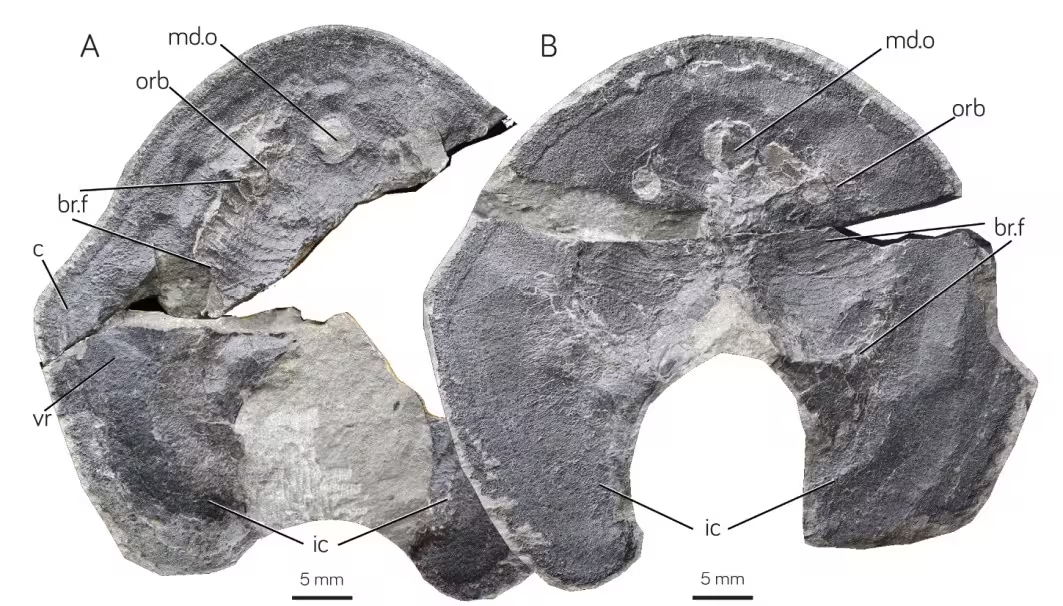
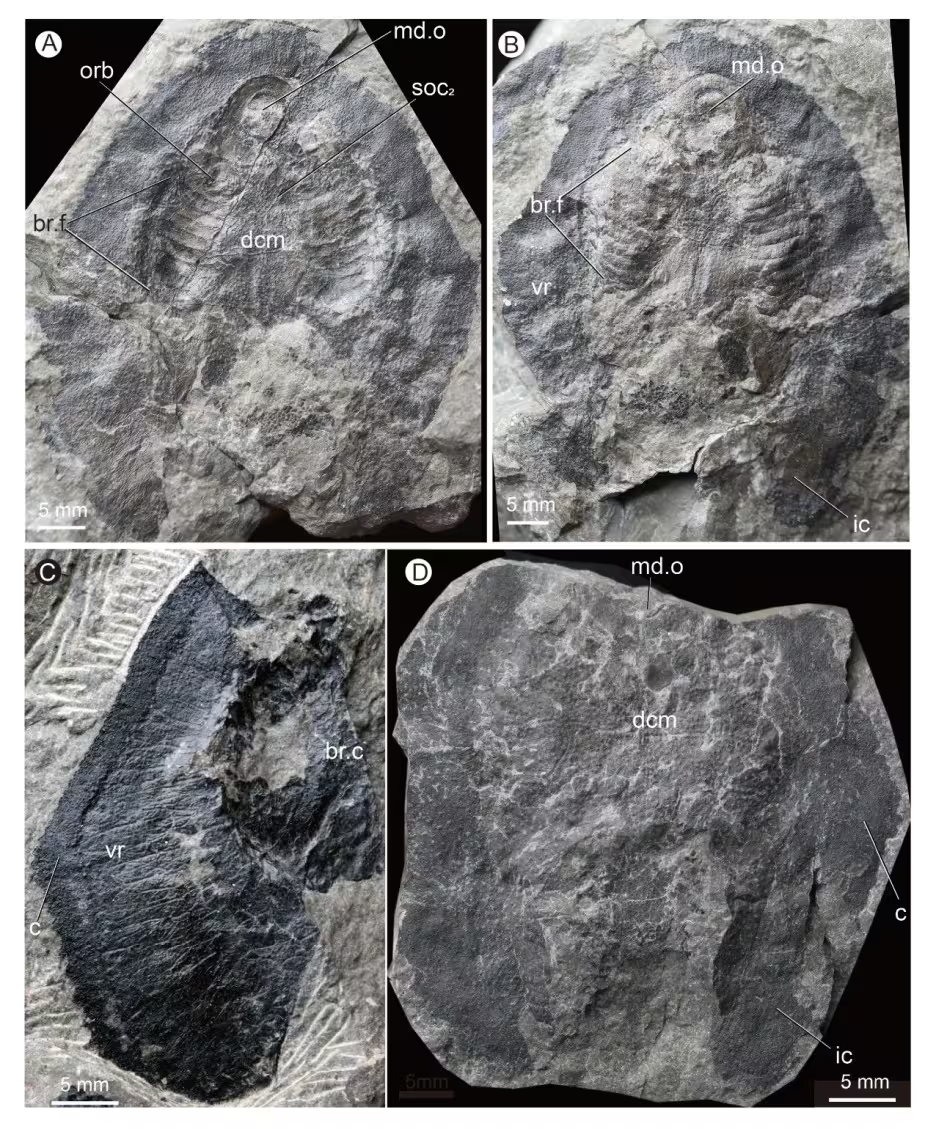
Excavations at the Xishancun Formation near Qujing in Yunnan province yielded three nearly complete headshields and several fragments of A. brachyotus. Measuring roughly 4.7 to 6 centimeters, the creature possessed a distinctive oval-shaped head covered in a coarse, granular surface with serrated edges. Examination of the fossils revealed at least 12 pairs of gill pockets, a hallmark of the Polybranchiaspiformes order to which the species belongs.
Dr. Zhi-Kun Gai of the Chinese Academy of Sciences and his research team analyzed the anatomy of these specimens to determine the fish’s ecological niche. Their findings suggest a significant behavioral shift within the group. While earlier relatives were equipped with eye and gill openings clustered at the top of the head—a design perfectly adapted for burying oneself in sand and silt—A. brachyotus displays a different configuration.
An Evolutionary Leap in Behavior
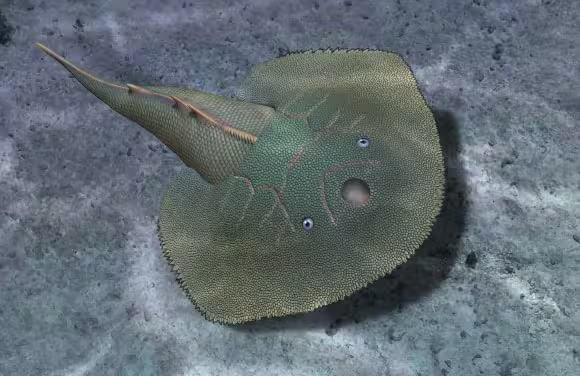
In this species, the sensory and respiratory openings are widely spaced and located closer to the ventral rim. According to the research team, this anatomy would have been impractical for a semi-infaunal lifestyle, as it would have allowed debris to clog the mouth and gill chambers. Instead, the placement indicates that A. brachyotus occupied an epibenthic position, living freely on the seafloor rather than hiding within the sediment.
This discovery positions the species as a crucial evolutionary bridge. It illustrates the transition from the specialized, burrowing existence of primitive polybranchiaspiforms toward the more mobile, surface-dwelling habits that would define later groups of early vertebrates. By bridging these two lifestyles, A. brachyotus offers paleontologists a tangible look at the adaptive pressures that shaped the early development of fish in the Devonian seas.
This article has been fact checked for accuracy, with information verified against reputable sources. Learn more about us and our editorial process.
Last reviewed on .
Article history
- Latest version
Reference(s)
- “Asioaspis, a new genus of Polybranchiaspiformes (Galeaspida, stem-gnathostomes) from the Lower Devonian of Yunnan, China.” Vertebrata Palasiatica, vol. 64, no. 2, April 20, 2026, pp. 137, doi: 10.19615/j.cnki.2096-9899.260113. <https://www.vertpala.ac.cn/EN/10.19615/j.cnki.2096-9899.260113>.
Cite this page:
- Posted by Elizabeth Taylor