Root Microbes Rewire Stress Signals to Help Citrus Survive Drought
Pairing beneficial soil fungi with helper bacteria restrains drought hormones and boosts antioxidant defenses in citrus seedlings.
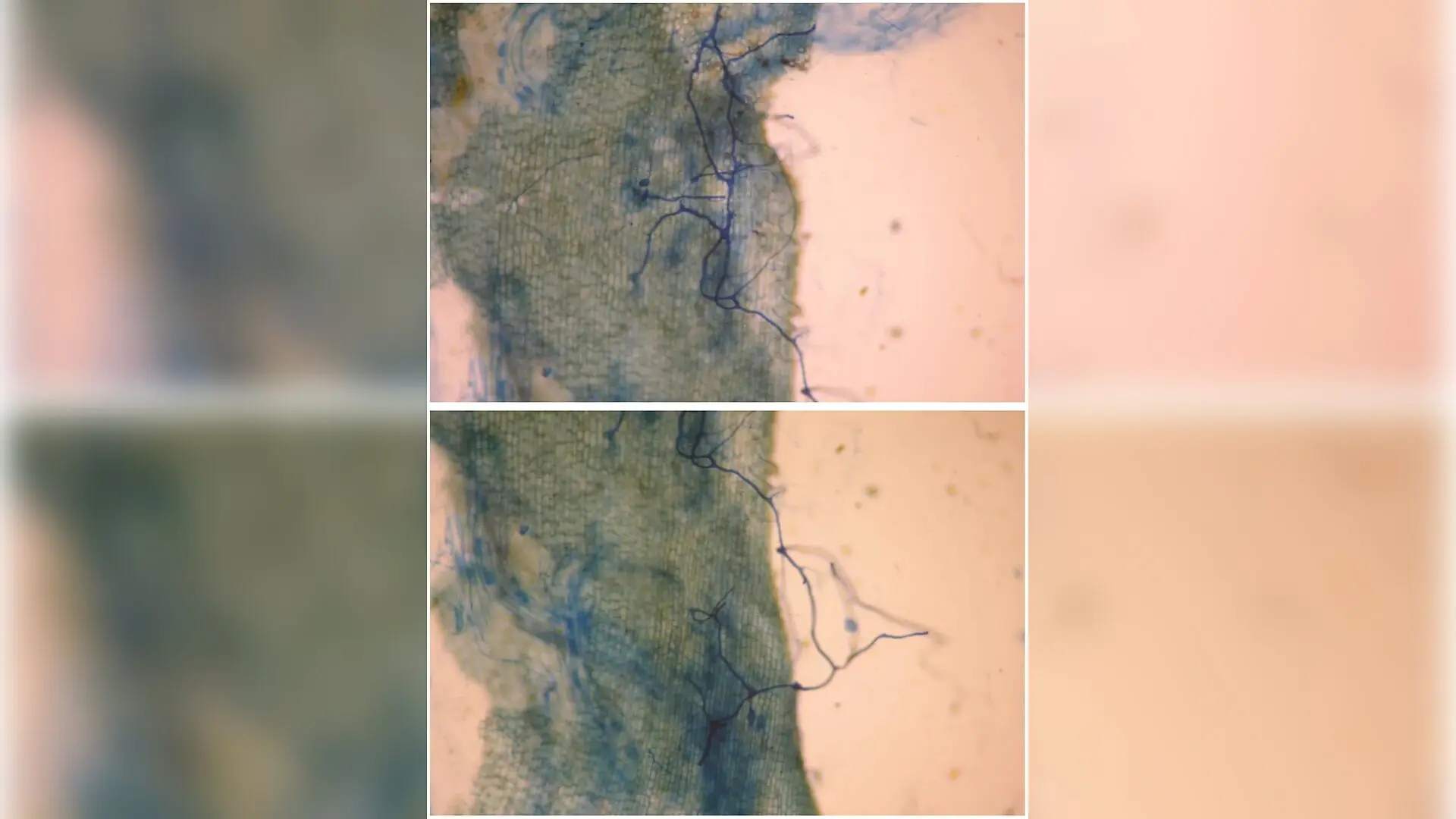
When citrus seedlings face severe water scarcity, a specific microbial partnership in their roots rewrites their internal stress signals and helps them survive. Researchers discovered that pairing arbuscular mycorrhizal fungi, which are beneficial soil fungi that form mutualistic networks with plant roots, alongside mycorrhizal helper bacteria, which are specialized helper microbes that stimulate fungal growth, dramatically alters how citrus plants handle drought.
The study, published in PloS one, evaluated two common citrus rootstocks known as Troyer citrange and Cleopatra mandarin. Over a multi-year period, the researchers inoculated these rootstocks with fungal strains like Glomus intraradices, either alone or combined with phosphate-solubilizing bacteria, Azospirillum, or Providencia. After 270 days of microbial establishment, the plants underwent a 20-day water-stress test where irrigation was withheld until over 50 percent of the stressed plants showed temporary wilting.
How Soil Microbes Alter Plant Water Retention
During the 20-day dry-down window, soil moisture in the root zones declined steadily, but the dually inoculated seedlings slowed that depletion down. Seedlings treated with Glomus intraradices and phosphate-solubilizing bacteria maintained higher soil relative water content compared to uninoculated control plants. By the end of the experiment, the treated Troyer citrange retained 10.50 percent soil moisture, while the untreated control dropped to 8.00 percent.
The microbial partnership also preserved leaf hydration. Under water stress, the dually inoculated Troyer citrange and Cleopatra mandarin maintained significantly higher leaf relative water content than their uninoculated counterparts. This boost in water status stems from an expanded underground network of extraradical fungal mycelium that improves root conductivity and water uptake from dry soils.
What Happens to Photosynthesis and Stress Hormones
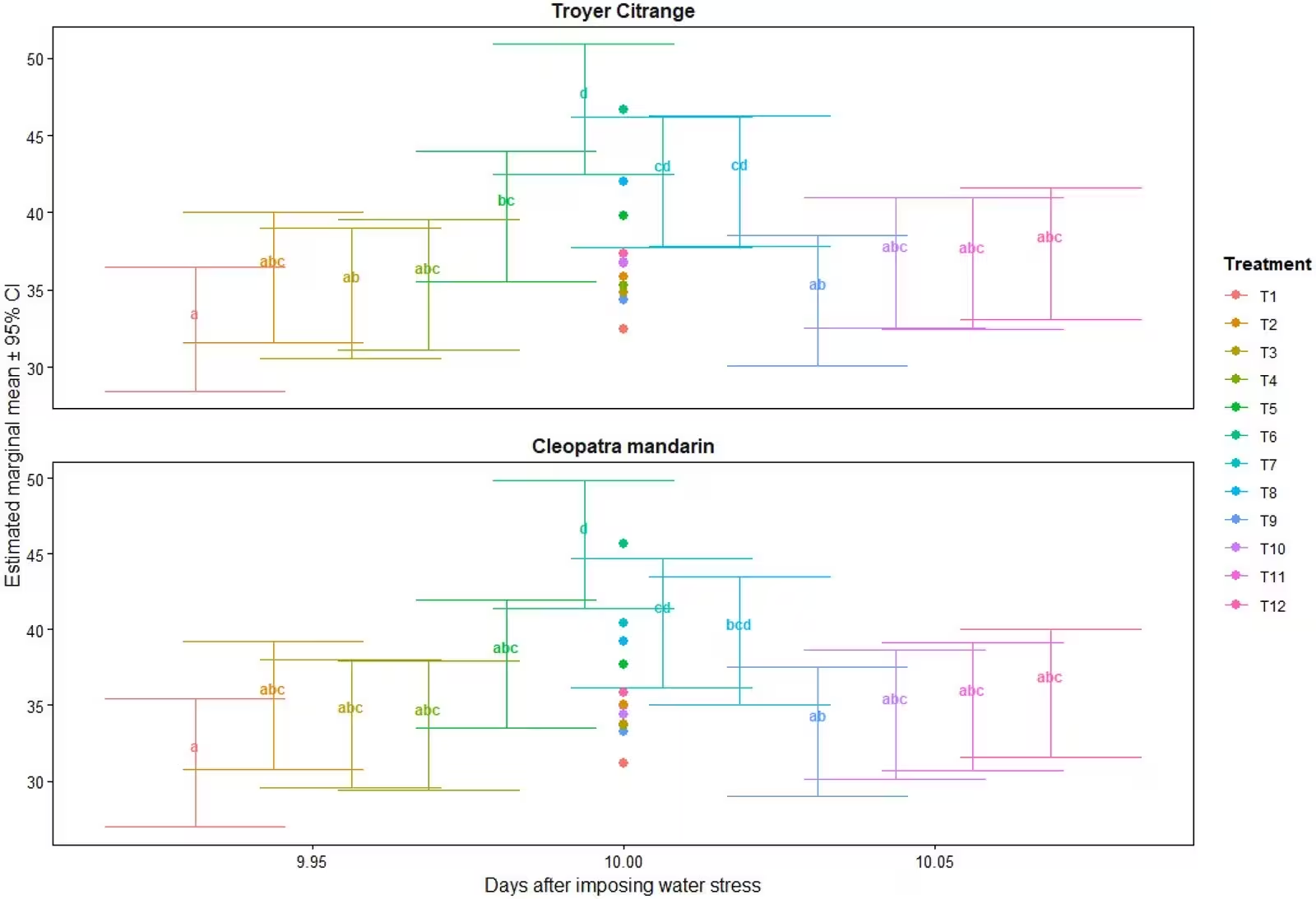
Water deprivation typically shuts down plant metabolism, but the microbial treatment acted as a physiological buffer. Uninoculated plants suffered steep declines in net photosynthesis, dropping to around 1.23 micromoles per square meter per second. In contrast, the dually inoculated Troyer citrange and Cleopatra mandarin maintained significantly higher photosynthetic rates at 7.57 and 6.45 micromoles per square meter per second.
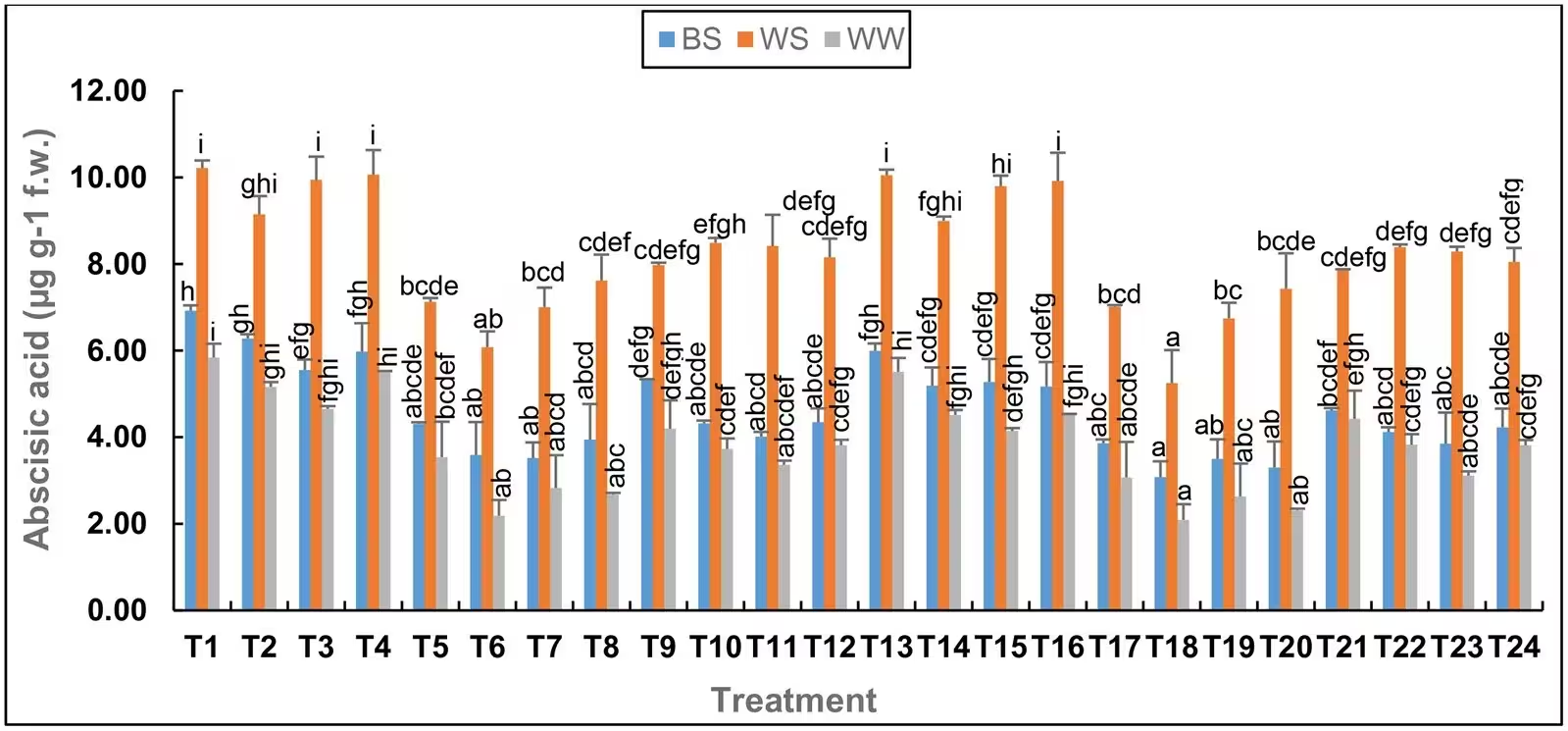
The treatment also modified abscisic acid, a primary plant hormone that triggers stomatal closure during drought. While uninoculated control seedlings accumulated massive surges of abscisic acid in their leaves under water stress, reaching over 10 micrograms per gram of fresh weight, the dually inoculated plants restricted this escalation. By keeping leaf abscisic acid concentrations lower, the treated rootstocks kept their stomata open longer, enabling continued carbon dioxide uptake without collapsing their water balance.
Osmolytes and Antioxidant Defenses Under Pressure
To protect their cells from dehydration damage, the microbially enhanced seedlings ramped up the production of protective chemicals. Plants inoculated with Glomus intraradices and phosphate-solubilizing bacteria accumulated significantly higher concentrations of osmolytes, including total phenols, proline, and total soluble sugars, in their leaves under stress conditions.
Furthermore, non-enzymatic antioxidants like ascorbic acid, total carotenoids, and glutathione increased substantially in the treated groups. Ascorbic acid levels in water-stressed Troyer citrange jumped by more than 130 percent in dual-inoculated variants compared to controls. These antioxidant compounds detoxify reactive oxygen species generated during drought, safeguarding cellular membranes and proteins from oxidative destruction.
Root Architecture and Future Agricultural Applications
The researchers noted that Troyer citrange and Cleopatra mandarin responded somewhat differently due to their distinct root structures. Troyer citrange possesses a finer root system with high specific root length, allowing for more aggressive root colonization by the fungi. Cleopatra mandarin features a coarser root system, yet still benefited significantly from the microbial intervention.
While pot-scale container experiments in glasshouses and orchards cannot fully replicate complex field environments, the findings point toward sustainable agricultural strategies. Harnessing specific combinations of beneficial soil fungi and helper bacteria could help orchard crops withstand climate-driven water scarcity without relying heavily on chemical inputs.
The research was published in PloS one on January 1, 2026.
This article has been fact checked for accuracy, with information verified against reputable sources. Learn more about us and our editorial process.
Last reviewed on .
Article history
- Latest version
Reference(s)
- Barman, Prananath., et al. “Arbuscular mycorrhizal fungi and mycorrhizal helper bacteria co-inoculation alters drought-associated physiological traits and leaf abscisic acid concentration in citrus rootstocks.” PLOS One, vol. 21, no. 10, October 27, 2026, pp. e0361406 Public Library of Science (PLoS), doi: 10.1371/journal.pone.0361406. <https://doi.org/10.1371/journal.pone.0361406>.
Cite this page:
- Posted by Raj Joshi