Scientists Tracked 312 GPS Bottles in 30 Rivers, and Found How Inland Plastic Reaches the Ocean
New continental modeling reveals that floating debris travels dozens of kilometers inland, reshaping strategies to stop ocean pollution.
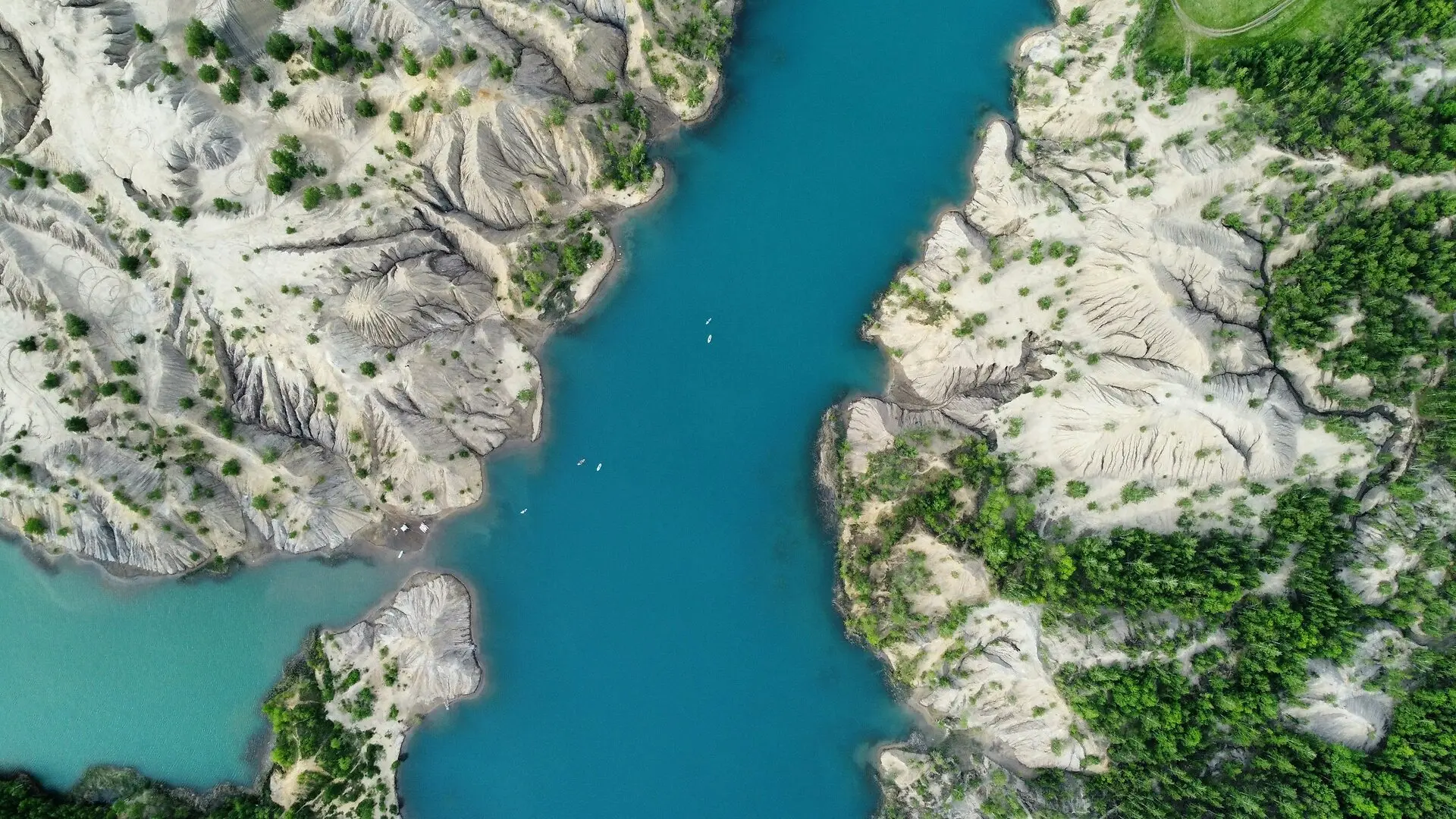
Researchers tracked 312 GPS-equipped plastic bottles across 30 river reaches in North America to quantify how debris travels from inland watersheds toward marine environments. The findings reveal that floating macroplastics can travel distances exceeding 50 km from the coast over seasonal cycles, reshaping strategies for intercepting pollution before it reaches the ocean.
Tracing Plastic Travel Across North American Watersheds
Scientists deployed GPS-tracked bottles across 7 diverse watersheds spanning from California to Massachusetts to measure how debris moves through freshwater systems. The study, published in ACS ES&T Water by Sarah Zuidema and colleagues at the University of New Hampshire, recorded 1,139 individual mobilization events during field campaigns conducted between 2022 and 2024. Total travel distances for individual bottles ranged from a minimum of 70 m in the Ipswich River up to 53,500 m in the Los Angeles River. The team found that apparent whole-deployment velocities varied widely from less than 1 m per day to more than 8,000 m per day, correlating positively with local river discharge.
The authors noted that maximum bottle travel distances were greater than 25 km in 4 of the 7 study watersheds. These field observations demonstrate that floating debris does not merely sink immediately into local sediments, but instead undergoes repeated cycles of downstream transport and temporary trapping by riverbanks, vegetation, and woody debris.
How Stream Power Drives Debris Mobilization
To determine what triggers a stationary piece of plastic to start moving again, the research team analyzed specific stream power, a measure of energy associated with flowing water regardless of channel size. A logistic regression model revealed that the daily likelihood of mobilization ranged from less than 1 percent during low flows to over 3 percent during higher flows. Furthermore, the duration that an item had already remained stationary strongly influenced its remobilization potential. Bottles that stayed in one location for extended periods became increasingly difficult to dislodge, likely because subsequent debris accumulated around them and anchored them in place.
Gradient boosted tree regression analyses showed that river discharge accounted for more than 70 percent of the variation in daily travel distances during active mobilization events. Upstream forest cover emerged as an important secondary factor, acting to reduce travel distances because forested margins often feature woody debris dams that trap floating items. Conversely, urban environments tended to enhance movement by replacing natural roughness with hardened, straightened channels and direct stormwater inputs.
Modeling Continental Export Probabilities and Limits
The team combined their observed tracking relationships with a large-scale hydrological model to simulate plastic export probabilities across the conterminous United States and southern Canada. Over annual time scales, the average probability of bottle export declined from about 22 percent at 1 km inland to less than 0.4 percent at 200 km from the coast. The probabilistic model estimated that nearly all reaches expected to export plastic debris in an average month are located within 51 km of the coastline. For quarterly and yearly averaging periods, that distance increased to 134 km and 223 km, respectively.
The authors emphasize that these coastal export zones intersect regions of dense human population, meaning that roughly 26 percent and 47 percent of the population in the studied regions reside within areas likely to export plastic debris over a given month or year. While the work provides a robust regional framework, the authors point out that highly managed hydrologic systems, such as the canal networks in Miami, experienced bimodal discharge patterns and local turbulence from wind or boat traffic that standard models did not fully capture.
The research was published in ACS ES&T water on November 28, 2026.
This article has been fact checked for accuracy, with information verified against reputable sources. Learn more about us and our editorial process.
Last reviewed on .
Article history
- Latest version
Cite this page:
- Posted by Vikram Desai