Pig Manure Fermentation Reduces Specific Antibiotic Levels, But Resistance Genes Persist in Agricultural Soils
Metagenomic profiling reveals that anaerobic digestion lowers tetracycline concentrations but leaves persistent resistance gene networks in ditch sediments and soils.
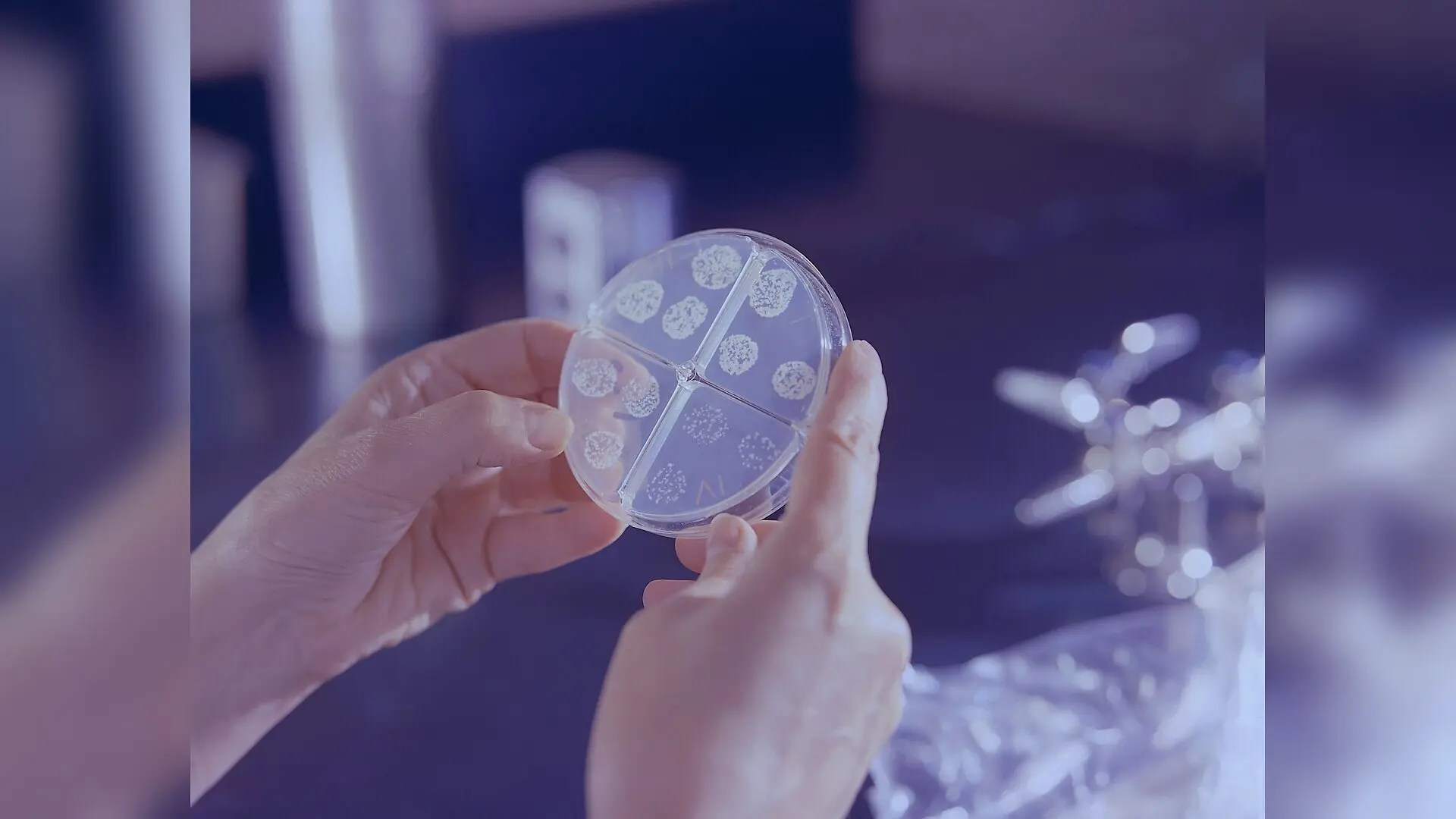
A 2026 cross-sectional investigation conducted in Qinzhou, Guangxi, China, revealed that anaerobically fermented pig manure contained lower concentrations of tetracycline and sulfamethazine, yet antibiotic and metal resistance genes remained widely detectable across downstream sediments and agricultural soils. Xiuli Liang from the Anyang Institute of Technology and colleagues evaluated environmental samples from two contrasting swine manure management pathways within a single intensive production system, uncovering complex distribution patterns among chemical residues and microbial communities.
Intensive livestock operations frequently utilize heavy metal feed additives such as copper and zinc, alongside various veterinary medicines, to promote animal health and growth. These chemical inputs are subsequently excreted in animal waste, which is often processed via anaerobic digestion or transported directly through agricultural ditches before application to farmland. While treatment methods are designed to stabilize waste, tracking how resistance genes and chemical contaminants move through interconnected environmental compartments remains a major scientific challenge. Metagenomic profiling allows researchers to sequence all genetic material in a sample simultaneously, providing a detailed snapshot of microbial community structures and resistance gene profiles.
The research team collected 24 biological samples across manure slurry, manure-impacted ecological ditch sediment, and adjacent agricultural soil. Chemical analysis showed that non-fermented manure contained exceptionally high nutrient loads, including 21,074.67 milligrams per kilogram of total nitrogen and 6,051.13 milligrams per kilogram of total phosphorus. In comparison, anaerobically fermented manure exhibited substantially lower concentrations of specific antibiotics like tetracycline, which dropped from 23,707.79 micrograms per kilogram down to 6,644.75 micrograms per kilogram. However, certain compounds defied this downward trend, with the antibiotic norfloxacin persisting at relatively high concentrations of 5,142.81 micrograms per kilogram in fermented manure and 4,658.89 micrograms per kilogram in receiving sediments. These findings were published in Veterinary Sciences, offering new data on agricultural waste management.
Heavy Metal Accumulation in Ditch Sediments
Heavy metal concentrations varied significantly depending on the environmental matrix and the management pathway used. Non-fermented ditch sediment accumulated the highest recorded levels of copper and zinc, reaching 254.38 milligrams per kilogram for copper and an overwhelming 1,885.29 milligrams per kilogram for zinc. Conversely, the fermented pathway exhibited lower copper and zinc levels in its corresponding sediment, though fermented manure and its associated soil contained higher concentrations than their non-fermented counterparts. These spatial concentration differences highlight how different processing pathways alter the distribution of heavy metals across terrestrial and aquatic interfaces.
Oxidation-reduction potential measurements also revealed distinct environmental conditions across the sampled compartments. In the non-fermented pathway, ditch sediment exhibited a strongly reducing value of minus 31.33 millivolts, whereas agricultural soils maintained positive redox values. Total metal concentrations alone cannot establish whether these heavy metals are chemically stabilized or environmentally mobile, as factors like sulfide precipitation and organic binding play critical roles in regulating metal availability.
Microbial Community Shifts Across Environmental Compartments
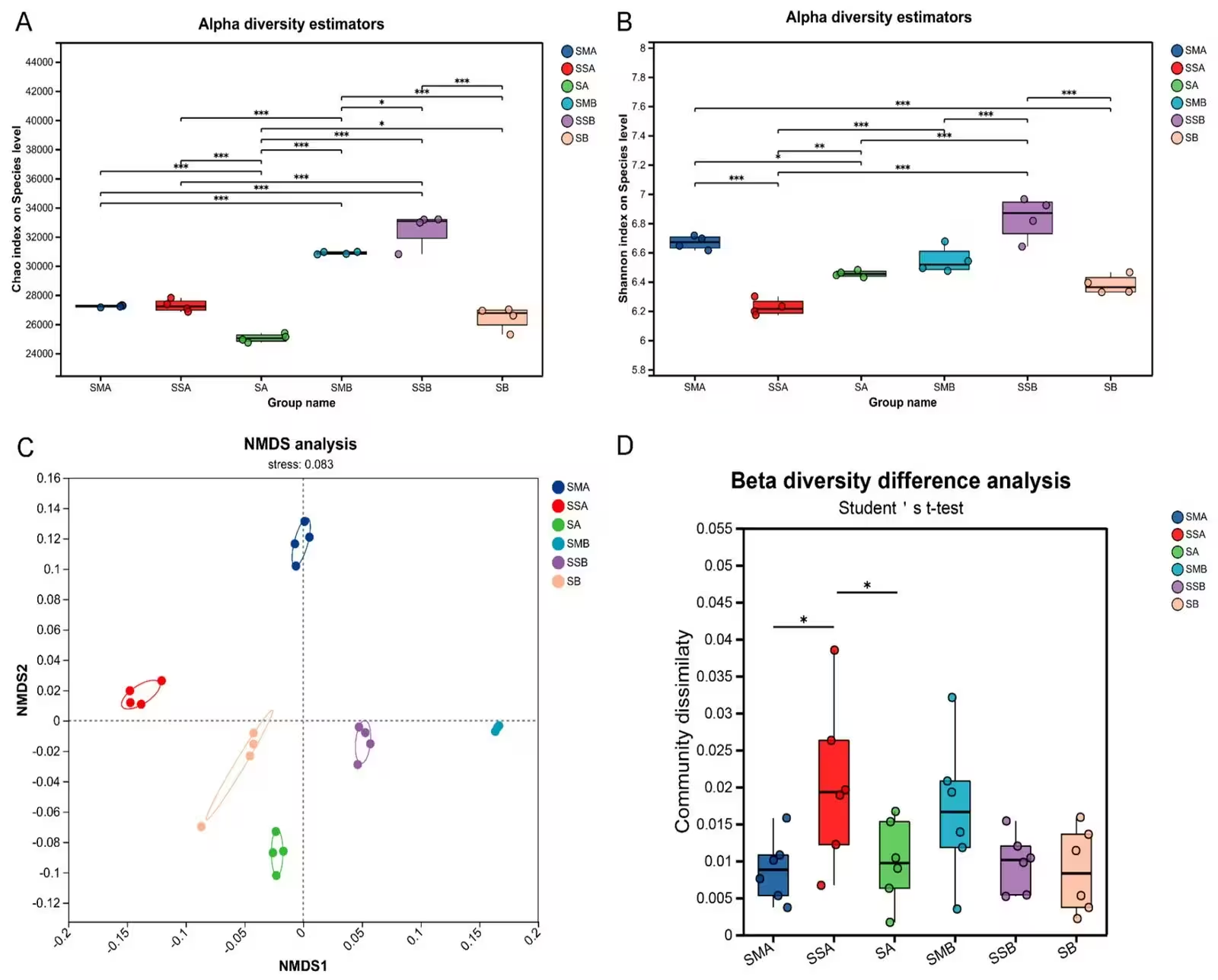
Metagenomic sequencing demonstrated that microbial community compositions shifted dramatically between the two management pathways and across different sample matrices. Non-fermented ditch sediment displayed the highest species richness and Shannon diversity among all tested groups, heavily populated by taxa such as Rhodanobacter and Povalibacter. In contrast, the fermented pathway favored environmentally adapted taxa like Trebonia and Bradyrhizobium, likely due to the reduced availability of labile organic substrates following anaerobic digestion. Dominant bacterial phyla across all samples included Pseudomonadota, Actinomycetota, Bacteroidota, Chloroflexota, and Acidobacteriota.
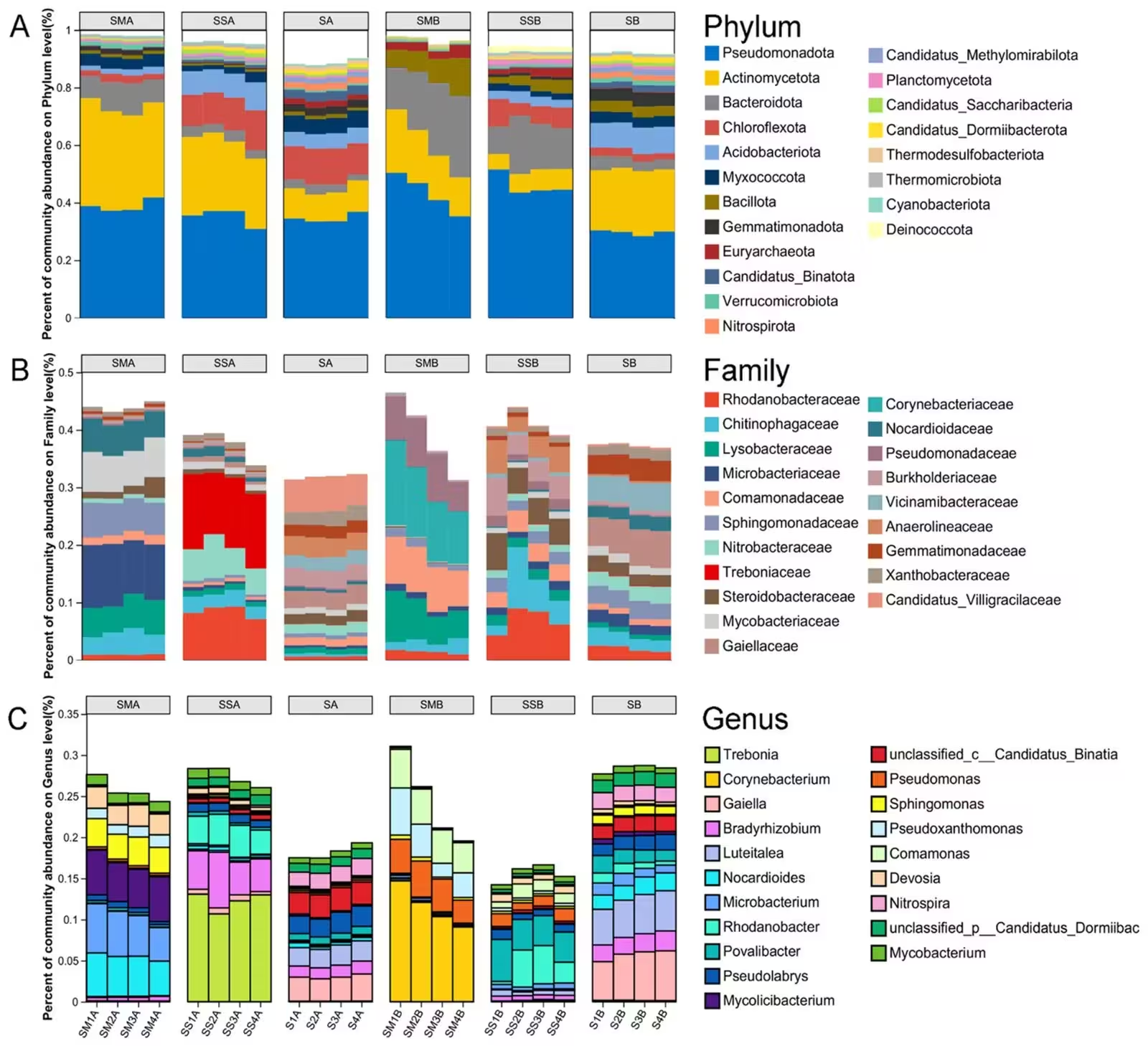
Soil communities also reflected the lasting impact of manure application methods. Agricultural soil linked to the non-fermented pathway retained stronger signals from manure-associated microorganisms such as Nocardioides and Microbacterium. Meanwhile, soil associated with the fermented pathway supported a more balanced, soil-typical bacterial profile dominated by resilient genera like Gaiella and Luteitalea. These compositional differences underscore how waste pretreatment shapes the persistence of introduced microorganisms in agricultural soils.
Resistinome Profiles and Co-Occurrence Network Patterns
Antibiotic resistance genes and metal resistance genes remained persistently detectable under both management practices, proving that lower concentrations of certain antibiotics do not eliminate resistance determinants. In the fermented pathway, genes such as macB and various tetracycline-related markers maintained prominent relative abundances. Network analysis revealed that the combined antibiotic and metal resistance gene network was less dense and contained more disconnected components in the fermented pathway, featuring 22 connected components compared to 16 in the non-fermented network.
The non-fermented pathway produced a denser association network with higher edge counts and greater connectivity among resistance genes. Across both pathways, copper-resistance genes frequently connected to the core resistance-gene network, whereas arsenic- and zinc-resistance nodes remained localized toward the network periphery. Because these networks rely on statistical correlations from pooled environmental matrices, the authors emphasize that these co-occurrence patterns describe association structures rather than confirmed physical gene linkage or horizontal transfer events.
The research was published in Veterinary sciences on November 20, 2026.
This article has been fact checked for accuracy, with information verified against reputable sources. Learn more about us and our editorial process.
Last reviewed on .
Article history
- Latest version
Reference(s)
- Liang, Xiuli., et al. “Antibiotic and Metal Resistance Gene Profiles Across Manure, Ditch Sediment, and Soil Under Contrasting Swine Manure Management Practices.” Veterinary Sciences, vol. 13, no. 11, November 20, 2026, pp. 1254 MDPI AG, doi: 10.3390/vetsci13111254. <https://doi.org/10.3390/vetsci13111254>.
Cite this page:
- Posted by Vikram Desai