Simple Blood Test Reveals Nine Molecules Tied to Gestational Diabetes
A nuclear magnetic resonance analysis of 270 plasma samples uncovers distinct energy and amino acid alterations linked to pregnancy-related high blood sugar.

A simple blood test measuring nine specific chemical compounds can help identify gestational diabetes, a common pregnancy complication characterized by high blood sugar. Researchers found that women with the condition show distinct molecular patterns in their blood plasma, reflecting how their bodies process energy and amino acids differently during pregnancy.
How Blood Chemistry Shifts During Pregnancy
Gestational diabetes mellitus affects about 14 percent of pregnant women worldwide and up to 27 percent in Southeast Asia, creating risks for both mothers and their developing babies. The condition occurs when the natural insulin resistance of pregnancy becomes too severe for the body to manage. While doctors typically rely on standard oral glucose tolerance tests to diagnose the disorder, these tests can vary widely in their results and criteria. To find more precise indicators, scientists turned to metabolomics, which is the high-throughput study of small-molecule metabolites produced by cellular processes.
The research team examined plasma samples from 270 pregnant women receiving antenatal care in Thailand, including 169 women diagnosed with gestational diabetes and 101 women with normal glucose tolerance. Using an untargeted 1H nuclear magnetic resonance platform, the investigators analyzed blood profiles to track differences between the two groups. Detailed insights from this work were published in PLOS One as part of a cross-sectional investigation into pregnancy metabolism.
Nine Biomarkers That Flag Metabolic Stress
Out of 31 identified molecules, the team prioritized nine compounds that remained significantly elevated in women with gestational diabetes even after adjusting for maternal age and pre-pregnancy body mass index. These nine markers consist of acetone, citrate, glucose, succinate, glycine, 3-hydroxybutyrate, leucine, phenylalanine, and specific unsaturated lipid bonds. The presence of these chemicals points directly to altered energy production and increased fat breakdown when glucose utilization is impaired.
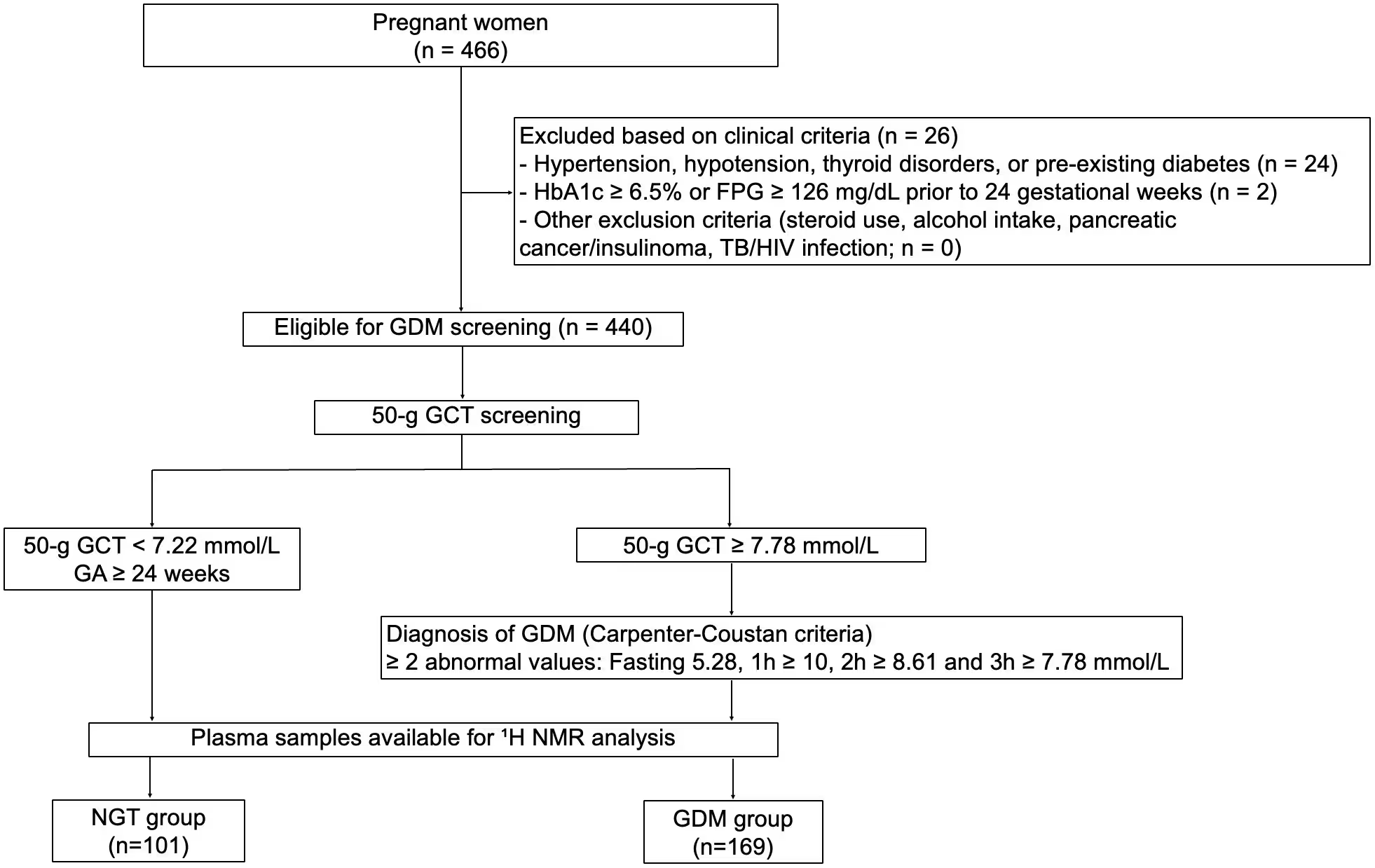
When researchers tested how well this nine-metabolite panel could separate the two groups using machine learning models, the random forest algorithm achieved an area under the receiver operating characteristic curve of 0.76. This level of performance indicates moderate within-cohort discrimination. Furthermore, pathway enrichment analyses connected the altered molecules to specific biological networks, highlighting disruptions in ketone body metabolism and branched-chain amino acid biosynthesis.
Limitations and What Lies Ahead
The authors noted several limitations in their study, including a moderate sample size and the fact that participant race and ethnicity were not systematically recorded. Because the metabolite panel was derived and evaluated within the same cohort, the findings represent exploratory within-cohort performance rather than an externally validated diagnostic test. Independent multicenter studies involving larger, diverse populations will be necessary to confirm whether these metabolic signatures can be translated into reliable clinical tools for early screening.
The research was published in PLOS One on November 19, 2026.
This article has been fact checked for accuracy, with information verified against reputable sources. Learn more about us and our editorial process.
Last reviewed on .
Article history
- Latest version
Reference(s)
- Chaiyachate, Kornpatchara., et al. “Untargeted plasma metabolomics reveals metabolite alterations and pathway perturbations in gestational diabetes mellitus.” PLOS One, vol. 21, no. 11, November 19, 2026, pp. e0362854 Public Library of Science (PLoS), doi: 10.1371/journal.pone.0362854. <https://doi.org/10.1371/journal.pone.0362854>.
Cite this page:
- Posted by Bilal Abbasi