Quarter Of Young Children In Rural Ethiopia Affected By High Diarrhea Rates
A new baseline survey reveals that improved water sources alone fail to protect kids from illness unless safe storage and hand washing are practiced.
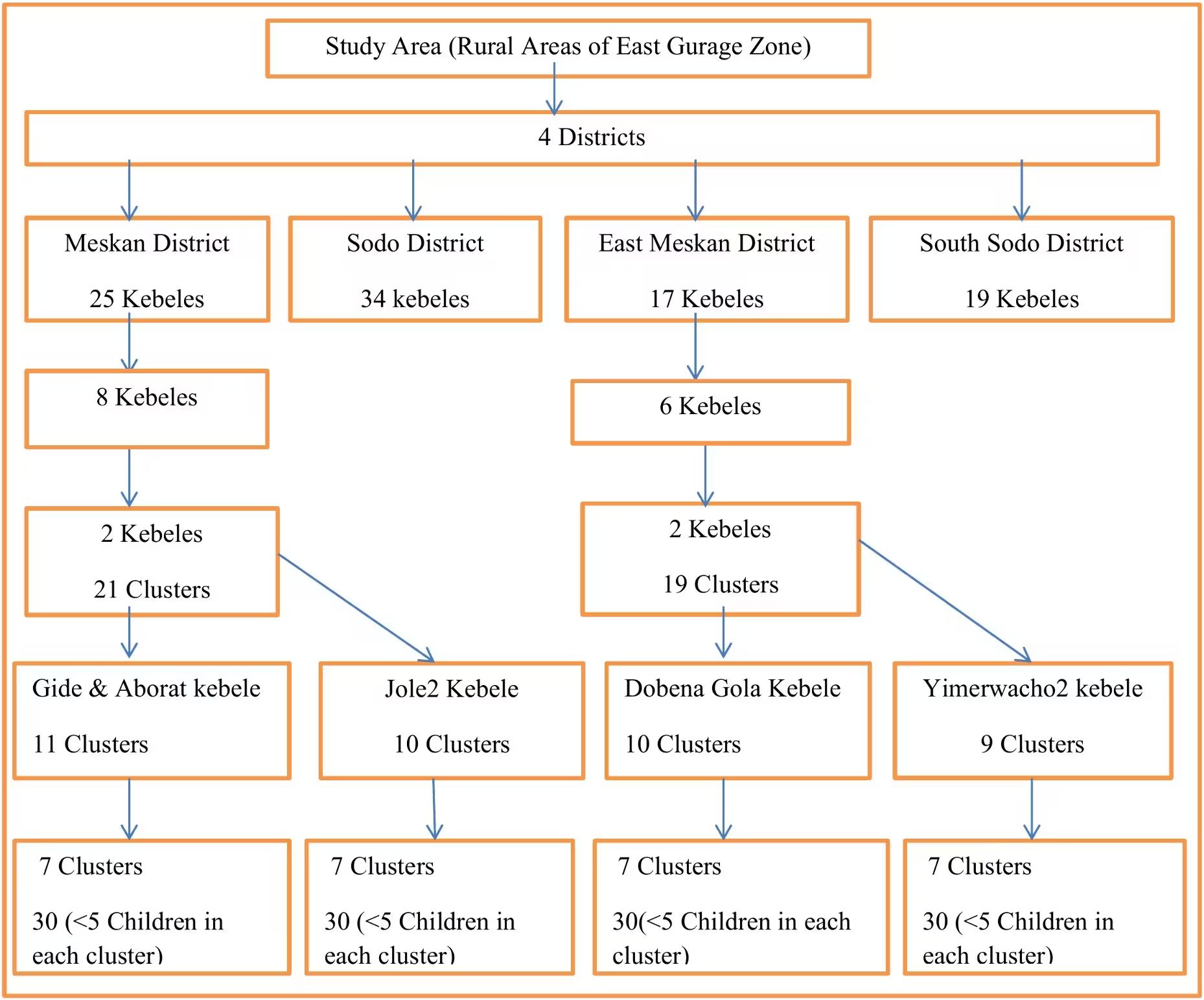
A quarter of young children in rural central Ethiopia experienced diarrhea in the two weeks prior to a new baseline survey, revealing a disease burden that outstrips national and global averages. The study, conducted by Melaku Tesfaye and colleagues from Jimma University, examined 840 households in the East Gurage Zone to establish a benchmark for an upcoming four-arm cluster randomized controlled trial.
Diarrheal diseases remain a leading global killer of children under five, particularly in low- and middle-income regions where access to clean water and sanitation is limited. In Ethiopia, intestinal infections are the second major cause of early childhood mortality, with children facing a vastly higher risk of dying before their fifth birthday compared to their European counterparts. To understand the localized drivers of this crisis, researchers surveyed mothers and caregivers between September 11 and September 25, 2025, assessing behavioral, environmental, and socio-demographic factors.
Why Does Childhood Diarrhea Remain So Prevalent in Rural Ethiopia?
The baseline survey, published in PLOS One, found a two-week diarrhea prevalence of 25.7% among children aged six to fifty-nine months. That figure is substantially higher than the national estimate of 12% reported in older demographic surveys and exceeds the global pooled prevalence of roughly 11%. The authors attribute the high local rate to severe infrastructural deficits, noting that water supply coverage in the study zone sat at just 44.9% during 2025 and 2026.
Statistical analysis using Generalized Estimating Equations identified several critical factors linked to lower odds of childhood illness. Mothers aged 24 to 34 years reported significantly fewer cases than older mothers, and children whose families practiced consistent hand washing at critical moments, such as after using the toilet or before feeding, experienced eighty percent lower odds of diarrhea. The choice of cleaning agent mattered greatly: households using both soap and water had ninety-one percent lower odds of reporting diarrhea than those relying on water alone.
How Do Water Storage Habits Influence Infection Risks?
Interestingly, having access to an improved water source did not automatically shield children from sickness. Water quality testing revealed that over eighty-five percent of household drinking samples drawn from improved sources were contaminated with E. coli bacteria, indicating that pathogens are frequently reintroduced during transport and storage.
However, physical storage practices made a measurable difference in health outcomes. Utilizing tightly covered storage containers reduced the odds of diarrhea by eighty-three percent, while maintaining visibly clean storage vessels cut the odds by more than half. Proximity to water also played a role; households that spent less than thirty minutes on a round-trip to fetch water recorded significantly lower rates of illness than those traveling greater distances.
What Role Do Sanitation and Healthcare Access Play?
The presence of a household latrine was associated with seventy-two percent lower odds of diarrhea, although the authors noted that over ninety percent of existing latrines were classified as unimproved. Researchers also observed a striking statistical link between child measles vaccination and lower diarrhea prevalence, though they caution that vaccination status likely serves as a broader proxy for good healthcare-seeking behavior and maternal health awareness rather than a direct biological defense against intestinal pathogens.
The study’s authors emphasize that cross-sectional baseline data cannot establish definitive cause-and-effect relationships, and reliance on maternal self-reporting over a two-week recall period introduces potential memory and social desirability biases. Nonetheless, the findings underscore the urgent need to move beyond merely installing water points and focus heavily on point-of-use water treatment, safe storage hygiene, and structural sanitation upgrades across rural communities.
The research was published in PLOS One on November 24, 2026.
This article has been fact checked for accuracy, with information verified against reputable sources. Learn more about us and our editorial process.
Last reviewed on .
Article history
- Latest version
Reference(s)
- Tesfaye, Melaku., et al. “Prevalence of diarrhea and its determinants among children under five years of age in rural Kebeles of East Gurage Zone, central Ethiopia: A cross-sectional study.” PLOS One, vol. 21, no. 11, November 24, 2026, pp. e0363559 Public Library of Science (PLoS), doi: 10.1371/journal.pone.0363559. <https://doi.org/10.1371/journal.pone.0363559>.
Cite this page:
- Posted by Anjali Singh