New Two-Dimensional Crystal Mixes Five Metals To Achieve Robust Magnetism Above Room Temperature
A novel two-step synthesis strategy overcomes traditional chemical constraints to build tunable magnetic materials for next-generation electronics.

A newly developed chemical strategy is making it possible to build ultra-thin magnetic materials that stay strongly magnetized at temperatures well above room temperature. By mixing five different metal elements into single atomic sheets, researchers have bypassed longstanding rules of chemistry that usually prevent such diverse atoms from binding together into a uniform crystal.
How Can Five Different Metals Form One Uniform Crystal Sheet?
As traditional silicon-based computer chips approach their physical limitations, scientists are searching for microscopic two-dimensional layers that can carry data faster and with less energy. Until now, nearly all ultra-thin transition metal dichalcogenides, which are sandwich-like structures made of a layer of transition metal atoms between two layers of chalcogen atoms like sulfur or selenium, were restricted to a narrow group of metals. This restriction was governed by strict chemical compatibility rules known as the Hume-Rothery criteria, which demand that constituent atoms have very similar sizes and identical crystal structures.
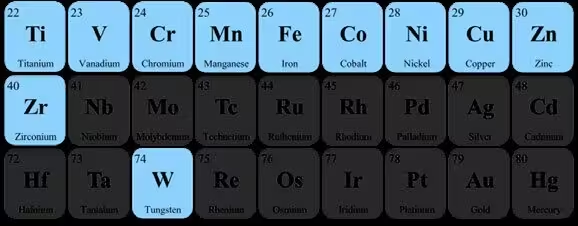
To break past this barrier, a multi-institutional team led by material scientists at the University of Missouri and Oak Ridge National Laboratory devised an innovative two-step synthesis method. First, the researchers used a mild hydrothermal process to grow three-dimensional structures called high-entropy layered double hydroxides, allowing five different transition metals, including elements outside the traditional groups such as iron, cobalt, nickel, vanadium, and chromium, to mix uniformly at the atomic scale.
In the second step, the team exposed these precursor materials to sulfur or selenium vapor at elevated temperatures, converting them into multi-metal crystal layers. The resulting materials, including a representative sulfide crystal containing vanadium, chromium, iron, cobalt, and nickel, retained a homogeneous distribution of all five elements without separating into individual metal clusters. The study is available on the arXiv preprint server, detailing how this entropy-driven stabilization approach successfully expands the chemical palette of two-dimensional materials.
Why Does High-Entropy Mixing Create Above-Room-Temperature Magnetism?
When the researchers probed the magnetic properties of their multi-metal crystals using advanced scanning nitrogen-vacancy microscopy and superconducting quantum interference measurements, they uncovered robust ferromagnetism that persisted up to four hundred Kelvin, which is roughly one hundred twenty-seven degrees Celsius. Unlike conventional binary magnetic materials that rely on simple magnetic alignment, these high-entropy sheets displayed complex ferrimagnetic behavior where neighboring atomic spins aligned in opposing directions yet failed to cancel out entirely.
First-principles density functional theory calculations performed as part of the research revealed that the random placement of diverse metal atoms creates localized lattice distortions. These microscopic distortions alter bond lengths and angles across the crystal lattice, generating competing magnetic interactions that stabilize long-range magnetic ordering at high temperatures. The substantial configurational entropy of mixing effectively lowers the overall Gibbs free energy, preventing the multi-element solid solution from breaking apart into separate binary phases.
What Happens When Specific Magnetic Metals Are Swapped Out?
To test the tunability of their system, the team synthesized four-metal variations by selectively excluding either vanadium or chromium from the precursor recipe. Removing vanadium and leaving behind chromium yielded classic square-like magnetic hysteresis loops typical of a dominant ferromagnetic phase with high coercivity and remanence across all tested temperatures. By contrast, retaining vanadium introduced more pronounced antiferromagnetic-like competition, demonstrating that scientists can precisely dial in the magnetic ground state by altering elemental ratios.
The ability to tune magnetic anisotropy, coercivity, and Curie temperatures within a single material class opens up promising avenues for next-generation spintronics and reconfigurable nanoelectronic devices. Such materials could eventually serve as atomic-scale spin filters or tunnel junctions in computing hardware operating in harsh, high-temperature environments. Future investigations will aim to synthesize isolated monolayer versions of these complex crystal systems and map their exact composition-structure-property relationships at the atomic scale.
The study was posted to the arXiv preprint server on November 24, 2026.
This article has been fact checked for accuracy, with information verified against reputable sources. Learn more about us and our editorial process.
Last reviewed on .
Article history
- Latest version
Reference(s)
- Zhang, Chen. “Compositionally Tunable Synthesis of High-Entropy Transition Metal Dichalcogenides Exhibiting Above-Room-Temperature Magnetism.” arXiv.org <http://arxiv.org/abs/2611.33115v1>.
Cite this page:
- Posted by Anjali Singh