Metal-Modified Melamine Additives Cut Flexible Plastic Burning Rates by Thirty-Five Percent
Laboratory tests show that incorporating metal-containing phosphate compounds into PVC improves fire resistance through enhanced char formation, though decomposition gases remain hazardous.
Adding specialized phosphorus and nitrogen compounds to flexible poly(vinyl chloride), commonly known as PVC, can sharply reduce its burning rate and heat release during a fire, according to a laboratory-scale chemistry study. Researchers synthesized and tested melamine-based additives containing metal phosphates to find safer formulations for plastics widely used in construction, electrical insulation, and consumer goods.
Poly(vinyl chloride) is naturally difficult to ignite due to its high chlorine content, but flexible versions require chemical plasticizers that burn easily and produce dense black smoke and corrosive hydrogen chloride gas. To counter this, chemists have turned to non-halogenated flame retardants that work in both the solid and gas phases, promoting protective carbon layers while releasing inert gases that dilute flammable vapors.
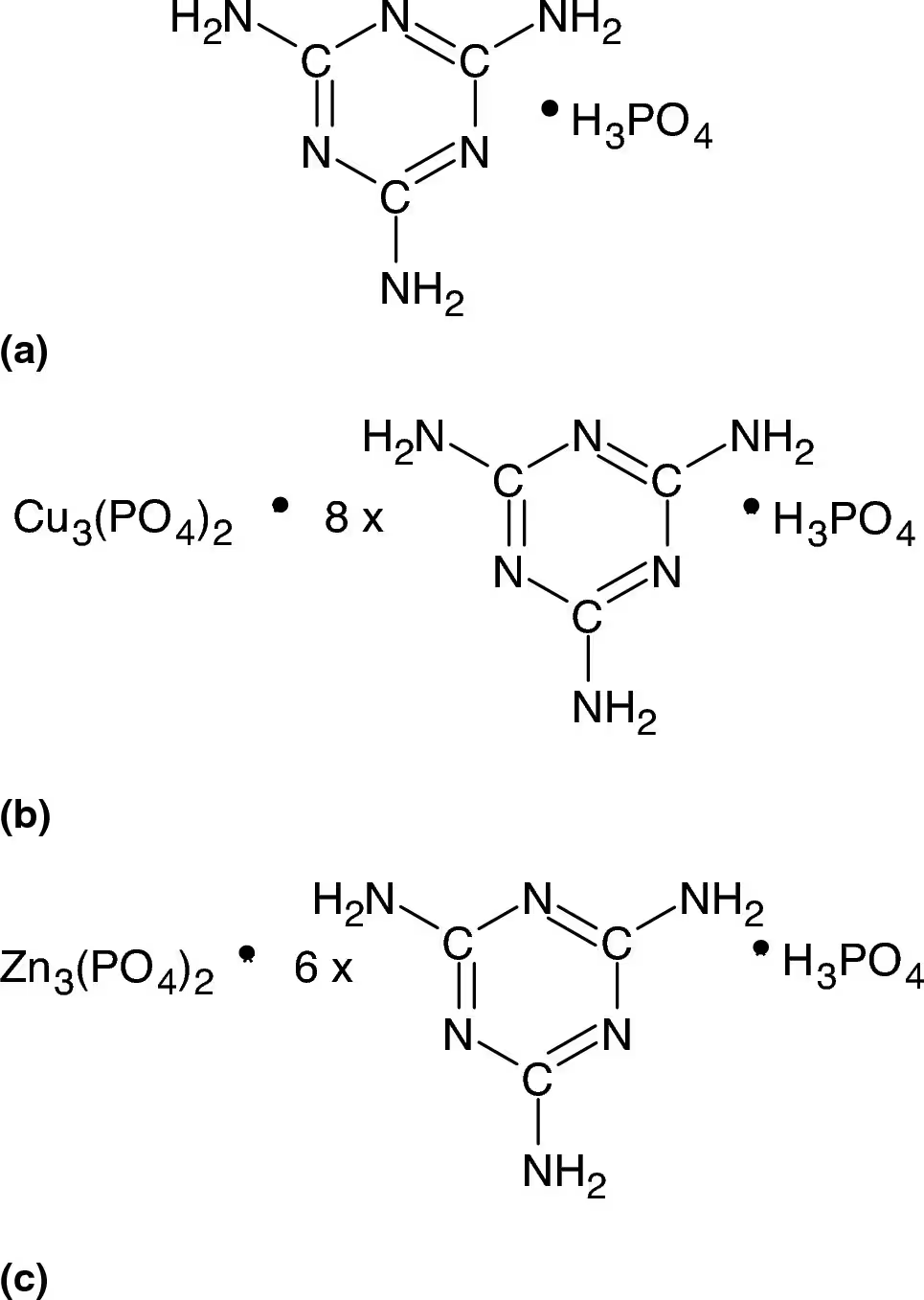
The research team synthesized pure melamine phosphate alongside two metal-modified derivatives containing copper and zinc. They then used these compounds to replace up to fifty percent of the calcium carbonate filler in flexible PVC composites at loadings of ten, thirty, and fifty mass percent. The study, published in the Journal of Thermal Analysis and Calorimetry, evaluated how the chemical modifications altered thermal decomposition, combustion behavior, mechanical strength, and the toxicity of gases released during heating.
How Do Melamine Derivatives Alter Polymer Thermal Stability?
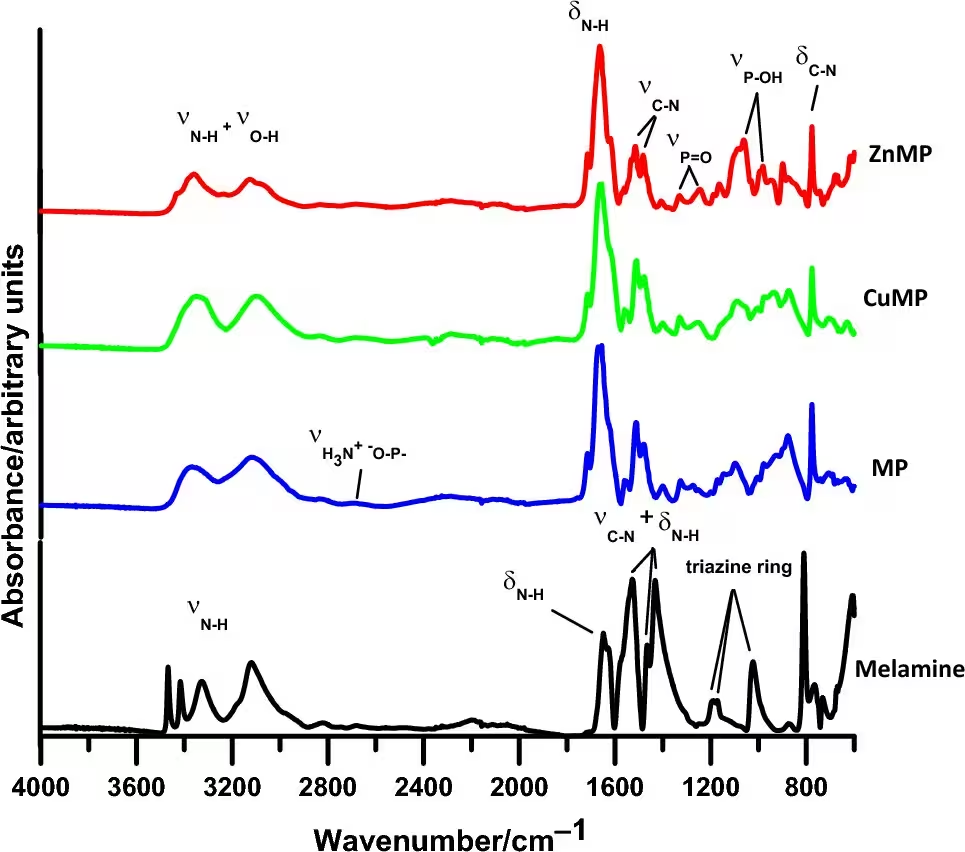
Infrared spectroscopy confirmed the successful chemical attachment of phosphate groups onto the melamine structure, replacing certain amine stretches with hydroxyl and phosphoryl bonds. Differential scanning calorimetry and thermogravimetric analysis revealed that the modified additives undergo multi-step decomposition, transforming into melamine pyrophosphate and melamine polyphosphate between two hundred fifty and three hundred fifty degrees Celsius while releasing water and ammonia.
Although this chemical activity caused the composite materials to begin losing mass at slightly lower temperatures than the reference sample, it significantly boosted solid residue formation. For instance, composites containing ten mass percent of the copper-modified melamine phosphate yielded twenty-eight percent solid char compared to twenty-three percent for the unmodified reference material, pointing to enhanced condensed-phase protection.
What Happens to Fire Behavior and Heat Release Rates?
Flammability testing demonstrated a substantial improvement in fire safety parameters across all modified polymer formulations. Measurements of the linear burning rate showed that every melamine-based additive reduced the speed at which flames spread across the plastic surface, with copper-containing variants showing particularly favorable performance.
Pyrolysis combustion flow calorimetry further quantified these improvements by tracking heat release characteristics. The peak heat release rate during the initial decomposition stage dropped by about thirty-five percent for high-loading melamine composites compared to the control material. Furthermore, total heat release values decreased by up to twenty-three percent for formulations containing fifty mass percent of melamine phosphate, reflecting a smaller amount of combustible volatile products escaping into a flame.
What Are the Trade-Offs in Toxic Gas Emissions?
Despite the clear fire-retardant benefits, analyzing the gaseous decomposition products revealed significant environmental and health safety challenges. Real-time Fourier transform infrared gas analysis showed that while the additives successfully lowered hydrogen chloride emissions, they also promoted the formation of nitrogen oxides at temperatures between five hundred fifty and seven-hundred fifty degrees Celsius.
To assess human health hazards, the researchers calculated fractional effective dose toxicity indices based on concentrations of carbon monoxide, hydrogen cyanide, and other gases. The resulting toxicity scores exceeded critical thresholds across all tested samples, indicating that the breakdown products remain highly hazardous. The authors emphasize that future work must focus on developing synergistic additive systems that maintain high fire resistance while suppressing the generation of toxic effluents.
The research was published in Journal of Thermal Analysis and Calorimetry on November 24, 2026.
This article has been fact checked for accuracy, with information verified against reputable sources. Learn more about us and our editorial process.
Last reviewed on .
Article history
- Latest version
Reference(s)
- Podkościelna, Beata., et al. “Phosphate-modified melamine additives for PVC: from synthesis to fire performance and decomposition toxicity.” Journal of Thermal Analysis and Calorimetry, November 24, 2026 Springer Science and Business Media LLC, doi: 10.1007/s10973-026-16609-7. <https://doi.org/10.1007/s10973-026-16609-7>.
Cite this page:
- Posted by Anjali Singh