Chloroplast‑Engineered Lettuce Yields Animal Myoglobin, Paving Way for Better Meat Alternatives
Imperial College scientists engineer lettuce and tobacco to synthesize meat‑like myoglobin in chloroplasts, creating the red color and flavor of meat.
Scientists have demonstrated a novel route for generating animal‑derived myoglobin inside edible plants, bypassing traditional microbial fermentation methods. By directly inserting cattle and pig myoglobin genes into the chloroplasts of lettuce and tobacco, the team showed that the engineered crops can synthesize detectable amounts of the protein and transmit the modification to their seeds.
The work, detailed in Frontiers in Plant Science, suggests that chloroplast‑based expression could eventually supply myoglobin as a functional ingredient for plant‑based meat alternatives. Researchers also compared chloroplast production with nuclear‑genome insertion, using lettuce as a potential food‑grade platform.
Chloroplasts Deliver Superior Myoglobin Yields Compared With Nuclear Expression
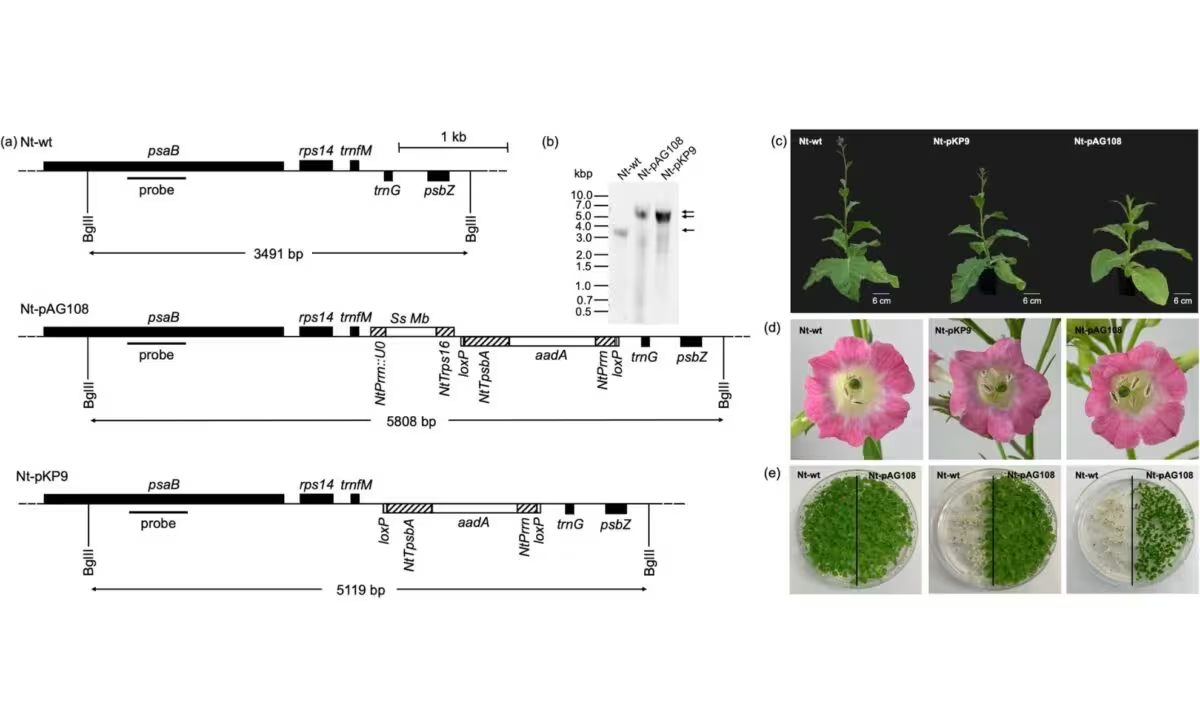
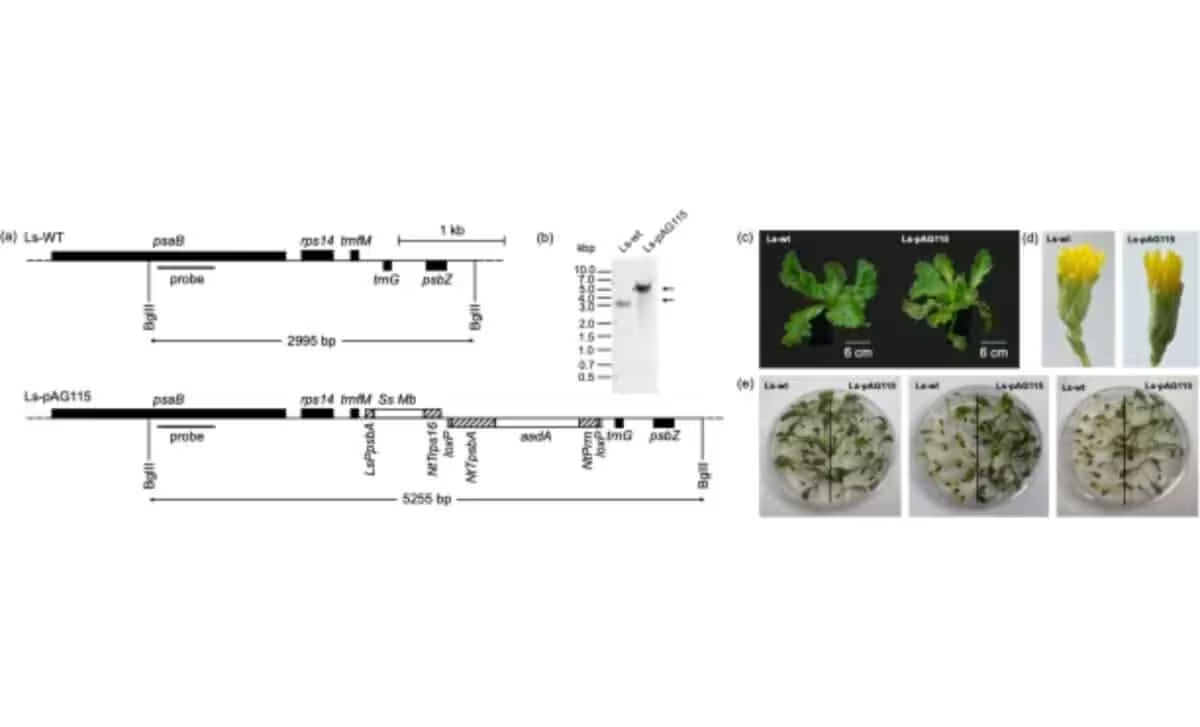
Myoglobin, a heme‑containing protein abundant in vertebrate muscle, is responsible for the metallic‑umami taste and the characteristic red hue of animal flesh. The investigators cloned the porcine and bovine myoglobin genes and employed a “gene gun” to bombard the chloroplast genomes of young tobacco and lettuce seedlings.
Molecular analysis confirmed successful integration of the transgenes into the circular chloroplast DNA of a subset of seedlings. The transformed plants were allowed to flower, set seed, and their progeny retained the inserted genes, confirming stable inheritance. The study provides the first evidence that chloroplasts can serve as a reliable chassis for animal protein production.
Dr. Alexia Groff of Imperial College London explained that chloroplasts are especially amenable to high‑level protein synthesis because of their bacterial origins and the numerous genome copies per cell. Tobacco served as a well‑established model, while lettuce was chosen for its edible nature and potential use as a direct food ingredient.
When the myoglobin gene was placed into the nuclear DNA of both crops, and also into the chloroplast of the unicellular alga Chlamydomonas reinhardtii, liquid chromatography‑mass spectrometry revealed roughly 800 mg of myoglobin per kilogram of dry tobacco tissue and about 810 mg per kilogram of dry lettuce. These figures represent a three‑fold increase over nuclear‑based expression in tobacco.
For context, conventional meat contains between 8.1 mg and 11.2 mg of myoglobin per gram of dry weight. The authors argue that plant cultivation demands fewer resources than livestock farming, suggesting that chloroplast‑derived myoglobin could achieve competitive yields per hectare while reducing water use and greenhouse‑gas emissions.
Scaling Extraction and Purification Remains the Next Hurdle
Generating myoglobin inside plant tissue addresses only half of the supply chain. The team notes that future work must focus on developing industrial‑scale methods to isolate and purify the protein from leaf material.
According to Groff, standard protein‑purification technologies could be adapted to recover the leaf‑derived myoglobin, which is structurally identical to its animal counterpart. Once purified, the protein could be added to plant‑based meat formulations to enhance color, flavor, and nutritional profile.
The researchers confirmed that the extracted protein was correctly folded and bound to heme, a prerequisite for replicating meat‑like coloration and taste. Professor Derek Stewart, co‑director of the National Alternative Protein Innovation Centre at the James Hutton Institute, highlighted the importance of this property for achieving authentic meat characteristics.
Beyond using the protein as an additive, co‑author Dr. Kyoko Morimoto of Cambridge‑based biotech firm Kyomei envisions a future where myoglobin‑enriched lettuce could serve as a direct source of heme‑iron in human diets, pending regulatory clearance.
At present, the study serves as a proof‑of‑concept, establishing that chloroplasts of lettuce and tobacco can stably produce animal myoglobin and that the engineered traits are heritable across generations.
This article has been fact checked for accuracy, with information verified against reputable sources. Learn more about us and our editorial process.
Last reviewed on .
Article history
- Latest version
Reference(s)
- Groff, Alexia. “Sustainable production of myoglobin meat protein in plant chloroplasts.” Frontiers in Plant Science, vol. 17, August 6, 2026, pp. 1876707 Frontiers, doi: 10.3389/fpls.2026.1876707/full. <https://www.frontiersin.org/journals/plant-science/articles/10.3389/fpls.2026.1876707/full>.
- Govan, Emily. “Lettuce and tobacco plants engineered to produce muscle protein for meat alternatives.”, August 6, 2026 Imperial College London <https://www.imperial.ac.uk/news/articles/natural-sciences/life-sciences/2026/lettuce-and-tobacco-plants-engineered-to-produce-muscle-protein-for-meat-alternatives/>.
- “Derek Stewart - James Hutton Institute.”, November 7, 2023 James Hutton Institute <https://www.hutton.ac.uk/people/derek-stewart/>.
Cite this page:
- Posted by Rohan Kumar