New Electronic Skin That Glows When Touched Can Map Fingerprints In Real Time
Scientists have developed a next-generation electronic skin capable of sensing and directly visualizing pressure in real time with high precision.
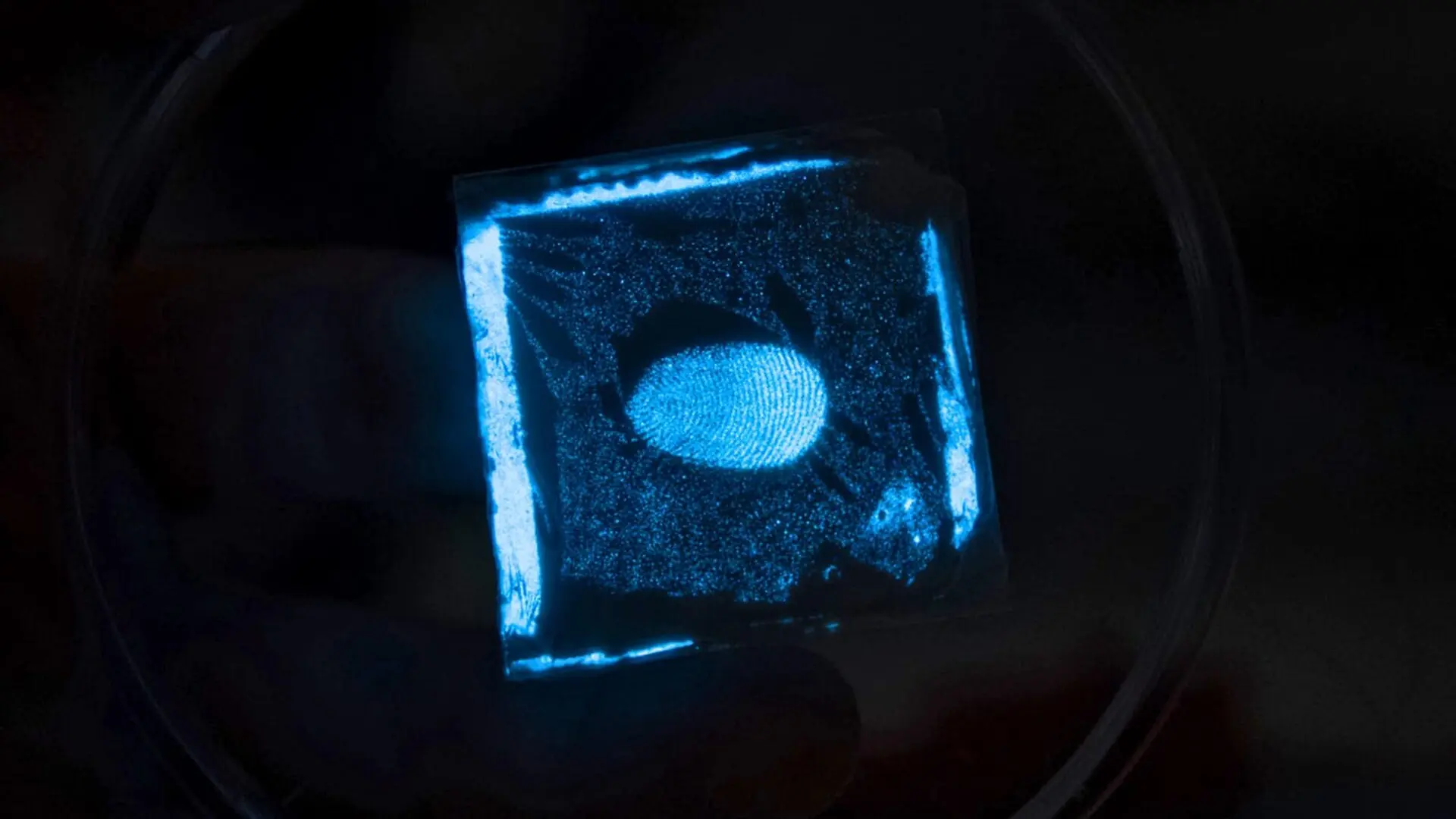
Breakthrough “eLuminator” Skin Offers Real-Time Visual Feedback of Touch
A team of researchers has unveiled a sophisticated, ultra-thin electronic skin capable of sensing and instantly visualizing pressure, marking a significant departure from conventional wearable technologies that typically require external processors to interpret tactile data. This innovation, dubbed the “eLuminator,” streamlines the bridge between physical touch and digital data interpretation by combining sensing and display within a single, flexible material.
Developed by a research group at the National University of Singapore’s biomedical engineering department and the Institute for Health Innovation & Technology (iHealthtech), the device is detailed in the journal Nature Communications. Led by Professor Lim Chwee Teck, the project seeks to overcome the hurdles of current electronic skins, which often suffer from complex wiring, bulky signal-processing hardware, and relatively low spatial resolution.
Unlike standard sensor arrays that rely on discrete pixels, the eLuminator features a continuous, pixel-free surface. This design choice allows for an impressive spatial resolution of approximately 30 µm, or 847 dpi—a substantial jump over the 100 dpi limit often found in traditional systems. This precision allows the material to map intricate textures, such as the ridges and valleys of human fingerprints, in real time.
The core of the technology lies in a mechano-electroluminescent mechanism. When physical force is applied to the surface, the material emits light directly in response. The intensity and shape of this illumination provide an immediate, intuitive map of the pressure distribution, effectively allowing the skin to “see” the contact it is experiencing without needing a separate monitor to translate the signals.
The applications for this development are broad, particularly in fields where precise force management is vital. In surgical settings, the eLuminator could be integrated into instruments to provide surgeons with visual confirmation of the force applied to delicate tissues, potentially lowering the risk of accidental trauma. Similarly, for patients managing diabetes, the technology could be utilized to monitor pressure distribution on the foot, identifying high-risk areas prone to developing ulcers before they become critical.
“This technology transforms how we interact with tactile information,” says Professor Lim. “Instead of relying on complex electronics, users can immediately see force distribution as it happens, making the process far more intuitive.”
Engineered to be just 70 µm thick, the eLuminator is designed to mimic the pliability of biological skin. It is capable of stretching beyond 100 percent strain, allowing it to conform snugly to curved surfaces like human limbs or complex medical equipment. Despite its thin profile, the material is highly durable, maintaining consistent performance across 1,000 to 4,000 stress cycles. It also boasts a versatile operating range, detecting everything from the lightest touch to pressures as high as 180 kPa.
The device operates with impressive speed, offering optical feedback within approximately 15 milliseconds, while digital readouts are processed in about 110 milliseconds. As the team looks toward future iterations, they plan to refine the sensitivity and energy efficiency of the device. The ultimate goal, according to Lim, is to move beyond the lab and into clinical environments, where the technology can provide tangible benefits to patient care through improved decision-making and diagnostic precision.
This article has been fact checked for accuracy, with information verified against reputable sources. Learn more about us and our editorial process.
Last reviewed on .
Article history
- Latest version
Reference(s)
- Wu, Zixiong., et al. “Strain-localized luminescent e-skin for high-resolution pressure mapping and visual force feedback.” Nature Communications, vol. 17, no. 1, May 26, 2026 Springer Science and Business Media LLC, doi: 10.1038/s41467-026-73073-5. <https://doi.org/10.1038/s41467-026-73073-5>.
Cite this page:
- Posted by Rohan Kumar