AI Decodes Individual Finger Movements From Muscle Signals With 90 Percent Accuracy
A custom neural network processes electrical forearm data to classify subtle hand gestures.
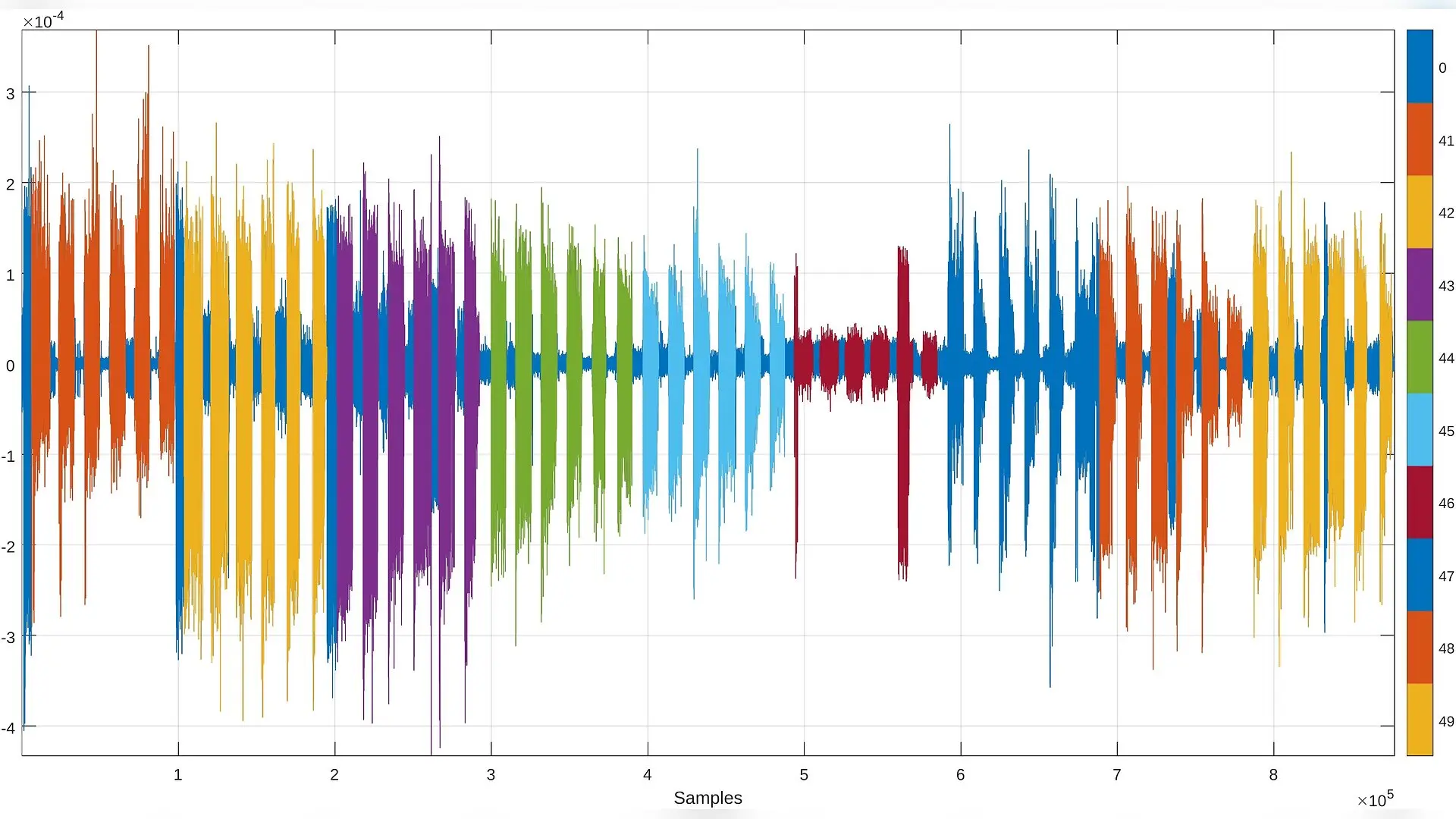
A new deep learning model decodes individual and combined finger movements from muscle electrical signals with 90.1 percent accuracy, offering a potential path toward more dexterous prosthetic hands. Surface electromyography, which records electrical activity from skin sensors when muscles move, usually struggles to distinguish subtle finger adjustments because signals overlap and contain noise.
To solve this, researchers developed a specialized computational architecture that processes complex electrical patterns without requiring massive computing power. The study, published in PLOS One, demonstrates how artificial intelligence can look past signal interference to identify fine motor intent.
How Muscle Signals Reveal Individual Finger Motion
Recreating natural hand dexterity in assistive devices requires moving beyond simple open and close commands. Traditional prosthetics often fail because they treat the hand as a single unit rather than an intricate collection of independent digits. Capturing individual finger motion means translating electrical signals from forearm muscles into precise mechanical responses.
The research team utilized data from 40 participants performing 49 different hand movements while wearing 12 surface electrodes. By narrowing their focus to nine specific classes of finger movements and combined gestures, the investigators targeted a domain of prosthetic control that remains largely underexplored.
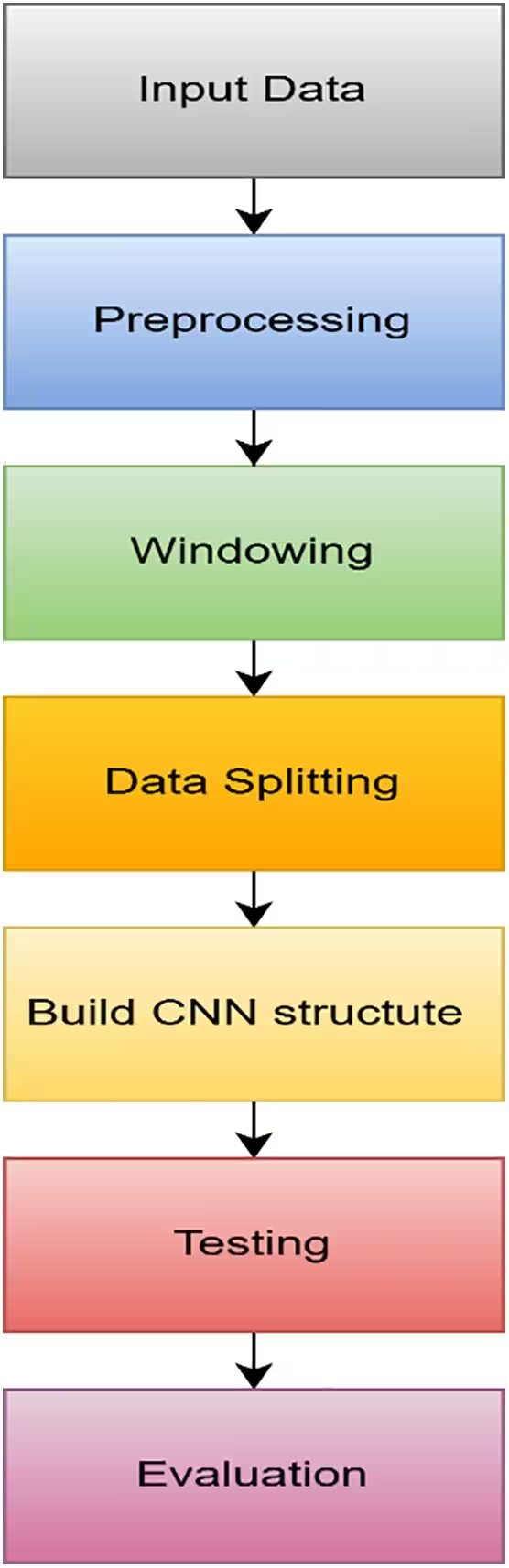
Filtering Noise and Training the Neural Network
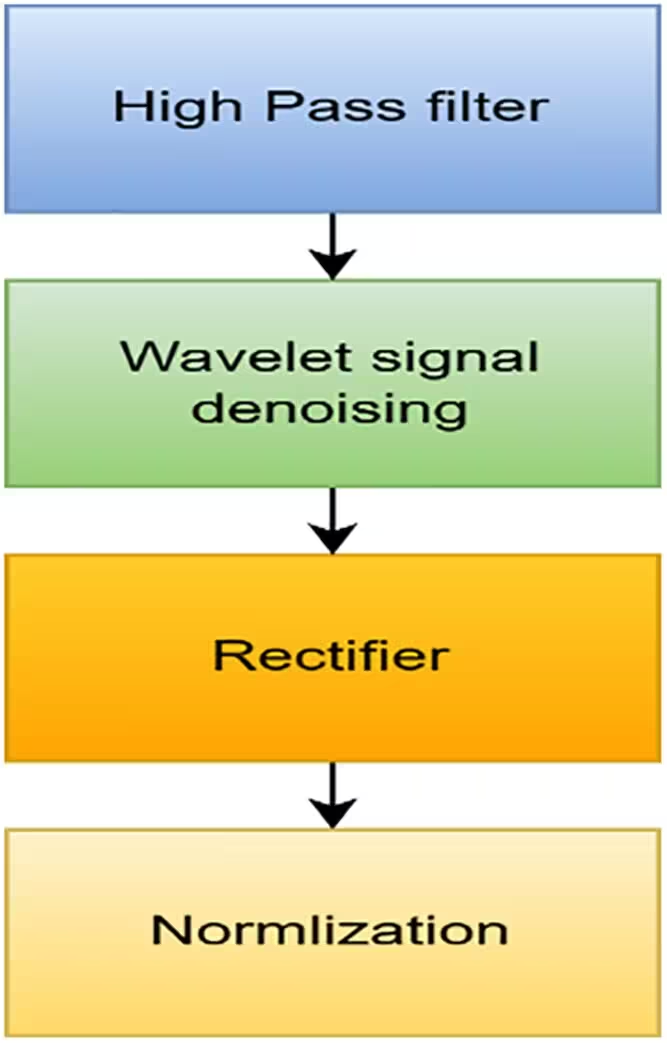
Raw muscle electrical signals are notoriously noisy, picking up interference from muscle fatigue, shifting electrodes, and random electrical activity. The team applied a band-pass filter ranging from 20 to 500 hertz to preserve key energy bands while blocking unwanted frequencies, alongside a notch filter to eliminate power-line interference.
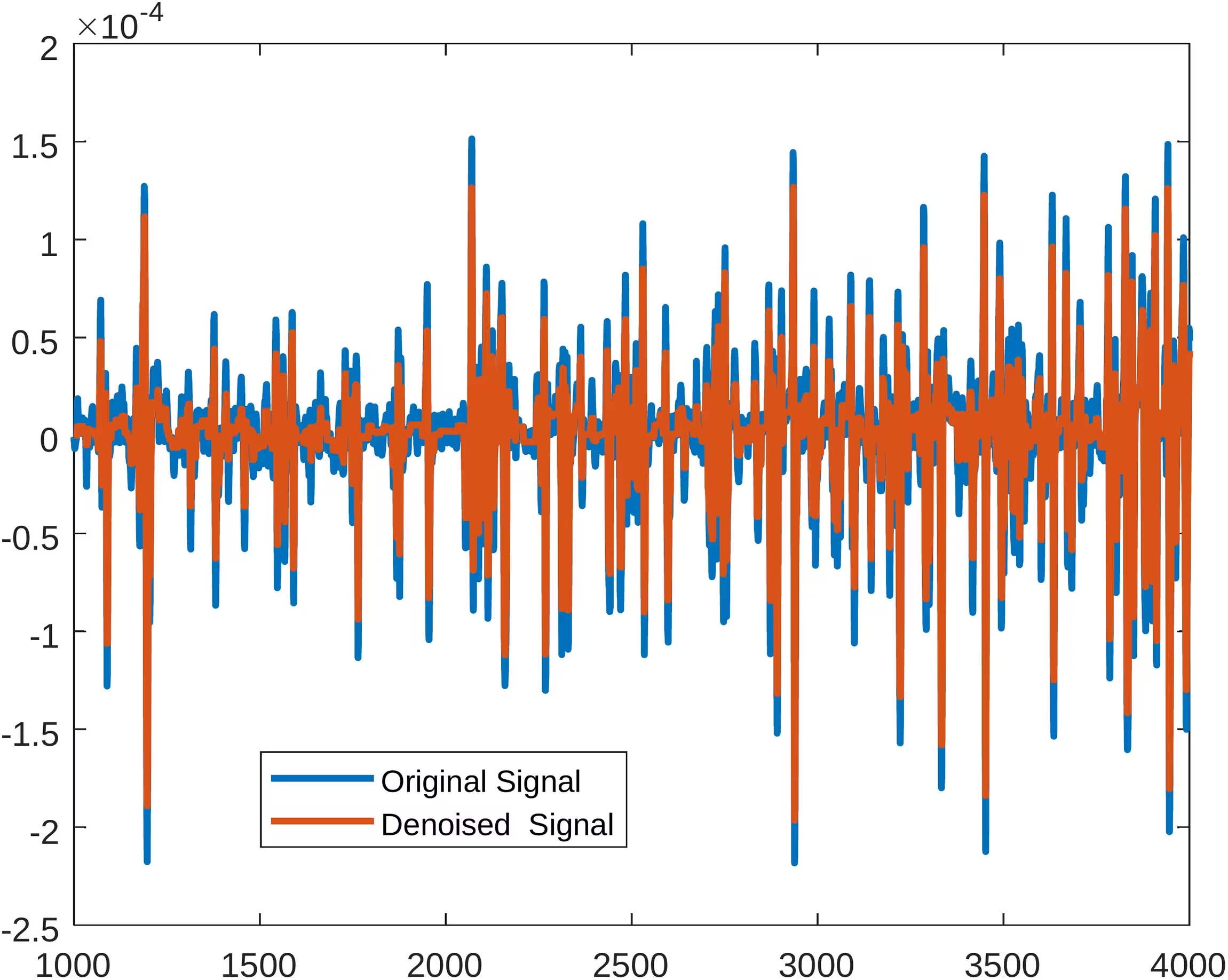
Next, the signals underwent wavelet-based denoising using Daubechies mother wavelets and empirical Bayesian thresholding to strip away random high-frequency noise. After full-wave rectification and Z-score standardization across all 12 channels, the data entered a custom one-dimensional convolutional neural network.
Unlike complex visual transformer models that demand heavy computer hardware, this streamlined architecture focuses on efficient feature extraction. It processes sliding windows of 400 milliseconds with a 50 percent overlap, allowing the system to capture slower, more complex finger gestures effectively.
Decoding Accuracy Across Nine Movement Classes
The classification model achieved an overall accuracy of 90.1 percent across all tested finger movements. A statistical validation using a 95 percent confidence interval established a narrow margin of error between 89.63 percent and 90.57 percent, highlighting the stability of the classification process.
Individual movement analysis revealed strong performance across different categories. Thumb flexion achieved the highest precision at 92.0 percent and an F1-score of 0.916. Little finger flexion recorded the highest recall at 93.1 percent, correctly identifying 1,777 test records.
Even complex combined movements, such as flexing the index and little fingers simultaneously or pairing the ring and middle fingers, maintained high recognition rates with F1-scores consistently surpassing 0.88. Specificity remained exceptionally high across all classes, staying near 98 percent or above.
Current Limitations and Next Steps for Prosthetic Design
Despite these high offline accuracy scores, the authors emphasize that the work represents technical feasibility rather than an immediate clinical product. The evaluation relied entirely on existing data from intact-limbed participants rather than amputee populations, and all testing occurred offline without real-time latency measurements.
Future development will require testing the framework on embedded hardware, incorporating real-time feedback loops, and validating the algorithms with amputee subjects whose residual limb signals differ from intact muscle patterns. These steps remain essential before such deep learning models can transition into next-generation commercial prosthetic devices.
The research was published in PLOS One on October 22, 2026.
This article has been fact checked for accuracy, with information verified against reputable sources. Learn more about us and our editorial process.
Last reviewed on .
Article history
- Latest version
Reference(s)
- Alquran, Hiam., et al. “Deep learning–driven fine-resolution finger movement recognition from surface EMG signals.” PLOS One, vol. 21, no. 10, October 22, 2026, pp. e0361050 Public Library of Science (PLoS), doi: 10.1371/journal.pone.0361050. <https://doi.org/10.1371/journal.pone.0361050>.
Cite this page:
- Posted by Robert Brown