Amazon Sky Harbors Living Bacteria That Survive High Altitude Atmospheric Stress
Culture-based sampling above the jungle canopy reveals one hundred thirty-four viable microbial strains drifting through the air.
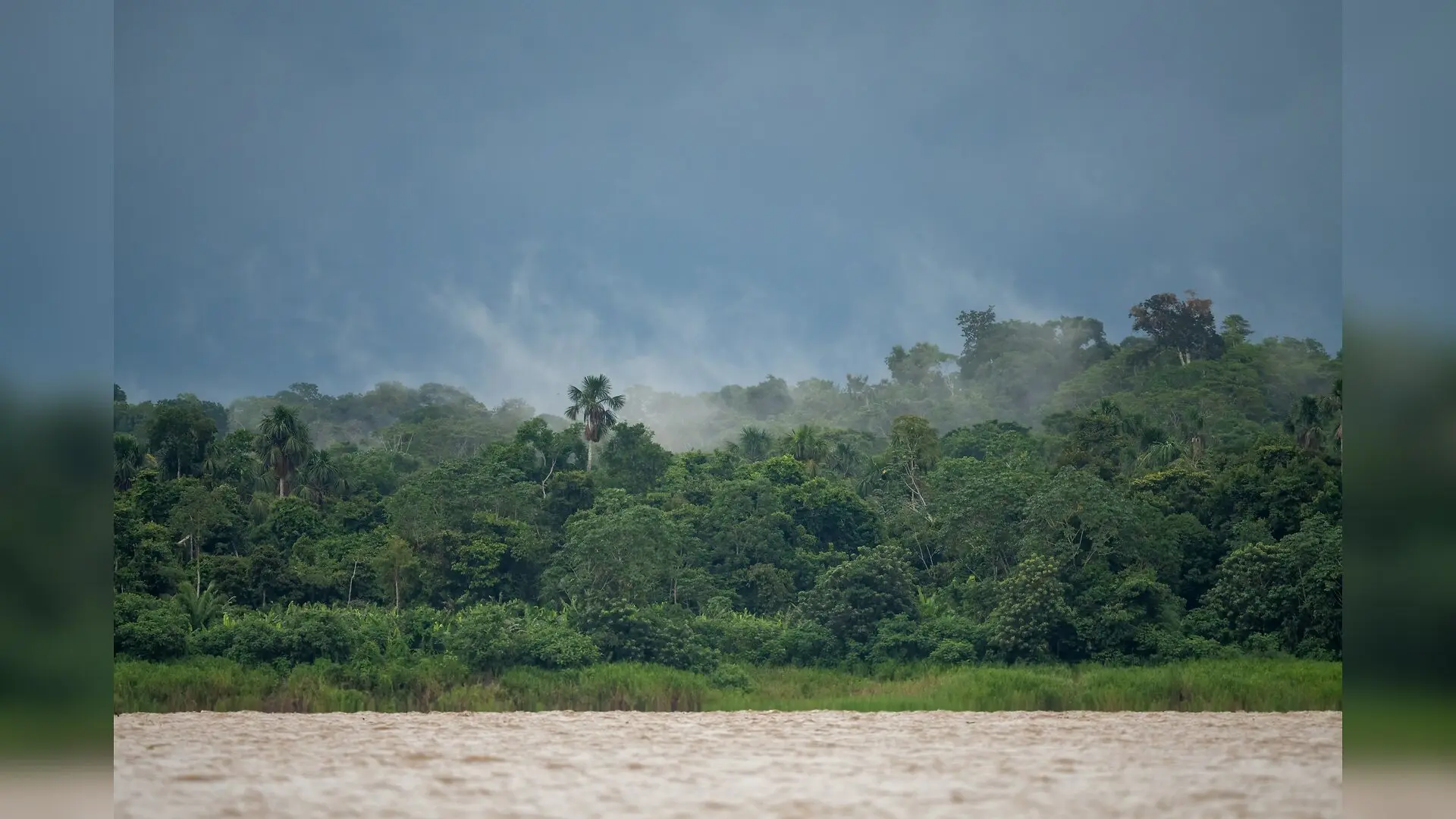
Airborne microbes drift above the Amazon rainforest through changing wet and dry seasons, remaining suspended in the sky despite frequent tropical downpours. Researchers captured these microscopic wanderers to understand which living organisms successfully inhabit the atmosphere above Earth’s most biodiverse landscape.
By using culture dependent techniques, meaning growing collected samples in laboratory nutrient dishes, the scientific team moved beyond previous genetic surveys that could not tell live cells from dead debris. The work reveals a surprisingly hardy assortment of bacteria surviving hundreds of meters above the jungle canopy, enduring ultraviolet radiation and shifting humidity. The findings were published in Antonie van Leeuwenhoek, shedding new light on how biological particles shape the atmospheric environment.
How Did Scientists Capture Living Microbes From the Sky Above the Amazon?
To sample the aerial biosphere, investigators set up collection equipment at the Amazon Tall Tower Observatory, a towering research structure rising high above the pristine forest canopy. Total particulate matter, which includes dust, pollen, and microscopic life, was gathered systematically across different seasonal periods to track how environmental shifts alter airborne populations. L. F. Huergo and colleagues at the Federal University of Paraná managed the complex sampling campaign, analyzing the recovered biological material to isolate viable strains.
The team successfully obtained one hundred thirty-four distinct bacterial isolates from the atmospheric samples. This collection provides a tangible window into the active biological components traveling on wind currents across the basin. Unlike environmental DNA extraction, which tallies every genetic fragment present regardless of whether the cell was functional, growing these organisms in culture proves they were alive and capable of metabolic activity when captured.
What Kinds of Bacteria Survive High Altitude Atmospheric Conditions?
The recovered isolates reflect a diverse cross-section of microbial life adapted to endure harsh atmospheric stress. While the Amazon rainforest is globally famous for producing massive amounts of primary bioaerosols, which are microscopic particles discharged directly from living ecosystems into the air, knowing which ones remain viable has remained a central puzzle. The atmosphere exposes these tiny travelers to intense sunlight, rapid temperature swings, and desiccation.
Microbiologists often find that only specialized stress-resistant spores or heavily pigmented cells can withstand these pressures long enough to be transported across vast distances. The newly isolated strains offer a valuable reference library for studying cellular survival mechanisms in the open sky. Understanding these traits helps researchers model how microbes travel between forest patches and potentially influence regional cloud formation and precipitation patterns.
Where Will Atmospheric Microbial Research Head Next?
While this culture-based study confirms that a living microbial community populates the Amazonian atmosphere, cultivation methods inherently miss species that refuse to grow on standard laboratory media. Researchers emphasize that cultured isolates represent only a fraction of the total atmospheric biodiversity detected through genetic sequencing in earlier work. Combining genetic screening with laboratory growth assays remains essential for painting a complete picture.
Future investigations will likely focus on the physiological adaptations that allow these specific bacterial strains to tolerate airborne stress. Scientists also aim to determine whether these airborne microbes play an active role in atmospheric chemistry or if they are merely passive passengers swept upward by rising thermal currents from the green expanse below.
The research was published in Antonie van Leeuwenhoek on November 21, 2026.
This article has been fact checked for accuracy, with information verified against reputable sources. Learn more about us and our editorial process.
Last reviewed on .
Article history
- Latest version
Reference(s)
- Huergo, Luciano F.., et al. “Culturable microbes from the subcanopy Amazon Rainforest atmosphere.” Antonie van Leeuwenhoek, vol. 119, no. 12, November 21, 2026 Springer Science and Business Media LLC, doi: 10.1007/s10482-026-02464-x. <https://doi.org/10.1007/s10482-026-02464-x>.
Cite this page:
- Posted by Priya Sharma