New Physics Framework Reveals How Pulsar Radii and Tides Unmask Deep Neutron Star Cores
Combining precision radius measurements with binary tidal data removes up to 68 percent of core structural uncertainty.
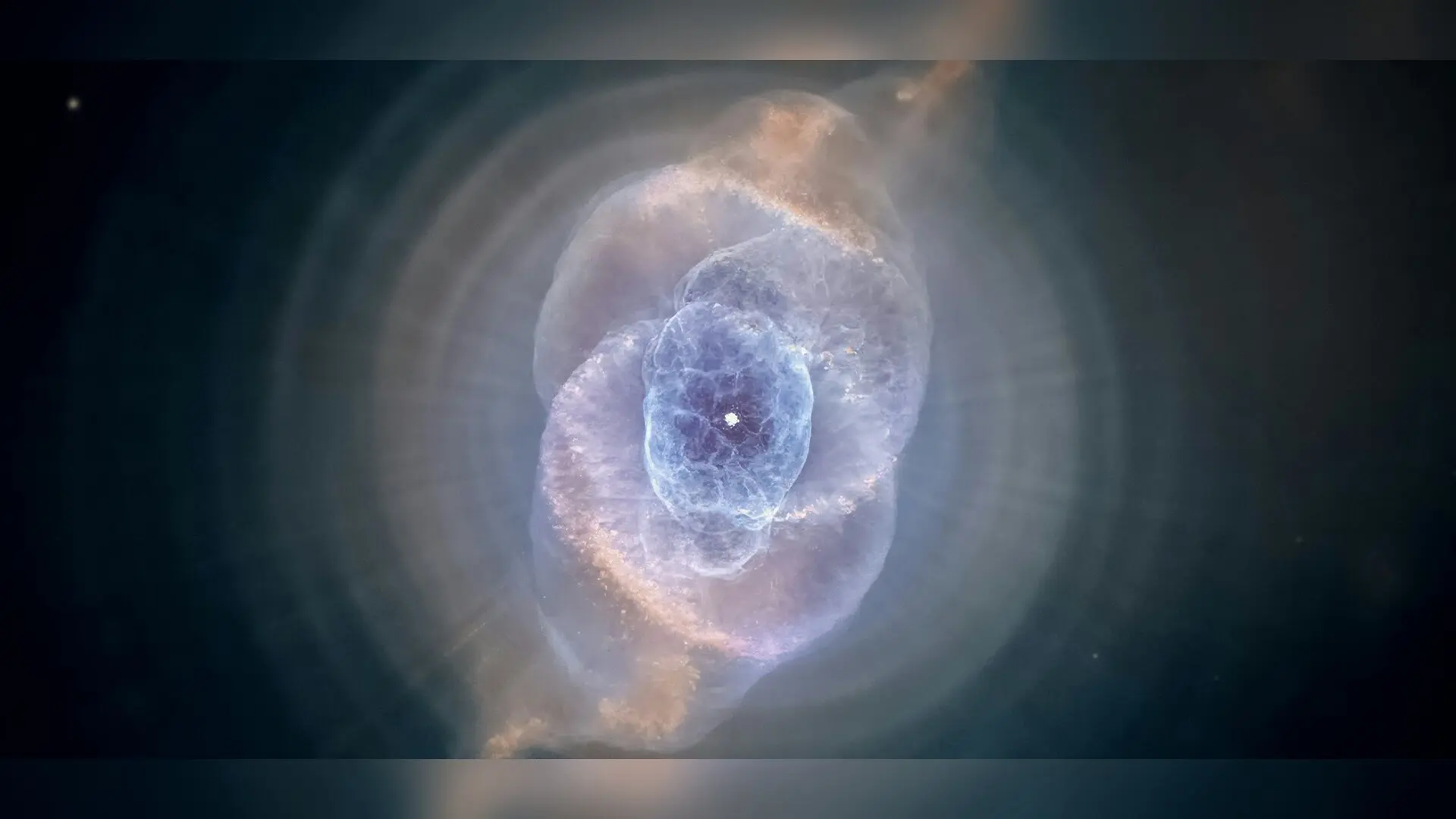
Neutron star cores hold structural secrets that ordinary laboratory nuclear physics cannot fully untangle on its own, according to a theoretical study published on the arXiv preprint server. A team of researchers led by Hisham Anwer from Zewail City of Science and Technology in Egypt found that pairing precise pulsar radius measurements with binary tidal deformations strips away nearly two thirds of the remaining uncertainty surrounding internal core structures.
How Do Nuclear Skins Connect to Dead Stars?
Neutron stars are among the densest objects in the Universe, packing about 1.4 to 2 times the mass of our Sun into a sphere only about 26 kilometers across. Deep inside their cores, matter is compressed far beyond the limit of atomic nuclei found on Earth. To understand this extreme realm, physicists rely on neutron skins, which measure the microscopic difference between neutron and proton distributions in heavy atoms like lead. These laboratory measurements probe the pressure of neutron-rich matter, linking earthly experiments directly to the immense gravitational pressures of stellar corpses.
However, distinct high-density equations of state can share identical nuclear inputs while predicting very different stellar radii and internal density profiles. To quantify this limitation, Anwer and their colleagues introduced an observable-dependent variance ceiling. This ceiling represents the maximum amount of stellar uncertainty that laboratory nuclear measurements alone can ever resolve.
Why Does Radius-Love Compensation Suppress Tides?
When analyzing how gravitational waves and X-ray observations constrain neutron stars, researchers often examine both the radius and the tidal deformability, which describes how easily a star stretches when tugged by a companion’s gravity. The study revealed a mathematical phenomenon dubbed radius-Love compensation near 1.4 solar masses. In this regime, an increase in a star’s radius tends to increase its tidal response, while the internal mass distribution response acts in the opposite direction. These competing effects nearly cancel each other out, making tidal measurements alone less sensitive to nuclear variations unless paired with other data.
Across four different data-conditioned equation-of-state families tested in the work, the team discovered that combining a pulsar radius measured to an accuracy of 0.3 kilometers with a binary tide measured to 10 percent removes between 44 and 68 percent of the logarithmic Love-number variance. By comparison, measuring the radius alone leaves between 64 and 97 percent of that variance unresolved.
What Does This Mean for Future Multimessenger Astronomy?
The findings demonstrate that laboratory experiments, such as proposed lead-radius measurements from the Mainz Radius Experiment, work hand in hand with space-based observatories like NASA’s Neutron Star Interior Composition Explorer (NICER) and gravitational-wave detectors like LIGO and Virgo. While laboratory nuclear physics pins down low-pressure properties, complementary stellar observations resolve the deep core variations left behind. The authors emphasize that bridging these complementary channels provides a robust framework for testing the limits of matter under conditions impossible to replicate in terrestrial laboratories.
The study was posted to the arXiv preprint server on November 20, 2026.
This article has been fact checked for accuracy, with information verified against reputable sources. Learn more about us and our editorial process.
Last reviewed on .
Article history
- Latest version
Reference(s)
- Anwer, Hisham. “Nuclear Precision and Multimessenger Constraints on Neutron-Star Structure.” arXiv.org <http://arxiv.org/abs/2611.27669v1>.
Cite this page:
- Posted by Farah Siddiqui