Distant Binary Star System Reveals Secrets of Faint Superoutbursts
Long-term telescope monitoring uncovers unusual outburst durations and clear precursor signals in a cataclysmic variable system 18,200 light-years away.
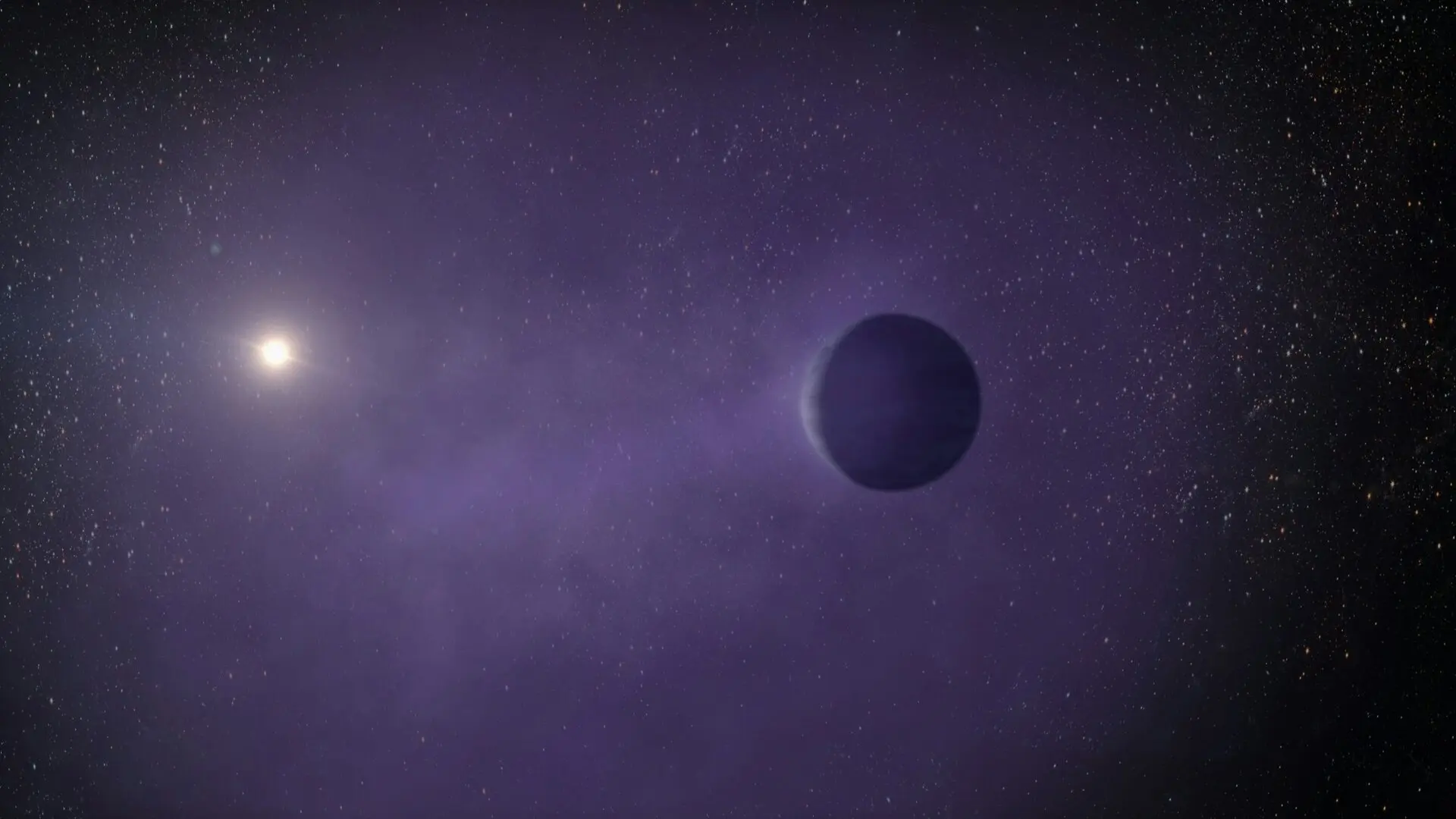
Astronomers have captured rare, long-term monitoring data on a faint binary star system located 18,200 light-years away that experiences dramatic brightness surges, revealing new clues about how cataclysmic variable stars behave. The system, known as KSP-OT-201602a, consists of a dense white dwarf star pulling matter from a lighter companion star in orbit around it.
Cataclysmic variable stars are binary systems where material pulled from a secondary star spirals onto the compact white dwarf via an accretion disk. Among these systems, a specific class called SU Ursae Majoris dwarf novae undergoes two distinct types of eruptions. Along with regular outbursts, they produce much brighter and longer events called superoutbursts, accompanied by periodic brightness wobbles known as superhumps.
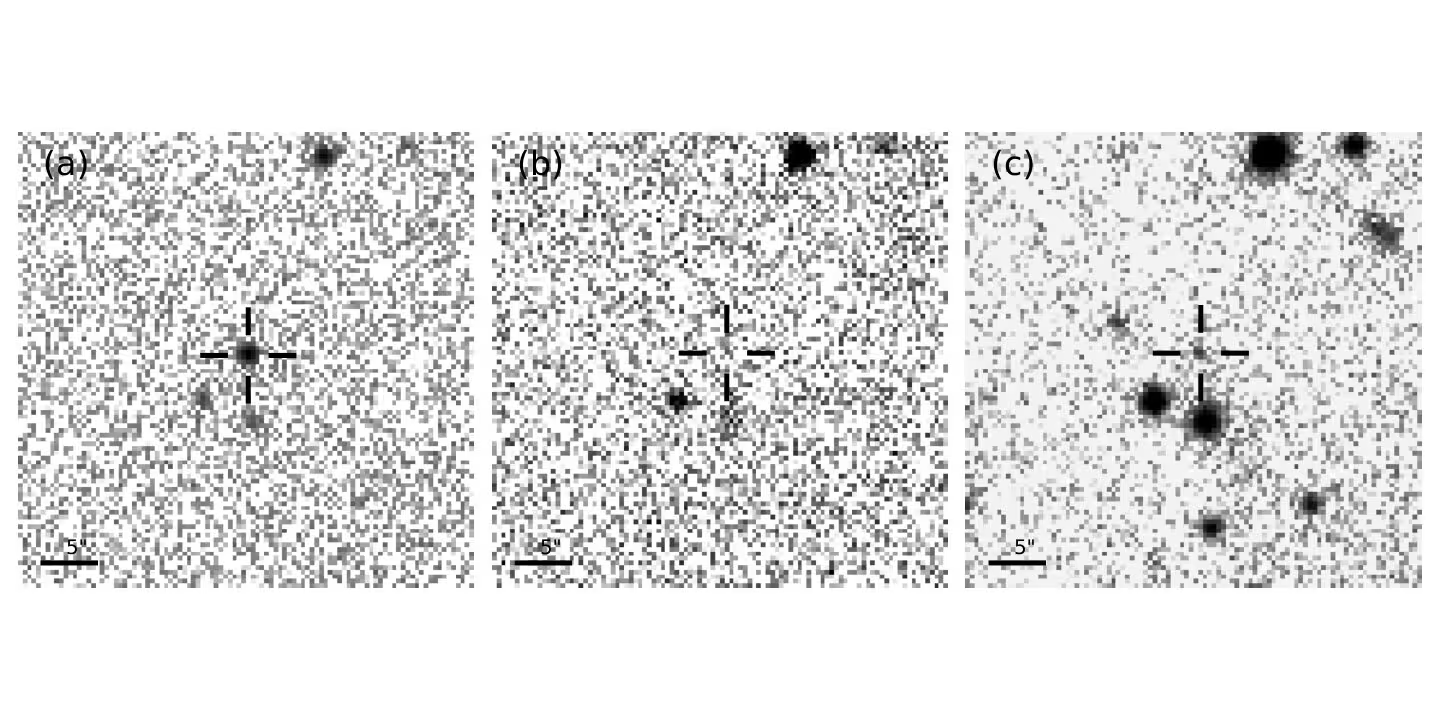
To analyze this distant system, the research team utilized data collected between 2016 and 2019 by the Korea Microlensing Telescope Network Supernova Program. The findings were published on the arXiv preprint server, detailing nearly four years of continuous monitoring across multiple optical filters. During this lengthy observation period, the team identified two major superoutbursts and two normal outbursts from the faint target.
Unusual Durations and Precursor Outbursts
The first recorded superoutburst, designated S1, reached a peak brightness of magnitude 18.95 in the V-band, while the second event, S2, reached magnitude 18.69. By comparison, the two normal outbursts, N1 and N2, peaked slightly dimmer at magnitudes 19.37 and 19.11, respectively. During quiet periods between these events, the system drops to a faint magnitude of roughly 23.29.
Using phase dispersion minimization and Lomb-Scargle period analysis techniques, the authors determined a superhump period of approximately 1.52 hours for the first superoutburst. This short oscillation period points to a tight binary orbit of about 1.48 hours. While the amplitudes of the superoutbursts match typical values for this category of variable stars, their physical durations turned out to be unusually short, lasting roughly 11.4 to 12 days.
Triggering Mechanisms in Binary Star Disks
A key finding of the campaign was the clear detection of a precursor shoulder immediately preceding the main superoutburst in the S1 light curve. This small initial rise supports the thermal-tidal instability model, which suggests that a standard outburst acts as a trigger by expanding the accretion disk until it reaches a specific tidal resonance point.
The authors note that while the first event displayed a distinct precursor, the second event showed only a potential indication due to data limitations. The unusual shortness of the superoutburst durations suggests that current theoretical models involving disk radius and surface density distribution may need refinement to fully explain how these distant stellar systems operate.
The study was posted to the arXiv preprint server on November 19, 2026.
This article has been fact checked for accuracy, with information verified against reputable sources. Learn more about us and our editorial process.
Last reviewed on .
Article history
- Latest version
Reference(s)
- Kim, Sang. “Superoutburst Precursors in the Faint SU UMa-type Dwarf Nova KSP-OT-201602a.” arXiv.org <http://arxiv.org/abs/2611.25983v1>.
Cite this page:
- Posted by John Williams