Astronomers Uncover Million-Year-Old Star Systems That Defy Classic Migration Rules
High-resolution observations of rare binary systems reveal surprising insights into how massive stars acquire close, low-mass companions.
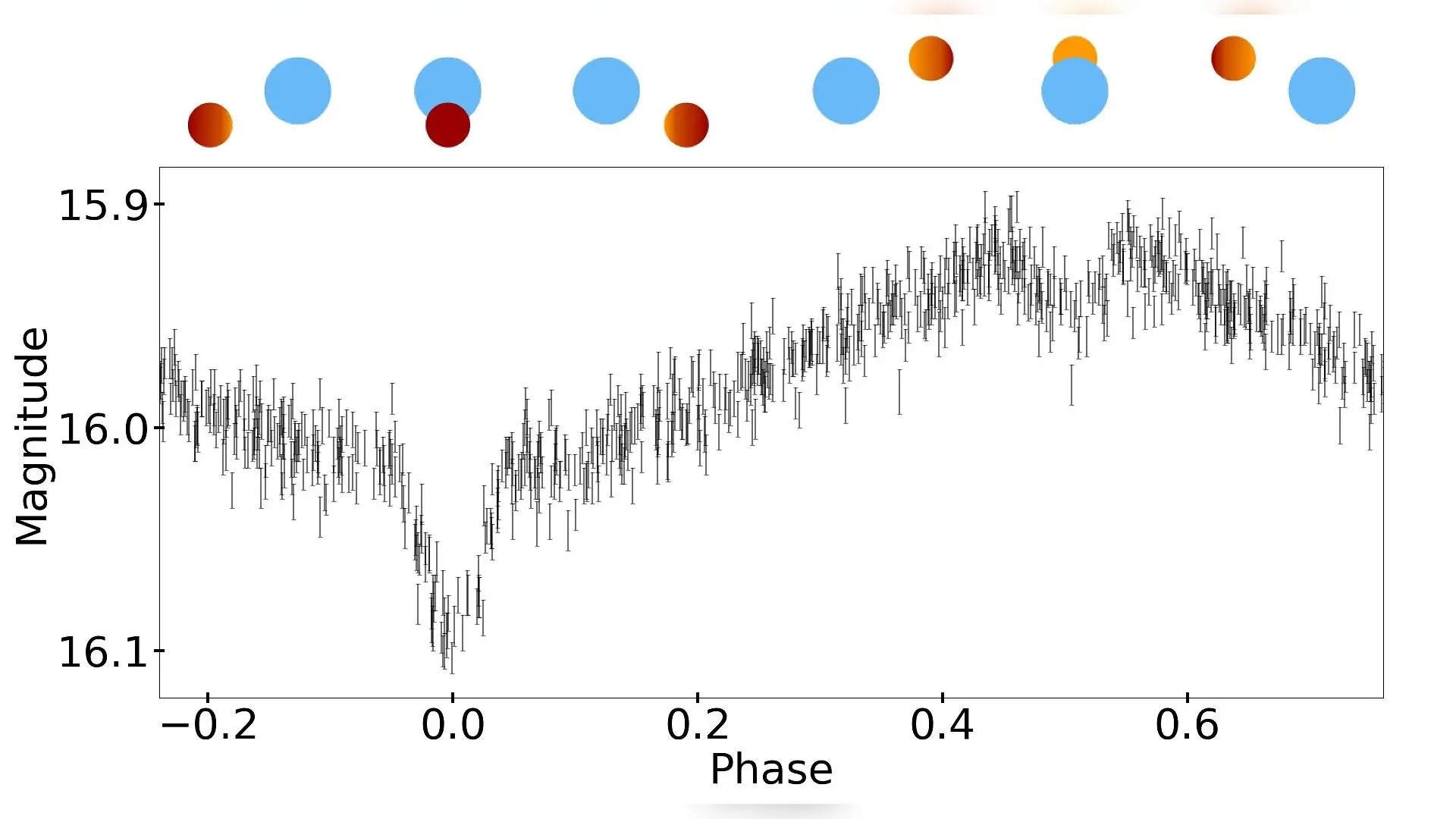
A team of astronomers has completed a comprehensive physical analysis of three exceptionally young stellar systems residing in the Large Magellanic Cloud. These objects, classified as nascent eclipsing binaries, feature striking light curves dominated by sinusoidal reflection effects, which occur when a luminous B-type primary star intensely irradiates the near side of a cooler, low-mass companion. By probing these configurations, researchers hope to resolve long-standing questions regarding how close stellar pairs assemble during their formative epochs.
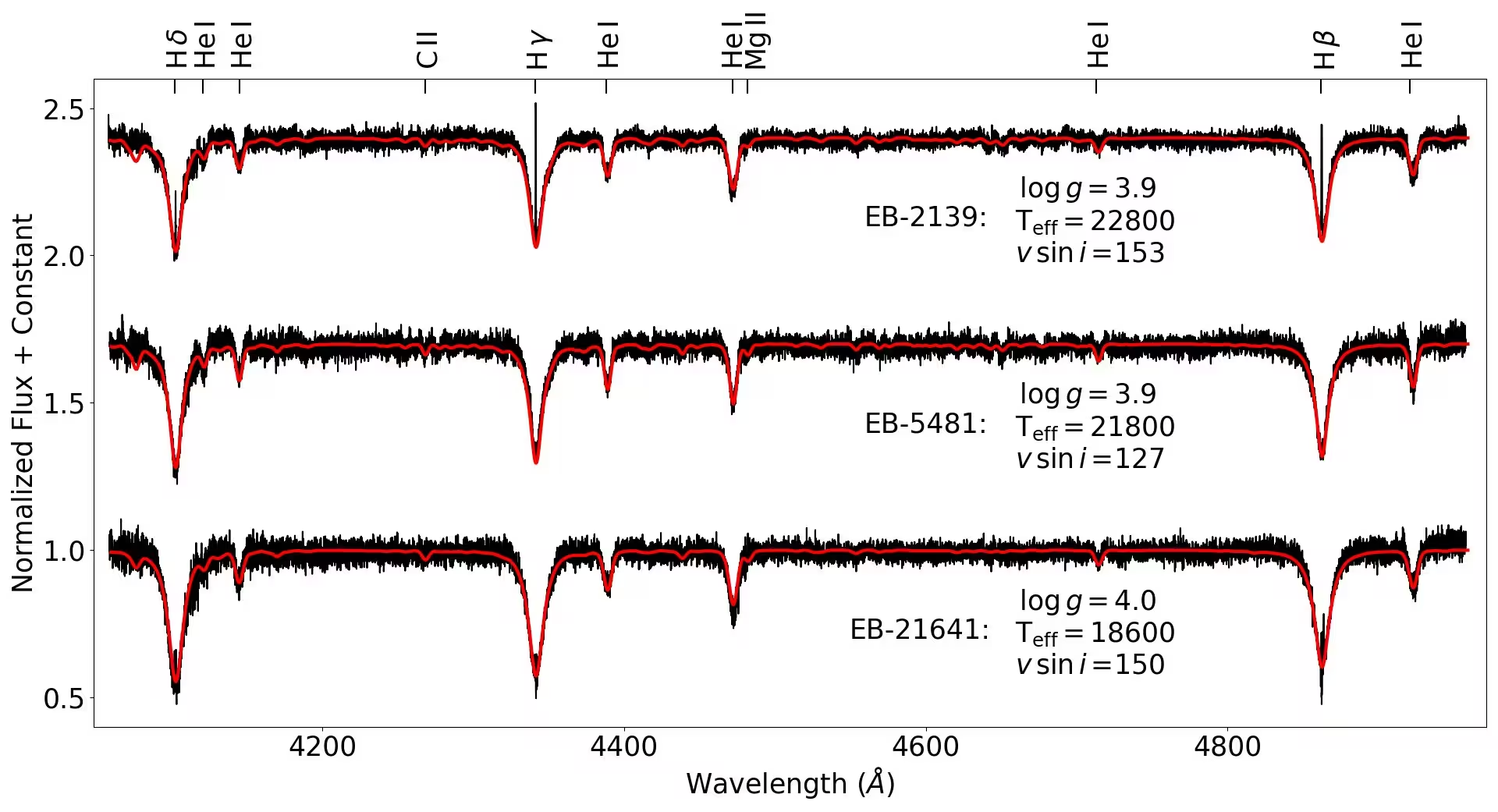
The study, available on the arXiv preprint server, utilized multi-epoch high-resolution echelle spectra gathered with the Magellan Inamori Kyocera Echelle spectrograph attached to the 6.5-meter Magellan-Clay Telescope at Las Campanas Observatory. The authors analyzed the blue spectral range of the light, fitting sophisticated atmospheric models to extract precise temperatures, surface gravities, and rotational velocities for the primary stars.
To determine the dynamical masses of the elusive secondary companions, the researchers tracked radial velocity shifts across multiple orbital phases. Because these systems are tidally circularized, simple sinusoidal curves accurately described the orbital motion. The resulting measurements revealed primary masses ranging from 6.8 to 8.5 solar masses, while the secondary companions weighed in between 0.38 and 0.95 solar masses. This yields exceptionally small mass ratios between 0.05 and 0.11.
Challenging the Brown Dwarf Desert
One of the most significant implications of this work involves the distribution of companion masses around massive stars. For solar-type primary stars, astronomers have long recognized a distinct deficit of close companions with mass ratios below 0.1, a demographic gap frequently referred to as the brown dwarf desert. In contrast, the newly evaluated systems demonstrate that massive stars readily host very close, low-mass companions.
Theoretical frameworks suggest that close binaries cannot form in their current tight configurations directly through in-situ collapse. Instead, they must form at wider separations and migrate inward. For solar-type stars, migrating brown-dwarf-mass objects typically accrete substantial material from surrounding circumstellar disks, ultimately evolving into stellar-mass companions. However, the dynamics operating around massive B-type stars appear fundamentally different.
Unraveling Protostellar Migration Timelines
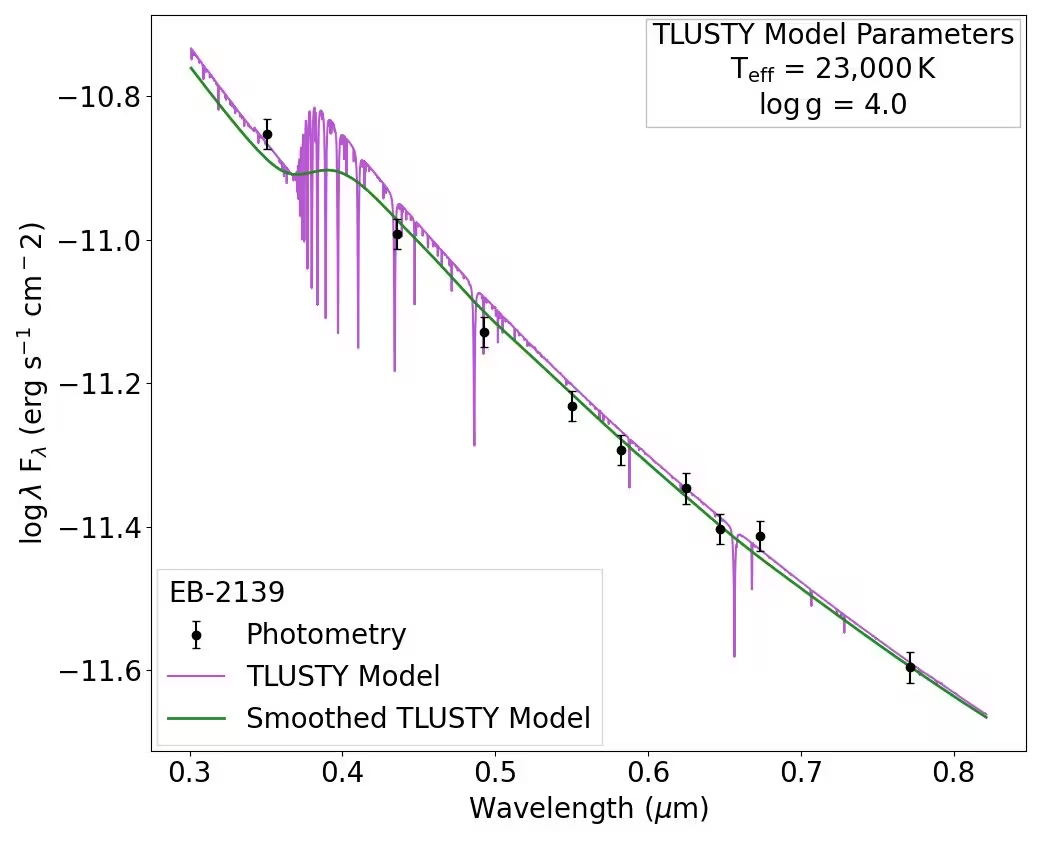
By fitting advanced binary modeling software to photometric light curves from the Optical Gravitational Lensing Experiment, the team determined the radii, temperatures, and inclinations of both stars. Plotting the secondary components on Hertzsprung-Russell diagrams placed them high on the Hayashi track, yielding estimated ages of approximately one million years.
This extreme youth places tight constraints on stellar evolution timelines. While stellar interactions in dense clusters can harden binary orbits over periods of several million years, that timescale exceeds the brief embedded protostellar phase of massive stars. Instead, the data favor rapid disk migration occurring while the birth envelope remains intact. These ultra-young binaries prove that low-mass companions can successfully migrate inward through massive protostellar disks without accumulating runaway mass, surviving as lightweight companions to massive stars.
The study was posted to the arXiv preprint server on October 23, 2026.
This article has been fact checked for accuracy, with information verified against reputable sources. Learn more about us and our editorial process.
Last reviewed on .
Article history
- Latest version
Reference(s)
- Frank, Megan. “One-Million-Year-Old Nascent Eclipsing Binaries in the LMC.” arXiv.org <http://arxiv.org/abs/2610.32931v1>.
Cite this page:
- Posted by John Williams