Scientists Successfully Transmit Radio Signals Using A Laser-Created Plasma Antenna
Researchers have successfully transmitted a 30 MHz radio signal using a laser-induced plasma filament, potentially paving the way for antenna-free comms.
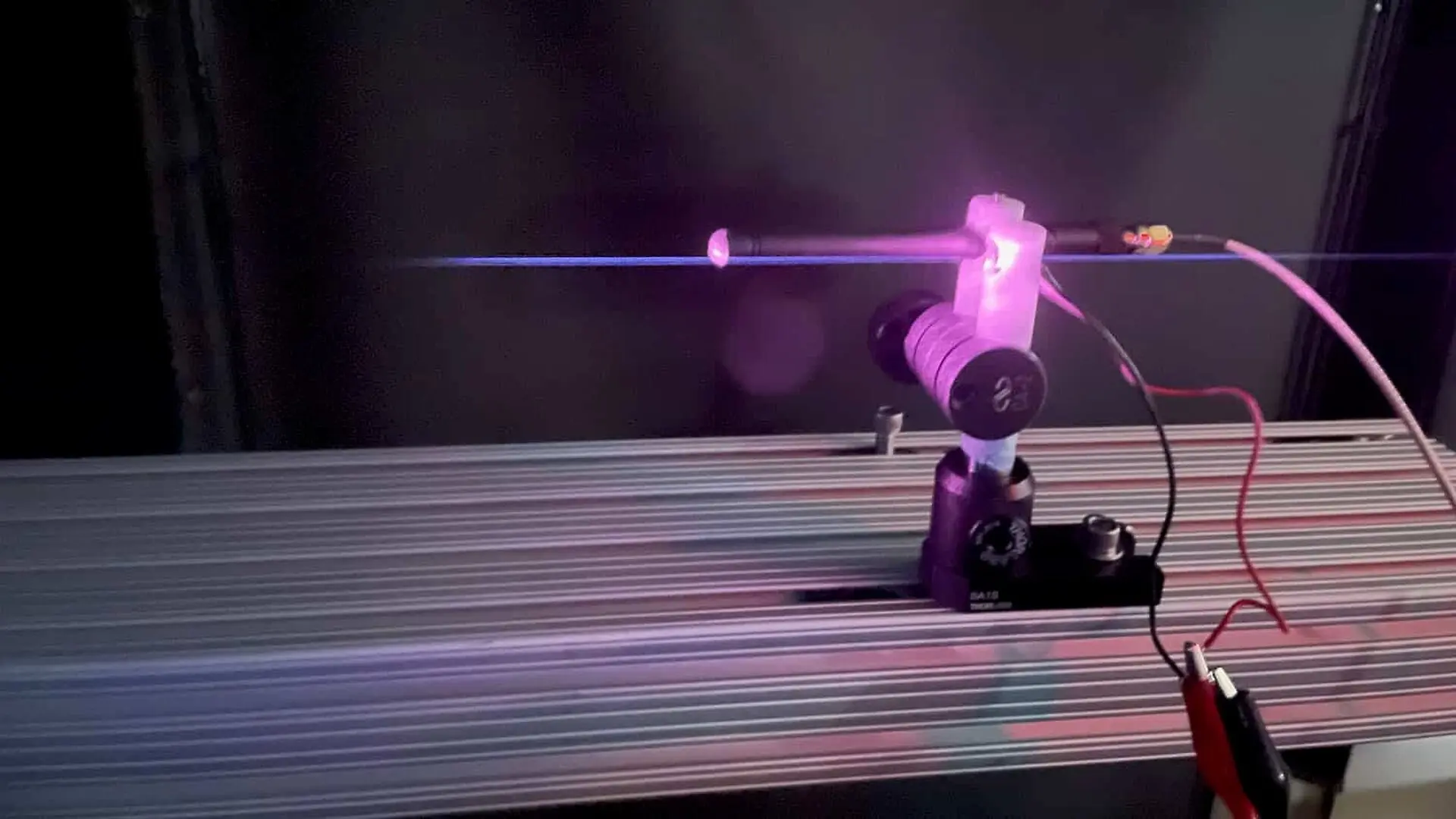
Researchers at North Carolina State University have successfully transmitted radio signals using a thin, laser-generated channel of ionized air, effectively bypassing the need for a traditional, rigid antenna structure. By utilizing a plasma filament, the team managed to boost signal strength to a nearby receiver by approximately 150 percent compared to using a feed alone. This proof-of-concept, published in the IEEE Journal of Microwaves, offers a glimpse into the future of reconfigurable communications technology.
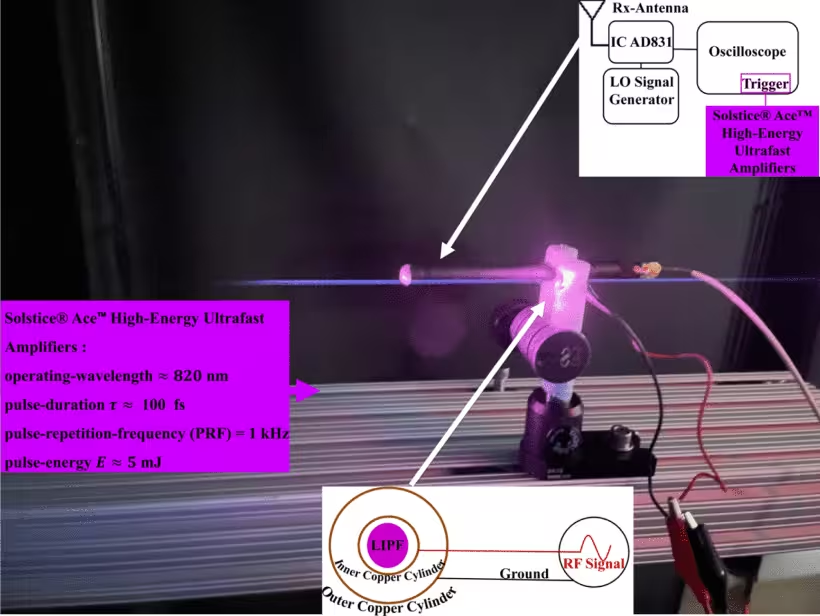
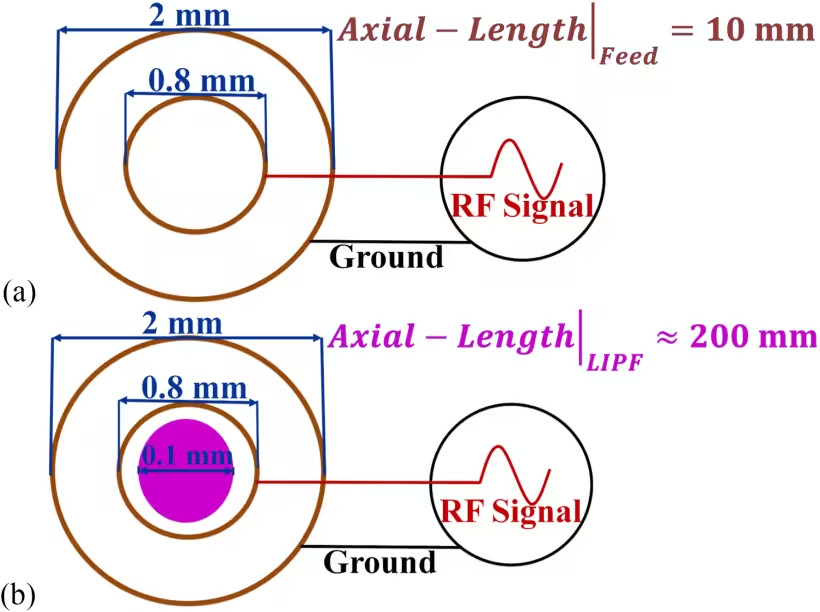
The system relies on creating a plasma filament—a narrow, conductive region of free electrons and ions—by firing ultrashort laser pulses into the atmosphere. The team generated a filament roughly 20 centimeters long and 0.1 millimeters wide. Each laser pulse lasted a mere 100 femtoseconds, delivering a burst of energy intense enough to ionize air molecules. While the peak power of these pulses reached about 50 billion watts, the average output remained manageable at approximately 5 watts.
Bridging the Gap Without Metal Contacts
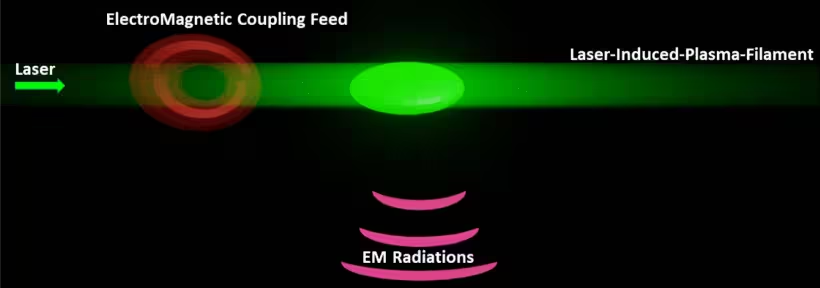
A primary engineering hurdle was supplying a 30-megahertz radio signal to the plasma without relying on metallic contact, which would disrupt the delicate filament. To solve this, the researchers employed a capacitive feeding mechanism. By placing copper cylinders around the laser’s path, they used an electric field to couple the radio signal into the plasma. This setup allowed the filament to act as a radiating element, demonstrating a novel approach to wireless hardware design where the medium itself serves as the antenna.
“The plasma beam antenna looks like a lightsaber and is tunable, meaning we should be able to transmit across a broad range of frequencies,” explained Prya Darshni, a doctoral student leading the research. The team observed that when the laser was active, the received voltage jumped significantly. However, they caution that these initial results represent a near-field measurement at close range and do not necessarily translate to long-distance broadcast efficiency.
Future Potential for Dynamic Communication
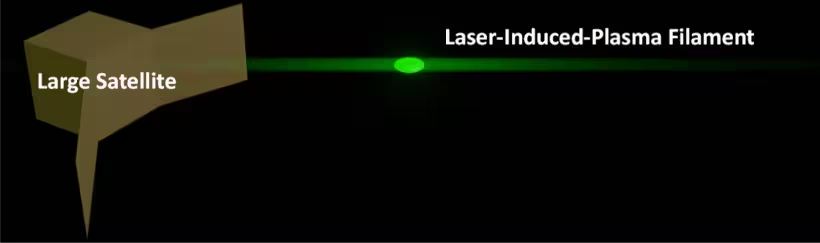
The ability to alter the properties of an antenna using light rather than mechanical hardware holds significant appeal for aerospace and satellite applications, where weight and deployment complexity are constant concerns. If the length or orientation of the plasma channel can be steered and adjusted via laser parameters, it could theoretically provide an antenna that changes shape and frequency response on demand.
Despite the success of the lab-based experiment, substantial work remains. The current setup still requires a physical feed and laser apparatus, and the researchers have yet to test the filament’s performance as a receiver or its behavior in the lower-pressure conditions of the upper atmosphere. Future iterations will focus on quantifying true radiated power and establishing how these plasma structures perform beyond laboratory distances.
By moving away from static metal rods toward transient, light-formed structures, this study highlights an emerging frontier in electromagnetics. As the researchers refine their models and address the complexities of atmospheric propagation, the prospect of a “lightsaber” antenna capable of dynamic reconfiguration may move closer to practical reality.
Further Reading on Plasma and Waveguide Research
- Femtosecond laser-induced plasma filaments for beam-driven plasma wakefield acceleration: Explores the dynamics of plasma filaments in low-pressure environments. (Physical Review E, 2025)
- Two-dimensional high resolution electron properties of femtosecond laser-induced plasma filament in atmospheric pressure argon: Provides technical details on the electron density and behavior within laser-created plasma. (Scientific Reports, 2024)
- Optical Guiding in 50-Meter-Scale Air Waveguides: Examines how laser filaments can shape air for light propagation. (Physical Review X, 2023)
- Laser-guided lightning: Discusses the practical application of laser-modified atmospheric paths in controlling high-voltage discharges. (Nature Photonics, 2023)
- Femtosecond filamentation in transparent media: A comprehensive review of the nonlinear optical physics that allows laser pulses to form stable, long-distance channels. (Physics Reports, 2007)
This article has been fact checked for accuracy, with information verified against reputable sources. Learn more about us and our editorial process.
Last reviewed on .
Article history
- Latest version
Reference(s)
- <https://ieeexplore.ieee.org/document/11674160>.
- Galletti, M.., et al. “Femtosecond laser-induced plasma filaments for beam-driven plasma wakefield acceleration.” Physical Review E, vol. 111, no. 2, February 18, 2025 American Physical Society (APS), doi: 10.1103/PhysRevE.111.025202. <https://doi.org/10.1103/PhysRevE.111.025202>.
- Bak, Junhwi., et al. “Two-dimensional high resolution electron properties of femtosecond laser-induced plasma filament in atmospheric pressure argon.” Scientific Reports, vol. 14, no. 1, February 14, 2024 Springer Science and Business Media LLC, doi: 10.1038/s41598-024-52868-w. <https://doi.org/10.1038/s41598-024-52868-w>.
- Goffin, A.., et al. “Optical Guiding in 50-Meter-Scale Air Waveguides.” Physical Review X, vol. 13, no. 1, January 23, 2023 American Physical Society (APS), doi: 10.1103/PhysRevX.13.011006. <https://doi.org/10.1103/PhysRevX.13.011006>.
- Houard, Aurélien., et al. “Laser-guided lightning.” Nature Photonics, vol. 17, no. 3, January 16, 2023, pp. 231-235. Springer Science and Business Media LLC, doi: 10.1038/s41566-022-01139-z. <https://doi.org/10.1038/s41566-022-01139-z>.
- COUAIRON, A., et al. “Femtosecond filamentation in transparent media.” Physics Reports, vol. 441, no. 2-4, March 1, 2007, pp. 47-189. Elsevier BV, doi: 10.1016/j.physrep.2006.12.005. <https://doi.org/10.1016/j.physrep.2006.12.005>.
Cite this page:
- Posted by Deepak Malhotra