James Webb Telescope Finds Evidence of a Chaotic Shell Merger Before a Massive Star Exploded
JWST has discovered unique dust clumps in Cassiopeia A, offering new clues about the chaotic stellar layers that merged before the massive star exploded.
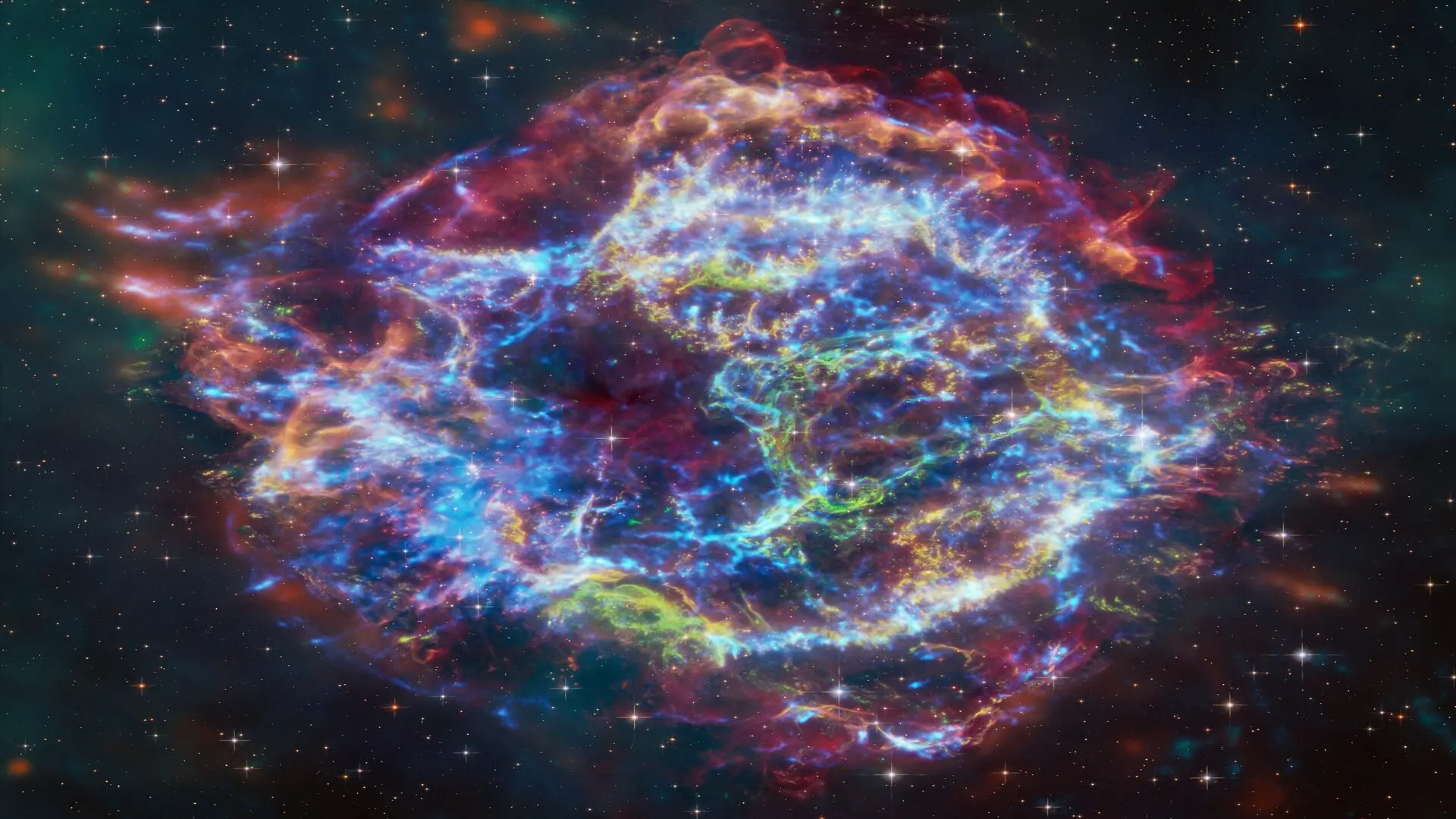
New analysis of the Cassiopeia A supernova remnant is providing an unprecedented look into the final, turbulent moments of a massive star’s life. By using the James Webb Space Telescope (JWST) to examine the chemical composition of distinct dust clumps, researchers have uncovered evidence that suggests the star’s internal burning shells may have collided and mixed just hours before its catastrophic collapse.
The findings, led by Tea Temim of Columbia University and published in The Astrophysical Journal Letters, demonstrate how the debris left behind by a supernova acts as a cosmic time capsule. While the explosion occurred roughly 11,000 light-years away and its light first reached Earth over three centuries ago, the remnant continues to expand, carrying the chemical signatures of the progenitor star’s final state.
Decoding the Chemical Fingerprints of Debris
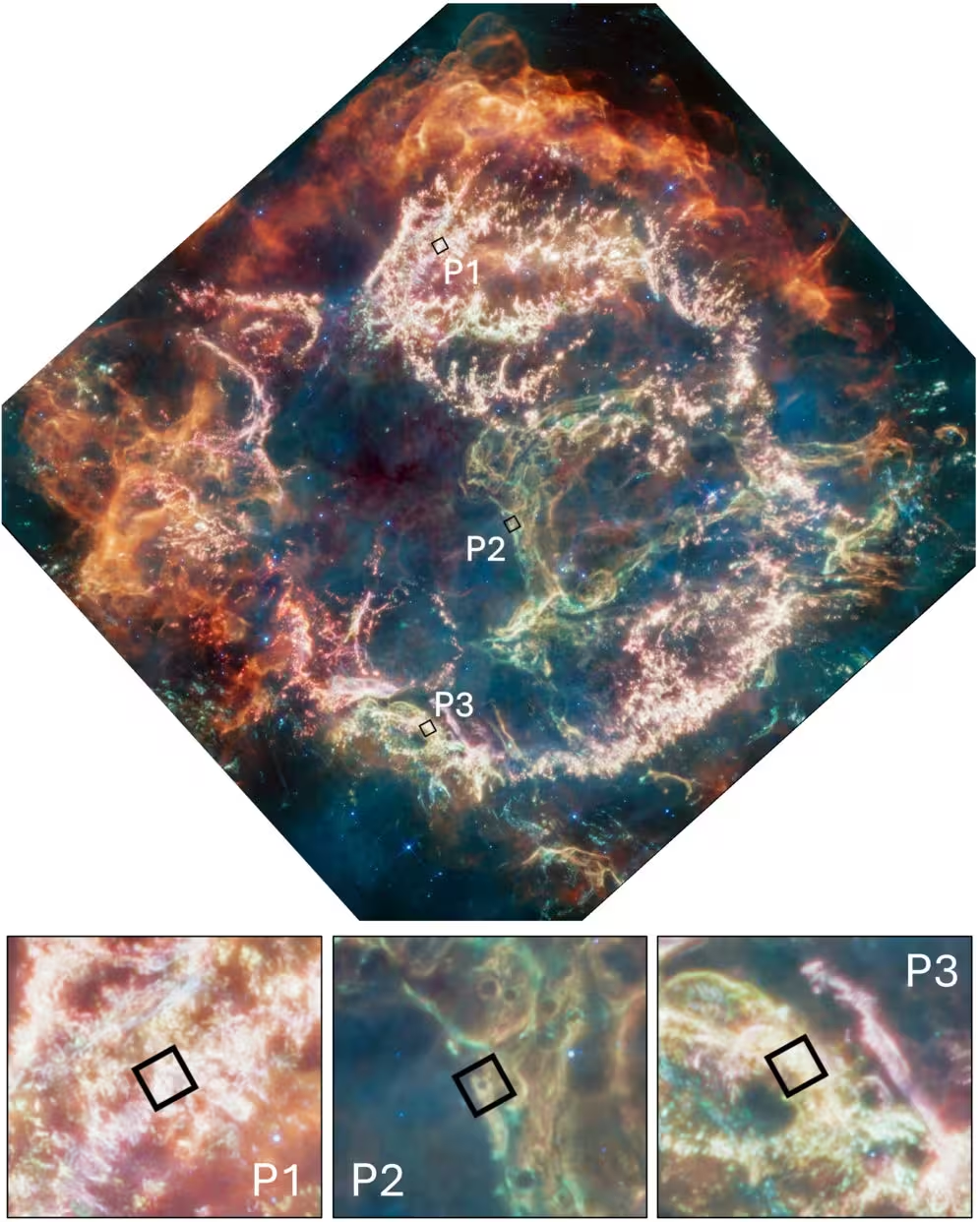
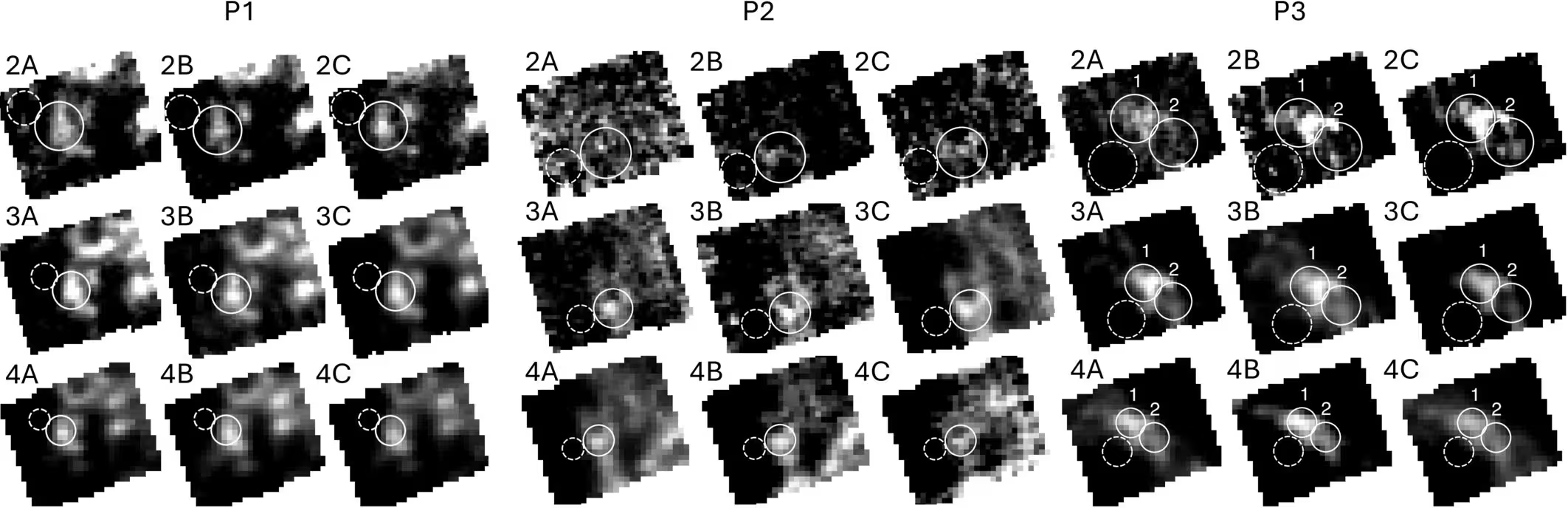
Dust grains form when the cooling gas ejected by an explosion condenses into solid particles. The specific type of grain—whether it is dominated by silica or carbon—depends entirely on the elemental abundance within the local environment. By using the JWST’s high-resolution spectroscopy, the team was able to distinguish between clumps of material the size of our solar system, effectively creating a chemical map of the interior of the dead star.
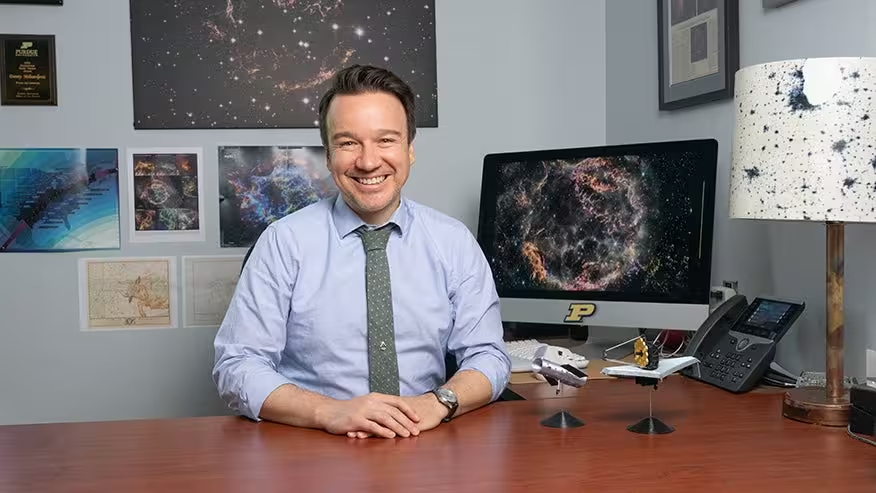
“Once Tea and the team made this very detailed dust map using spectroscopy of small regions, that gave us the decoder ring needed to understand the picture,” said Danny Milisavljevic of Purdue University. By matching spectral features observed by the telescope to known mineral signatures, the researchers confirmed that different regions of the same remnant evolved under vastly different conditions.
Evidence of Pre-Explosion Instability
Massive stars possess complex internal structures with layers of varying fuels. As a star reaches the end of its life, convection currents can become increasingly unstable. The new data supports models where the star’s oxygen-burning and carbon-burning shells merged prior to the supernova. Such a merger would significantly alter the chemical composition of the star’s interior, explaining why specific pockets of debris are rich in silica while others are carbon-dominated.
This mixing process likely occurred in the final hours leading up to the core collapse. Because the dust grains condensed shortly after the explosion, they serve as a frozen record of the chemical conditions present at that exact moment of transition.
Distinguishing Between Internal Ejecta and Surrounding Gas
The research also clarified the origins of different materials within the remnant. Two of the clumps studied were heated by a “reverse shock”—a phenomenon where the primary blast wave interacts with surrounding gas, driving energy back into the stellar ejecta. A third target, known as the “Green Monster,” was found to contain magnesium silicates, indicating that it was composed of material the star had shed earlier in its life, rather than the core material released during the final explosion.
Understanding these distinct sources is crucial for astronomers as they attempt to track how heavy elements are recycled into the interstellar medium. These stellar materials eventually become the building blocks for subsequent generations of stars and planetary systems.
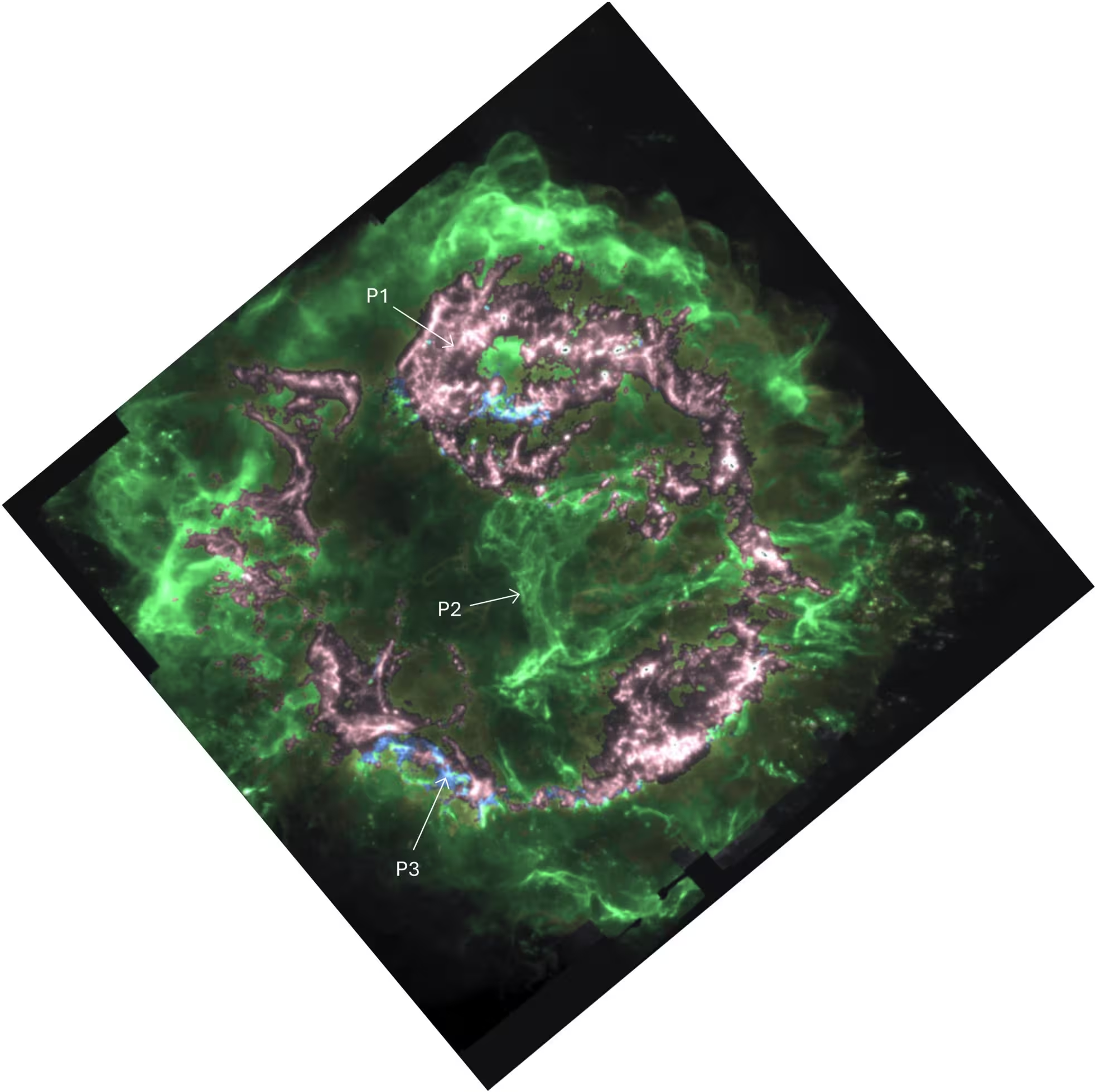
By combining 3D reconstructions of the expanding debris with precise spectral analysis, astronomers can now pinpoint the location and composition of materials within Cassiopeia A. This ongoing work not only refines our understanding of how stars die, but also provides a vital connection between the death of one star and the potential birth of future solar systems.
Further Reading
- NASA Telescopes Chase Down “Green Monster” in Star’s Debris
- NASA’s Webb Stuns With New High-Definition Look at Exploded Star
- Webb Reveals Never-Before-Seen Details in Cassiopeia A
- The Bubble-like Interior of the Core-Collapse Supernova Remnant Cassiopeia A
- Freshly Formed Dust in the Cassiopeia A Supernova Remnant as Revealed by the Spitzer Space Telescope
This article has been fact checked for accuracy, with information verified against reputable sources. Learn more about us and our editorial process.
Last reviewed on .
Article history
- Latest version
Reference(s)
- <https://www.columbia.edu/>.
- Temim, Tea., et al. “JWST Resolves Dust Emission from Individual Ejecta Clumps in Cassiopeia A: Dominant Grain Compositions Point to a Shell Merger in the Progenitor.” The Astrophysical Journal Letters, vol. 1012, no. 2, November 23, 2026, pp. L26 American Astronomical Society, doi: 10.3847/2041-8213/aea901. <https://doi.org/10.3847/2041-8213/aea901>.
- “Purdue University - Indiana’s Land Grant University.” Purdue University <https://www.purdue.edu/>.
- “Chandra Press Room :: NASA Telescopes Chase Down "Green Monster" in Star's Debris :: 08 January 2024.” <https://chandra.cfa.harvard.edu/press/24_releases/press_010824.html>.
- McCoy, Marty. “NASA's Webb Stuns With New High-Definition Look at Exploded Star - NASA Science.”, December 11, 2023 NASA <https://science.nasa.gov/missions/webb/nasas-webb-stuns-with-new-high-definition-look-at-exploded-star/>.
- McCoy, Marty. “Webb Reveals Never-Before-Seen Details in Cassiopeia A - NASA Science.”, April 7, 2023 NASA <https://science.nasa.gov/missions/webb/webb-reveals-never-before-seen-details-in-cassiopeia-a/>.
- <https://pubmed.ncbi.nlm.nih.gov/25635094/>.
- Rho, J.. “Freshly formed dust in the cassiopeia a supernova remnant as revealed by the Spitzer space telescope.”, vol. 673, no. 1, January 20, 2008, pp. 271-282. Experts@Minnesota, doi: 10.1086/523835. <https://experts.umn.edu/en/publications/freshly-formed-dust-in-the-cassiopeia-a-supernova-remnant-as-reve/>.
Cite this page:
- Posted by Aisha Ahmed